
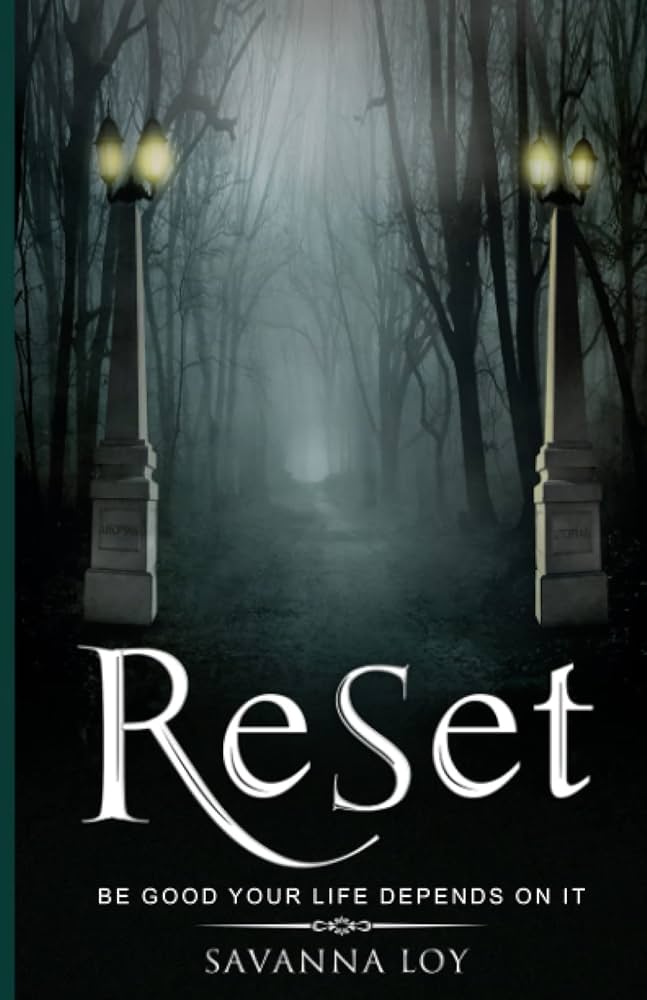
A horror/dystopian novel premised on a popular trope — but delivered from a novel perspective. In ReSet the world as we know it has come to an end and a new oligarchy has come into power. A committee of a few men now decide who lives and dies and the terms which everyone must now abide. Failure to do otherwise results in the collective execution of whole communities, a reset. The novel reveals all through the eyes of one of its elite families, those chosen to plan and carry out the gruesome task of resetting.
The premise is inherently intriguing, given the climate change, political and social turmoil of the American nation at present; one cannot help but wonder what consequences we may need to confront — and perhaps sooner than we would like to admit. ReSet plays on those fears. In that vein, the novel is reminiscent of Margaret Atwood’s Handmaid’s Tale and the eugenically driven political world of Gilead. A central theme of the novel is the corruption of power and the terrible consequences this can lead to.
For all its unique perspective, I found the narrative arc of the story predictable and the peak of the novel, its crescendo, slightly disappointing and less explosive than promised. The drama of that moment is confined to a small circle, decreasing the visibility of its larger impact on society. Given the drastic shift in culture that the apocalypse created, I expected a greater dramatic backlash or swing in equal measure. The ending suggests a sequel, and perhaps this is where the novel leads — rather than to a terminal ending.
On the whole, the novel was well-written, though there were some parts which unfolded in confusion — deliberately, I suspect — which detracted from the flow of the novel for this reader. Nonetheless, this is a minor complaint. Likewise, characters are well-developed and tangible, though some better than others. On the whole, an intriguing read for readers who enjoy dystopian possibilities.

 Dr JoAnn LoSavio