Ramaswamy weaves a complex story, one as wild, unpredictable, funny, sad, and as convoluted as the people who populate it. The characters might live in an era long past and in a place we have never been to, but they are as recognizable to us as ourselves. On more than one occasion I smiled and giggled to myself, seeing my father, mother, a cousin, or myself in the characters.
This is a novel of a place and time. The novel takes place in the vicinity — the junction — of the tamarind tree and revolves around events the tamarind tree witnessed, became party to, and became a victim of. But, more than that, the novel is set in and depicts India in the 1950s; not colonial, europeanized India, brimming with exoticism and romanticism, and not fiery, violent India of the Partition and Decolonization, not political India, not anthropological Indian, but India in the lull after the violence, the lived India of Indians, when ordinary people, Muslim and Hindu alike, merchants, beggars, men, women, and children are settling into the age-old necessary rhythms of life: marriage, work, the bearing and raising of children, paying taxes, earning wages. The social politics of the moment underpin the interactions of the people who live and work at the junction of the tamarind tree. It is in these banal frictions between merchants, husband and wife, apprentice and master, that Ramaswamy invokes the shadows of India’s larger social conflicts: religious tension between Muslims and Hindus, the oppression of women and the traditionalism of domesticity, the capitalist desire for individualism and individual profit at odds with a kind of social collectivism necessary to survival and tribalism.
The story is told from an unnamed narrator’s perspective, partly. In other parts an omniscient narrator takes into the interior movements and minds of the characters. The story is fluid, flowing from one character to another, from one drama to another, one scandal to another — not in a superficial way, but to perform how close contact is between the characters, to show the reader how intertwined these lives are.
This is a beautiful novel that imparts the scent and colors of India through a vivid portrait of its people and their everyday needs, their lives, and interactions with one another.
Black Victorians: Hidden in History by Keshia N. Abraham & John Woolf
First, let me begin this review by stating: I WANT A COPY OF THIS BOOK. Please, Somebody, get me this for Whatever-the-Next-Gifting-Holiday-is! I also fervently hope that Duckworth Books will have this available (at a reasonable price!) through an American imprint so it can be adopted for college courses in the United States. This is the perfect book for a decolonizing history curriculum whether the course is focused on Modern Europe, Black History, History of Racism, Modern World — or, in my case — Roots of Contemporary Issues.
The reasons: First, the book is broken down into assignable, digestible thematic sections and chapters which focus on a single individual and their historical significance. Part One is “Context and Concealment” and it provides an overview of the state of black history in Europe and in Victorian Era historiography. Here, the point is made that the act of existing is resistance itself, it is a decolonizing act to just be. Bringing these histories to the forefront is a necessary and powerful step towards decolonizing history as it is popularly understood, historical narrative, and the academy. The following sections: “Struggle and Survival”, “Church and State”, “Cultural VIPs”, and “Fighting for Freedom” offer well-researched deep dives into specific individuals across all classes, genders, and social positions. Working class black Britons, criminals, socialites, intellectuals, clergy, activists and freedom fighters are given a moment of spotlight and discussed as part of a larger colored and white fabric of Victorian society. This is a fantastic prosopography. And it could easily be partitioned to assign one or a few chapters per week to undergraduate students.
The second reason this book is ideal for an undergraduate seminar or an introductory survey course is because the readability of this book is amazing. Abraham’s and Woolf’s prose is smooth, the language requires little effort, their arguments are explicit, allowing for an easy transition from archival data to analysis to discussion. Indeed, the shift from storytelling to analysis is so seamless that many students are likely to be fooled into reading the entirety of any chapter assigned! Bonus: I bet the kids will really enjoy it. I am told over and over by students that they love seeing the “real people” in history.
The third reason is that while its accessibility makes it the perfect addition to any library, for any level of reader, it is also perfect for the more advanced historian, including those well versed in historiography and professional history production. Simply put, our own training is steeped in colonial and orientalist standards that have obscured the presence of color and ethnicity. We need to read this. I could not help but feel joy at reading this, though I am not black I am a scholar of color and from a former colony to boot! Black Victorians: Hidden in History is not the first or only of its kind, but is part of a larger movement towards decolonizing European history, which has been and remains largely as white history. Black Victorians joins Olivette Otele’s African Europeans: An Untold History (2021) and Miranda Kaufman’s Black Tudors: The Untold Story (2018) and others which are highlighting the transnational presence of Black people in other eras. The “Untold” theme across these recent histories is telling and a clue to the point being made: Black People never were confined to the so-called Dark Continent, that notion was a myth promulgated by a eurocentric academy, a eurocentric world — and Here! Here is proof!
Therefore, and perhaps most significantly, Black Victorians is bound to hit with younger readers, a generation for which representation matters and matters a lot! This is for the next generation for whom the symbols and the exhibition of blackness can have an immense impact on their decisions now and in the future. Our students of color need to see themselves in their classrooms, on the big screen (by which I mean the white board and projector screen in the front of the classroom).
All this said, merely bringing black Victorians to the forefront is not the endgame. It is not the last word on this. This is only the beginning; the conclusion emphasizes not only existence of black victorians, but points out that black victorians — black people — have played significant roles in shaping their moment as well as the present, thus their historical existence was not static, sealed in a vacuum, but interactive and dynamically integrated with white victorian society. This is the more powerful message, one which the book manifests.
Again, please, someone, gift me a copy of this book! I will be looking for it to assign in a future course!
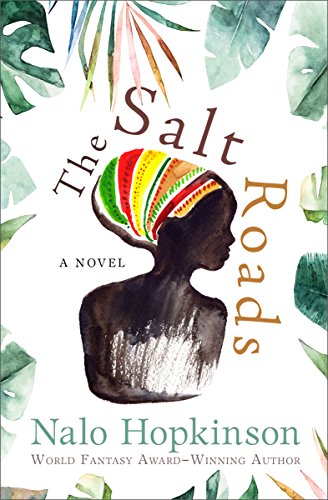
The Salt Roads is a bold statement about black womanhood across historical space and time past. The novel unfolds in magical chronology; it is a fantasy/magical realist novel that is grounded in history, but woven together through the movements of a spirit-being, Ezili and the Ginen goddess, Lasirén. The spiritual relationship is never fully explained — adding to the magical aspect — between Ezili, Lasirén and the human women whose bodies these spirits inhabit at various moments in time. The salt roads of the title is the trail of tears black women have cried, the salt of those tears having dried and laid a path for all those who came after. It is a well-trod path. Ezili and Lasirén live and relive, walk and walk again on that same path, possessing different bodies.
The plot revolves around three disparate stories, loosely connected by a shared history of racism, gendered suffering, and life-affirming black sexuality. The first lifetime that the novel opens with is that of Mer, an old Ginen woman, a respected elder and healer in the enslaved community in an unnamed French colony in the West Indies. Through her eyes and hands, Mer/Ezili helps the Ginen on the plantation survive their white master’s rages, their unpredictable cruelties. In this lifetime we also encounter Makandal, the male counterpart to Mer/Ezili, another magical being who also seeks to help the Ginen survive, but in different ways. Mer is the female, the feminine, the woman who knows what other women in this oppressed world need to survive. Makandal is the male, the masculine, the combative counterpart.
The second body Ezili occupies belongs to a mixed-race woman in France in 1842, Jeanne Duval (aka Lemer and Prosper). Jeanne is a dancer, an actress, a courtesan, the mistress of a white man. She embodies black sensuality and sexuality in all its forms. Here I think is Hopkinson’s great contribution: the boldness of her sexual prose disrupts the negative images history has painted of black women’s sex. Historical depictions of black women as sexual beings pose Her as savage, deviant, an object to possess. Hopkinson wipes that away. Jeanne Duval is a powerful sexual woman, human and frail and vibrant in her sexuality. She is a temptress, but sex is her weapon, one she has full control over.
The third manifestation of Ezili/Lasirén is called Thais, Meritet, Mary, and Pretty Pearl. Her time is in ancient Egypt. As in Mer’s lifetime, Thais’ experiences are deeply gendered; her body is a sexual, reproductive source and her life is shaped by oppression under forces larger than herself.
Hopkinson’s prose is beautiful, song-like in parts, especially in the sections where Ezili and Lasirén’s voice(s) narrate events. Their spirit presence is attached to, but not fully part of their human manifestation’s consciousness. They are experiencing humanity through the bodies they possess as much as they are imparting their power and strength to these women.
The novel is not a historical fiction in the traditional sense; it is not factually informative, but it conveys the affect and emotional experience of enslaved, black, women’s history. It conveys the psychological tensions of this history. It also shows the reader a different way to view the historical enslaved black woman, a woman who has become an archetype. Hopkinson revises Her, suffuses Her with a humanity through raw sexuality and the materiality of her womb.
My Three Dads: Patriarchy on the Great Plains by Jessa Crispin
This was not what I expected. I mean that in as positive a way as possible. Let’s say that the three dads Crispin deep discusses in the book are not the fathers you might assume from the title. This is not a work centered on biological relationships or familial history; it is, rather, a genealogy of our present moment — Crispin’s response — to the very existential question: What in the biscuits is going on here? (Here being America or ‘Murica. Take your pick, it is somewhat fungible.)
Crispin’s answer is: No gravy. All biscuits, no gravy. From this reviewer’s position, Crispin hits it on the head of the nail pretty dead on. Told from a woman’s perspective, the response cannot but factor in gender and sexuality. A person’s lens is inevitably shaped by their experience of living within the patriarchy. And that’s Crispin’s big point IMO: We all live within a patriarchal world and we always have. It is highly likely we always will. Or, at least, those of us alive today always will.
[Side Note: It is likely Crispin wrote the bulk of this book prior to the recent SCOTUS ruling on abortion. It is interesting reading this in the wake of that decision, on the cusp of things going so very sideways. I would have liked to read Crispin’s view on that in these pages. Perhaps, next time, eh?]
Crispin’s MyThree Dads is a long read essay, flowing from one chapter to another like a river, making turns at arbitrary, but logical loci. The book is split, however, into three major parts, one for each “father”. Dad One is a figure from Crispin’s past, a father figure or an archetype of a male/masculine figure we’ve all known or read about, the invasive species of man who erases women violently, silently, assuredly, simply through living their own lives. The act of being a man — in the midwestern definition — is a violent act toward women. Crispin mulls marriage and children, the banal locale of domesticity as the insidious, quotidian site of patriarchy; here, she admits to its wiles herself. The disguise is love, security, belonging.
Dad Two is the Citizen, in Crispin’s case, John Brown, a Kansan historical figure. But again, John Brown is the manifestation — one of many — Crispin write about it. She’s interested in the archetype again, but again these are men we recognize as living individuals: The White Men Who Feel Their Lack of Control And Lash Out. Politics becomes the platform for these men: the excuse for their rage and the subsequent tantrum. Reading this section was like watching a montage of the American news from the past thirty or so years. Crispin revives Waco, Timothy McVeigh, Nazis, Bolsheviks, bring the conversation to the present with references to unnamed mass shooters. Crispin’s point is made visible by the invisible: there’s no need to name any of the recent mass shooters of the past twenty years because these perpetrators (typically a man or a boy) are so commonplace as to collate into an archetype of their own.
Dad Three is God, but since that is too multicultural, too broadly applicable as a term, Crispin narrows it in: the Protestant God and, even more specifically, his human mouthpieces, Martin Luther. But this is really a discussion of the Church and the folk version of Christianity as it is practiced in the American Midwest. Crispin lost me a little here, but that may be because I can’t relate, having grown up in Asia where religion flavors life in very different ways. That said, having spent a significant amount of my adult life in the Midwest, Crispin’s cultural landscape is familiar.
Crispin critiques the patriarchal world we live in, but her point is its all-encompassing presence. The title says this is focused on the Midwest, but really, the world Crispin paints for us is easily recognizable as anywhere else in the United States. The title and structure of the book even performs Crispin’s point: the world revolves around man and men and their needs, desires, rages. My Three Dads is a snapshot of what it means to be American — but, a caveat on that: The people in Crispin’s work are white. She doesn’t really say this, but she does through silence and implication. The book focuses on the Midwest, after all, and that is the heartland of whiteness, despite the millions of non-white people who reside there now and have historically shaped Americanness. So, let me rephrase: My Three Dads is a snapshot of White Americanness, the kind typically performed, desired, and domiciled in (but not confined to) the American Midwest. But this doesn’t mean this is just about or for white people; People of color have to live in a white world, after all. My Three Dads is a worthy expenditure of time for any reader interested in the question: What in the bisuits is going on in America today? The answer will either confirm what you already know or ricochet off someone you know.
The Long Day Wanes: A Malayan Trilogy by Anthony Burgess
As I closed this book for the last time, I could not help but wonder how and why I had made it to my fourth decade as a Malaysian without having read this. I wondered why the existence of books about Malaya and Malaysia were not a part of my IGSCE or GCSE exams, part of my primary and secondary school education. We could have read this in English class, in History class, in Religion class, instead of Shakespeare’s Much Ado About Nothing and William Golding’s Lord of the Flies. It would have made more sense, it would have been interesting, it would have given us a sense of who were were! No, we learnt about WWI and WWII, but never about the Malayan Emergency, never about Communism — except as a Soviet or Chinese or Cuban-Missile Crisis thing.
Such a misnomer, the “post colonial” world. There is nothing postcolonial about it. Burgess’s three intertwined novels prove that. Published in 1964 and reading them nearly six decades later, it’s clear nothing much has changed except the language: the racism remains, the ethnic conflict, the Malay calling the Indian lazy, the Chinese reviled for their share of the economy, the Malay condemned for their bumiputra entitlements. The primacy White Men still hold over those of darker fleshtones. Nothing is different except Chinese folks don’t say yam seng as much any more (Kam pai I think is the more popular term now. Not that I drink enough to know) and diluting whiskey with water and ice has become passé with the ubiquitous use of aircon. I recognized the sounds and smells and sweaty stickiness in Burgess’ Malaya, especially when I read the books while having a cup of steaming Horlicks. I laughed out when luncheon meat was mentioned, then counted how many tins I have in my pantry.
The novels are nothing spectacular plotwise; it’s the point that nothing happens. In the first book, Victor Crabbe and Fenella Crabbe drink and drink and drink, complain, complain, complain. Victor even complains that Fenella complains; for, in his view, he has purpose. Burgess does not name it but it is the White Savior Complex; Victor has it in buckets.
It is the characters which save the novels and make the trilogy worth reading. This is one of the few times I have read a book from this era that brought “native” characters to the forefront. Even Orwell’s Veraswami was a supporting character. Of course, we should not be too hasty; Victor Crabbe remains the central focus of the trilogy. But Rosemary, an Indian woman who has swallowed the White Mask — perhaps the whole bottle of white makeup — is prominent in the last novel, Beds in the East. Alladad Khan, a Muslim man is also given pride of place in the first one, Time for a Tiger. The second book, Enemy in the Blanket focuses more closely on the Crabbe’s marriage. I appreciated Fenella’s prominence here, even as a white character; she is a woman and it was pleasant to read a woman’s story, even if told by and from a man’s perspective. I enjoyed Anne Talbot a lot. Her spunk was refreshing.
But ugh, the racism threaded all the way through. I read it, recognized it, hated it, enjoyed it for its honest — if ugly — portrayal of Emergency era Malaya.
I found this novel by chance, sifting through the remainder books stacked on a Dollar Tree shelf. (Now a dollar TWENTY-FIVE tree due to Covid-19 caused inflation. Still, a steal.) I was searching for scavenger hunt rewards for my Summer class. The title caught my eye and as I picked it up I wondered if I would regret it. In these increasingly divisive days, the word “American” conjures a dark and paranoid shadow, a hidden figure that vaguely appears to be toting a gun. It is a hateful individual with movements that jerk unpredictably, violently. I could not help but take a pause to wonder at my assumptions: Who is the New American? I am one, but I don’t recognize the person in my vision. Who would Aharonian Marcom’s American be? Hopefully they are not merely a rehashed version of the old American. Never buy a book without reading the front and back flaps. My hope was vindicated. “Dreamer”, “Migrant”, the synopsis told me. I bought two copies. One for myself, one for a scavenger-hunt-winning student.
Aharonian Marcom’s The New American did not disappoint. It seized me and would not let go until I finished it. I wanted to finish it. I had to. The New American is a novel of our moment, the turn of the 21st century. It is unashamed and bold in its title; the novel captures the determination of the human spirit and the suffering of being an American. The latter is inextricable from the former. As an immigrant myself, I saw parts of my own experience in the novel, though my own journey was far less deadly, far less bloody.
The plot is straightforward, a clever ruse for a very complicated discussion of identity, belonging, desire, and survival. The story begins and ends with Emilio, a DREAMER who grew up in California, became a student at UC Berkeley, and then was deported when authorities outside the university sanctuary city boundaries discovered he was undocumented. Emilio is deported to Guatemala, stuck in a legal limbo he cannot see a way out of. He decides — with the typical brashness and fearlessness and naïveté of a college kid — to find a way back to the United States and his former life. His journey takes him through Mexico and the Sonoran Desert. On the way he meets and befriends other migrants: Matilde, Pedro, Jonatan and others. The story follows their feet as they walk miles upon miles upon miles to the deadly trains that carry them across Mexico, follows their feet as they suffer through the heat and aridity of the Sonoran Desert.
The characters seem simple at first, but they are facsimiles of real individuals and as such, the reader will find them complex, confusing, irrational. They are not guided solely by emotion or by avarice or by ambition or by necessity. They are driven by a combination of those things and more. Aharonian Marcom’s prose is succinct but powerful; Milo and Mati are visible to the reader, the pain in their hearts is within reach of their fingers. You could almost detect the odor of their sweat as you read, but then you realize it’s your own because you’re so tense and concerned about what will happen to these young migrants. You know this is a not a love story, that there is no happy ending guaranteed.
The New American‘s back flap told me about Aharonian Marcom and helped seal my desire to read this. They are a professor of Creative Writing at the University of Virginia, a founder and Creative Director of The New American Story Project [NASP], which hosts the website, New American Story. Aharonian Marcom’s research and professional engagements inform the content of the novel, fiction as it is.
I could not help but be reminded of a book I’d read a long time ago, which had changed me: Rubén Martinez’s Crossing Over: A Mexican Family on the Migrant Trail (2013). This was in my own undergraduate days, when I had just begun questioning for myself what it meant to be an American. Aharonian Marcom’s novel reads as the updated version: more YA-oriented, more college freshmen friendly, with a deeper interiority than Martinez’s. Both are wonderful; Martinez’s book still echoes. Almost a decade after it came out, it remains relevant. While there are so many books in the same vein out there now than there were before, it and The New American still have much work to do to bring stories of our humanity — in its glory and deadliness — to new readers. All of them are worth reading, including The New American.
The Shortest History of the Soviet Union by Sheila Patrick
The perfect overview of a massive, tumultuous history. At 248 pages from start through to the end of the index, Patrick’s book lives up to its name and delivers on accessibility and content. The chapters are chronologically organized, written in succinct prose, and free of historiographical or theoretical tangents. My galley copy did not even have footnotes! (But more on this later).
Patrick’s book is perfect for the undergraduate survey course in Soviet history (or for a Modern European history course) and for anyone who is new — like me — to the nuances and complications of Soviet history. The chapters are short enough to assign in lower level college courses and they lay out the chronological landscape very well; Soviet history can feel a bit overwhelming and Patrick eases the reader into it smoothly. The lack of footnotes here, normally a red flag in my view, was a positive characteristic. Undergraduate students sometimes feel overwhelmed at the footnotes, feeling unsure of where to direct their attention. The absence of citations allows readers to focus fully on the content at hand instead of worrying about tangential or other information.
As a historian of other regions I cannot comment on Patrick’s content in depth; however, I will say that I am very appreciative of the very meticulous sources, references, and bibliography Patrick provides at the end.
The Disappearance of Josef Mengele: A Novel by Olivier Guez
Like many people I have a deep personal fascination with World War II (much influenced by my professional interests in this time period), but I was unsure if I wanted to read a book — fiction or otherwise — centered on so evil a person, a human being capable of having inflicted so much suffering on others. Indeed, the first third of the novel made me rather queasy: Should I be more detached from this historical material? Should I be reading this with a massive grain of salt? Should I be enjoying this read?
And that’s the thing: The Disappearance of Josef Mengele: A Novel is a captivating, enjoyable read. Guez’s prose is irrepressibly smooth, the plot is compelling and thrusts the reader forward, his characterization of Mengele is fascinating, successful, human. I did not want to like him — and here I think is Guez’s brilliance — I did not end up liking this horrendous human being, in fact, my distaste for him was confirmed, but Guez prevailed on me to acknowledge Mengele as a member of my own species. By the end of the book, I could not deny that Mengele and I shared a common sense of existence, a common biology, that he and I were human. And I therefore must confront the real horror of Nazi eugnenics and racism: humanity is cruelest to its own and any study of our inherent nature must accept our own cruelty.
Josef Mengele — in all his aliases (Pedro, Peter, Helmut, Wolfgang, so many others) — was not the only character in Guez’s meticulously researched historical novel who brought me to this uncomfortable realization. Mengele’s first wife, Irene; his second wife and ex-sister-in-law, Martha; his unwanted lover, Gitta; his father, Karl; and his mother, Walburga are those who inflict cruelties — justified or not, minor or abusive — on Mengele. This does not excuse Mengele, but in terms of a fictionalized view, Guez gives us a window into his psyche,
This novel is not about Mengele per se, it is a layered dissection of the interaction of individuals, their subjective desires, and their collective obligations as these factors intersect with history and its unavoidable tides. Guez writes without pretending any unique insight into Mengele’s interiority. That which Guez assumes and invents is well within the parameters of fiction; his characterization of Mengele is plausible, the world Guez constructs is recognizable as our own. I want to note that Guez’s deep research into the topic is visible, appreciated, exemplary. If only most writers of historical fiction did this. For historians, professional, hobby, and emergent, Guez’s brief but detailed note on sources is a fantastic bonus. But, I digress, the book isn’t about Mengele; it is about all that made the disappearance possible.
Therefore, added to the above cast is the vast network of enablers that made Mengele’s escape and assimilation possible. These friends, politicians, extended family members, and indeed all the clerks, secretaries, and supporting unnamed persons make the horror even more palpable — as tangible as the sense of the person sitting in the office next to me, the odor of my fellow-commuters on public transports, the sound of a door closing elsewhere in my apartment building. These people are not the cowardly or indifferent Germans who made the Third Reich and its genocide of Jews, Roma, and so many others possible, no, what Guez forces the reader to recognize is that there are people who are willingly complicit in promoting and preserving the genocidal, racist ideologies of the Nazis — and others like it. Juan and Evita Perón and their institutionalized obsession with Nazism and Fascism, Alfredo Stroessner in Paraguay, officials in Germany from the highest levels of the state down to the municipality of Günzberg, where the Mengele family was headquartered and ran their multinational corporation from, and so many others were thrilled to be part of the Nazi machine, during and after WWII. Some were motivated by their own ambitions, others by a sense of loyalty, others by fanatical belief in Mengele’s work and Nazism. Guez brings this massive conspiracy to life, peoples it with individuals we recognize in our own lives.
There are also those individuals who were completely hoodwinked by Mengele, and therein lies the other side of this story. I hesitate to say this is the “redeeming” aspect of Guez’s novel; no, it is better described as a more recognizable payoff. Their stories are those which we expect to see in a novel like this; these are the characters whose snubs and betrayals serve as rewards for sitting through the horrors I have described above. When Mengele’s son, Rolf; his dog, Heinrich Lyons; his landlords, Geza and Gitta; and later, Elsa abandon Mengele, the reader is bound to exclaim, “Yes! Finally!” and feel a rush of tingly righteousness.
Still, mingled with this happier sensation is a sadness: it is not enough that Rolf Mengele refused his name, freezes out his father, it is bittersweet that Heinrich Lyons dies (no spoiler here, what dog outlives a man who lives into his late 60s?). I will not spoil what happens with Elsa, Geza, or Gitta. The reader cannot forget that an exhausted and geopolitically influenced Mossad had to redirect its efforts away from Mengele’s capture and lose the opportunity to deliver some closure and justice to the millions affected by the Shoah. The fact that Mengele’s story rolls on to the novels end is an unhappy reminder that the cruelties Mengele experienced were in no way comparable to that which he inflicted on others.
For all the nuance and complications woven into the characters interactions, the plot is straightforward: it is an account of how this sadistic individual got away with it and how he did not fully escape the consequences and punishment of a kind. There is a sense of satisfying comeuppance, though the degree to which any reader will feel vindicated will vary. I was glad that Mengele could not live in peace, but the measure of his penalties was small in comparison to the magnitude of his crimes. That too is Guez’s point: fate is not bound by any moral scale. There is no equilibrium in justice.
A note on audience: Because of the multiple meanings this novel could convey its merits could be misconstrued, its story could be twisted to serve neo-Nazi tendencies if read without some guidance or instruction for some readers. For that reason, I would not recommend this as a book for novice historians, undergraduate students, or for use in a classroom — except, perhaps, a graduate seminar. The Disappearance of Josef Mengele: A Novel requires dissection with historical guidance for readers who have less experience working with or knowledge of the histories this novel is built on.
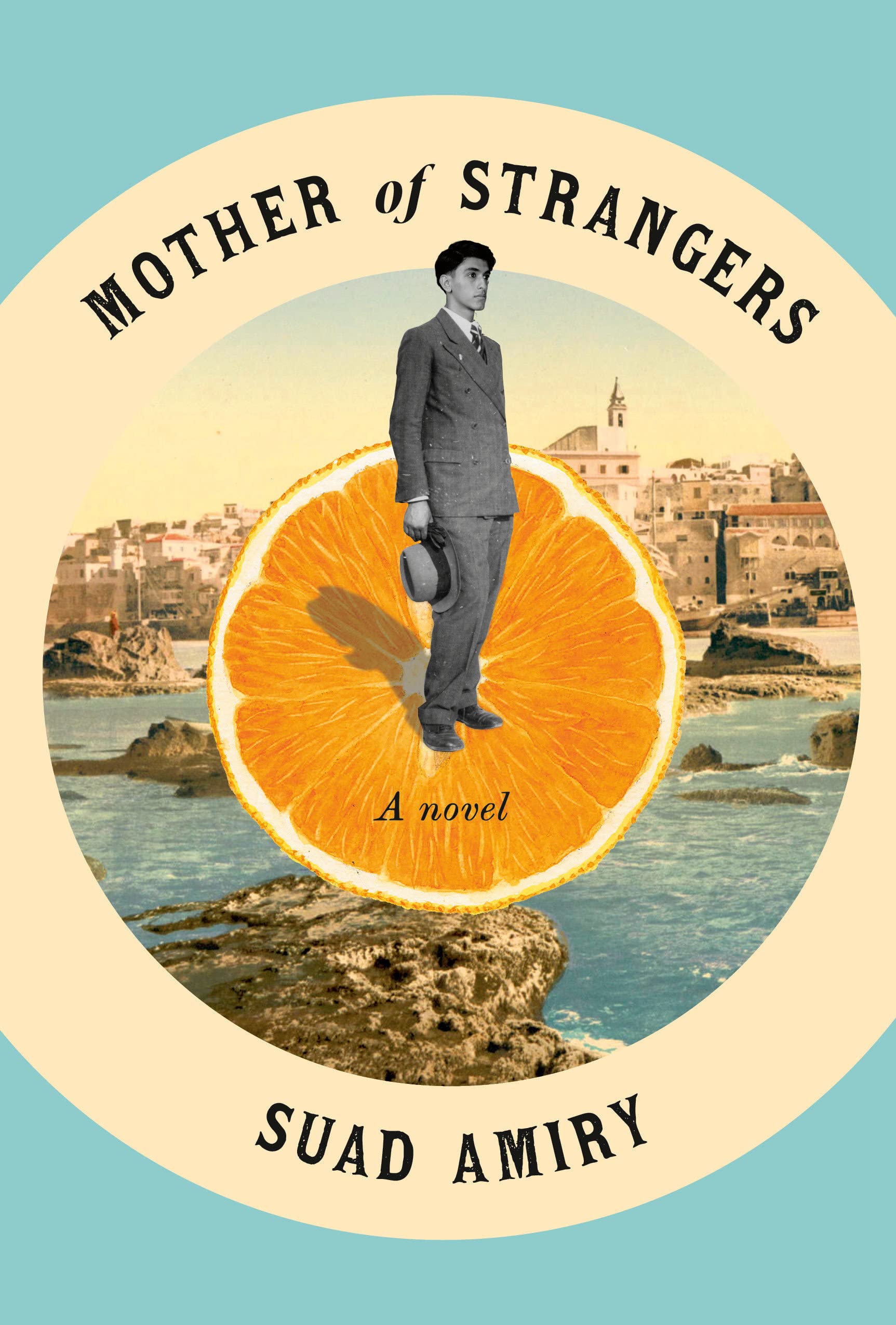
Amiry’s choice for the title of her novel, Mother of Strangers, is an homage to the city of Jaffa, the city in which most of the story is set. Indeed, while this is a coming-of-age tale revolving around two young muslims, a 13 year old girl named Shams and a 15 year old boy named Subhi, Mother of Strangers is more accurately a memoir of a lost place and people: Jaffa in the 1940s, before the end of the British Mandate and the beginning of the Arab-Israeli war. This novel is a literary memorial to the Palestine and the ethnically-, religiously-mixed community that lived there. (It should be noted that Amiry based the story on real events. There was a real Shams and a real Subhi.)
Through Subhi’s and Sham’s young eyes, the reader is treated to a view of Palestine before it became haunted by politics of religion, zionism, and war, what it it is today. Both of them were on the edge of a modern moment; in some ways eager to tear away from the traditionalism of life as it was lived by their forebears and in other ways, seeking approval and belonging in that world — only to find themselves wrenched away from it violently by invasion and war. This is a serious, heart breaking novel, not to be undertaken lightly. Grief and loss thread through it from its start, beginning with children wanting to assert to their own identities and desires, the shedding of childhood and ending with the actual, fatal loss of children, mothers, family, belongings, and legacies. This is a serious, important novel because it highlights this often-hidden aspect of Palestinian trauma. This novel humanizes a history and experience that is often sterilized in the news.
I couldn’t possibly give this novel any more stars. It is well worth the read and the tears.





 Dr JoAnn LoSavio