The Lover: A Novel by Rebecca Sacks

The Lover: A Novel by Rebecca Sacks

I can’t stop thinking about this love affair. It’s been months since I finished reading the book, but Allison and Eyal (and Timor, Aisha, Talia, and so many others) continue to occupy my thoughts, not least because the war in Gaza and the horrors that plague Palestine and Palestinians, Israeli and Israelis, remains on-going.

The Lover is a timely novel, as one which revolves around that very political and cultural conflict. But the novel offers a social perspective on how politics hits the ground, how real lives are shaped by the tragedy. The short of it, as I think most people understand, is that the situation is messy. Israelis and Palestinians, Jewish, Arab, each and every one, is woven into a fabric that cannot be unpicked, their threads too tightly interlaced for any one to be extracted without fraying, snapping, leaving a scar in the cloth. The Lover highlights that messiness, the ethical messiness, the material messiness, the psychological and emotional turmoil of Palestine and Israel.

The Lover is a love story, a romance between Allison, a half-Jewish American graduate student who has come to Israel for a semester abroad, and Eyal, a soldier in the Israeli army. To fulfill his military duty, Eyal must conduct missions in Gaza, while Allison frets and waits for his return. But there is another romance here: Allison’s as she becomes enraptured with Israel and the tensions between Jews and Arabs. This is a novel about the ethics of love, what authentic compatibility means, and the difference between passion and compassion between lovers.

What makes The Lover so compelling is that the intertwined romances here force us to confront our own biases in this or other situations. This is a story we cannot turn away from, because even as outsiders watching the news, looking in on the events in Gaza, its messiness forces us to consider what we each might do, might have to do in a similar situation.

The story, as darkly riveting as it is, is not the novels only attraction. The Lover is superbly written. This is literary fiction at its most devastating. Sacks has also clearly done an incredible amount of research, and what might be understood as ethnographic observation; the novel’s environs are so real as to transport the reader to that place, to Israel, to Gaza. The tension Sacks develops through combining research with literature results in a palpable immersion for the reader.

Moreover, Sacks’ characters are fleshy, flawed, and real. Allison is its main protagonist; it is through her voice, her thoughts, that the story is narrated (though she is not its only narrator). Readers cannot help but feel her anxiety, her excitement; as Allison falls deeper in love with Israel, readers may find they are uncomfortably immersed in Allison’s mind. This is a testament to Sacks skill with words.

The Lover is a novel I will likely return to again, perhaps more than once.
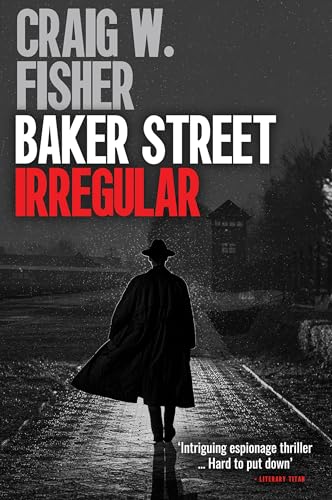
Baker Street Irregular: A Novel by Craig W. Fisher

Baker Street Irregular: A Novel
by Craig W. Fisher

Readers who love a good spy novel, immersive writing with fleshy details, and large casts of characters will find a gem in Baker Street Irregular.

The novel follows a WWII British spy, Bill Hoffman, as he navigates Nazi occupied Europe, attending to the missions he has been tasked with. His primary task is to track a Nazi official in Vichy France, but events lead him to a deeper mystery.

I have mixed thoughts about Baker Street Irregular. On the positive side, Fisher is adept at storytelling, weaving the historical fabric of WWII through an intricate interaction of historical details and dark, noir-ish mood-setting scenes. The story is compelling. And Fisher is a good writer, possessing a unique voice and style. Fisher’s characters too are clearly visible. The novel reads like literary fiction: deeply reflective and full of wartime shadows.

But, some of these same aspects of the novel lost me as a reader. The pace of the novel is slow; long and numerous pages flow without progressing the arc of the story, even as they contribute to making the grey landscape of war tangible for the reader. Pages and pages would pass without a clear direction of where things are headed. At 328 pages — not including Historical Notes and a Glossary of terms at the end — the meanderings within the novel induced torpor, rather than interest. There are also numerous characters; Fisher’s attention to detail suggests each one is one to remember, leading this reader to forget many of them for lack of memory to track them all.

All in all, Baker Street Irregular delivers on its promise. Readers who enjoy historical fiction set in WWII or languid, noir novels are very likely to find it gripping and satisfying.

Unshrinking: How to Face Fatphobia by Kate Manne

Unshrinking: How to Face Fatphobia by Kate Manne

I had feelings reading Unshrinking. Lots and lots of feelings, feelings which made me reflect and assess, then reassess again.

Some part of my reaction is due to the particular place I am at in my life where I am actively trying to lose weight and return to a body shape and size that I used to be, and the fact that I, like Manne, am a woman in higher education, in the humanities to boot. This book hit on many levels for me. YMMV, of course, but I think most readers, regardless of their gender, occupation, and size will find that some part or whole of this book mirrors an experience they have had themselves, witnessed, or been party to.

Manne’s Unshrinking focuses on fatness and the fear and loathing around that subject as an oppressive force; an unrecognized and often invisible loci on the intersectional matrix dominated by Race, Class, and Gender. Fat, says Manne, ought to figure up there, alongside the big three — or at the very least, Fatness ought to be taken into account as one of the newer cohort of (though no less inferior) factors like Disability/Ability, Age, Education, etc.

Some chapters address what readers might expect in a conversation about fatness and size: the FDA approved Food Pyramid, the faulty application of Body Mass Index (BMI) to any and all, the near global obsession with “dieting,” and what constitutes — in many societies — the Ideal Body Figure for men, women, everyone. But Manne also devotes pages to the philosophical and ideological fallout of Fatphobic culture, and the effects of fatphobia and prejudice in academia and professional settings. What it comes down to, according to Manne, is the moral leverage thinness, paired with the moral condemnation of fatness, has to shape not only individual experiences, but society on a larger scale.

Unshrinking also offers the reader — and readers like me — a certain, if narrow, avenue of hope and empowerment. I felt seen, even though my fatness is not especially fat and more a reflection of my own fatphobia and internalization of what size I ought to be. Manne suggests that fatphobia can be acknowledged, addressed, and the situation ameliorated. We can and should change the way we see fatness; it shouldn’t be a moral yardstick, it isn’t a signal of health, and it isn’t up for public policing. Instead, fatness is another facet of our human diversity, a thing worth embracing and including.

Still, today I counted my calories.

A Short Stay in Hell: A Novella by Steven L. Peck

A Short Stay in Hell: A Novella by Steven L. Peck

This is one of the weirdest stories I’ve ever read. Weird, but good. Weird and thought provoking. Weird and depressing. The novella is a thought exercise, a what-if-what-would-I-do? immersion activity.

The story is simple enough: after death we go to hell where we discover what the “right” religion was, and where we have to perform a series of tasks to get out of hell. There are rules in hell. And interminable tasks that promise an end, but test the limits of our boredom. Hell is exactly what it sounds like: hell.

In the course of traversing hell, the characters explore what it is to essentially still be alive and somewhat immortal. Just as in life, they find they have to traverse paths they would rather not, navigate ethical dilemmas, and deal with an incredible amount of boredom.

Peck’s prose is deft; with few words he develops the story, builds the claustrophobic, suffocating environment and duly immerses the reader in hell.

It is likely I will think of this book on my deathbed.

A Woman of Pleasure: A Novel by Kiyoko Murata

A Woman of Pleasure: A Novel by Kiyoko Murata

 Woman of Pleasure is a slim novel whose size belies its powerful contents. For readers who enjoyed Memoirs of a Geisha, a novel by Arthur Golden (1997), Murata’s novel is the more historically accurate complement. Like Golden’s popular (but flawed and orientalist) work, this is a novel about Japanese geishas and their Floating World; however, unlike Golden, Murata draws on real events from Meiji-era Japan, weaving a story which is both fiction and history at their best. In Murata’s novel, geishas are not isolated from the rest of Japanese society, but integral to the larger whole.

The view of the floating world Murata offers us is raw and real, not romanticized; here we see women as they were, as actors with agency and power. We are given a glimpse into the real operations of a hanamachi and geisha houses of varying ranks and size, and the concerns of its most visible denizens. This is a powerful novel, one which removes geishas from the stereotypical niche they are often penned into, and places them in historical and economic context; Murata’s geishas are not dolls, but fleshy, flawed, and powerful individuals. This isn’t a romance, but an honest portrayal of what people do when they are denied their basic needs.

I am considering assigning A Woman of Pleasure in one of my history courses, as it emphasizes the change an individual and collective can invoke.

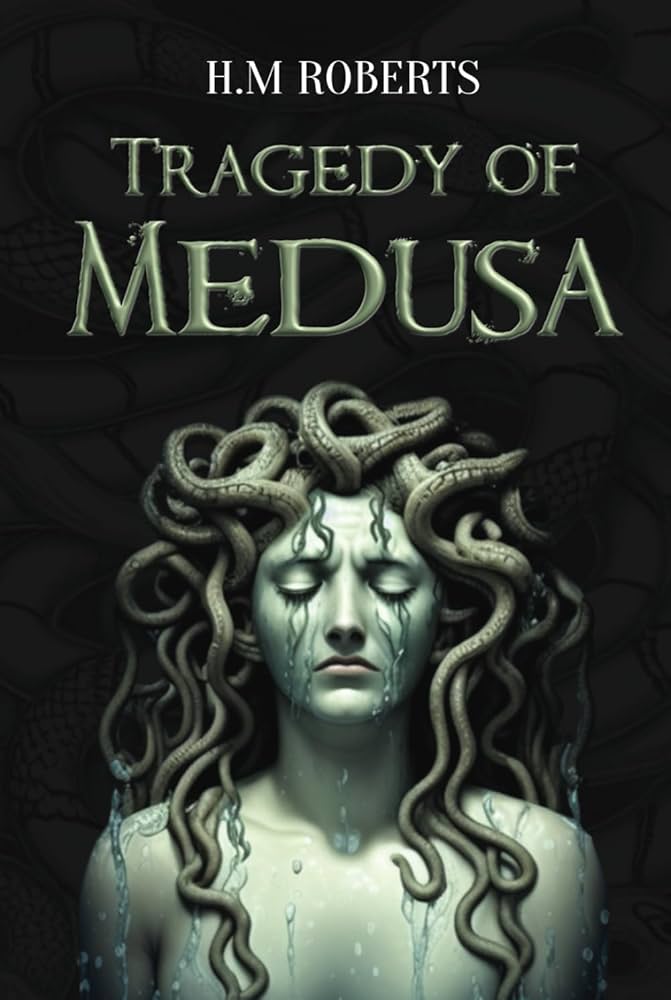
The Tragedy of Medusa: A Novel by H.M. Roberts

The Tragedy of Medusa: A Novel by H.M. Roberts

At under 200 pages, The Tragedy of Medusa is deceptively thin. H.M. Roberts delivers a powerful and emotional alternate narrative to the myth of this complicated woman through a swiftly moving story and with a succinct use of words.

Readers should know that the novel spans the length of a lifetime, and will immerse them thoroughly in its magical timeline. I emerged from the novel feeling a kind of grief; as if I had lived alongside the woman, Medusa, herself. Having a familiarity with the original myth of Medusa is not required here; Roberts uses the mythology as a guide, but deviates from its rules to develop a compelling, deeply human tale. Through Roberts’ prose and storytelling I lived the tragedy of Medusa myself.

Readers who enjoy historical fiction, fantasy, and mythology will appreciate Roberts’ equal attention to research and reality on one hand, magic and lore on the other. As a historian and as a pleasure-reader, I appreciated how well-researched it was without being pedantic. Small details about dress and life brought a tangibility to the interactions between characters, put the story in historical context. But the novel remained focused on its story and characters, and this is ultimately what made it so compelling: Medusa, her sisters, and family were nuanced, imperfect and human, for all their divine origin, the mortal characters transcended time, feeling all too familiar despite the historical difference. Fans of literary fiction will find the deep reflection and well-crafted characters of this novel as appealing as story. Roberts’ The Tragedy of Medusa cuts across the boundaries of genre.

I thoroughly enjoyed this indie read, and would not hesitate to recommend this to other readers.

The River We Remember: A Novel by William Kent Krueger

The River We Remember: A Novel by William Kent Krueger

As a reader, we all yearn for those novels that truly take us to another moment in time and hold us there until we feel like our own world is strange. We are lost when we return to our reality, feeling a little fuzzy in the head. I felt that way with this novel.

The River We Remember is a historical murder mystery, a story that is almost a cliché: the cowboy-like detective of a small, rural town, embroiled in the politics and corruption that all small towns seem to have and own proudly, must cut through all that to discover the truth. Along the way he has to confront his own loyalties, his own foibles, his own prejudices. He’s a flawed human being. Indeed, that’s part of Krueger’s skill here as a story-teller. His characters are fleshy, flawed beings, each with their own set of ambitions and darkness.

The River We Remember documents the seediness of life in a small town that looks perfect and serene on the exterior. That’s the kind of atmosphere Krueger builds here. Exposure of what lies in the shade. The crime rips away the comfort of that darkness, makes everything come into the glaring light.

The brilliance of the story aside, Krueger’s prose and dialogue, both the internal reflection of its protagonist and what is voiced, creates a lively world. Readers can almost hear the breath of the characters as they brush past the invisible reader in their midst.

The Library Book, Non-Fiction by Susan Orlean

The Library Book by Susan Orlean

I read this for an Adult Book Club I’m part of at my local library. I wasn’t sure what to expect, but once I started reading, I was hooked.

The Library Book is about the Los Angeles Central Library, which I have walked past when I visited downtown LA last year, though it is not about that library, but the one which was very nearly destroyed by a fire on April 29th, 1986. Indeed, this is a book-lover’s dream book; it is about the history of the LA County Central library, the politics of the region and the immediate downtown area, the experiences of its staff, librarians, and patrons. Wrapped up into the book are issues that we face every day: sexism, homelessness, the politics of wealth and poverty.

Orleans opens with the arsonist and the investigation into the fire, which is fascinating in itself, but the book quickly branches out to discuss the rebuilding of the library, the meaning of the library to its patrons, staff, and to the community at large.

The history of the library is not the only appeal of the book. It is brilliantly written and deeply researched. Orlean writes with a keen sense of details, using them to bring what might seem to be a rather boring subject to life. Through her prose we can smell the charred incense of the library, feel the anguish of the staff, tense at the fury of the politics around the library’s governance.

The Dyatlov Pass Mystery: A Graphic History by Cédric Mayen

The Dyatlov Pass Mystery: A Graphic History by Cédric Mayen and illustrated by Jandro González

I don’t often read graphic histories, but I was intrigued by this one, not knowing much about the mystery of the Soviet team who were lost while passing through these mountains in the 1950s. On February 1st, 1959 a group of young Soviet students who were hiking through the mountains disappeared without a trace. It has never been fully understood or revealed what happened to them.

The graphic novel tracks along two timelines: the team as it traversed the snowy mountain trails and the investigation afterwards. In the former timeline, the reader is given a fictionalized glimpse into the relationships and conversations between the teammates, their hopes and dreams, and an understanding of who they were as individuals. The latter time line offers the reader an understanding of the politics surrounding the mystery and its investigation, an event potentially embarrassing to the then-regime.

It was an entertaining read, if thin on history.

Speech Team: A Novel by Timothy Murphy

Speech Team: A Novel
by Timothy Murphy

I picked up this book by chance, walking past it in my local public library. I know we’re not “supposed” to judge books by their covers, but I do. When I turned the inner flap to read the synopsis, I knew immediately I had to read it.

The premise is that a member of a high school debate team commits suicide later in life, and a former team mate and friend sees this on social media. In the suicide post left behind, is an accusation against the teacher who ran the debate team, that he had said some awful things. What follows is a series of enlightening conversations between the surviving friends, revealing that all the team mates experienced some kind of denigrating treatment at the hands of the debate teacher.

As an educator, I know that the words I say have an incredible impact on my students, for the better and for the worse, though I hope for the former. Sometimes I say things I wish I had said differently, or not at all. The semester before I read Speech Team I had a student breakdown in my office during a private meeting. They were debilitatingly afraid of submitting their assignments to me, for fear that I’d be disappointed. They told me that in middle school, they overheard a teacher telling someone else how disappointed the teacher was in them, thinking that the subject wouldn’t hear. The teacher had expected more of my student and was complaining to another person. It cut deep and my student never forgot it, and it ruined their experience of school forever.

The story is supported by Murphy’s excellent prose. Like most literary fiction, it is deeply introspective and thoughtful in its content and approach. Murphy excavates what has become a quotidian trauma — the rod-wielding nun, the grouchy math teacher, the demanding and unyielding debate team teacher — drawing out complex feelings, leading to even more complex and perplexing actions/reactions. Readers will find a piece of themselves in these characters, perhaps more than one.

This is an extraordinary tale of an ordinary epiphany: what happens when we discover there is more than one authentic version of our past, sometimes hidden from ourselves by ourselves, and that the view of it looks different from other angles and through other eyes. That sometimes it takes time to understand our traumas.

Speech Team struck a nerve. I couldn’t put it down. I had to know what happened. If you’re a teacher of any kind, read this, and re-read it.