In the Upper Country: A Novel by Kai Thomas

In the Upper Country: A Novel
by Kai Thomas

I was very excited to read this, and it did not disappoint. In The Upper Country offers readers a new perspective, one of many histories, of the Underground Railroad, and the people who traversed it, were borne out of it. This is a story about ancestry and descending, the diverse and convergent ways in which histories flow, often beyond our control and understanding.

Several stories, seemingly disparate, come together here to bring a fleshiness to a spectral kind of history.

The story is set in Dunmore, a town in Canada were black people who have escaped slavery can be free — and yet, of course, not, living as they are within a white world. An event shakes the town, the criminal refuses to be cowed and the result is a tense struggle between generations to grapple with North American chattel slavery and the concept of freedom. The result is a portrayal of the tragically disjointed and yet deeply connected lives of black slaves and free blacks. Lensinda was born free. But she must still live with the past. The past must learn how to reconcile itself.

This is the kind of story that must be read and re-read, the reader accepting that with each re-reading a different understanding of the characters and their ideas of freedom and bondage will become visible.

The Nickel Boys: A Novel by Colson Whitehead

The Nickel Boys: A Novel by Colson Whitehead

This novel knocked the breath out of me. It’s a punchy, unabashed novel that does not hold back for the delicate senses of the reader. And that’s really its purpose: to strike, to aggressively announce blackness and the terrible history of being black in America.

The Nickel Boys are children and teens who have been sentenced to a juvenile detention center of the same name, a place that announces its purpose is rehabilitation and calls itself a school in name only. This is where the state of Florida shuts away its poor, young white and black boys. The novel follows a young man who, after seventeen years of successfully avoiding the racism roaming the streets in the form of cops, finds himself arrested and carted off to Nickel for his sentence. Here, he and reader have their eyes opened to the brutalities of being a black boy in a white man’s world.

Like Whitehead’s other novels, The Nickel Boys is written with an urban lyricism unique to him. The way Whitehead’s prose and story weaves in on itself, producing by the novel’s end, a symmetrical structure is deeply satisfying and alluring to this reader. Throughout the novel there are little hints at its ending, as if its ending was never — should never — be a surprise (though it is, and purposefully so). Whitehead is a master at unravelling just enough thread to keep the reader dangling, tying off all the knots at the end to zip it all up.

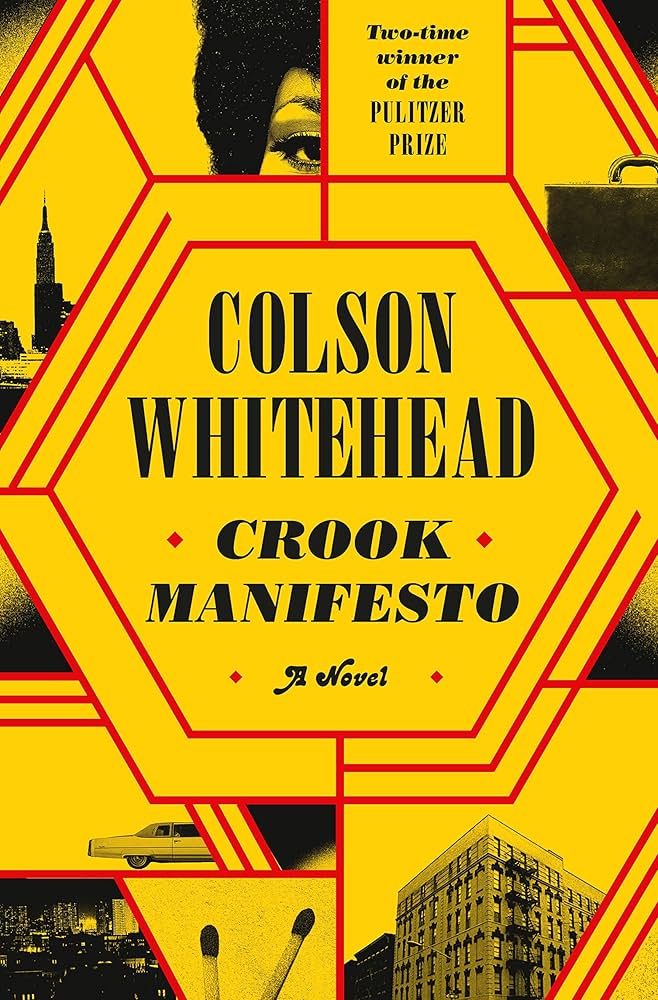
Harlem Shuffle & Crook Manifesto: Novels by Colson Whitehead

Having read Harlem Shuffle and Crook Manifesto, I cannot wait for the third novel in this series. Whitehead has me hooked on Ray Carney and Pepper, men you hate and yet can’t help but respect and care about. These novels had me reading through the night, damn whatever work I had the next day!

Harlem Shuffle is the first of the series, set in the late 1950s and early 1960s. It introduces the reader to the primary protagonist, Ray Carney, a black man who grew up and lives in Harlem, NYC. Carney is a successful business owner selling furniture, both new and gently used. His product is both legitimately sourced and… well, less so. The novel revolves around his world and the choices he has to make as a black man living in a white world, in a community where the lines between the licit and illicit are and have always been fluid. His wife, Elizabeth, for example, works in a travel agency who designs agendas for black folks in need of safe passage through white territory governed by Jim Crow legislation and prejudice. This is an era in which lynchings are common. A world before the American Civil Rights movements began.

The novel revolves around Carney and his immediate circle of friends, employees, and family, including his shiftless cousin, Freddie and his overbearing, “politics of respectability” in-laws. Split into three parts, each segment taking place three years apart, the novel is a collection of events that define Carney’s legitimate and less-legitimate career. Each segment revolves around a specific heist or… shall we say, project Carney gets involved in, willingly or otherwise.

Crook Manifesto follows the same format, except that it picks up where Harlem Shuffle leaves off but three years later in 1971. It is a new era in Harlem now. New York City is a different world than what it had been, but little has changed in Harlem. It is still a white man’s world, still a world in which the boundaries between the legal and illegal are fuzzy. Carney finds himself still doing the Harlem shuffle. Carney’s “projects” are criminal and noble, focused on vengeance and utterly righteous. He is a man of many talents and flaws, the kind of man everyone knows because that’s who we are: good and bad and everything in between.

The main attraction of the novel and the series as a whole is not the characters and their stories, or even the world of Harlem in the mid-20th century — though any one of these draws is enough for me — but Whitehead’s delicious prose and witty turn of phrase. Whitehead can evoke an image with just a handful of words, delivered with the kind of finesse only a slick Harlem player possesses; the prose is as smooth as the cons and crimes carried off in the novels. Whitehead’s words pack a punch, sharp and powerful like the ones Pepper throws. The words flow like music, like funk, and you, Reader, you will find yourself dancing to Whitehead’s beat long into the night.

The characters, and Whitehead’s smart crafting of their stories, does warrant mention. Carney, Pepper, Freddie, Marie, Munson, Zippo, Elizabeth, and Big Mike are each their own literary masterpieces. These are real people, visible and tangible. There is an enormous cast, but as the novels build, the reader will find that they make up the urban village that is Harlem, this closed and vulnerable world, an enclave of blackness in white New York. In Harlem Shuffle we fall in love with these characters, understand them and their desires. In Crook Manifesto Whitehead reprises them and we get a deeper view into their vulnerabilities, their powers, their strengths.

Whitehead’s attention to history and the culture of the past is also commendable. Events of the past are woven into the fabric of the story, as it was in reality, a necessary foundation for the way things end up shaking out. No world, even Black Harlem, exists in a vacuum; the events of New York politics as much as Civil Rights events happening in other parts of the country reverberate in Harlem, in the Carney’s living room, in Carney’s furniture showroom.

I. Cannot. Wait. For the next installment in this series.

This Other Eden: A Novel by Paul Harding

This Other Eden: A Novel by Paul Harding

Having read Tinkers, I began my reading of This Other Eden with high expectations and hopes. I wasn’t disappointed. On the surface it appears a pastoral novel. But this is false. To the reader the landscape is hidden — at first. Then as the novel unravels, it is clear there is a dark narrative thread running through the whole thing, a cohesion of some kind that is based on something less rosy than than a scenic, island reverie and altogether discomfiting: history, racism, resistance. This is a historical fiction, spanning the 18th through the 20th centuries, a significant time in the development of race and racism in America. Harding delivers this highly charged story carefully, in an ecological, atmospheric wrapper, one that makes the geography of the island on which the story takes place — its isolation, its raw, loam scent, its shaded trees — an important metaphorical actor. The island serves as a shroud and a setting for the demise of a way of life: a black way of life as it is subsumed by whiteness. Readers should expect to feel uncomfortable, perhaps a sense of claustrophobia from an inability to escape the island. This is to mimic the kind of slow isolation felt by its inhabitants.

This Other Eden is a novel about an island and its black inhabitants, the mainland and its white population, the slow — then rapid — shift of race and the infliction of racism on the former, the closing in on a way of life. The island is inhabited in 1792 by an interracial couple, not an uncommon pairing in this moment in time necessarily; Benjamin Honey and Patience, an Irish woman (the Irish having been ostracized as some Other race in the hierarchy of Western Europe). Their descendants occupy the island, but are increasingly subjected to America’s abhorrence and obsession with eradicating miscegenation. As the decades and centuries roll on, the islanders become targeted by eugenicists — much like the rest of the nation. So-called “good” intentions to bring progress and education to the island are misguided attempts, achieving none of their intended outcomes and instead excelling at cultural and racial erasure.

This Other Eden is told through the eyes of the islanders. Even while it addresses larger issues such as eugenics and racism, it is focused on the experiences of the islanders. It is a novel about people and the lives they must live, even while it is a commentary on America’s racist history.

We Are A Haunting: A Novel by Tyriek White

We Are A Haunting: A Novel by Tyriek White

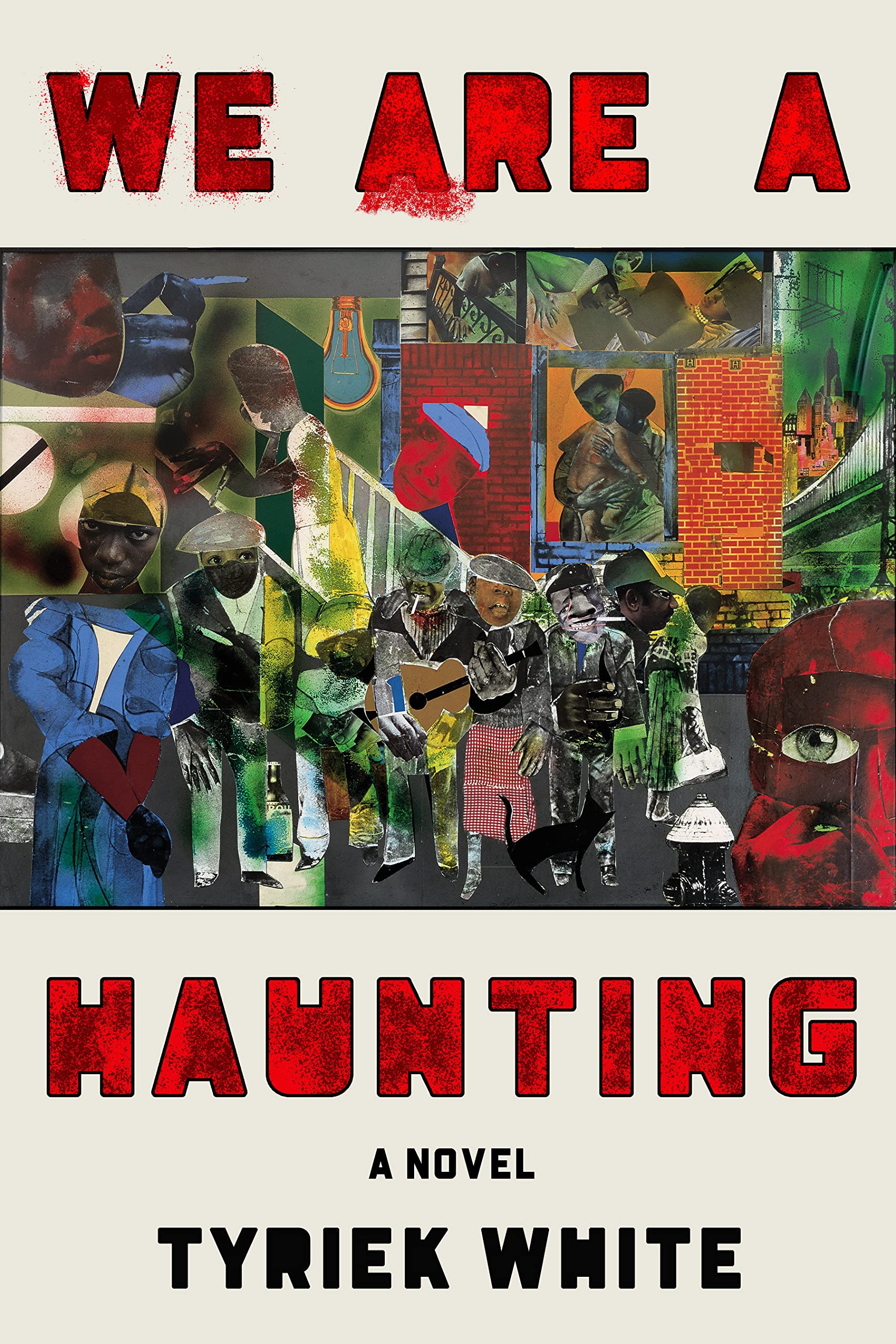
We Are A Haunting is a poetic song, like a siren that lured me into its world. Through the eyes of three generations of a black family living in New York City: Colly, Key, and Audrey, and the unraveling of their lives in a world rife with systemic racism, poverty, violence, grief, loss, readers are treated to a story that flows seamlessly between decades and generations.

White’s novel toggles forward and back in time. Characters float — as ghosts — between the past and the present. As the space between these three generations contracts and expands, the reader’s construction of time and history is reshaped, no longer a linear thing but a fluid matrix in which they live, all together, simultaneously at once. As a historian, We Are A Haunting reminds me that the past is never past, the present is merely a locus in history’s path.

The language which binds all these moments and spirits together is history, emotion, and experience: suffering and longing, obligations and promises kept or broken, strength and compromise, the ability to survive and a sense of defeat under the unwavering boot of poverty and racism. This is a complicated world in which awful events — such as getting fired and losing one’s income — is a nonevent warranting no reaction because of how useless it is to express emotion over it. This is just how life is. But, at the same time, such events are also gateways, paths that lead elsewhere, to better futures.

The interactions of the main characters with others in their lives: friends, fathers, husbands, children, and the dead or dying create the bonds which constitute the community and are the paths along which history travels. Each generation seeks to identify for themselves who they are and what they want, but they are also inevitably bound to the previous generation. Just as the living and the dead move seamlessly between their worlds in this novel, birth and death are a window that lets light in and keeps out the wind. Key, in her community, serves as a kind of gateway for life, possessing the ability to see things others cannot and in the capacity of a doula.

We Are A Haunting is not just about the black community itself, as an insular, discrete object in a vacuum. Then novel situates these black histories and experiences within the context of American material culture and history. Colly, Key, and Audrey and those around them are embedded in a world that has and continues to be assaulted by colonial institutions and racist systems. The deaths — those both metaphorical and physical — in We Are A Haunting are caused by this abuse and indifference. Casual micro-aggressions are tiny cuts and death is caused by a thousand of them.

This is a complex novel. For all its historical meaning, this is not a historical fiction in an informative sense; the time-bending, paranormal elements and the focus on characters’ and their emotional lives make this a more literary work than a historical narrative. This is not a novel that brings all its narrative arcs to happy, organic closures; un-repaired relationships, unfulfilled desires, and falsehoods are part of its characters’ lives. Morose, resentful endings are, after all, part of the colonial experience (at least from the perspective of the colonized.) In no way is this a detraction; this honest harshness is an authentic portrayal of racialized America.

The prose is literary. It is singularly focused on its characters more than its plot, though the unfolding of events lead to the characters’ interactions that shape their experiences. The characters are tangible, flawed, and powerfully written in each their own voices. Readers will have access to their interiority, but this is not an easy read in that the characters are — as real people are — guarded, afraid, unwilling to be vulnerable. Readers should not expect to be told what to think; this reader had to work to understand the motives and meanings of their conversation, their actions. The work, however, is worth it.

Black Tudors: The Untold Story by Miranda Kaufmann

Black Tudors: The Untold Story
by Miranda Kaufmann

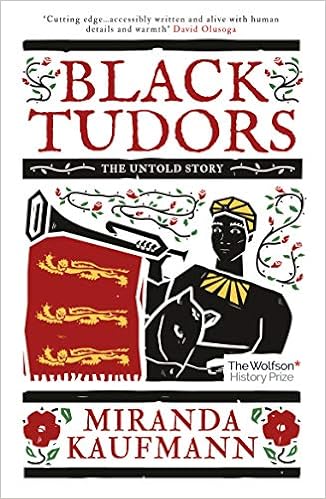
This is the kind of history and historical writing that excites me! Kaufmann’s Black Tudors is a gem because of its topical focus, that is, centering black history, its accessible language, and smooth, flowing prose. I was very excited to read this book and it exceeded expectations!

Black Tudors is split into ten content chapters, bookended with an introduction and conclusion. Each chapter focuses on a specific individual, a black person who left a mark — sometimes a small one — in the historical record for us to find. These individuals were not lords or aristocrats (like Alessandro de Medici, Duke of Florence), but ordinary working folks who came to England through a number of avenues: trade, servitude, attached to diplomatic entourages, etc. While each chapter focuses largely on the individual who lends the chapter their name for its title, Kaufmann also includes evidence of other Black individuals from North and West Africa, the Southern Mediterranean, the Middle East. The result is a rich historical landscape of a hidden minority community and the cultural, social, and political context of their Tudor world.

The reader gets a textured, almost tactile experience of Tudor life, not from an aristocratic or royal perch, but from below. Kaufmann grants the reader entry into the working, merchant classes, into the world of the laborer, the Tudor servant class. This is a culture without a “middle class” in the way in which we understand the term, but there is a servant class, a working class, a peasant class, a mercantile class. Kaufmann gives us a view of these worlds from within and through the lens of foreigners, Africans, and Muslims.

Kaufmann adds to a growing number of histories which add color to the whiteness of European history. It joins the work of Marc Matera, Olivette Otele, and others which have and continue to excavate blackness in a traditionally white-centric history. That said, this is hard work; the act of research in these kinds of histories is difficult as so many layers need to be peeled off to discover hidden individuals in the historical record. I fully acknowledge Kaufmann’s effort and applaud their thorough research.

As an example of historical method and empiricism, Black Tudors shows the reader how to weave a history and a prosopography from very little archival material. This makes this book an excellent historiographical case study for an under– or graduate level seminar on historical methodology.

Black Victorians: Hidden in History by Keshia N. Abraham & John Woolf

Black Victorians: Hidden in History by Keshia N. Abraham & John Woolf

First, let me begin this review by stating: I WANT A COPY OF THIS BOOK. Please, Somebody, get me this for Whatever-the-Next-Gifting-Holiday-is! I also fervently hope that Duckworth Books will have this available (at a reasonable price!) through an American imprint so it can be adopted for college courses in the United States. This is the perfect book for a decolonizing history curriculum whether the course is focused on Modern Europe, Black History, History of Racism, Modern World — or, in my case — Roots of Contemporary Issues.

The reasons: First, the book is broken down into assignable, digestible thematic sections and chapters which focus on a single individual and their historical significance. Part One is “Context and Concealment” and it provides an overview of the state of black history in Europe and in Victorian Era historiography. Here, the point is made that the act of existing is resistance itself, it is a decolonizing act to just be. Bringing these histories to the forefront is a necessary and powerful step towards decolonizing history as it is popularly understood, historical narrative, and the academy. The following sections: “Struggle and Survival”, “Church and State”, “Cultural VIPs”, and “Fighting for Freedom” offer well-researched deep dives into specific individuals across all classes, genders, and social positions. Working class black Britons, criminals, socialites, intellectuals, clergy, activists and freedom fighters are given a moment of spotlight and discussed as part of a larger colored and white fabric of Victorian society. This is a fantastic prosopography. And it could easily be partitioned to assign one or a few chapters per week to undergraduate students.

The second reason this book is ideal for an undergraduate seminar or an introductory survey course is because the readability of this book is amazing. Abraham’s and Woolf’s prose is smooth, the language requires little effort, their arguments are explicit, allowing for an easy transition from archival data to analysis to discussion. Indeed, the shift from storytelling to analysis is so seamless that many students are likely to be fooled into reading the entirety of any chapter assigned! Bonus: I bet the kids will really enjoy it. I am told over and over by students that they love seeing the “real people” in history.

The third reason is that while its accessibility makes it the perfect addition to any library, for any level of reader, it is also perfect for the more advanced historian, including those well versed in historiography and professional history production. Simply put, our own training is steeped in colonial and orientalist standards that have obscured the presence of color and ethnicity. We need to read this. I could not help but feel joy at reading this, though I am not black I am a scholar of color and from a former colony to boot! Black Victorians: Hidden in History is not the first or only of its kind, but is part of a larger movement towards decolonizing European history, which has been and remains largely as white history. Black Victorians joins Olivette Otele’s African Europeans: An Untold History (2021) and Miranda Kaufman’s Black Tudors: The Untold Story (2018) and others which are highlighting the transnational presence of Black people in other eras. The “Untold” theme across these recent histories is telling and a clue to the point being made: Black People never were confined to the so-called Dark Continent, that notion was a myth promulgated by a eurocentric academy, a eurocentric world — and Here! Here is proof!

Therefore, and perhaps most significantly, Black Victorians is bound to hit with younger readers, a generation for which representation matters and matters a lot! This is for the next generation for whom the symbols and the exhibition of blackness can have an immense impact on their decisions now and in the future. Our students of color need to see themselves in their classrooms, on the big screen (by which I mean the white board and projector screen in the front of the classroom).

All this said, merely bringing black Victorians to the forefront is not the endgame. It is not the last word on this. This is only the beginning; the conclusion emphasizes not only existence of black victorians, but points out that black victorians — black people — have played significant roles in shaping their moment as well as the present, thus their historical existence was not static, sealed in a vacuum, but interactive and dynamically integrated with white victorian society. This is the more powerful message, one which the book manifests.

Again, please, someone, gift me a copy of this book! I will be looking for it to assign in a future course!

The Salt Roads: A Novel by Nalo Hopkinson

The Salt Roads: A Novel by Nalo Hopkinson

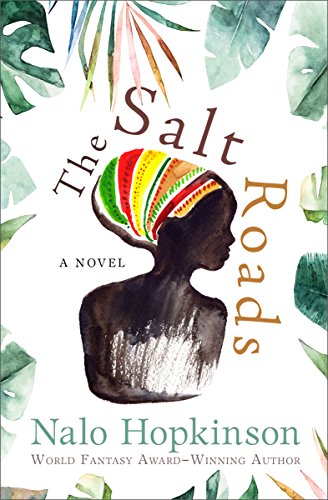
The Salt Roads is a bold statement about black womanhood across historical space and time past. The novel unfolds in magical chronology; it is a fantasy/magical realist novel that is grounded in history, but woven together through the movements of a spirit-being, Ezili and the Ginen goddess, Lasirén. The spiritual relationship is never fully explained — adding to the magical aspect — between Ezili, Lasirén and the human women whose bodies these spirits inhabit at various moments in time. The salt roads of the title is the trail of tears black women have cried, the salt of those tears having dried and laid a path for all those who came after. It is a well-trod path. Ezili and Lasirén live and relive, walk and walk again on that same path, possessing different bodies.

The plot revolves around three disparate stories, loosely connected by a shared history of racism, gendered suffering, and life-affirming black sexuality. The first lifetime that the novel opens with is that of Mer, an old Ginen woman, a respected elder and healer in the enslaved community in an unnamed French colony in the West Indies. Through her eyes and hands, Mer/Ezili helps the Ginen on the plantation survive their white master’s rages, their unpredictable cruelties. In this lifetime we also encounter Makandal, the male counterpart to Mer/Ezili, another magical being who also seeks to help the Ginen survive, but in different ways. Mer is the female, the feminine, the woman who knows what other women in this oppressed world need to survive. Makandal is the male, the masculine, the combative counterpart.

The second body Ezili occupies belongs to a mixed-race woman in France in 1842, Jeanne Duval (aka Lemer and Prosper). Jeanne is a dancer, an actress, a courtesan, the mistress of a white man. She embodies black sensuality and sexuality in all its forms. Here I think is Hopkinson’s great contribution: the boldness of her sexual prose disrupts the negative images history has painted of black women’s sex. Historical depictions of black women as sexual beings pose Her as savage, deviant, an object to possess. Hopkinson wipes that away. Jeanne Duval is a powerful sexual woman, human and frail and vibrant in her sexuality. She is a temptress, but sex is her weapon, one she has full control over.

The third manifestation of Ezili/Lasirén is called Thais, Meritet, Mary, and Pretty Pearl. Her time is in ancient Egypt. As in Mer’s lifetime, Thais’ experiences are deeply gendered; her body is a sexual, reproductive source and her life is shaped by oppression under forces larger than herself.

Hopkinson’s prose is beautiful, song-like in parts, especially in the sections where Ezili and Lasirén’s voice(s) narrate events. Their spirit presence is attached to, but not fully part of their human manifestation’s consciousness. They are experiencing humanity through the bodies they possess as much as they are imparting their power and strength to these women.

The novel is not a historical fiction in the traditional sense; it is not factually informative, but it conveys the affect and emotional experience of enslaved, black, women’s history. It conveys the psychological tensions of this history. It also shows the reader a different way to view the historical enslaved black woman, a woman who has become an archetype. Hopkinson revises Her, suffuses Her with a humanity through raw sexuality and the materiality of her womb.