
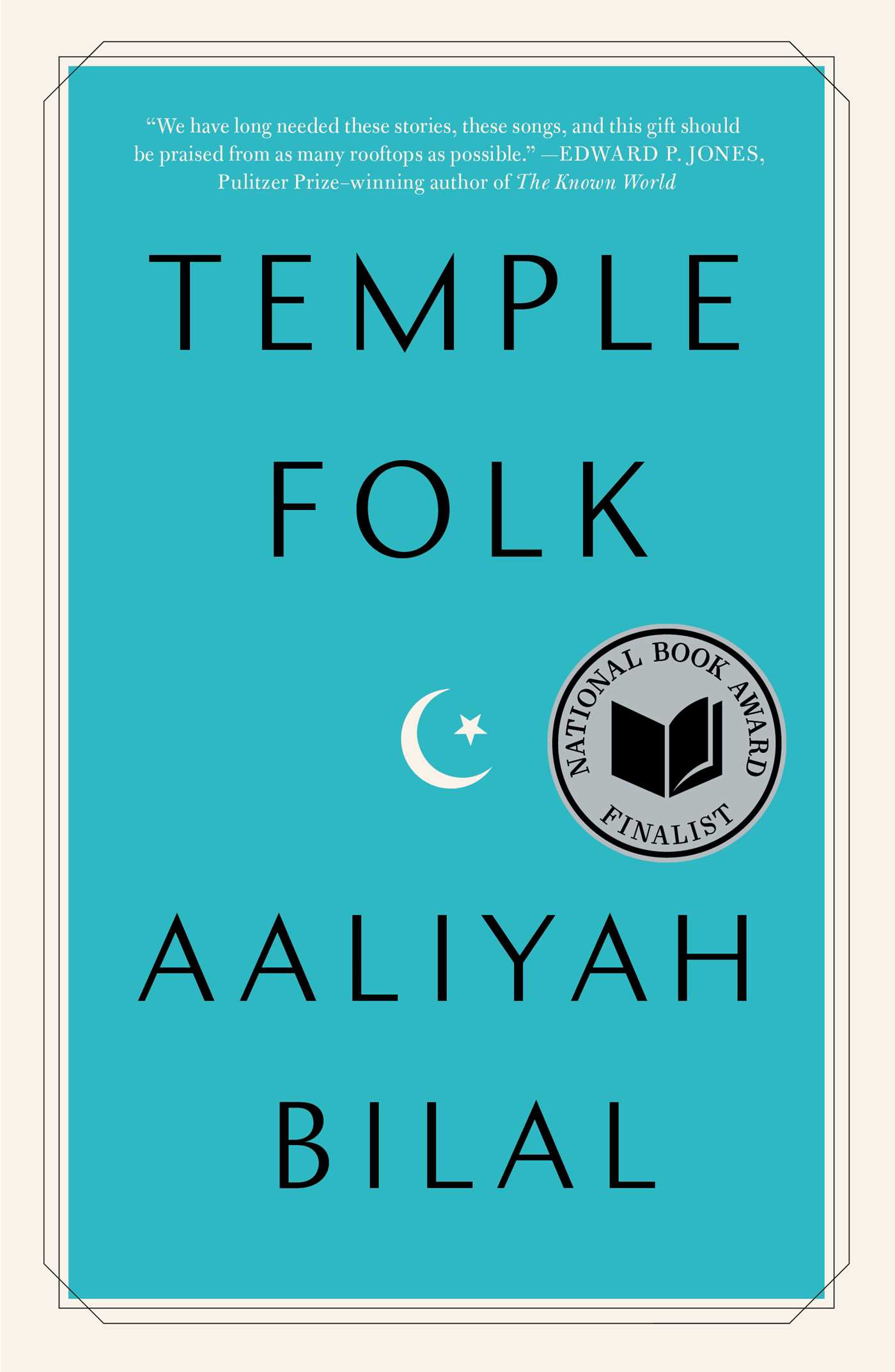
Temple Folk: Stories by Aaliyah Bilal

Temple Folk: Stories by Aaliyah Bilal

Marketing being often exaggerations, I rarely pay attention to the endorsement blurbs on covers; but, in this case, the quote is right and right on target. We — society as a whole, and especially readers of color — have long needed stories like these in Bilal’s collection, stories which reflect a way of thinking and life beyond the literal pale (read: whiteness) that has so long been taken as the norm in literature.

Literary canons still rarely feature writers and stories of diverse backgrounds, genders, and identities, and the term still conjures an Eurocentric image. Bilal’s collection is a balm, not a bandaid; a healing wound, not a scar; a mark of beauty, not a blemish. It highlights this paucity in modern literature and offers a concrete solution towards developing a greater oeuvre of our human experience.

The opening tale in Temple Folk orients the landscape of the collection as a whole: it centers on an interstate bus ride. The bus is filled with faithful black and white Muslim-American women, chartered to bring them from their small hometown, across a rural and white-dominated expanse, to Chicago where a Muslim conference will be held. This is a community unto itself, though it exists — consciously — as a part of white, Christianized America. Readers are given a privileged view into this world within a world.

The other tales highlight the daily, lived experiences of the citizens of the Nation of Islam. As a whole, these stories bring to the fore the intersection where NOI citizens, black denizens within their world, and the non-NOI, non-Muslim white world meet. Bilal presents the reader with scenarios where the whiteness of a child confronts the blackness of a woman, and what this might mean within the context of a religion that is often positioned adjacent and not central to the black/white politics of our era. Bilal pokes at the humor and seriousness of dating in the muslim world, knowing the gendered expectations of muslim women and men the reader is likely to filter her tales through. Bilal encourages a shift away from that pockmarked lens, offering a clearer view if the reader is willing to remove the glass from their eyes.

Indeed, most of my favorite stories were premised on a collision of modern, American ideas of empowerment and feminine identity, with Orientalist stereotypes of Islam and Muslims. But, the unique feature Bilal brings is a side-sweep which softens the collision and creates instead, a merger. Modern Muslim identity is not at odds with Islamic traditions and cultures (though it can be), nor do modern muslims (men, women, children, and all alike) need to make choices between their Blackness, modernity, and Islamic identities. In performing this clever maneuver, Bilal introduces the reader to a much more nuanced world of Black Islam, likely one that they have not seen before. Certainly, for this reader, this was the case.
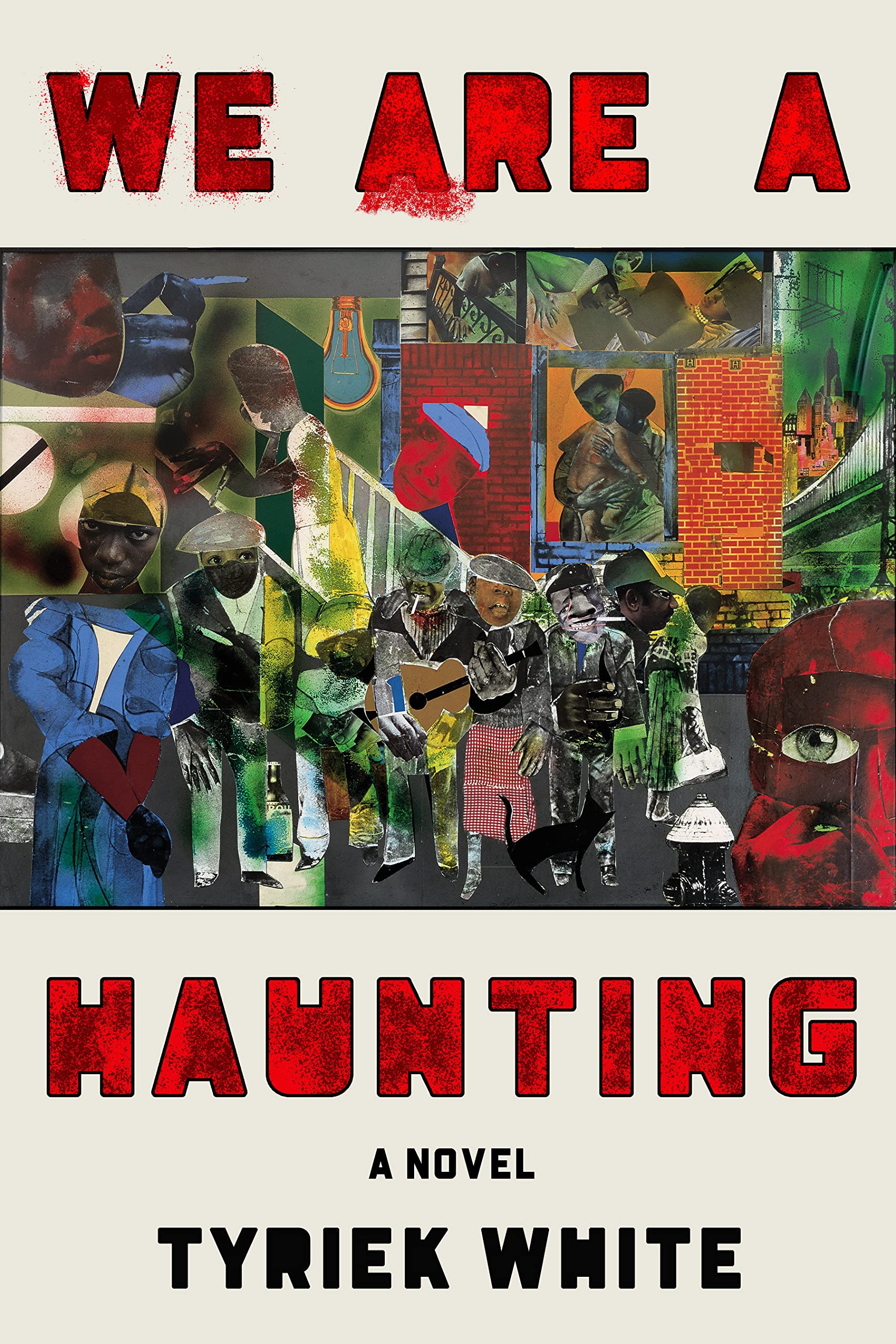
We Are A Haunting: A Novel by Tyriek White

We Are A Haunting: A Novel by Tyriek White

We Are A Haunting is a poetic song, like a siren that lured me into its world. Through the eyes of three generations of a black family living in New York City: Colly, Key, and Audrey, and the unraveling of their lives in a world rife with systemic racism, poverty, violence, grief, loss, readers are treated to a story that flows seamlessly between decades and generations.

White’s novel toggles forward and back in time. Characters float — as ghosts — between the past and the present. As the space between these three generations contracts and expands, the reader’s construction of time and history is reshaped, no longer a linear thing but a fluid matrix in which they live, all together, simultaneously at once. As a historian, We Are A Haunting reminds me that the past is never past, the present is merely a locus in history’s path.

The language which binds all these moments and spirits together is history, emotion, and experience: suffering and longing, obligations and promises kept or broken, strength and compromise, the ability to survive and a sense of defeat under the unwavering boot of poverty and racism. This is a complicated world in which awful events — such as getting fired and losing one’s income — is a nonevent warranting no reaction because of how useless it is to express emotion over it. This is just how life is. But, at the same time, such events are also gateways, paths that lead elsewhere, to better futures.

The interactions of the main characters with others in their lives: friends, fathers, husbands, children, and the dead or dying create the bonds which constitute the community and are the paths along which history travels. Each generation seeks to identify for themselves who they are and what they want, but they are also inevitably bound to the previous generation. Just as the living and the dead move seamlessly between their worlds in this novel, birth and death are a window that lets light in and keeps out the wind. Key, in her community, serves as a kind of gateway for life, possessing the ability to see things others cannot and in the capacity of a doula.

We Are A Haunting is not just about the black community itself, as an insular, discrete object in a vacuum. Then novel situates these black histories and experiences within the context of American material culture and history. Colly, Key, and Audrey and those around them are embedded in a world that has and continues to be assaulted by colonial institutions and racist systems. The deaths — those both metaphorical and physical — in We Are A Haunting are caused by this abuse and indifference. Casual micro-aggressions are tiny cuts and death is caused by a thousand of them.

This is a complex novel. For all its historical meaning, this is not a historical fiction in an informative sense; the time-bending, paranormal elements and the focus on characters’ and their emotional lives make this a more literary work than a historical narrative. This is not a novel that brings all its narrative arcs to happy, organic closures; un-repaired relationships, unfulfilled desires, and falsehoods are part of its characters’ lives. Morose, resentful endings are, after all, part of the colonial experience (at least from the perspective of the colonized.) In no way is this a detraction; this honest harshness is an authentic portrayal of racialized America.

The prose is literary. It is singularly focused on its characters more than its plot, though the unfolding of events lead to the characters’ interactions that shape their experiences. The characters are tangible, flawed, and powerfully written in each their own voices. Readers will have access to their interiority, but this is not an easy read in that the characters are — as real people are — guarded, afraid, unwilling to be vulnerable. Readers should not expect to be told what to think; this reader had to work to understand the motives and meanings of their conversation, their actions. The work, however, is worth it.