
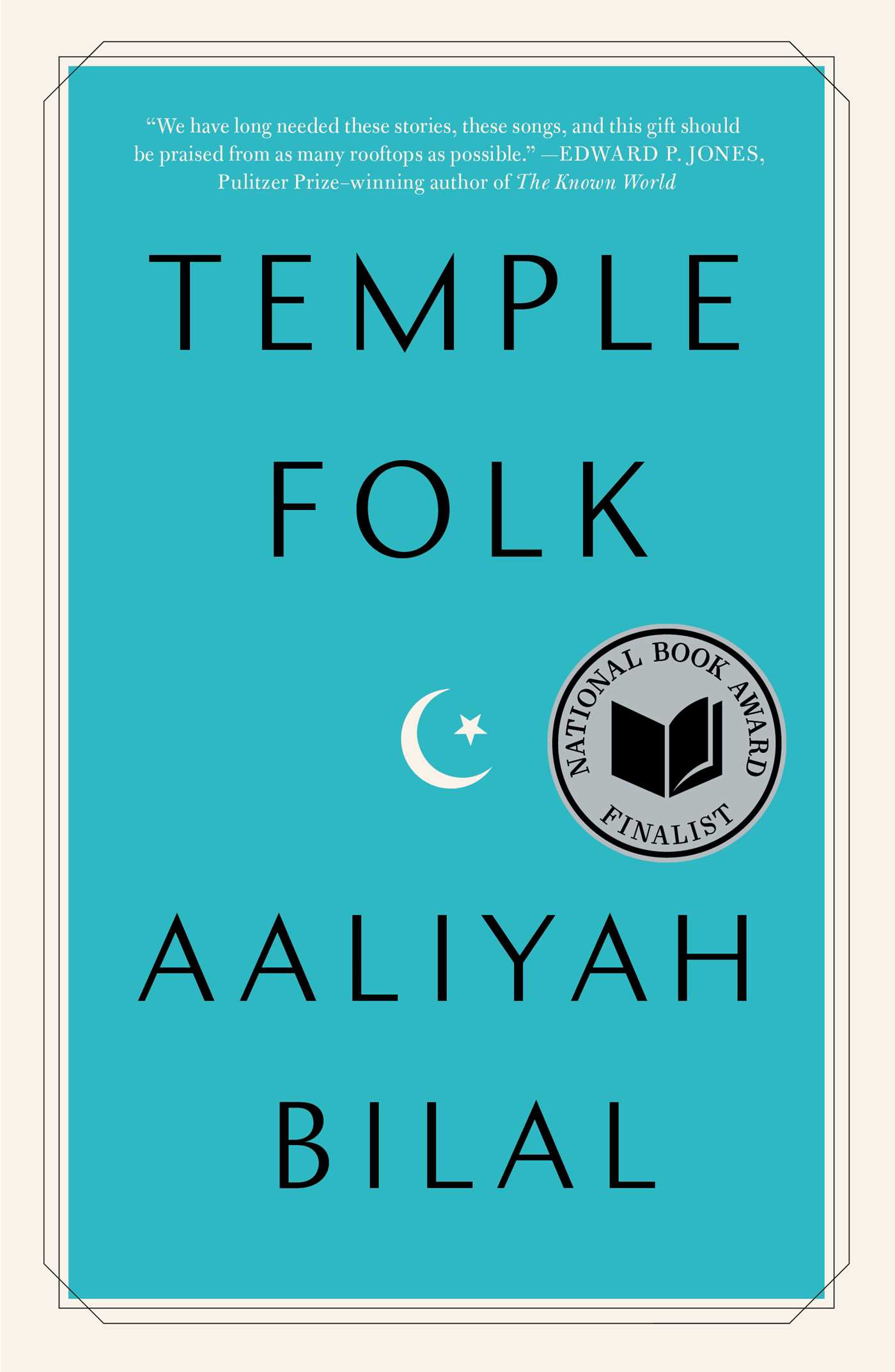
Temple Folk: Stories by Aaliyah Bilal

Temple Folk: Stories by Aaliyah Bilal

Marketing being often exaggerations, I rarely pay attention to the endorsement blurbs on covers; but, in this case, the quote is right and right on target. We — society as a whole, and especially readers of color — have long needed stories like these in Bilal’s collection, stories which reflect a way of thinking and life beyond the literal pale (read: whiteness) that has so long been taken as the norm in literature.

Literary canons still rarely feature writers and stories of diverse backgrounds, genders, and identities, and the term still conjures an Eurocentric image. Bilal’s collection is a balm, not a bandaid; a healing wound, not a scar; a mark of beauty, not a blemish. It highlights this paucity in modern literature and offers a concrete solution towards developing a greater oeuvre of our human experience.

The opening tale in Temple Folk orients the landscape of the collection as a whole: it centers on an interstate bus ride. The bus is filled with faithful black and white Muslim-American women, chartered to bring them from their small hometown, across a rural and white-dominated expanse, to Chicago where a Muslim conference will be held. This is a community unto itself, though it exists — consciously — as a part of white, Christianized America. Readers are given a privileged view into this world within a world.

The other tales highlight the daily, lived experiences of the citizens of the Nation of Islam. As a whole, these stories bring to the fore the intersection where NOI citizens, black denizens within their world, and the non-NOI, non-Muslim white world meet. Bilal presents the reader with scenarios where the whiteness of a child confronts the blackness of a woman, and what this might mean within the context of a religion that is often positioned adjacent and not central to the black/white politics of our era. Bilal pokes at the humor and seriousness of dating in the muslim world, knowing the gendered expectations of muslim women and men the reader is likely to filter her tales through. Bilal encourages a shift away from that pockmarked lens, offering a clearer view if the reader is willing to remove the glass from their eyes.

Indeed, most of my favorite stories were premised on a collision of modern, American ideas of empowerment and feminine identity, with Orientalist stereotypes of Islam and Muslims. But, the unique feature Bilal brings is a side-sweep which softens the collision and creates instead, a merger. Modern Muslim identity is not at odds with Islamic traditions and cultures (though it can be), nor do modern muslims (men, women, children, and all alike) need to make choices between their Blackness, modernity, and Islamic identities. In performing this clever maneuver, Bilal introduces the reader to a much more nuanced world of Black Islam, likely one that they have not seen before. Certainly, for this reader, this was the case.
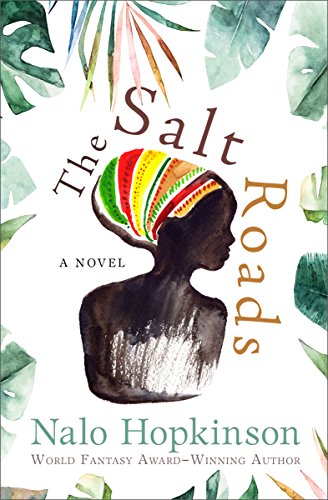
The Salt Roads: A Novel by Nalo Hopkinson

The Salt Roads: A Novel by Nalo Hopkinson

The Salt Roads is a bold statement about black womanhood across historical space and time past. The novel unfolds in magical chronology; it is a fantasy/magical realist novel that is grounded in history, but woven together through the movements of a spirit-being, Ezili and the Ginen goddess, Lasirén. The spiritual relationship is never fully explained — adding to the magical aspect — between Ezili, Lasirén and the human women whose bodies these spirits inhabit at various moments in time. The salt roads of the title is the trail of tears black women have cried, the salt of those tears having dried and laid a path for all those who came after. It is a well-trod path. Ezili and Lasirén live and relive, walk and walk again on that same path, possessing different bodies.

The plot revolves around three disparate stories, loosely connected by a shared history of racism, gendered suffering, and life-affirming black sexuality. The first lifetime that the novel opens with is that of Mer, an old Ginen woman, a respected elder and healer in the enslaved community in an unnamed French colony in the West Indies. Through her eyes and hands, Mer/Ezili helps the Ginen on the plantation survive their white master’s rages, their unpredictable cruelties. In this lifetime we also encounter Makandal, the male counterpart to Mer/Ezili, another magical being who also seeks to help the Ginen survive, but in different ways. Mer is the female, the feminine, the woman who knows what other women in this oppressed world need to survive. Makandal is the male, the masculine, the combative counterpart.

The second body Ezili occupies belongs to a mixed-race woman in France in 1842, Jeanne Duval (aka Lemer and Prosper). Jeanne is a dancer, an actress, a courtesan, the mistress of a white man. She embodies black sensuality and sexuality in all its forms. Here I think is Hopkinson’s great contribution: the boldness of her sexual prose disrupts the negative images history has painted of black women’s sex. Historical depictions of black women as sexual beings pose Her as savage, deviant, an object to possess. Hopkinson wipes that away. Jeanne Duval is a powerful sexual woman, human and frail and vibrant in her sexuality. She is a temptress, but sex is her weapon, one she has full control over.

The third manifestation of Ezili/Lasirén is called Thais, Meritet, Mary, and Pretty Pearl. Her time is in ancient Egypt. As in Mer’s lifetime, Thais’ experiences are deeply gendered; her body is a sexual, reproductive source and her life is shaped by oppression under forces larger than herself.

Hopkinson’s prose is beautiful, song-like in parts, especially in the sections where Ezili and Lasirén’s voice(s) narrate events. Their spirit presence is attached to, but not fully part of their human manifestation’s consciousness. They are experiencing humanity through the bodies they possess as much as they are imparting their power and strength to these women.

The novel is not a historical fiction in the traditional sense; it is not factually informative, but it conveys the affect and emotional experience of enslaved, black, women’s history. It conveys the psychological tensions of this history. It also shows the reader a different way to view the historical enslaved black woman, a woman who has become an archetype. Hopkinson revises Her, suffuses Her with a humanity through raw sexuality and the materiality of her womb.