
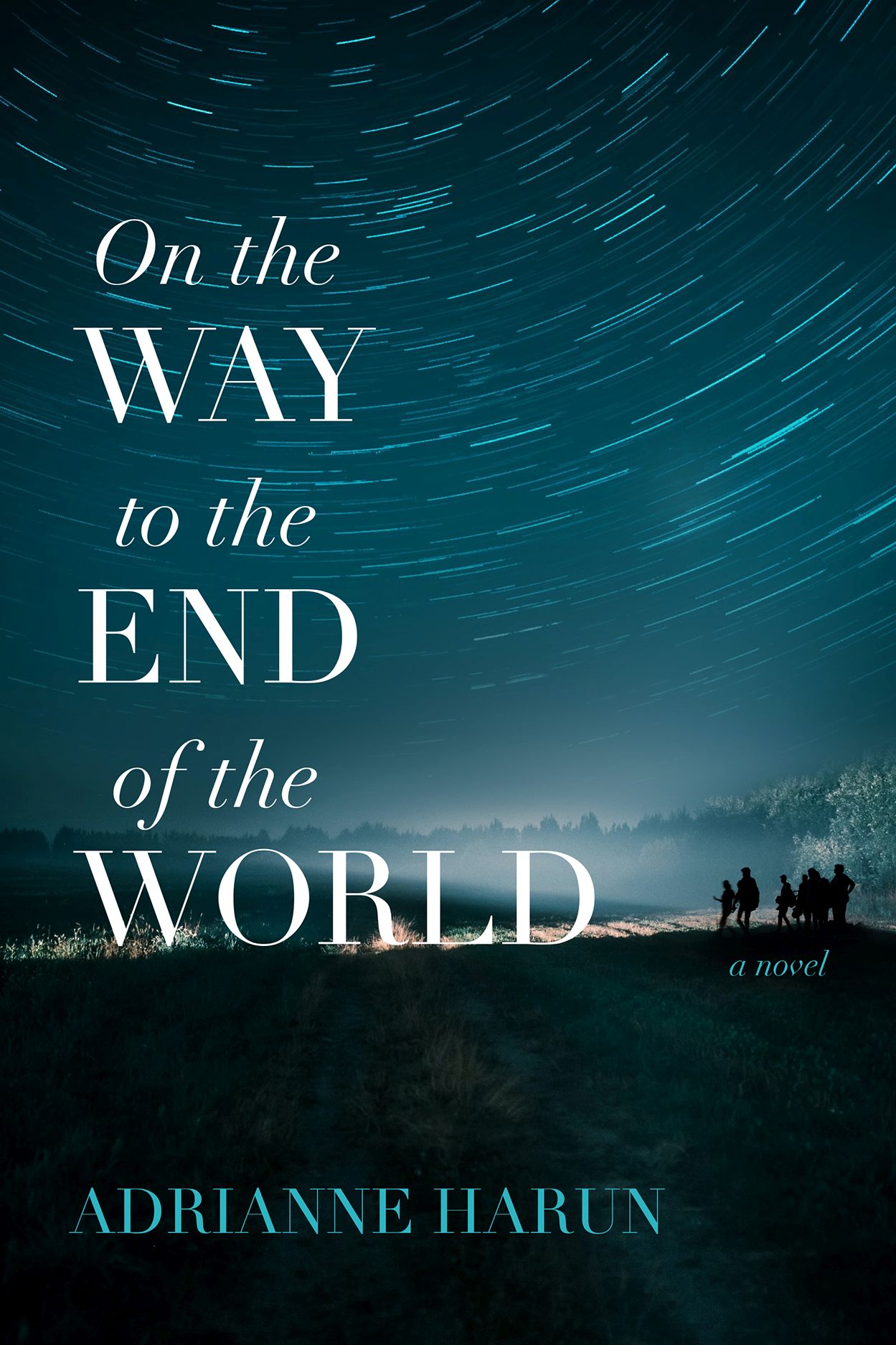
On the Way to the End of the World: A Novel by Adrianne Harun

On the Way to the End of the World: A Novel by Adrianne Harun

I wanted to like this novel more than I actually did. Some parts of it utterly exhilarated, drove me on to the next page. Other parts dragged. Ultimately and sadly, many of the endings in the novel unravelled the tight twists of its mysteries into mere frayed ends.

But, that said, Harun’s prose and character building was phenomenal; I could almost feel their breath in the air as I read. For readers who enjoy the gossip and politics of living in a small town, this is the novel for you. The tensions were real and tight and very appealing.

The premise of the story, while it falls flat, is an intriguing one. The novel centers on a strange community building exercise instigated by President John F. Kennedy in 1962, exhorting citizens to walk fifty miles within twenty hours. This brainchild, the Kennedy March, is the event which brings together an odd collection of a Pacific Northwest’s townsfolk: boy scouts, middle and high school students, a widow, the town’s telephone operator, and a mish-mash of others. It is an informal, poorly organized march, mapped out for the participants and then nothing — they are left to navigate the route on their own.

What occurs during those twenty hours is what draws them together, asks them confront and perhaps reconcile the restlessness of their personal trajectories, forces them to look upon one another with suspicion. The rag-tag group encounter secrets along their march and in doing so must sort out who they think they really are.

Embedded in their adventure are the misadventures of others in their town. It is here that I was disappointed. There are mysterious lures… there is the promise — actually several — of scandal and thrill, but the story never fully resolves those mysteries, abandons them. I read on hoping that the novel would return to those threads, but it didn’t. At least not to my satisfaction.

Nonetheless, an intriguing and character-centric read, one that will please fans of literary fiction.

How to Sell a Haunted House: A Novel by Grady Hendrix

How to Sell a Haunted House: A Novel by Grady Hendrix

Yes, Grady Hendrix’s books are kitschy. Yes, they are gimmicky. Yes, they are never what they seem — and isn’t that a great thing for a horror novel? Yes! This novel is nothing like what the title might seem. The horrors run far deeper than the house itself; like most of Hendrix’s horror stories, it is the past, relationships and families gone awfully awry that are the real terror.

The novel begins with a woman who dreads facing the task of cleaning up her childhood home with her estranged brother. The brother who is an utter assH*le. As they delve through their inheritance it becomes clear that there is an entity between them, something old and ancient, and malicious. This novel is not what it seems, but there really a haunted house in it!

What makes How to Sell a Haunted House so compelling though is not only the story arc, which is fairly straightforward, but the characters Hendrix creates. The characters are flawed in ways that are intimately familiar (everyone knows someone like the assH*le brother); I felt a real tension between wanting to slam the book shut on some of these people and desperately wanting to read on to find out if they got their comeuppance. That tension is Hendrix’s brilliance as an author; Hendrix creates people you love to hate or hate to hate… and who eventually, you hate to love. The heroes are villains in as much as they as are the neighbor next door, your sister in law, your mother, your teacher.

The novel is one of transformation; dare I say it? It is the story of an exorcism. But while there is a kind of fluff about the novel, it is also dark and its subject matter is deeply disturbing. This is the kind of horror that is so real, so plausible, that it seeps under your skin and make you wonder how things that can happen every day can morph into a tangible darkness. Readers, be prepared to feel creeped out, heartbroken, angry, and disgusted all at the same time.

How to Sell a Haunted House was Hendrix at their best (and I couldn’t imagine how they’d top My Best Friend’s Exorcism or The Southern Book Club’s Guide to Slaying Vampires (my two favorite Hendrix novels), but they did!)

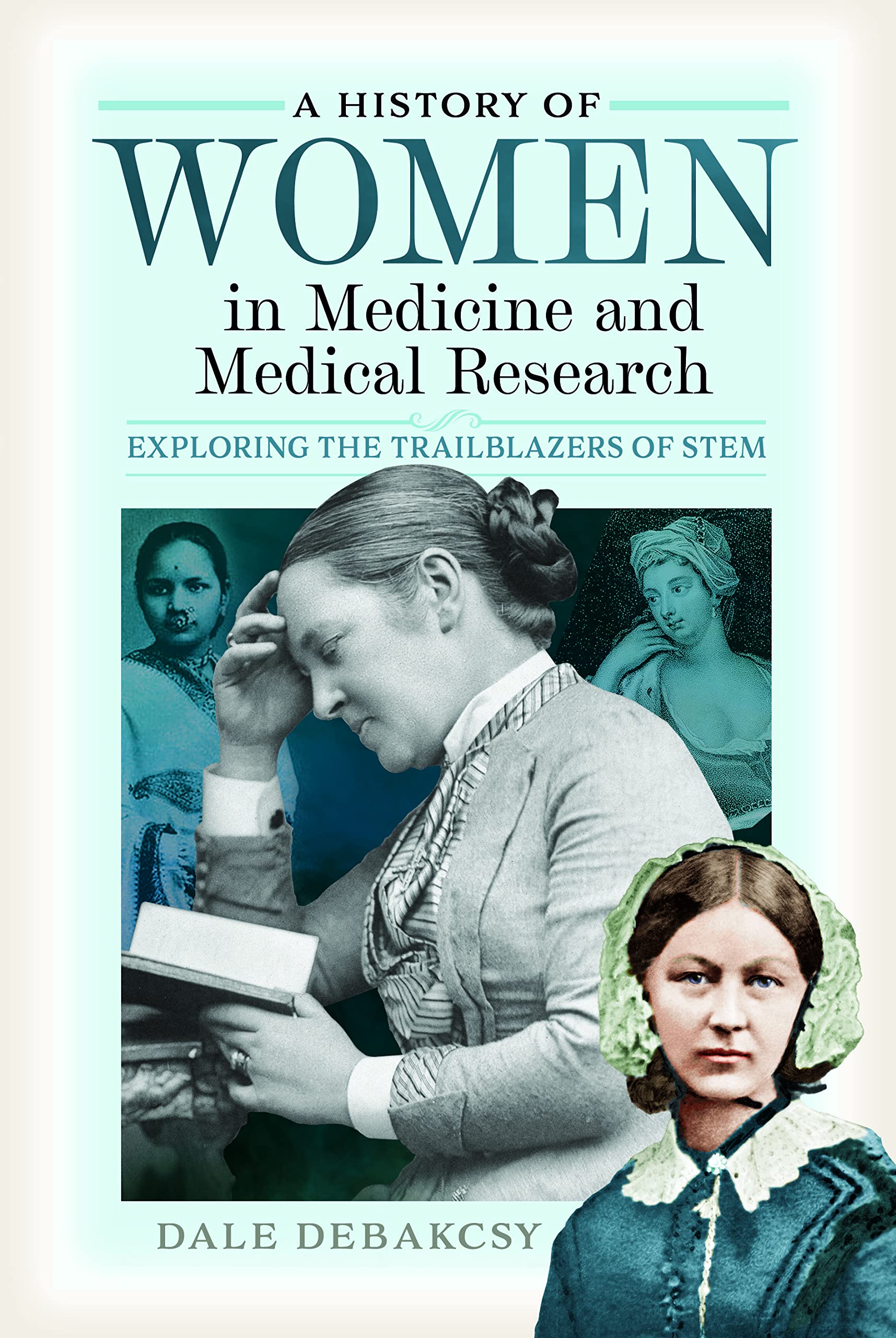
A History of Women in Medicine and Medical Research: Exploring the Trailblazers of Stem by Dale Debakcsy

A History of Women in Medicine and Medical Research: Exploring the Trailblazers of Stem
by Dale Debakcsy

I loved reading this ARC (Advanced Reader’s Copy) so much I pre-ordered it! Eye-opening, superbly written, and well-researched. I cannot think of higher praise for a non-peer-reviewed non-fiction written for a general audience. I can’t wait for my copy to arrive so I can re-read it!

A History of Women in Medicine and Medical Research: Exploring the Trailblazers of Stem is broken down into several chapters, each one focusing on a specific woman, her personal background or life story, and her professional career in the sciences. The book progresses chronologically from the 16th century up to the near present, ending in the 1970s.

Each chapter ends with a section devoted to further reading and sources. While the book lacks citations and formal references, these inclusions are especially valuable. This kind of historiography is difficult to discover without a significant investment of time and effort making Debakcsy’s book all the more useful and appealing. I do not mind admitting this is a key reason why I have chosen to purchase my own copy.

These are not long or exhaustive studies of each individual; these historiographical sections allow the reader to explore further. That said, the brevity of each chapter is not a detraction. These are easily digestible chapters, perfect for classroom use or as readings for an undergraduate course. The chapters capture all they need to, leaving the reader satisfied but curious for more.

The women themselves are fascinating subjects, not only for their contributions to STEM, but also for their perseverance and resilience in the face of class, gender, and racial prejudices. Many of the women derive from the upper classes, but a significant number of them are working- or middle-class. Some were immigrants or enslaved (or lived just outside that category). Many had to break with their families to pursue their dreams. In many cases these women knew or knew of one another, interacted closely or within similar professional circles. A cohort of pioneering women in these fields is visible in the 19th century, particularly in the fields of medicine.

While the majority of women examined and brought to light in DeBakcsy’s book are white, European or American, there are also significant chapters focusing on women of color in the Western world. These are mostly (but not exclusively) black women who broke academic and professional ceilings.

This is a fantastic book for the classroom and any library (academic and home, alike). I cannot wait for my copy to arrive!