I’m not a huge fan of short story collections, especially those by a single author… but Margaret Atwood! It’s Margaret Atwood! So I was thrilled to read and review this.
As it turns out, Old Babes in the Wood includes a set of stories that unfolds like a novel told in segments. There are also some standalone stories in this collection, but several which incorporate the same characters and, combined, offer the read a novel-like narrative arc. This novel-in-stories revolves around a mature couple and their engagements with one another and others of their mature social circle. They are “empty nesters”, finding themselves now in a moment of their lives that is somewhat unfamiliar.
Other stories are also peppered with similarly mature life-stage themes and concerns. One of my favorites in this collection revolves around the hot topic of motherhood and mothering. As usual, Atwood delivers very creative approaches to each one, turning the perspective inside out, and presenting the reader with a novel experience.
That said, many tales here have been published in journals earlier, so readers should not expect a wholly new collection of stories. Their cohesiveness here, however, appears to mimic Atwood’s own life journey: these tales are concerned with change from one life-stage to another, mature themes and concerns (by which I do not mean X rated spice, but concerns of older adults). Atwood is, after all, an old babe in their own wood (no offense, Mx Atwood!) and like us all, navigating our own paths through life.
A profoundly moving novel, with a story so powerful as to cause me to pause every few pages to wipe away tears. Mercy packs an emotional punch along the lines of Tinker by Paul Harding or Annie Proulx’s Brokeback Mountain. This is an impressive debut novel, one well-worth the grief and tears it is sure to evoke.
The novel revolves around Sadie, a twelve-year old girl abandoned by her parents and her subsequent landing on her Uncle Charlie’s farm in South Dakota. Mercy is both what she finds and what she delivers to those in her life, whether they are deserving of forgiveness or not. This is literary fiction at its best: raw and rich characters; humanity at its flawed worst and inspiring best.
Patrick is an excellent writer; her prose is evocative and succinct, creating an affect that strikes the reader deep in the gut with very few words. In the space of 154 pages, Patrick immerses the reader in Sadie’s juvenile, but deeply adult and complicated world. The reader follows Sadie’s journey as she navigates the traumatic events of her abandonment, her memories of the past, her fears for her future. Patrick very successfully channels the emotions of a 12-year old, whilst balancing the very mature context of her circumstances; this is not a novel for a teenaged audience necessarily, its themes cross age-oriented literary boundaries.
The novel could use a professional editing, as there are some inaccuracies in turns of phrase; “Martha could have cared less” on page 23 for example. Indeed, it appears that Martha could not possibly have cared any less. [Some of the lack of professional editing may be due to the novel being independently published.] Still, despite the occasional typographic error, Mercy remains irresistible. I read it in an afternoon, I could not put it down.
I encountered this book via a Facebook Group, in which I serve as a reviewer for ARCs and independently published novels. I have previously read and reviewed another of Patrick’s books here, Anxiety in the Wilderness: Stories. If you are interested in Patrick’s work, please see her Amazon author page here. You may purchase Mercy there, currently priced at $9.99 for a paperback, $15.99 for a hardback, and $2.99 for the Kindle ebook format.
Unlike my usual reviews, this is an older book, published in 1998. I found it on sale from the University of Hawai’i Press and since I enjoyed Pak’s other novel, Children of a Fireland by Gary Pak I had to read it. Like Pak’s other works, A Rice Paper Airplane is set in Hawai’i and revolves around one of its communities. In this case, the story centers of Koreans who migrated to the islands to seek better employment or escape from Japanese persecution during the period of the latter’s occupation of the former’s country.
The novel unfolds like origami, turning backwards and forward in time according to the scattered memories of an old man, Uncle, as he recounts his life for his nephew. Threaded through his memories are histories of Hawai’i and its many residents, Korean, Japanese, White, Indigenous. The novel also folds across geography, taking place in both Hawai’i and Korea. This is a novel about conflict, both cultural and political; desires, both of the individual kind and the ambitions of states; resistance and fighting spirit, in body and mind, through success and failure.
This is an emotional novel. Readers should expect to feel grief and sorrow. But also the hope and resilience of Korean migrants in cultures, circumstances, and places not of their own making and wholly according to history and fate.
For these reasons alone, this is a very worthwhile read. It is little known, but ought to rank with the best sellers of today in the vein of intergenerational, multi-generational historical fiction: Yaa Gyasi’s Homegoing for example.
But that is not the only reason to read A Ricepaper Airplane: Pak’s prose is also an appeal. The novel’s dialogue is written in Hawai’ian pidgin, a creole language that is unique to the islands, lending authentic voice and substance to the characters and the story itself. The exposition is unfussy, straightforward, yet also flowing. Pak leaves the reader with poetic silences that fill with organic emotion.
This is an incredible novel, one which deserves greater recognition.
Having read Tinkers, I began my reading of This Other Eden with high expectations and hopes. I wasn’t disappointed. On the surface it appears a pastoral novel. But this is false. To the reader the landscape is hidden — at first. Then as the novel unravels, it is clear there is a dark narrative thread running through the whole thing, a cohesion of some kind that is based on something less rosy than than a scenic, island reverie and altogether discomfiting: history, racism, resistance. This is a historical fiction, spanning the 18th through the 20th centuries, a significant time in the development of race and racism in America. Harding delivers this highly charged story carefully, in an ecological, atmospheric wrapper, one that makes the geography of the island on which the story takes place — its isolation, its raw, loam scent, its shaded trees — an important metaphorical actor. The island serves as a shroud and a setting for the demise of a way of life: a black way of life as it is subsumed by whiteness. Readers should expect to feel uncomfortable, perhaps a sense of claustrophobia from an inability to escape the island. This is to mimic the kind of slow isolation felt by its inhabitants.
This Other Eden is a novel about an island and its black inhabitants, the mainland and its white population, the slow — then rapid — shift of race and the infliction of racism on the former, the closing in on a way of life. The island is inhabited in 1792 by an interracial couple, not an uncommon pairing in this moment in time necessarily; Benjamin Honey and Patience, an Irish woman (the Irish having been ostracized as some Other race in the hierarchy of Western Europe). Their descendants occupy the island, but are increasingly subjected to America’s abhorrence and obsession with eradicating miscegenation. As the decades and centuries roll on, the islanders become targeted by eugenicists — much like the rest of the nation. So-called “good” intentions to bring progress and education to the island are misguided attempts, achieving none of their intended outcomes and instead excelling at cultural and racial erasure.
This Other Eden is told through the eyes of the islanders. Even while it addresses larger issues such as eugenics and racism, it is focused on the experiences of the islanders. It is a novel about people and the lives they must live, even while it is a commentary on America’s racist history.
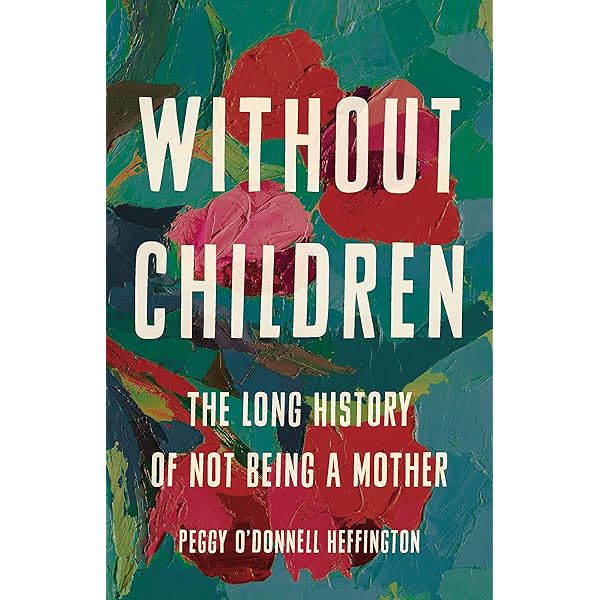
Without Children: The Long History of Not Being a Mother by Peggy O’Donnell Heffington
I read this over Mother’s Day, so it was particularly poignant for me as I reflected on the fluidity of my own womanhood and ideas concerning mothering. It’s a profound read; readers should be prepared to question their notions of womanhood and mothering.
As a mother, I found this history of mothering, motherhood, and childlessness to be an amazing read, and on multiple levels. First, in terms of its content, O’Donnell Heffington lays out a compelling history, arguing for a revision in the way mothering is perceived, valued, and recognized. This is a history for anyone and everyone, regardless of their position on child-bearing, motherhood, or womanhood at large. Each chapter addresses a form of mothering or motherhood, expectations around these roles as they have changed through time, and historical factors which have influenced our collective image of Mother today. Throughout Without Children there are stories of mothers — of diverse kinds — embedded, evidence of O’Donnell Heffington’s arguments and research. The result is an intimate narrative history, one which toggles seamlessly between micro-history, prosopography, and discussions of the larger contexts of religion, politics, and gender.
Second, Without Children impresses in terms of its prose and language; it flows at a comfortable, easy pace, delivering what is a deeply contentious issue in straightforward terms. O’Donnell Heffington clearly has an agenda; what writer and what non-fiction does not? — but the book, to its credit, lacks superciliousness, pedantry, and jargon. Given the controversial topic and the heated debates among many women and mothers regarding having children or not, Without Children performs a miracle of balance.
At the root of the debate and ultimately at the root of this book, is the question and discussion of the constituency of womanhood as it is understood in most Euro-American Western societies. What makes a woman? (Some would have us believe it is motherhood.) What constitutes a mother then? (Some challenge the notion of birth and biology.) In a moment of gender fluidity and revolution of gender identity, Without Children asks us to suspend our ingrained understandings of gender to consider other definitions of motherhood and womanhood.
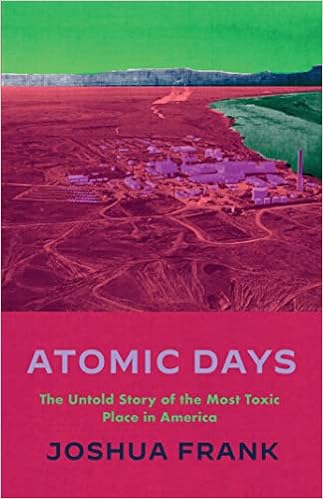
Atomic Days: The Untold Story of the Most Toxic Place in America by Joshua Frank
My local community library hosts reading events and they gave copies of this book, Atomic Days away as part of one of them. The program includes an event with the author and other experts on the subject. One of my colleagues was part of this. I had hoped to participate in the events, but couldn’t on the day of. I did, however, read the book.
For a resident of the PNW Atomic Days is a disturbing read, its eponymous locale is a mere few hours drive from where I live and work. My usual landscape is serene: mountains, verdant pines, blue-grey skies, the sound of fresh water pelting down from the sky or rushing in the creeks and rivers everywhere around here. Atomic Days is a harsh concrete disruption, a whiplash to reality. This work of investigative journalism exposes a danger in our plain sight: the Hanford nuclear power plant near the TriCities in Washington state.
Riding on the same wave of documentaries like “Meltdown: Three Mile Island”, Atomic Days highlights serious nuclear accidents and the potential for future serious public health concerns arising from the United States government’s Cold War policies and decisions. Frank’s research unfolds the history of these decisions, their outcomes, and their potential for future disaster through oral histories, archival research, and interviews with stakeholders on all levels. The chapters focused on individuals’ experiences, those who have been intimately involved in the plant and its operations, its workers and residents of the immediate vicinity are especially riveting and profound.
Justifiably, there is a warning tone in Frank’s account. It is not one we should ignore as difficult as it is to read about such threats to our mortality and way of life. But Frank’s prose is not pedantic; the language is accessible and written for a general audience — for everyone, as with a doubt, what Frank highlights is very much everyone’s concern.
Rough Sleepers: Dr Jim McConnell’s Urgent Mission to Bring Healing to Homeless People by Tracy Kidder
Living in the urban PNW, homelessness is a very real, very visible flaw in our society, something that shows up in the local news daily. Encampments dot the city I live and work in, transient individuals spend their days roaming the streets I drive. Last semester I encountered students in my own classroom who were in middle of housing crises and were facing housing insecurity. [I helped them get set up with Passport, a housing insecurity program for students my campus offers.] I often wonder about those students who didn’t come forward or reach out to me and I hope they got the help they needed elsewhere.
Rough Sleepers is the book I needed to read. It is the book many of us need to read. I’m glad for the opportunity to have done so; I won this book in a Goodreads Giveaway and I am so pleased to have been selected.
Rough Sleepers revolves around a specific case study of homeless assistance, Dr Jim McConnell and the Street Team, who operate in, for, and with Boston’s homeless population. Kidder spent a number of years observing and interviewing McConnell and the Street Team, as well as other stakeholders — including homeless individuals — before compiling the book. The assistance program that is the focal point of Rough Sleepers has spanned decades and continues to do so, with the help of private donors. As a result of Kidder’s breadth and ethnographic method, Rough Sleepers possesses an intimate grassroots perspective; readers will feel like they’re along for the midnight van rides, sitting in the clinic with individuals like Tony and Rebecca. The voices of those involved is clear, even as they are filtered through Kidder’s lens.
Kidder also provides the reader with historical, social, and political context, allowing the reader to view the issue of homelessness as both a personal lived experience and a larger community concern. Federal and state administrations and policies, along with a capitalist system, have contributed to the problem of housing insecurity; the lives Kidder gives us a glimpse into show how the good intentions and limitations of government have inadvertently exacerbated homelessness in so many ways. In one case, the peripatetic movements that kept a homeless man safe at night made him ineligible to apply for housing as a “chronically homeless” individual.
For this reader, the stories of real people like Tony and Rebecca who lived and slept on the streets, were the most moving of those Kidder collected. These real-life cases strip the abstraction from homelessness as a societal issue. McConnell’s interviews also provide insight, from the perspective of an activist with decades of deep involvement. The Street Team and fund-raising observations give readers a view into the mechanics and politics of activism around this problem.
Readers should expect to feel discomfort, but this is not due to anything Kidder does; indeed, Kidder refrains from inserting supercilious remarks — to their credit! It is my opinion as a reviewer that this dissonance is the objective of Rough Sleepers. We, as readers, can (dare I say, ought to?) use the discomfort this book raises to mobilize our actions or reconsider their philosophies towards homelessness. Certainly, this book has given me cause to pause and think.
Dear Chrysanthemums: A Novel in Stories by Fiona Sze-Lorrain
A literary dream, that’s what this novel segmented into stories, felt like. Dear Chrysanthemums floats. There is something reminiscent in this novel of Cloud Atlas by David Mitchell or Virginia Woolf’s Orlando, a kind of immortal quality that flows one life into another, connects what appear to be disparate loci — combined with a historicity that reminds me of Jung Chang’s seminal, biographical, non fiction work, Wild Swans: Three Daughters of China about Chang’s mother and grandmother, women who lived and survived China’s imperial demise, revolution, Japanese occupation, and Communist Cultural Revolution.
The stories in this novel, seemingly unconnected at first, reveal an intimate connection in the end: the women who feature in them are ordinary women, servants, daughters, mothers. They are separated by time and space, but their desires and ambitions, fueled by the need to become individuals in their own right, fuse them together. There is tension between the women of each story, but there is also connection.
The novel crosses continents, spanning the globe from China to France, and across time. Each generation of woman encounters a different kind of struggle, but a struggle all the same, and the story of each them reveals a common desire to realize who they are and what they want from life and from the circumstances of their lives.
History plays a role here, shaping where the women begin and where they end, the trajectories of their journeys. Colonialism, conflict, and war shape their migrations, that is, their physical and metaphysical, subjective journeys towards themselves. The women in these stories are bound by history inasmuch as they are bound to each other and to their own individual desires.
For those who love historical fiction, literary layers to excavate, and strong and flawed female characters, this is the novel for you.
In Daniel’s case, she moves from Nigeria on the coast of West Africa to England, and from there, to the United States. Across the span of three geographic zones, she also crosses into and between multiple cultures: Nigerian, Black-British, Black-American, coming to terms with herself as a bit of everything. Intersected between the racial and ethnic lines are the class lines and linguistic lines Daniel must also negotiate. This is a story of code-switching across multiple planes.
This is also a universal coming-of-age story about how we come to understand perceptions of ourselves from within and beyond ourselves. Who we are is not a singular explanation, but one refracted through a prism, the final view is ultimately dependent on the eye of the beholder and the position where they stand. What Daniel’s highlights in this memoir is both how dependent this view is on historical, cultural, class and geographic context.
For readers who enjoy memoirs and those which trace the processes of identity change, this is a winner.
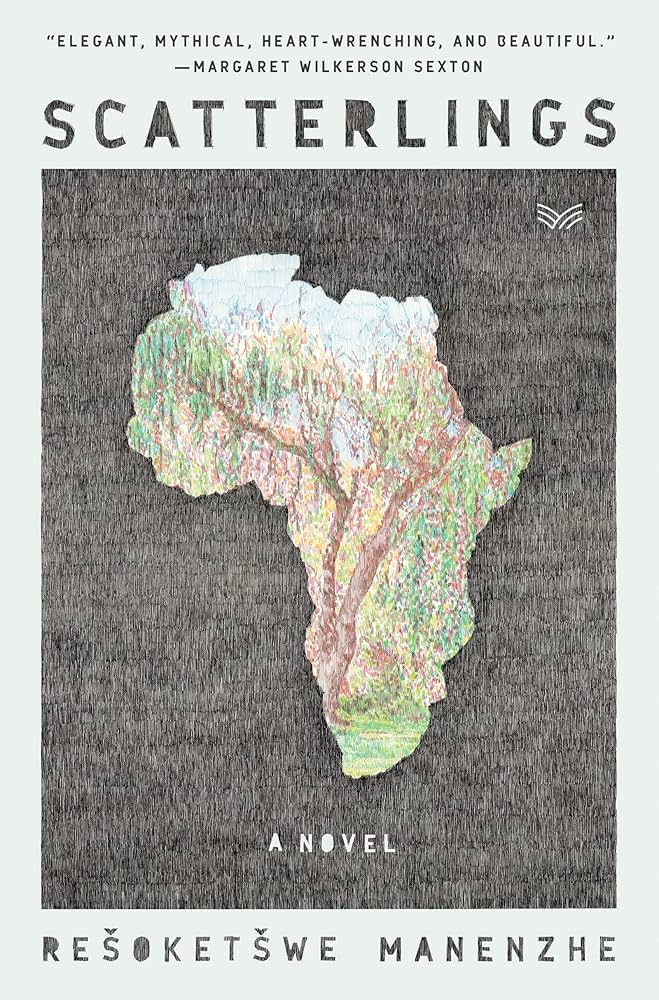
Scatterlings: A Novel by Resoketswe Martha Manenzhe
One of the primary reasons I love reading — and I’m not the first to say this — is the deep empathy reading about others’ experiences develops in ourselves. Scatterlings is such a novel that opens us up to new ways of understanding the past and the present, others and ourselves. This is a novel that will move you in many ways: to sadness, to fear, to loathing, to empowerment, to depression.
This is a novel in the vein of Beast of No Nation by Uzodinma Iweala or The Bird Tattoo: A Novel by Dunya Mikhail. It is fiction of the very real, very tangible suffering in our world, albeit in a time now past (though, not gone, forgotten, or fully healed).
The novel is a historical fiction, taking place in South Africa as its racist, anti-black Apartheid policies began to ramp up. It revolves around the enforcement of the Prohibition of Mixed Marriages Act, Act No. 55 of 1949, and the very real fall out in people’s lives.
The scattered are the wives, husbands, and children of these mixed-race marriages, suddenly made illegal in the eyes of the law. The novel traces the actions of a family and what they each individually must do to survive this.
The outcomes are tragic, but the reader who chooses this subject matter is one who understands that to witness is a step towards reparation.





 Dr JoAnn LoSavio