I was very excited to read The House of Doors, being Malaysian (though now living the diaspora). Tan did not disappoint in any way. I was profoundly moved; the setting of the novel, in high colonial era Penang, evoked a sense of lost history for me, being so far from Malaysia, and culturally divorced from all that home invokes, but I also suffered for the characters and felt the grief of their romantic losses.
This novel is a romantic anti-romance, the kind of romantic novel that mimics tragic, realistic romance in life, with all the attendant unhappy endings and disappoints, guilt and regret, nostalgia and memory that romance actually delivers.
There are two intertwined stories here, that of Lesley Hamlyn, a middle aged British woman living in Penang with her lawyer husband, and “Willie” Somerset Maugham, the novelist who comes to stay with them for a short holiday (which turns into a research and writing expedition). They are products of their British Colonial culture; this is the 1920s, the peak of British rule in Malaya, and they represent the elite class that enjoys all Asia has to offer.
Lesley and Willie form an unusual friendship, and in doing so, the stories of their respective romances is unveiled and threatens both of them and their place in society. Love brings both of them pain and escape; traps them and offers them a way out.
Tan tackles tough subjects: queerness, interracial romance, sexuality and sex, gendered expectations — all things the British were (are?) notorious for suppressing at home and abroad. Tan does this with great skill; the writing is gorgeous. A particular ocean scene utterly devastated me; I was as submerged as the characters in it.
This is a book I will need for my personal library.
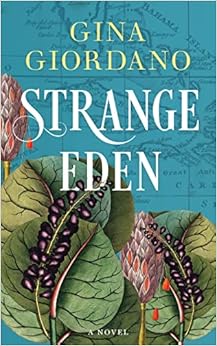
Strange Eden is a novel of many things. Foremost, it is a historical fiction set in the Bahamas in 1791, as the British Empire consolidates its colonies in the Caribbean and mourns the loss of its American ones. The story revolves around Eliza Sharpe née Hastings, a young English girl of the gentry class and her life as the bride of Lord Charles Sharpe, the scion of an old Colonial family and a Lieutenant Colonel in the British Army at Nassau. Their union is a relationship rife with hostility and repulsion; it is a core pillar of the novel, as is Eliza’s and Charles’ relationship with one of this old friends, Jean Charles de Longchamp.
Romance aside, the novel also possesses paranormal elements, political intrigue, and feminist assertions. Eliza is a young woman with many gifts, some which are less desirable in the highly hierarchical and patriarchal world of the Colonial 18th century: a fierce independence, a boldness of spirit and tongue, a sharp intelligence in matters spiritual and political, and an ability to see that which is beyond the visible. In her adventures on the island, Eliza encounters those who expand her view of the world and those who would seek to limit it. It is a diverse cast of characters: Lord Dunmore, the governor of the island, Charlotte and a host of aristocratic society women, Cleo, an enslaved obeah woman, pirates and smugglers, and a mysterious shadow man. Each one paints this Strange Eden in garish and sober colors. It is a paradoxical place for those who are free may also live in chains, though made of silk and gold, and only those who are enslaved know the notion of freedom is an illusion. The novel’s title is apt: what is a paradise for some is very often not a paradise for a great of many others.
This dissonance is what makes Strange Eden shine as a work of historical fiction. For this reader, the appeal of the novel is its attention to historical notions of gender, race, and class. Giordano includes a bibliography at the end, and it is clear that she has done a great deal of research. I hesitate to consider the novel appropriate for the classroom; it is not. The research is good, though not at a professional level. But it was not meant to be; Strange Eden is not a textbook. The historical research Giordano has done remains a positive attribute of the novel nonetheless.
Giordano highlights the expectations put upon women of Eliza’s aristocratic class, and the overarching misogyny women experienced in this era. This is a theme which threads throughout the novel. The expectations of white upperclass women are contrasted against those imposed on enslaved women, like her young maids, Celia and Lucy, and contrasted against the rights and privileges of powerful men like Charles, her husband, Jean de Longchamp, and Lord Dunmore.
Giordano also pays close attention to the slave trade in the Atlantic, racial hierarchies risen out of Europe’s Enlightenment, and the paternalistic racism of the so-called “Civilizing Mission” as it was inflicted on the indigenous and persons of color in the colonies. Britain’s slave trade was abolished in 1807 and the practice itself in 1833, several decades after the moment of the novel; the novel is bold in its recognition of the tension between abolitionists and slave-holders at this time.
Strange Eden delivers a powerful lesson about the gendered and racial notions of the British Colonial world.
The mode of its delivery unfolds at a languid pace. The novel’s prose is thick with description, rich like the molasses that were produced in the Caribbean islands the novel is set in. In some parts the prose, to stick with the analogy to molasses, is unrefined for this reader; on occasion its phrasing conveys cliché over clarity or is redundant, perhaps benefiting from further editing. These do not degrade the novel on the whole. Giordano delivers a cohesive narrative, tangible characters and dialogue, and — most importantly for this reader — weaves a textured fabric of the period. Readers will find the prose is performative of the heat, vibrancy, and slow pace of life inherent in the British colonies of the 18th century. The result is an immersive read.
Readers should also know Strange Eden is the first of a series. The novel ends on a cliffhanger, “to be continued“; however this should not dissuade readers for two reasons. First, the novel ends at 517 pages allowing one to meander through it at their leisure until the next in the series is available and second, the novel has the strength and narrative arc to stand alone without its sequel. The ending satisfies.
To purchase a copy of Strange Eden click here. At present, you can purchase it on Amazon for $19.99 (paperback) or $4.99 (Kindle ebook).
Some context as to how I came across this book. As I have mentioned before in another review, I do not usually gravitate toward independently published novels. But as with that previous review, I happened across the opportunity to do so via a FB group I am in which pairs up authors with reviewers. See here for the details of the May 2023 Book Review.
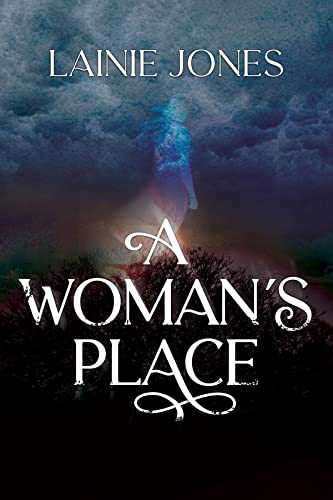
I am not one to pay attention to those one-word reviews you see plastered all over the covers of mass market books: “Captivating”, “Spell-binding”, “Unputdownable!” What is one woman’s tea is another’s poison (isn’t that the saying?) and so I am hesitant to repeat any of those vague, yet complimentary, descriptions here. But the thing is, A Woman’s Place is truly captivating. The paperback is a substantial read at 317 pages; I found myself lost in several chapters at a sitting, finishing the book in two days. It is, indeed, hard to put down. This historical paranormal mystery is riveting to its last page.
Jones does more than weave a gripping story; her prose is well-crafted and the dialogue is vivid, resulting in the creation of tangible, flawed, and very human characters. Jones holds a PhD in creative writing and possesses an academic and literary portfolio which clearly contributes to the historical and literary robustness of A Woman’s Place. This novel is clearly not a “standalone” work in the sense that it is built upon a foundation of years of research, thought, and analysis. What we read in A Woman’s Place is merely the tip of a very large iceberg.
A Woman’s Place is a novel running along the lines of Yaa Gyasi’s Homegoing or Melissa Fu’s Peach Blossom Spring as it is a multigenerational tale. It might be appropriate to liken A Woman’s Place to a fictional European settler version of My Place by Sally Morgan, though, of course the latter is biographical and A Woman’s Place is fiction.
The setting of Jones’ novel is rural Australia, in sheep farming country. It revolves around the events at a remote homestead named Barragunyah, a desolate place known by the name given it by its original inhabitants, indigenous aborigines. The novel spans the end of the 19th century through into the late 20th century, capturing the experiences of five generations of women of the family who came to farm the land. There is also another woman who resides on the land, a mysterious presence called only Mary. The novel unfolds the mystery of Mary and the magnetic pull of Barragunyah, as well as revealing how Australia’s and the world’s history comes to affect ordinary Australians, native and settler alike. British imperial history, the tragedy of the World Wars humanity faced in the twentieth century, and changes in women’s rights emerge as central hinges in the novel. There is also a prosopographical aspect to the novel in that the reader is treated to how these large world events actually affect the daily, lived lives of the Barragunyah women.
In many ways, this is a fantastic historical fiction written for a historian. Or perhaps I feel that way because I am one, and because Australian colonial and post-colonial history, being adjacent to Southeast Asian history of the same period, is something I have an interest in on both a professional and personal level. I think American audiences will find both novel elements and familiarity in these pages. The bond between mothers and daughters, humans and the land we inhabit and shape (and which shapes us), and our selves and our place in the movement of time and history are universal experiences, but American readers will also find themselves introduced to Australian history and experiences.
The novel also has an intriguing mystery embedded in it. As each generation faces the turbulent events of their age, Barragunyah and Mary are there, watching and waiting — though it is unclear what for. This is where the paranormal element emerges. In this way, A Woman’s Place reminds of me of Simone St James’s supernaturally tinged novels, The Haunting of Maddy Clare or The Sun Down Motel. Like many paranormal mysteries, Jones’ A Woman’s Place revolves around an unspoken crime, one grounded and inescapable in Australian history. Jones does a fantastic job of revealing the root of this crime without giving it away, tantalizingly allowing the reader’s own imagination to make sense of the darkness where Mary resides. On that point, I wish Jones had delved more deeply into the aboriginal perspectives on Barragunyah; I am left wanting a sequel or a prequel or the “other side” of the story, as it were. Barragunyah is haunting; as a reader I feel just as deeply connected to this place as the Larson women.
That is a good thing, to be left wanting more.
If you are interested in purchasing a copy of this independently published novel, you can find it on Amazon here. At present, it is priced at $7.49 for the ebook Kindle version and $18.99 for the paperback print.
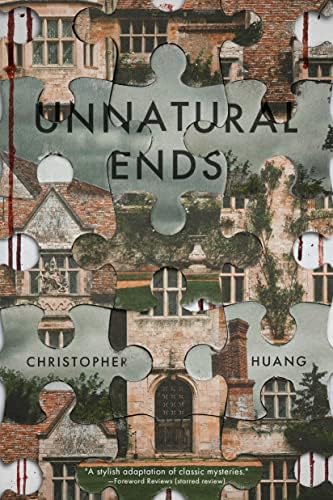
Unnatural Ends reads like a French six-course dinner prepared and delivered by the latest cohort of Top Chef, served in the very classy digs of Downton Abbey, while you and your guests find yourself flung into a live-action Gosford Park; in short, this novel is the quintessential English manor-murder-mystery, updated for the 2022 reader. There is a hint of Mavis Hay’s (1936) Santa Klaus Murder here, a bit of Agatha Christie, and a good strong nod to the immorality of the British Empire (though, nothing quite so dark as Kazuo Ishiguro’s Remains of the Day). This novel is unbelievably English.
I loved it.
It did take me a few chapters to fully dig into the thrill of the case, but the family was so immediately deranged and dysfunctional, I couldn’t look away any more than if I encountered a train accident and found it to be the wreckage of the Orient Express.
The story begins with the death of the patriarch — his ghastly murder — and the strange clause in his will that disproportionately favors any of his adopted children who solves the crime. The novel unfolds from that point on in a predictable fashion for any mystery, but the ending and the twists of blood, family, and the loyalties of genetics kept this reader on her toes. Just when this reader thought she’d solved it, something emerged which threw her off! Between the three siblings, the pathetic mother and widow, the overbearing and sadistic father, and the eye-rolling police, Unnatural Ends delivers a very witty enjoyable read from start to finish.
For the reader who enjoys more than mystery, the novel also possesses several threads of underlying social and historical commentary. Britain’s dark imperial history, rife with its undeniable racism and eugenic standards of morality, are key foundational elements of the plot. Indeed, the cruel history of eugenics and colonialism are integral to the constituency of its characters and the motivations behind the twists and ruts of this mystery. On that note, however, the novel is not pedantic or a history lesson: it is wholly a mystery novel.


 Dr JoAnn LoSavio