This novel took me by surprise — and in that wonderful way that good books often do. Goyhood opened me up to new perspectives, reminded me of the strangeness of life and its myriad twists.
The novel lies beyond my usual fare. I tend toward historical fiction, historical non-fiction, and rarely take on contemporary fiction. But the opportunity came my way, and I found a perfect balance of history, culture, and contemporary life in this novel.
Goyhood calls into question the ways in which we build our narratives, our identities, and how those stories can cheat us of who we really are and who we want or could be. The story revolves a young man on the edge of his life, one which he has cultivated carefully and meticulously, and an event which forces him to abandon it. This is the story of his angst and (re)discovery of self. It is also the story of siblinghood, the tumult that comes from deeply embedded family secrets.
It is also, like most stories, one about love, the depths of it and the lengths we take to protect those we love and the love we desire to maintain.
This is also a book about jewishness, though I am in no position to review on that point. I can only say that I found the book informative and am delighted to know more about what it means to be Jewish in America.
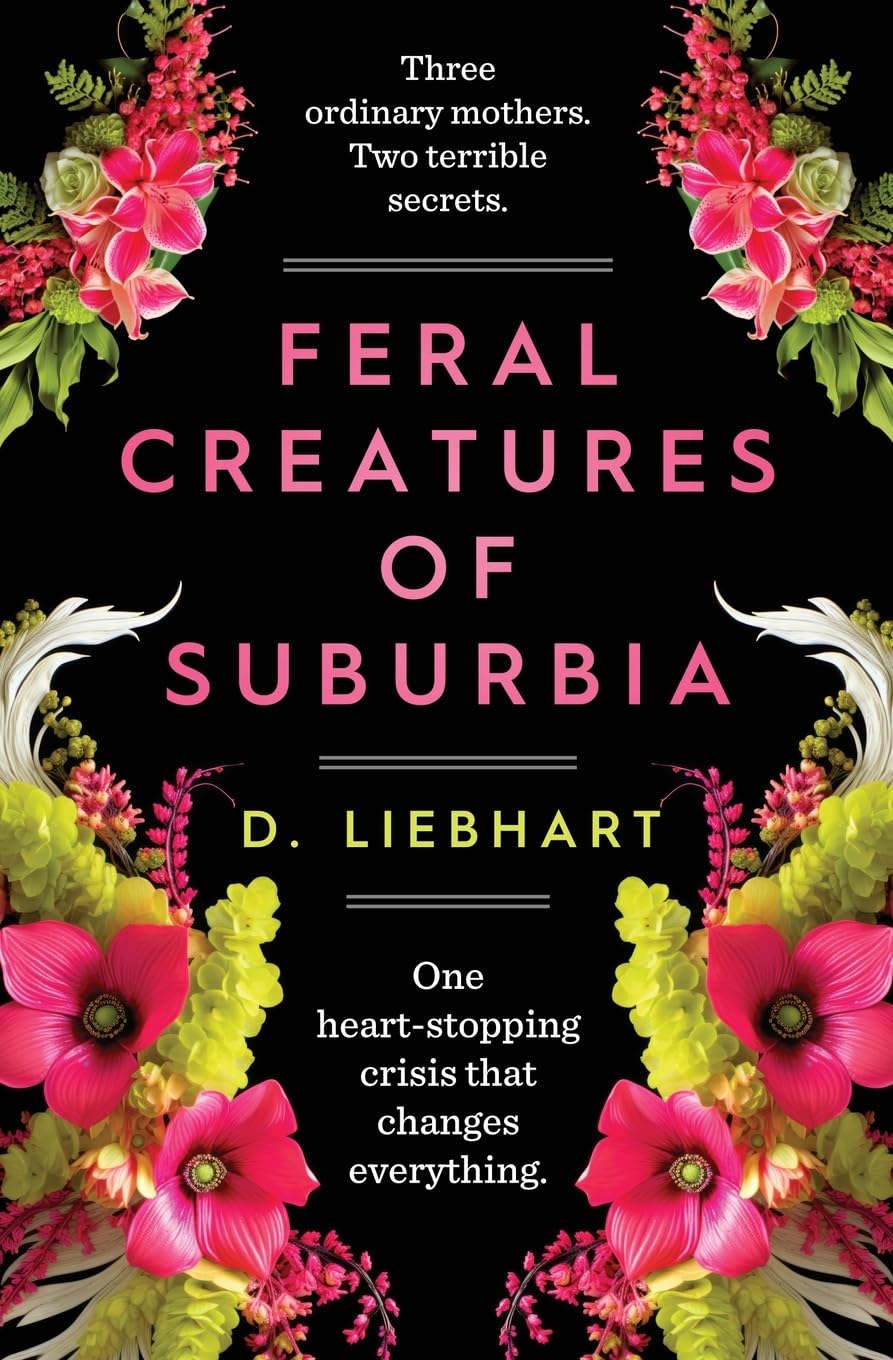
This is the second book of D. Liebhart’s I have read and I can’t wait for the next. Contemporary fiction isn’t my usual genre, but Liebhart’s introspective and acutely insightful style borders on literary fiction. This isn’t a casual novel for the lighthearted; Feral Creatures will rip a hole in your soul and leave a scar. But it will be one you treasure as a reader, one that will change your perspective on life and the world — and perhaps how you read. It did for me.
This is, in large part, due to Liebhart’s skill as a writer. The prose is simultaneously lyrical and straightforward, soothing and incisively sharp. There were several moments I had to pause reading, just to take a breath. But the urge to know what happens, the need for resolution drove me back.
The story moves slowly, but the pace is measured and deliberate — and warranted. The story unfolds in overlapping parts, revolving around three women: Julie, Crystal, and Varvara, and their children: Logan, Mateo, and Myra. Their lives are ordinary — recognizable as our own. It is the tragic intersection of their relationships with one another that the novel builds toward. It is a situation we have all — at one point or another — dreaded to prepare for.
Grief, loss, and the hardship of loving their children are the major themes of these women’s’ lives — indeed, of ALL our lives.
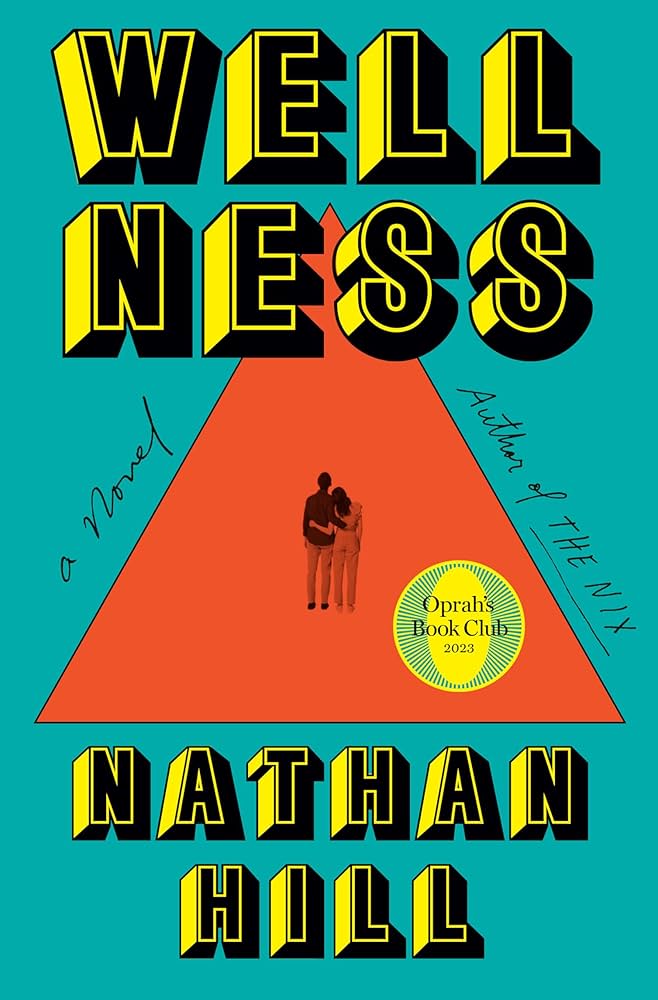
The best – BEST – book I have read in awhile. This novel deserves all the awards, and I’m not only saying that because I lived in Chicago-land, where the novel is set, but because the story and the story-telling is so amazingly delivered. To borrow a phrase from Spinal Tap‘s Nigel Tufnel, “this one goes to 11.”
Wellness revolves around the romance, marriage, demise of said-romance, and self-discovery of a couple, Jack and Elizabeth. Their 9-year old son, neighbors, old friends, and parents also play — as to be expected — significant roles in this account of their mid-life crisis. It’s a mundane and perhaps all-too-familiar tale of life lived and regretted, of the parts of ourselves we lose along the way. This is the draw of the book; it is immensely relatable — at least for those of us of a certain age. There are bits of Jack and Elizabeth in us all, and for those of us who parents, the novel highlights the agony of parenting, especially as mother.
It’s the story of what you do when life doesn’t seem to have delivered what you promised yourself, and — as the novel progresses — it’s the story of why that happened.
At 600+ pages, this is a doorstopper of a novel, but Hill’s prose is so smooth, the story so compelling, the characters so intriguing, that I finished the book in about a week, roughly a hundred a pages a night. A feat given that I read this book during and just after Finals Week of the semester when I had to knuckle down and grade.
And Hill is hilarious. Several parts and dialogue made me laugh out loud; not only could I see myself at the Metro (been there, yes) and some of the other places where Jack and Elizabeth lived out their romance, but Hill allowed me to laugh at myself and my past a little bit. Readers of my generation are likely to find some humor in the pretentiousness of our younger selves in this. I did, and loved the confrontational reflection I had with myself afterwards.
The book will date you and itself, but I think it’s destined to be a classic of our moment.
I can’t stop thinking about this love affair. It’s been months since I finished reading the book, but Allison and Eyal (and Timor, Aisha, Talia, and so many others) continue to occupy my thoughts, not least because the war in Gaza and the horrors that plague Palestine and Palestinians, Israeli and Israelis, remains on-going.
The Lover is a timely novel, as one which revolves around that very political and cultural conflict. But the novel offers a social perspective on how politics hits the ground, how real lives are shaped by the tragedy. The short of it, as I think most people understand, is that the situation is messy. Israelis and Palestinians, Jewish, Arab, each and every one, is woven into a fabric that cannot be unpicked, their threads too tightly interlaced for any one to be extracted without fraying, snapping, leaving a scar in the cloth. The Lover highlights that messiness, the ethical messiness, the material messiness, the psychological and emotional turmoil of Palestine and Israel.
The Lover is a love story, a romance between Allison, a half-Jewish American graduate student who has come to Israel for a semester abroad, and Eyal, a soldier in the Israeli army. To fulfill his military duty, Eyal must conduct missions in Gaza, while Allison frets and waits for his return. But there is another romance here: Allison’s as she becomes enraptured with Israel and the tensions between Jews and Arabs. This is a novel about the ethics of love, what authentic compatibility means, and the difference between passion and compassion between lovers.
What makes The Lover so compelling is that the intertwined romances here force us to confront our own biases in this or other situations. This is a story we cannot turn away from, because even as outsiders watching the news, looking in on the events in Gaza, its messiness forces us to consider what we each might do, might have to do in a similar situation.
The story, as darkly riveting as it is, is not the novels only attraction. The Lover is superbly written. This is literary fiction at its most devastating. Sacks has also clearly done an incredible amount of research, and what might be understood as ethnographic observation; the novel’s environs are so real as to transport the reader to that place, to Israel, to Gaza. The tension Sacks develops through combining research with literature results in a palpable immersion for the reader.
Moreover, Sacks’ characters are fleshy, flawed, and real. Allison is its main protagonist; it is through her voice, her thoughts, that the story is narrated (though she is not its only narrator). Readers cannot help but feel her anxiety, her excitement; as Allison falls deeper in love with Israel, readers may find they are uncomfortably immersed in Allison’s mind. This is a testament to Sacks skill with words.
The Lover is a novel I will likely return to again, perhaps more than once.
I picked up this book by chance, walking past it in my local public library. I know we’re not “supposed” to judge books by their covers, but I do. When I turned the inner flap to read the synopsis, I knew immediately I had to read it.
The premise is that a member of a high school debate team commits suicide later in life, and a former team mate and friend sees this on social media. In the suicide post left behind, is an accusation against the teacher who ran the debate team, that he had said some awful things. What follows is a series of enlightening conversations between the surviving friends, revealing that all the team mates experienced some kind of denigrating treatment at the hands of the debate teacher.
As an educator, I know that the words I say have an incredible impact on my students, for the better and for the worse, though I hope for the former. Sometimes I say things I wish I had said differently, or not at all. The semester before I read Speech Team I had a student breakdown in my office during a private meeting. They were debilitatingly afraid of submitting their assignments to me, for fear that I’d be disappointed. They told me that in middle school, they overheard a teacher telling someone else how disappointed the teacher was in them, thinking that the subject wouldn’t hear. The teacher had expected more of my student and was complaining to another person. It cut deep and my student never forgot it, and it ruined their experience of school forever.
The story is supported by Murphy’s excellent prose. Like most literary fiction, it is deeply introspective and thoughtful in its content and approach. Murphy excavates what has become a quotidian trauma — the rod-wielding nun, the grouchy math teacher, the demanding and unyielding debate team teacher — drawing out complex feelings, leading to even more complex and perplexing actions/reactions. Readers will find a piece of themselves in these characters, perhaps more than one.
This is an extraordinary tale of an ordinary epiphany: what happens when we discover there is more than one authentic version of our past, sometimes hidden from ourselves by ourselves, and that the view of it looks different from other angles and through other eyes. That sometimes it takes time to understand our traumas.
Speech Team struck a nerve. I couldn’t put it down. I had to know what happened. If you’re a teacher of any kind, read this, and re-read it.
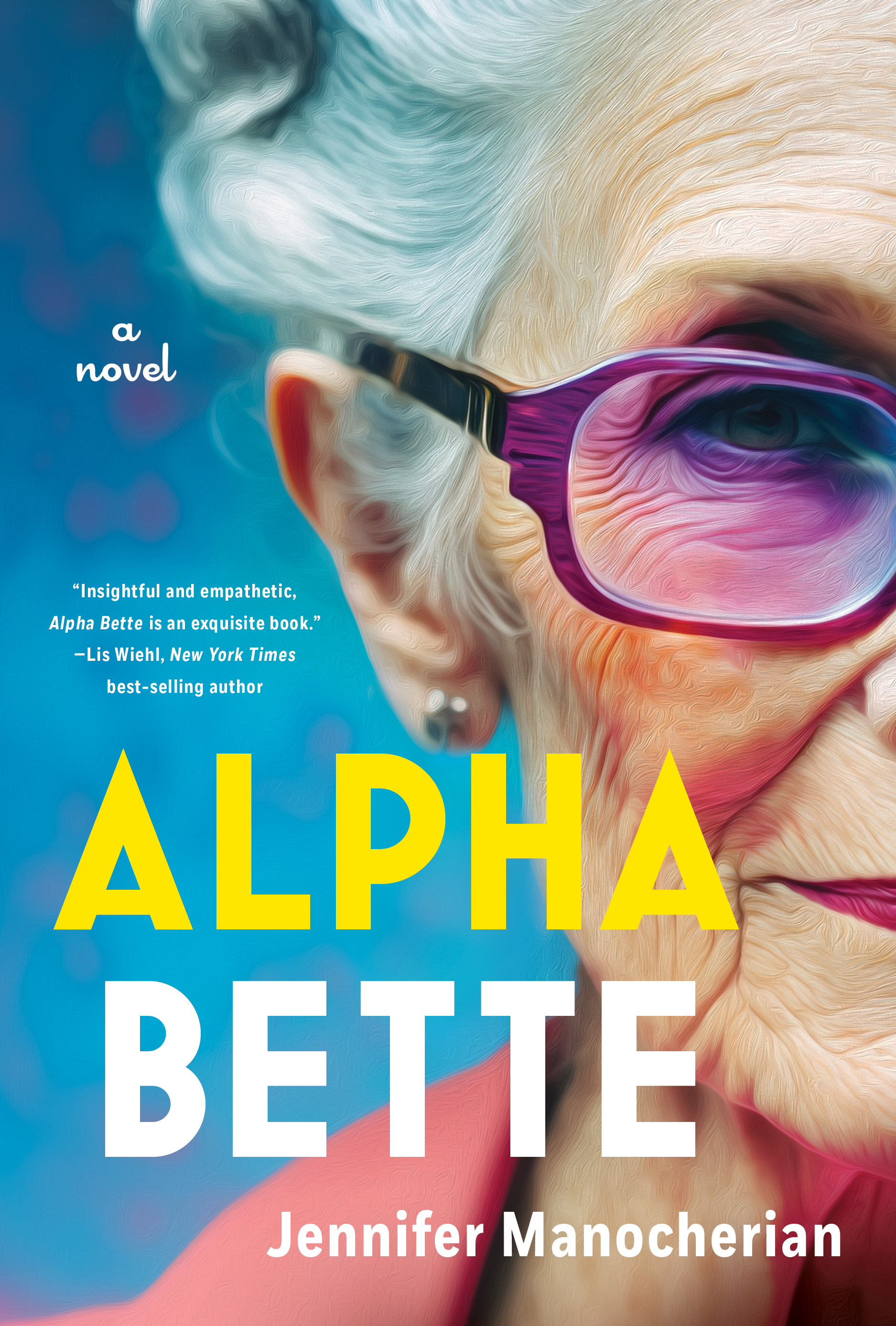
Alpha Bette: A Novel by Jennifer Robbins Manocherian
I’m still not quite sure what to make of Bette, the eponymous protagonist of this novel, and I think that might have been the point. She’s definitely a character that sticks with you, someone you don’t really expect. Indeed, the quirky cast of characters is the primary draw of this novel; they’re ordinary, but uniquely so, and thereby, strangely unforgettable.
Alpha Bette revolves around Bette, the ancient matriarch of an urbane New York family, who, recently widowed, has been left to sputter out the rest of her life in an upscale apartment with her night nurse and daytime housekeeper. Her children, grandchildren, and great grand child are grown, living lives of their own without her. Bette wakes up one morning and decides she’s going to throw a dinner party. Over the course of the frantic day during which Bette and her housekeeper attempt to make all the necessary arrangements, Bette’s neighbors and others on the periphery of her life, present and past, are woven into the story and the dinner party plans.
The novel is about those encounters, the myriad of ways in which we connect — or don’t — with those closest around us, whether they are family, friends, employers, employees, neighbors, enemies, etc. The novel dregs up those age-old existential questions posing them in charming ways: What’s the point of this all? What really matters in the end?
Indeed, “charming” is the perfect descriptor for this piece of contemporary fiction. The characters — even the crotchety ones — are charming in their own ways. The story itself, charming. The life Bette lives and has lived, charming and charmed. All in all, this is an enjoyable, entertaining read with tangible, fleshy characters, some of whom you’ll like and some you’ll enjoy hating.
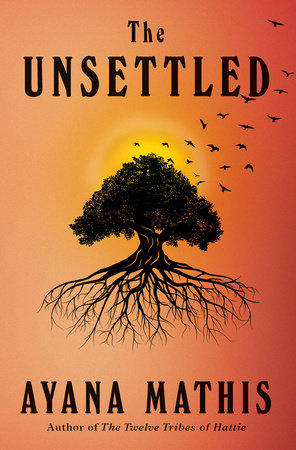
This novel gut-punched me in ways that only good novels can. I could feel tears sting along those nerves behind my eyes. Sometimes I felt my skin get sweat-clammy. The Unsettled unsettles, just like Mathis wants it to.
Right from the start, The Unsettled knocks you down and it doesn’t let up. Its breathless, relentless struggle, the way it forces the reader to keep grasping for relief mimics the feeling that its protagonists feel, trapped in a transient limbo of poverty and abuse and disappointment. This is a novel about what it is to be black and working class in urban America.
The novel revolves around a young boy and his mother, forced to live in temporary housing because of an abusive stepfather and husband, because of racist, classist inequities, because life has dealt them a harsh hand. The novel documents their life before and during their stay in this housing, the people they encounter there, at school, in their former and current neighborhoods. Interwoven between these grim chapters is the story of the mother’s past, her mother and a different world of an all-black enclave in the deep south. In this place too, there is the struggle for blackness to simply exist. The two stories are linked by several threads, the most salient of which is the structural oppression of blackness in America; both stories eventually merge into one, culminating in an explosive end.
Mathis writes with a machete, its edge as sharp as a scalpel. The prose in The Unsettled is blunt, straightforward, and will absolutely cut you down. But the pace of this beating does not exhaust; I was compelled to return to the book again and again until it was done with me (and not I done with it). Its characters were there with me, around me, so fleshy and tangible. I read mostly in bed, where I feel warm and safe, and there were more than a few times when I put down the book and nearly cried, wishing they did not have to live in such an unsafe, cold, grey place.
Everything the Light Touches: A Novel by Janice Pariat
Lyrical, poetic, and ephemeral as its title suggests, Pariat’s novel Everything the Light Touches is an opus-like work of literary fiction. Readers who enjoy historical fiction that spans generations, speculative fiction like Cloud Atlas where the narrative leaps from one place and time to another, and botanical themes will find Everything appealing.
The novel begins in the present, and is set in India — Shillong — a region tucked between Bangladesh and Myanmar. Readers will find that this novel of India encompasses cultures and communities beyond the typical novel set in India; these are the borderlands, an India not usually seen or heard in literature or popular media. Pariat uses this site of unexplored India to their advantage. The result is a novel and mysterious India which does not resort to orientalism to achieve a sense of exoticism.
Everything straddles multiple sites and periods, setting the reader down in India’s high colonial period, taking a step back into 18th century Europe with Goethe, and bringing the author back to the present. We see Shillong through multiple eyes, filtered through multiple histories, both Indian, indigenous, and European alike.
This wide range of periods and foci make it difficult to pin down what exactly the book is about. As its title suggests, it is about “everything”, but of course, it can’t be literally. The novel is about the metaphorical and physical connection between that which light touches: the soil and earth, plants, leaves, and humans. Across space and time, the characters of Pariat’s novel are connected together, sometimes loosely as though through a vine of time, sometimes tightly as a result of proximity or intimacy. Each of the main characters is searching for something, a connection to someone else — marriage, love, parent, child — and also to the earth and its progeny, plants.
This botanical theme vines through each section of the novel. In the present it is about conservation, resource management, and exploitation. In the past it is about botanical science and the essence of growth and life. It is about humans and humanity finding a place for ourselves in the jungle mess of our lives, and about many of us finding that the jungle mess is more orderly than we thought — if we just pay closer attention, the answers are so simple: love, loyalty, and love again — in its myriad of forms.
The prose of the novel mimics the wilderness it highlights; Pariat’s text is sensuous in parts, alluring and floral and fern-like in its delicacy. Yet, simultaneously, Pariat’s prose is structured as a plant cell, symmetrical as a leaf. Some parts are even wild in being tangential and unexpected. There is a section devoted to poetry, but poetry is written all through it. This is a novel for the literary fan; while it is propelled by a plot and a structured narrative, the novel is also deeply rooted in its characters’ flaws, desires, and personalities.
Oh my goodness, this was a fun, fun, fun read! It was like reading an indie version of Ocean’s Eleven, but without the attractive people, fabulous clothes, or money$money$money! Ha! This is a Western, Noir, Stoner, Comedy novel rolled into one. There’s drugs, sex, manipulation, and crime in this swift-moving novel of criminal bungling.
The story revolves around a weed dispensary, its employees, and those within its seedy orbit. There is a plot, hatched by an amateur criminal, a woman who works at the dispensary. She ropes in her dimwitted boyfriend who also works there. (You can see where this is going!) They commit the crime and it’s off! There is bounty hunter and a chase to track them down and that’s what the zig zag is all about.
This is a very entertaining read. It leaves you feeling bemused, glad that you’re smarter than most of the characters in the novel, but don’t expect anything earth-shattering. Life most blockbuster films, the thrill is only as good as it lasts, and that’s OK.
What makes this enjoyable — just as it is with most films — is the writing. O’Brien’s prose is witty, humorous. This reads as smoothly as a screenplay, transiting from scene to scene ease. This novel is a perfect Sunday afternoon read; the kind that makes you happy about going to work the next day because where you work isn’t this HAHA!
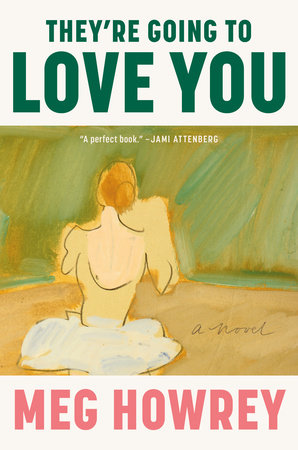
This one is a quiet burn, the kind of novel that leads to a swell of deep and intense emotion at the end. You’re left, Reader, with a sense of loss at the end, a feeling that you’ve experienced something very intimate, that maybe you shouldn’t have, but you had to — and you did — and now you’re left to think about the memory of the novel. They’re Going to Love You sticks in your mind like taffy to the roof of your mouth, a lingering taste of sweet and salty. Maybe a little sour.
They’re Going to Love You is a story about parenting, being a child, being a child to parents who are human and flawed. It is also a story about the fragility of relationships and the unpredictable strength of them. It’s a story about the trials of family, the values that are assumed in a family unit, assumed because of blood and marriage and birth. It is also a story of betrayal and grief, of not having what we assume we should have or of losing what we felt we should never have been able to lose.
The novel revolves around and is narrated through the eyes of a young girl who becomes a young woman and then a middle aged woman. She is a dancer and the daughter of dancers, ballet dancers in the heady and chaotic New York city scene of the mid-twentieth century. The father is a gay man, openly so, and there is a step-father. Then there is her mother, a former ballerina. The parents expect a lot from the girl. This is a story about expectations and hopes and dreams that are ours and also, not our own.
As the girl grows up there are things she learns about her privileged life and the expectations of her privileged life and the ways in which people look at her from outside her life. She learns about love from her parents and from their divorce and from their forced interactions on her account. She learns about love from her father’s gay friends. She learns about betrayal from her parents and what it means to forgive.
The novel is also about death and the finiteness of this life and of love. It is about realities underlying the fantasy of a ballet-infused, performed life.
Howrey’s prose is stark and cutting. It is dark and yet also childish, implying childhood is in fact a darker space and time than we are often led to believe. The characters are children and adults and you are not sure who is the adult and who is the child sometimes. The dialogue is authentic, sometimes painfully so, too reminiscent of our own familial traumas.
There is an element of this book that prickled me, for as much as I praise it: the characters are insufferably privileged. They are white, wealthy, part of the exclusive milieu of pretentious NYC. The main character is a nepo baby, whether she thinks so or not. So is her father. Intergenerational privilege abounds in this novel. This is a world that exists for a fraction of a fraction of a fraction of the world’s population. It’s not my world, for sure.
But, that is what novels are for (in part): entries into worlds unknown.






 Dr JoAnn LoSavio