Free: Two Years, Six Lives, and the Long Journey Home by Lauren Kessler

Free: Two Years, Six Lives, and the Long Journey Home by Lauren Kessler

I didn’t know what this book was, until I was in it. And then I couldn’t stop reading. By the end, I was heartbroken and frustrated, not only for the individuals who shared their stories of incarceration and attempts at reintegration afterwards, but also for us, the rest of American society, for our lack of understanding, compassion, and knowledge about this very real, tangible human tragedy.

Free is about the failure of the American judicial and prison systems to manifest actual reintegration of paroled and released persons after they’ve served their sentences, and the impotence these individuals must confront as they try to forget their pasts, forge new pathways, and defeat recidivism. Kessler delivers the gravity and causes of recidivism to the reader through the lived experience of a handful of individuals, six men and women of different races and backgrounds. Free is deeply human-focused; Kessler highlights and allows the voices of those who live this trauma and oppression to speak for themselves, making this a very emotionally charged and profound read.

It’s not a comfortable read. Free made me reflect on my own prejudices and biases, enlightened me to facts and processes I was unaware of. I’m grateful for this.

Kessler’s subtext is not subtle. The responsibility of recidivism lies with us, the members of society who have never been incarcerated — those of us who have the power to vote, demand fairer forms of justice, manifest real compassion for those who have been imprisoned (rightly or wrongly). The issue is this: society as a whole continues to punish those who have been incarcerated and released, as if the serving of their sentences were the beginning of the penalty, and not the end of it.

The call to action is this: The sentence once served should be the only punishment. We as a society need more compassionate, more inclusive and supportive systems of reintegration for these formerly incarcerated individuals if we want to reduce rates of recidivism. It is us who need to change, not the convicted. The systems which govern incarceration and reintegration need adjustment at the very least, a complete reform in some areas. And we, voters and citizens who must live alongside the incarcerated and the paroled and the released must speak up and demand these changes.

Free is a powerful book with a powerful and empowering message.

Free was introduced to me through my local library system. It was one of the “Revolutionary Reads” the Fort Vancouver library system hosts annually. The chosen book is usually one that is local in some way to the Pacific Northwest (Free is grounded geographically in my local region). Copies are given away to the public and there is attendant programming in the form of Zoom and in-person events along the lines of interviews with the author and/or subjects, experts on the topic, film screenings, and so on. I absolutely love this program and am so glad it introduced me to this book, to this issue, and helped me gain a deeper and more nuanced understanding of recidivism.

Alcatraz Ghost Story: Roy Gardner’s Amazing Train Robberies, Escapes, and Lifelong Love by Brian Stannard

Alcatraz Ghost Story: Roy Gardner’s Amazing Train Robberies, Escapes, and Lifelong Love by Brian Stannard

Roy Gardner was pretty impressive… even if he was also abhorrent as a human being. This reader found him perversely interesting, like a train wreck you can’t stop staring at. There is an element of action movie magic here, a kind of wonderment and expectation that the hero (Gardner) may not survive the next car chase. But he does.

Alcatraz Ghost Story is a biography of Roy, the man, but in true prosopographical fashion it paints a landscape of the early twentieth century through Roy’s life.

The result is a compelling read on multiple levels: Roy himself led an amazing life, if an unethical one, and tracing it reveals much about the expectations and norms of his life, as well as others in his orbit. His wife, for instance, and her reactions and behavior through his incarceration reveal the gendered notions of their age.

Readers who enjoy true crime, history, and biographies of so-called ordinary individuals will find that Stannard successfully develops a textured experience for the reader.

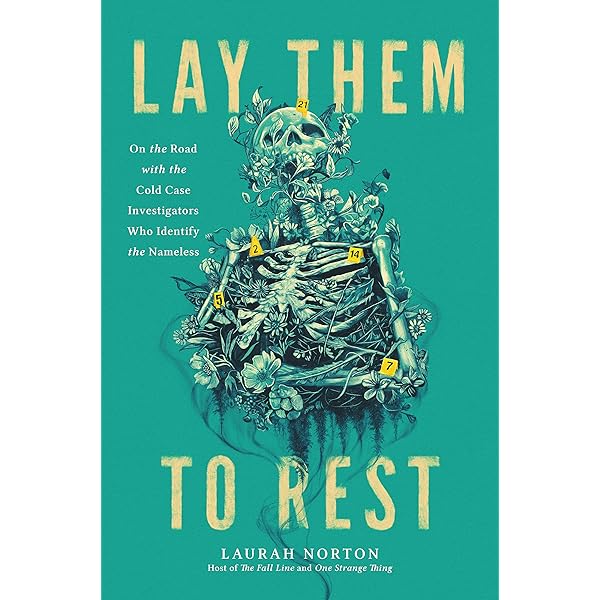
Lay Them to Rest: On the Road with the Cold Case Investigators Who Identify the Nameless by Laurah Norton

Lay Them to Rest: On the Road with the Cold Case Investigators Who Identify the Nameless by Laurah Norton

I thoroughly enjoy my true crime reads, gruesome and terrifying as they are. I especially enjoy the intricacies of police work and investigation, probably that’s a side of the analysis that I can both relate to and have no idea about. I love learning about the ways in which investigations of this nature are conducted, the nuances of analysis and the low and high technology that comes into play.

Lay Them to Rest delivered… and yet, also didn’t quite hit the high notes for me.

The bad part first. I didn’t enjoy the degree of personal involvement and commentary Norton provided. While it is common for writers to relay their personal trajectories and use it to form the narrative arc of their non-fiction books, I found the way in which Norton did this to be distracting. The injection of her personal thoughts felt like intrusive minutiae. This is, of course, a subjective opinion; other readers may very much enjoy Norton’s personal journey. For this reader, not only did this detract from the primary story of the victims and their cold cases, but Norton’s self-deprecating approach undermined her credibility and authority, coming off as fumbling. I believe the intention was to code Norton’s “character” as endearing, but its delivery did not persuade me of this view of her.

But now, the good. Norton’s partnership with a biological anthropologist produced an academic perspective which I greatly appreciated. It is clear a great deal of research had been conducted, both by Norton and Amy Michael, as well as the many others Norton shadowed, interviewed, and worked with. The book provides a great deal of information, and Norton’s delivery of that — along with the abundant necessary context — was accomplished with both straightforward utility and finesse. Norton’s prose was smooth, its language accessible while still necessarily full of the argot of the subject matter. Norton distills an enormously complex subject into easily digestible and palatable parts.

Lay Them to Rest is built through the cold cases of several victims, Jane Does, found dead and abandoned. Norton uses these cases to relay to the reader a nuanced view of the layered landscape of police work, forensic analysis, and dysfunctional systems of databases for DNA tracking used for investigating and solving crime. The focus here is not on the victims, or their families, or even on the police or investigators who strive to solve their crimes; Lay Them to Rest focuses on the structural elements of criminal investigation, the organizations and systems which organize and sift through the millions of bits of data and information that can be gathered about victims and the crimes against them. This angle into the world of criminal investigation was a novel one for me; most of the true crime I have read have not delved into this specific aspect of investigation. I found this perspective refreshing and intriguing.

Readers of true crime will find Lay Them to Rest a worthy addition to their libraries. Or, at the very least, well worth the time and effort of reading it.

Zig Zag: A Novel by J.D. O’Brien

Zig Zag: A Novel by J.D. O’Brien

Oh my goodness, this was a fun, fun, fun read! It was like reading an indie version of Ocean’s Eleven, but without the attractive people, fabulous clothes, or money$money$money! Ha! This is a Western, Noir, Stoner, Comedy novel rolled into one. There’s drugs, sex, manipulation, and crime in this swift-moving novel of criminal bungling.

The story revolves around a weed dispensary, its employees, and those within its seedy orbit. There is a plot, hatched by an amateur criminal, a woman who works at the dispensary. She ropes in her dimwitted boyfriend who also works there. (You can see where this is going!) They commit the crime and it’s off! There is bounty hunter and a chase to track them down and that’s what the zig zag is all about.

This is a very entertaining read. It leaves you feeling bemused, glad that you’re smarter than most of the characters in the novel, but don’t expect anything earth-shattering. Life most blockbuster films, the thrill is only as good as it lasts, and that’s OK.

What makes this enjoyable — just as it is with most films — is the writing. O’Brien’s prose is witty, humorous. This reads as smoothly as a screenplay, transiting from scene to scene ease. This novel is a perfect Sunday afternoon read; the kind that makes you happy about going to work the next day because where you work isn’t this HAHA!

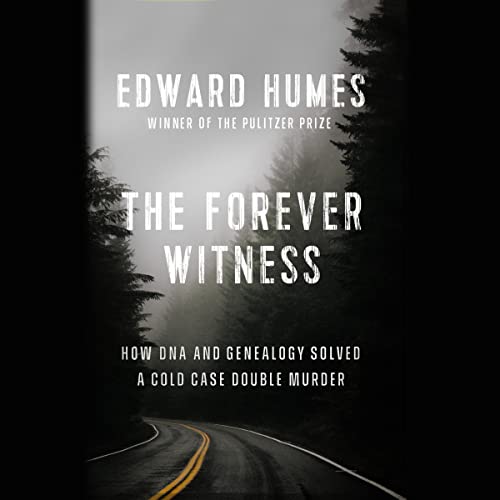
The Forever Witness: How Genetic Genealogy Solved A Cold Case Double Murder by Edward Hume

I am such a fan of true crime (not an amateur expert in it, but I enjoy it a lot!) and Humes’s The Forever Witness delivered in all the best ways. This book details the context and circumstances of a cold blooded double murder of a young man and woman in Washington state, near Seattle. They disappeared while on an overnight roadtrip, running an errand. Their murder was a cold case for decades until new technologies became more available.

What makes The Forever Witness so compelling though isn’t just the fact that Humes gives us an account of how such DNA identifying technologies worked or even how the case was eventually solved (though those are good enough reasons to pick it up!), no, what makes this book unputdownable is Humes deeper delving into the larger national and world wide considerations and context of using DNA, genealogical, and qualitative research together in combination to investigate such crimes. Humes provides the reader with a landscape of criminal methodologies, giving them a glimpse into a world often over-dramatized and glossed over with unspecific details in news media and hour-long television serials. As if often the case, when compared with film, the book is better. The Forever Witness is full of nuanced context and specific information, perfect for the true crime fanatic for whom details are everything.

Readers should be aware that this wide fish-eye lens of the book and its subject matter does mean that Humes veers on occasion away from the specific case. He draws upon similar cases, discusses parallel crimes and explores the use of genealogy in other, related cases. Humes also provides the reader with a view from the other side; included here are not only the investigators, the family of the victims, but also the perspectives of genealogists and other criminologists not directly involved in these cases. The varied perspectives adds to the book’s appeal, giving the reader a deep understanding of the crime-solving process, with all its obstacles and victories.

Humes’ prose is also deeply compelling: dramatic and yet not overblown, succinct and yet brimming with knowledge, informative without overbearing being pedantic, flowing and smooth throughout. It is clear Humes has a vast and thorough grasp of his subject matter, but he does an exceptional job at breaking this down for the average reader. Terminology is explained, procedures and protocols are laid out step by step and their logics revealed.

In short, a fantastic read and one for every fan of true crime.

1794: The City Between the Bridges (A Novel) by Niklas Natt Och Dag

1794: The City Between the Bridges (A Novel) by Niklas Natt Och Dag

1794 is a deliciously dark journey through the underbelly of 18th century Stockholm. It’s the second novel in Natt och Dag’s Cardell series; but, the novel stands on its own. I didn’t read 1793: The Wolf and the Watchman where the characters, Jean Mickel Cardell and Anna Stina Knapp first appear, but that did not preclude my enjoyment of 1794.

The novel begins with Eric Three Roses, the second and less-loved son of a minor nobleman. Eric’s journey to Sweden’s only tropical colony, Saint Barthélemy and the mysterious, scuzzy individuals he meets there are the mystery that seeds the rest of the novel. What happens to Eric is tragic. Cardell is called upon to discover the crime and the criminal — and bring them to justice. He seeks out Cecil Winge, encounters Anna Knapp again, and slithers through the shadowy and crime-infested underworld of Stockholm, sorting through those who are struggling to survive and those who prey on others to survive.

This is a crime novel, one which reveals a seedy and complex weaving of lives, fortunes, and terrible fates that not only delivers the tension of a mystery but also, and perhaps more appealing to me personally, the texture of 18th century European urban society. Classes collide, fates are intertwined, and motives are never simple. Relationships function on transaction, but the currency people must pay can run the range from gold to love, from silver to power. Murderers murder for the sake of a love of violence. Fathers overlook the transgressions of their daughters for the sake of a peaceful existence. Brothers blind themselves to the follies of their siblings. Sanity and madness are two sides of the same coin.

1794 is not a story with happy endings, neat narratives wrapped up by the end; this is a reflection of life under a harsh light. The mystery lies in how we survive it.