
Cities of Women: A Novel by Kathleen Jones

Cities of Women: A Novel by Kathleen Jones

This is a historian’s historical novel, in every sense of the word. Not surprisingly, is is written by a former academic; Kathleen Jones began her writing career as a political scientist and professor, before turning to literary fiction. Cities of Women is a seamless blend of these two domains of their experience, reflecting a deep respect for the scholarly pursuit of history while offering readers a deeply textured and emotional perspective of the past.

The novel toggles between the modern present and the medieval past, beginning with a tenure track historian’s search for her place in the academia. Verity Frazier then encounters, by chance, that rare glimpse of an undiscovered history. This is the sort of thing historians dream of when they enter archives; Jones portrayal Verity’s hope and desire is palpable — or perhaps that is just my historian’s heart set aflutter. Buried, like so many women of his age, is the presence of a female illuminator, Anastasia.

The unfolding of Verity’s archival adventure draws the reader into a world that is both exotic and familiar. Verity and Anastasia (like us all) live in a patriarchal world, one which fails to take women seriously, which gaslights us, and forces us to make undesirable choices. This is a feminist novel, bringing to the fore these age-old prejudices and the battles women must fight to be heard, seen, remembered.

Then novel also contains more than one beautiful and flawed sapphic romance, highlighting the containment and self-sustaining world of womanhood. This is the beauty of Cities of Women; it is an illumination of women, an honest portrait of women’s struggles and successes, a tale of oppression and empowerment as the two sides of our collective experience. Readers should know this realist capturing of the female experience may trigger; who among us cannot point to some evidence of trauma in our lives?

Indeed, Jones’ characters are as made of flesh as ourselves, so well does her characterization reflect the depth of her historical research and her skill as an author. We can feel Verity’s pain, the elasticity of Anastasia’s tenacity, Christine’s boldness and pride. We can also recognize the women around them, the friends who succumbed to the status quo, the colleagues who share in the frustration of being a woman in a man’s world, the lovers who boost us and tear us down.

The novel revolves around these women and their lives, and as such, being character-driven, moves at a languid pace, stretching the length of lives for some characters and capturing mere months of others. Time, in fact, is fluid in this novel, a kind of ephemeral backdrop; the lives Jones tells us about cut across time, flatten it. Women have then, as now, experienced much the same things.

Dialogue between the characters is seamless, perhaps too much so sometimes; I was left wondering if people really talk like this? But then, the world is wide and there are many in it, so perhaps they do. Or perhaps Jones is referencing the physic unity between women, so One-Of-Mind are we that our words may zipper so flawlessly together. Overall, however, Jones’ prose is splendid, mature, and expressive; it is smooth, flowing, and sensuous in many parts. Readers will find themselves cradled in gorgeous text throughout.
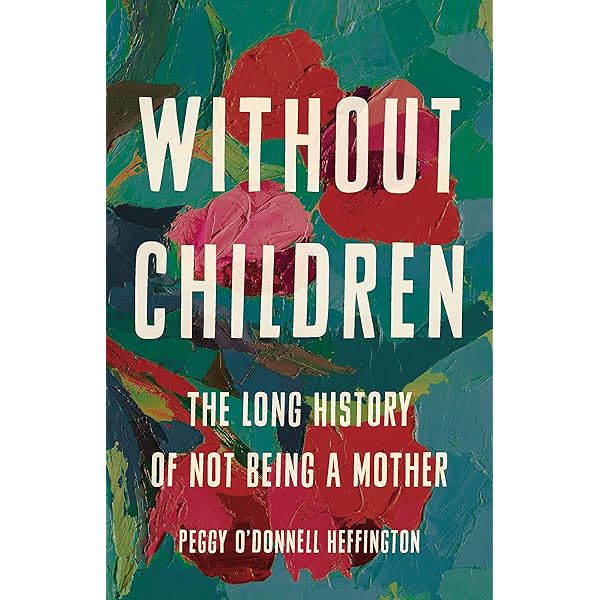
Without Children: The Long History of Not Being a Mother by Peggy O’Donnell Heffington

Without Children: The Long History of Not Being a Mother
by Peggy O’Donnell Heffington

I read this over Mother’s Day, so it was particularly poignant for me as I reflected on the fluidity of my own womanhood and ideas concerning mothering. It’s a profound read; readers should be prepared to question their notions of womanhood and mothering.

As a mother, I found this history of mothering, motherhood, and childlessness to be an amazing read, and on multiple levels. First, in terms of its content, O’Donnell Heffington lays out a compelling history, arguing for a revision in the way mothering is perceived, valued, and recognized. This is a history for anyone and everyone, regardless of their position on child-bearing, motherhood, or womanhood at large. Each chapter addresses a form of mothering or motherhood, expectations around these roles as they have changed through time, and historical factors which have influenced our collective image of Mother today. Throughout Without Children there are stories of mothers — of diverse kinds — embedded, evidence of O’Donnell Heffington’s arguments and research. The result is an intimate narrative history, one which toggles seamlessly between micro-history, prosopography, and discussions of the larger contexts of religion, politics, and gender.

Second, Without Children impresses in terms of its prose and language; it flows at a comfortable, easy pace, delivering what is a deeply contentious issue in straightforward terms. O’Donnell Heffington clearly has an agenda; what writer and what non-fiction does not? — but the book, to its credit, lacks superciliousness, pedantry, and jargon. Given the controversial topic and the heated debates among many women and mothers regarding having children or not, Without Children performs a miracle of balance.

At the root of the debate and ultimately at the root of this book, is the question and discussion of the constituency of womanhood as it is understood in most Euro-American Western societies. What makes a woman? (Some would have us believe it is motherhood.) What constitutes a mother then? (Some challenge the notion of birth and biology.) In a moment of gender fluidity and revolution of gender identity, Without Children asks us to suspend our ingrained understandings of gender to consider other definitions of motherhood and womanhood.

Cunning Women: A Novel by Elizabeth Lee

Cunning Women: A Novel by Elizabeth Lee

The description states this is a feminist tale, what happens when women are ostracized, “cast out” from their communities. It does not disappoint. The characters and their lives challenge typical narratives of women in this historical era. Despite being several decades past the so-called Women’s History turn in the discipline, popular depictions of European women in the 17th century remain stagnant as powerless, subjects in a patriarchal world, and largely passive. Of course, we have seen and heard of the warrior women (queens), daring women (aristocrats), extraordinary women (those who chose to challenge norms); what we often lack are narratives of truly ordinary women. They remain (largely) relegated to a passive role in society.

Not so in Elizabeth Lee’s Cunning Women.

In this tale women lead the way despite living under a patriarchal yoke. The characters here are not heroines, they do not dismantle patriarchy, they must live within in it (as we all do) but they resist. It is this reality that Lee folds the reader into. Mother and daughters, even the sons of the village are bound within a system not of their own making. What makes Cunning Women feminist is that some characters find ways to resist, even when knowing their reality cannot deliver on desire. They resist anyway. Other characters find ways to resist by scraping by, by working within the system and in these ways — by merely surviving — challenge the patriarchy which binds them. These characters, in their hanging onto life, raise a fist to “the Man” so to speak. Even the characters who bow to the patriarchy find themselves at odds with it when the women in this tale earn their vengeance.

Cunning Women is a complex tale, one which appears deceptively simple in its plot. It is for that reason (I believe) the story moves slowly. Lee allows the reader time to digest and mull over, to reflect as the main character does on the parameters of a woman’s life in an English village in the 17th century. The love story necessarily moves slowly; this is not a rush of lust but an intellectual and emotional growth of love. Note: this is not a romance. No, this is much more realistic than that. Cunning Women is an account of a realistic life with all its banality and uncertainties.

All in all, well worth the read.