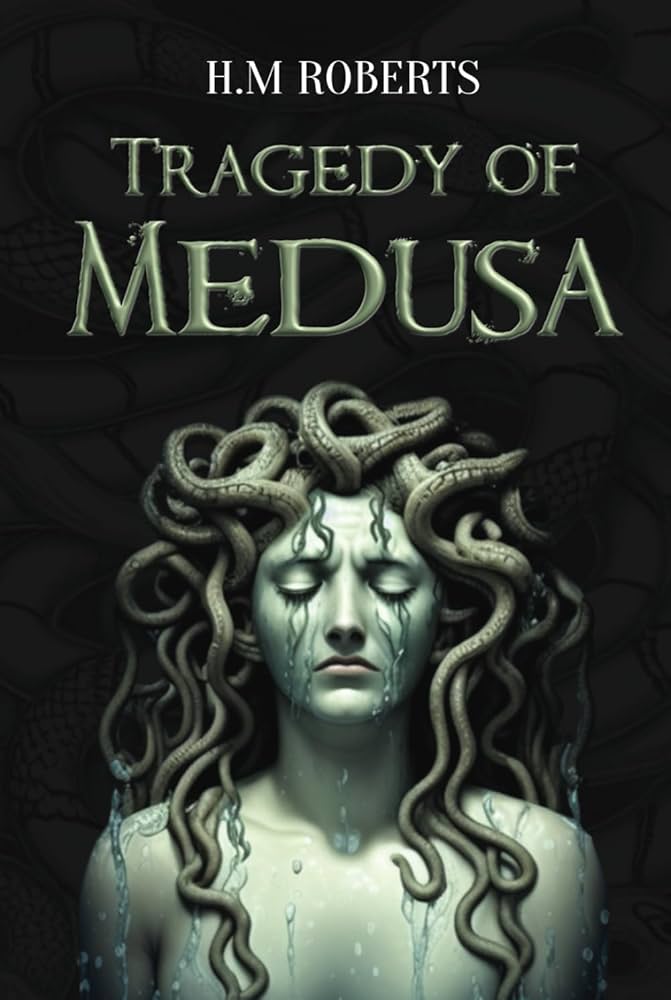
The Tragedy of Medusa: A Novel by H.M. Roberts

The Tragedy of Medusa: A Novel by H.M. Roberts

At under 200 pages, The Tragedy of Medusa is deceptively thin. H.M. Roberts delivers a powerful and emotional alternate narrative to the myth of this complicated woman through a swiftly moving story and with a succinct use of words.

Readers should know that the novel spans the length of a lifetime, and will immerse them thoroughly in its magical timeline. I emerged from the novel feeling a kind of grief; as if I had lived alongside the woman, Medusa, herself. Having a familiarity with the original myth of Medusa is not required here; Roberts uses the mythology as a guide, but deviates from its rules to develop a compelling, deeply human tale. Through Roberts’ prose and storytelling I lived the tragedy of Medusa myself.

Readers who enjoy historical fiction, fantasy, and mythology will appreciate Roberts’ equal attention to research and reality on one hand, magic and lore on the other. As a historian and as a pleasure-reader, I appreciated how well-researched it was without being pedantic. Small details about dress and life brought a tangibility to the interactions between characters, put the story in historical context. But the novel remained focused on its story and characters, and this is ultimately what made it so compelling: Medusa, her sisters, and family were nuanced, imperfect and human, for all their divine origin, the mortal characters transcended time, feeling all too familiar despite the historical difference. Fans of literary fiction will find the deep reflection and well-crafted characters of this novel as appealing as story. Roberts’ The Tragedy of Medusa cuts across the boundaries of genre.

I thoroughly enjoyed this indie read, and would not hesitate to recommend this to other readers.

A Cowardly Woman No More: A Novel by Ellen Cooney

A Cowardly Woman No More:
A Novel by Ellen Cooney

I utterly love, love, love this book. I never knew about or read any of Ellen Cooney’s fiction before, but I am a fan now. And to think, I only found this novel by mere chance. I happened to visit a branch of my local library system that I used to go to quite a bit, but hadn’t for awhile, and I happened to walk past the new arrivals shelf. The title, so striking, so challenging immediately appealed to me. I picked it up, felt its heft in my hand (slim novel as it is) and decided it was coming home with me.

I read it in a day and half. I couldn’t tear myself away. I felt so connected to this woman, felt her latent simmering dissatisfaction so keenly, I had to keep reading.

The novel revolves around a woman who leads an ordinary life, as most of us do: she works for a local company, a office job, and she’s married with kids. She’s hitting her middle years. She’s good at what she does professionally. She is encouraged to and does apply for a promotion. She doesn’t get it, which would be devastating enough — but the kick in the head is that the job goes to a man who is clearly under-qualified for it. It all comes to a head at the company’s annual banquet, held at a famous, local restaurant.

The woman walks in one way, walks out another.

That’s all I’ll say. You have to read this book.

Cooney’s words are knives and silk ribbons. Perhaps they are silk ribbons with edges as sharp as knives; they slice and soothe all at the same time. Women of this age — or, really, of any age once they’ve had a taste of the patriarchal world in which we all must live — will find this novel tragically relatable. It is so nice to hear a chorus of voices bounce back to us, to know what sounds like an echo is not merely our own voice, but the sound of many others screaming same complaints, announcing the same snubs and hurts and disrespects that have been inflicted on ourselves. The isolation Trisha Donahue, the novel’s protagonist, lives is a dark we all know. Cooney shows us that though we may not see each other, she does.

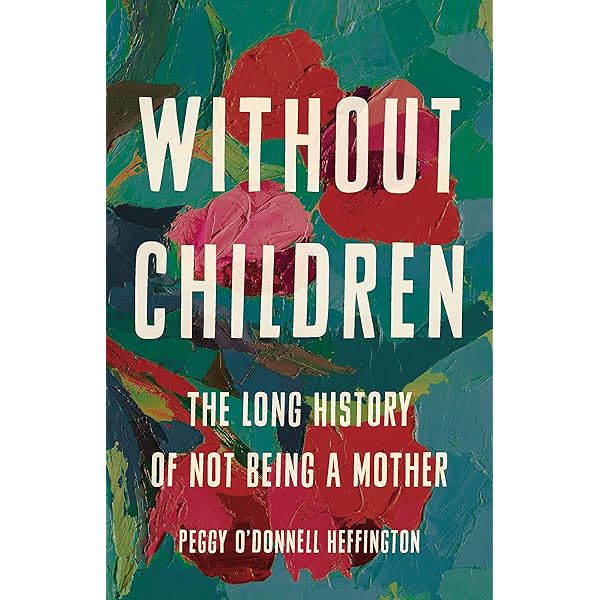
Without Children: The Long History of Not Being a Mother by Peggy O’Donnell Heffington

Without Children: The Long History of Not Being a Mother
by Peggy O’Donnell Heffington

I read this over Mother’s Day, so it was particularly poignant for me as I reflected on the fluidity of my own womanhood and ideas concerning mothering. It’s a profound read; readers should be prepared to question their notions of womanhood and mothering.

As a mother, I found this history of mothering, motherhood, and childlessness to be an amazing read, and on multiple levels. First, in terms of its content, O’Donnell Heffington lays out a compelling history, arguing for a revision in the way mothering is perceived, valued, and recognized. This is a history for anyone and everyone, regardless of their position on child-bearing, motherhood, or womanhood at large. Each chapter addresses a form of mothering or motherhood, expectations around these roles as they have changed through time, and historical factors which have influenced our collective image of Mother today. Throughout Without Children there are stories of mothers — of diverse kinds — embedded, evidence of O’Donnell Heffington’s arguments and research. The result is an intimate narrative history, one which toggles seamlessly between micro-history, prosopography, and discussions of the larger contexts of religion, politics, and gender.

Second, Without Children impresses in terms of its prose and language; it flows at a comfortable, easy pace, delivering what is a deeply contentious issue in straightforward terms. O’Donnell Heffington clearly has an agenda; what writer and what non-fiction does not? — but the book, to its credit, lacks superciliousness, pedantry, and jargon. Given the controversial topic and the heated debates among many women and mothers regarding having children or not, Without Children performs a miracle of balance.

At the root of the debate and ultimately at the root of this book, is the question and discussion of the constituency of womanhood as it is understood in most Euro-American Western societies. What makes a woman? (Some would have us believe it is motherhood.) What constitutes a mother then? (Some challenge the notion of birth and biology.) In a moment of gender fluidity and revolution of gender identity, Without Children asks us to suspend our ingrained understandings of gender to consider other definitions of motherhood and womanhood.

Cunning Women: A Novel by Elizabeth Lee

Cunning Women: A Novel by Elizabeth Lee

The description states this is a feminist tale, what happens when women are ostracized, “cast out” from their communities. It does not disappoint. The characters and their lives challenge typical narratives of women in this historical era. Despite being several decades past the so-called Women’s History turn in the discipline, popular depictions of European women in the 17th century remain stagnant as powerless, subjects in a patriarchal world, and largely passive. Of course, we have seen and heard of the warrior women (queens), daring women (aristocrats), extraordinary women (those who chose to challenge norms); what we often lack are narratives of truly ordinary women. They remain (largely) relegated to a passive role in society.

Not so in Elizabeth Lee’s Cunning Women.

In this tale women lead the way despite living under a patriarchal yoke. The characters here are not heroines, they do not dismantle patriarchy, they must live within in it (as we all do) but they resist. It is this reality that Lee folds the reader into. Mother and daughters, even the sons of the village are bound within a system not of their own making. What makes Cunning Women feminist is that some characters find ways to resist, even when knowing their reality cannot deliver on desire. They resist anyway. Other characters find ways to resist by scraping by, by working within the system and in these ways — by merely surviving — challenge the patriarchy which binds them. These characters, in their hanging onto life, raise a fist to “the Man” so to speak. Even the characters who bow to the patriarchy find themselves at odds with it when the women in this tale earn their vengeance.

Cunning Women is a complex tale, one which appears deceptively simple in its plot. It is for that reason (I believe) the story moves slowly. Lee allows the reader time to digest and mull over, to reflect as the main character does on the parameters of a woman’s life in an English village in the 17th century. The love story necessarily moves slowly; this is not a rush of lust but an intellectual and emotional growth of love. Note: this is not a romance. No, this is much more realistic than that. Cunning Women is an account of a realistic life with all its banality and uncertainties.

All in all, well worth the read.