Having read Tinkers, I began my reading of This Other Eden with high expectations and hopes. I wasn’t disappointed. On the surface it appears a pastoral novel. But this is false. To the reader the landscape is hidden — at first. Then as the novel unravels, it is clear there is a dark narrative thread running through the whole thing, a cohesion of some kind that is based on something less rosy than than a scenic, island reverie and altogether discomfiting: history, racism, resistance. This is a historical fiction, spanning the 18th through the 20th centuries, a significant time in the development of race and racism in America. Harding delivers this highly charged story carefully, in an ecological, atmospheric wrapper, one that makes the geography of the island on which the story takes place — its isolation, its raw, loam scent, its shaded trees — an important metaphorical actor. The island serves as a shroud and a setting for the demise of a way of life: a black way of life as it is subsumed by whiteness. Readers should expect to feel uncomfortable, perhaps a sense of claustrophobia from an inability to escape the island. This is to mimic the kind of slow isolation felt by its inhabitants.
This Other Eden is a novel about an island and its black inhabitants, the mainland and its white population, the slow — then rapid — shift of race and the infliction of racism on the former, the closing in on a way of life. The island is inhabited in 1792 by an interracial couple, not an uncommon pairing in this moment in time necessarily; Benjamin Honey and Patience, an Irish woman (the Irish having been ostracized as some Other race in the hierarchy of Western Europe). Their descendants occupy the island, but are increasingly subjected to America’s abhorrence and obsession with eradicating miscegenation. As the decades and centuries roll on, the islanders become targeted by eugenicists — much like the rest of the nation. So-called “good” intentions to bring progress and education to the island are misguided attempts, achieving none of their intended outcomes and instead excelling at cultural and racial erasure.
This Other Eden is told through the eyes of the islanders. Even while it addresses larger issues such as eugenics and racism, it is focused on the experiences of the islanders. It is a novel about people and the lives they must live, even while it is a commentary on America’s racist history.
Dear Chrysanthemums: A Novel in Stories by Fiona Sze-Lorrain
A literary dream, that’s what this novel segmented into stories, felt like. Dear Chrysanthemums floats. There is something reminiscent in this novel of Cloud Atlas by David Mitchell or Virginia Woolf’s Orlando, a kind of immortal quality that flows one life into another, connects what appear to be disparate loci — combined with a historicity that reminds me of Jung Chang’s seminal, biographical, non fiction work, Wild Swans: Three Daughters of China about Chang’s mother and grandmother, women who lived and survived China’s imperial demise, revolution, Japanese occupation, and Communist Cultural Revolution.
The stories in this novel, seemingly unconnected at first, reveal an intimate connection in the end: the women who feature in them are ordinary women, servants, daughters, mothers. They are separated by time and space, but their desires and ambitions, fueled by the need to become individuals in their own right, fuse them together. There is tension between the women of each story, but there is also connection.
The novel crosses continents, spanning the globe from China to France, and across time. Each generation of woman encounters a different kind of struggle, but a struggle all the same, and the story of each them reveals a common desire to realize who they are and what they want from life and from the circumstances of their lives.
History plays a role here, shaping where the women begin and where they end, the trajectories of their journeys. Colonialism, conflict, and war shape their migrations, that is, their physical and metaphysical, subjective journeys towards themselves. The women in these stories are bound by history inasmuch as they are bound to each other and to their own individual desires.
For those who love historical fiction, literary layers to excavate, and strong and flawed female characters, this is the novel for you.
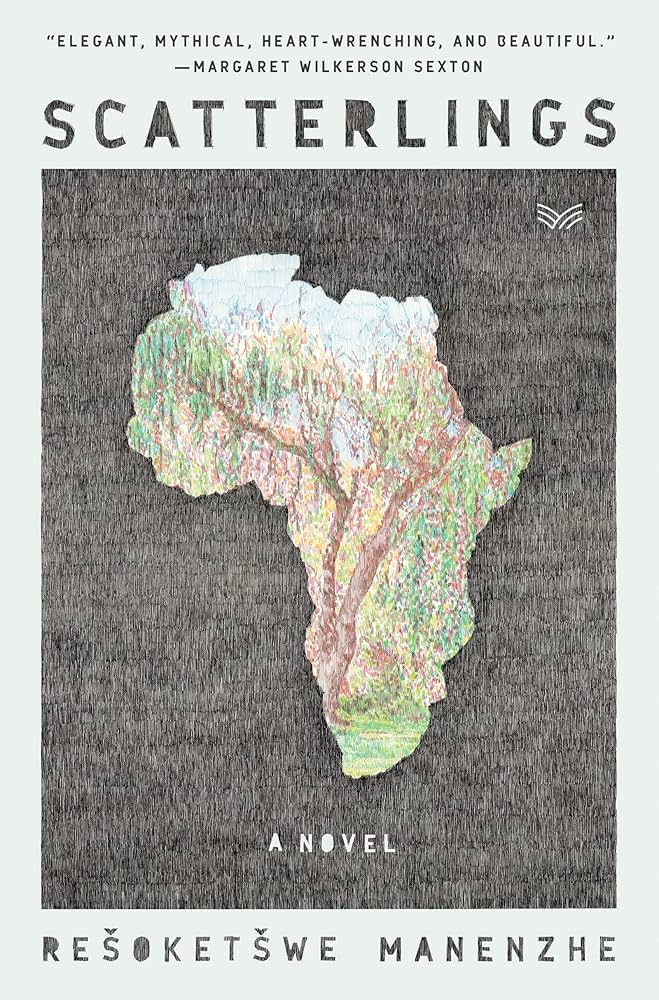
Scatterlings: A Novel by Resoketswe Martha Manenzhe
One of the primary reasons I love reading — and I’m not the first to say this — is the deep empathy reading about others’ experiences develops in ourselves. Scatterlings is such a novel that opens us up to new ways of understanding the past and the present, others and ourselves. This is a novel that will move you in many ways: to sadness, to fear, to loathing, to empowerment, to depression.
This is a novel in the vein of Beast of No Nation by Uzodinma Iweala or The Bird Tattoo: A Novel by Dunya Mikhail. It is fiction of the very real, very tangible suffering in our world, albeit in a time now past (though, not gone, forgotten, or fully healed).
The novel is a historical fiction, taking place in South Africa as its racist, anti-black Apartheid policies began to ramp up. It revolves around the enforcement of the Prohibition of Mixed Marriages Act, Act No. 55 of 1949, and the very real fall out in people’s lives.
The scattered are the wives, husbands, and children of these mixed-race marriages, suddenly made illegal in the eyes of the law. The novel traces the actions of a family and what they each individually must do to survive this.
The outcomes are tragic, but the reader who chooses this subject matter is one who understands that to witness is a step towards reparation.
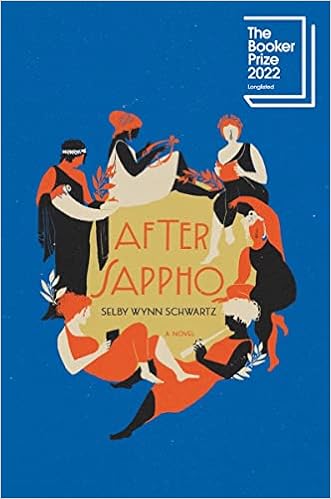
This is a deeply intellectual tale, one woven out of ancient and Italian history, imagination, and philosophies of Womanhood and queerness. The fiction in these pages reads as a reimagined history of real women, whose lives were lost to us because of the threat they posed (just by being) to European and Italian patriarchy. The tale unfolds as a kind of immortal telling of several lives, connected to a single soul. It is multigenerational and historical. There are several “Sapphos”.
As a historian, I deeply appreciated the embedded histories here: legal, social, cultural. There is a historiographical element to the book, an unfolding of a trajectory of thought as the book follows “Sappho” in her various guises and incarnations through time.
This is not an easy read. There is a required pre-existing understanding of Italian and European literature necessary to grasp its nuances. But, that said, the undercurrent of desire, rage, and feminist ambition is hard to miss. For that reason, After Sappho is worth both an initial and several re-reads.
Some context as to how I came across this book. As I have mentioned before in another review, I do not usually gravitate toward independently published novels. But as with that previous review, I happened across the opportunity to do so via a FB group I am in which pairs up authors with reviewers. See here for the details of the May 2023 Book Review.
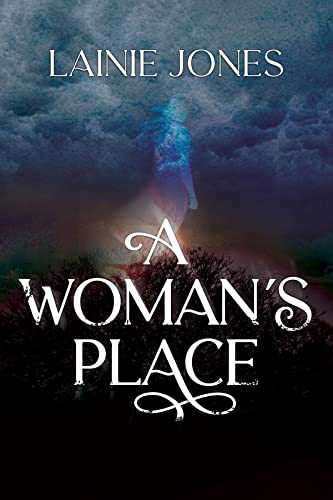
I am not one to pay attention to those one-word reviews you see plastered all over the covers of mass market books: “Captivating”, “Spell-binding”, “Unputdownable!” What is one woman’s tea is another’s poison (isn’t that the saying?) and so I am hesitant to repeat any of those vague, yet complimentary, descriptions here. But the thing is, A Woman’s Place is truly captivating. The paperback is a substantial read at 317 pages; I found myself lost in several chapters at a sitting, finishing the book in two days. It is, indeed, hard to put down. This historical paranormal mystery is riveting to its last page.
Jones does more than weave a gripping story; her prose is well-crafted and the dialogue is vivid, resulting in the creation of tangible, flawed, and very human characters. Jones holds a PhD in creative writing and possesses an academic and literary portfolio which clearly contributes to the historical and literary robustness of A Woman’s Place. This novel is clearly not a “standalone” work in the sense that it is built upon a foundation of years of research, thought, and analysis. What we read in A Woman’s Place is merely the tip of a very large iceberg.
A Woman’s Place is a novel running along the lines of Yaa Gyasi’s Homegoing or Melissa Fu’s Peach Blossom Spring as it is a multigenerational tale. It might be appropriate to liken A Woman’s Place to a fictional European settler version of My Place by Sally Morgan, though, of course the latter is biographical and A Woman’s Place is fiction.
The setting of Jones’ novel is rural Australia, in sheep farming country. It revolves around the events at a remote homestead named Barragunyah, a desolate place known by the name given it by its original inhabitants, indigenous aborigines. The novel spans the end of the 19th century through into the late 20th century, capturing the experiences of five generations of women of the family who came to farm the land. There is also another woman who resides on the land, a mysterious presence called only Mary. The novel unfolds the mystery of Mary and the magnetic pull of Barragunyah, as well as revealing how Australia’s and the world’s history comes to affect ordinary Australians, native and settler alike. British imperial history, the tragedy of the World Wars humanity faced in the twentieth century, and changes in women’s rights emerge as central hinges in the novel. There is also a prosopographical aspect to the novel in that the reader is treated to how these large world events actually affect the daily, lived lives of the Barragunyah women.
In many ways, this is a fantastic historical fiction written for a historian. Or perhaps I feel that way because I am one, and because Australian colonial and post-colonial history, being adjacent to Southeast Asian history of the same period, is something I have an interest in on both a professional and personal level. I think American audiences will find both novel elements and familiarity in these pages. The bond between mothers and daughters, humans and the land we inhabit and shape (and which shapes us), and our selves and our place in the movement of time and history are universal experiences, but American readers will also find themselves introduced to Australian history and experiences.
The novel also has an intriguing mystery embedded in it. As each generation faces the turbulent events of their age, Barragunyah and Mary are there, watching and waiting — though it is unclear what for. This is where the paranormal element emerges. In this way, A Woman’s Place reminds of me of Simone St James’s supernaturally tinged novels, The Haunting of Maddy Clare or The Sun Down Motel. Like many paranormal mysteries, Jones’ A Woman’s Place revolves around an unspoken crime, one grounded and inescapable in Australian history. Jones does a fantastic job of revealing the root of this crime without giving it away, tantalizingly allowing the reader’s own imagination to make sense of the darkness where Mary resides. On that point, I wish Jones had delved more deeply into the aboriginal perspectives on Barragunyah; I am left wanting a sequel or a prequel or the “other side” of the story, as it were. Barragunyah is haunting; as a reader I feel just as deeply connected to this place as the Larson women.
That is a good thing, to be left wanting more.
If you are interested in purchasing a copy of this independently published novel, you can find it on Amazon here. At present, it is priced at $7.49 for the ebook Kindle version and $18.99 for the paperback print.
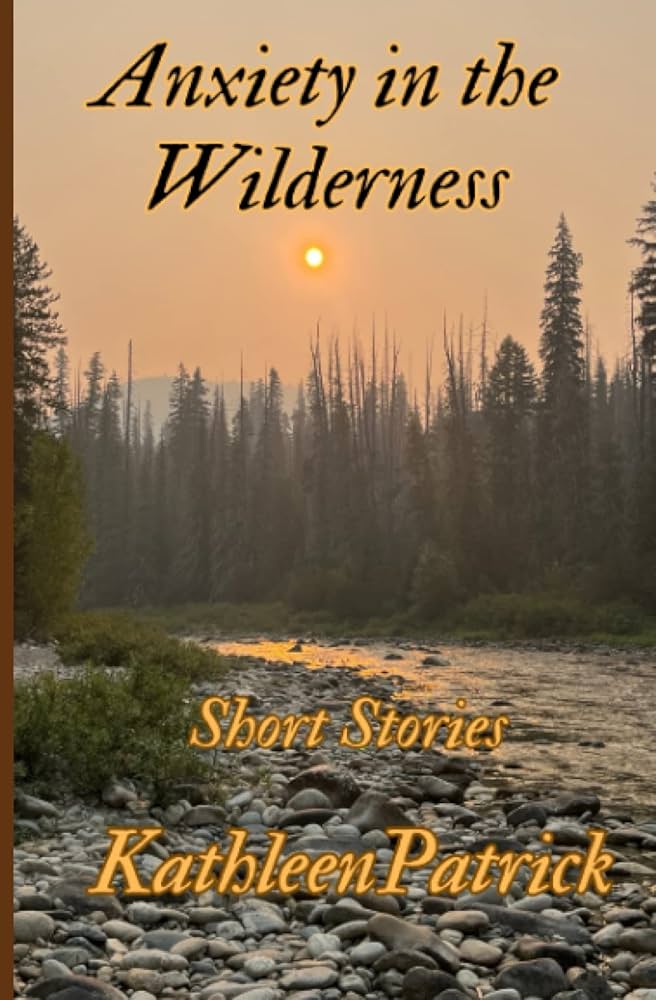
Anxiety in the Wilderness: Short Stories by Kathleen Patrick
I’ll start with context, not about the book, but about how I came to review it. I don’t typically read independently published novels and books for a variety of reasons. But I decided to join a Facebook group, one which has an active review program organized by the administrators. On a whim and by chance, I joined in.
The process began with contacting the organizing administrator. Every reviewer wrote a short biography of themselves as readers.
Hello! My name is JoAnn. I'm located in the USA. I'm an academic in the humanities and a huge reader (it's part of the work I love to do!) I actively review books and galleys, both professionally and for my own pleasure. I review Non-Fiction and Fiction. I prefer physical print copies. For NF I read history and historical archaeology. In fiction, my preferred genres are: Historical Literary Fiction, Literary Fiction, Multicultural/OwnVoices, multigenerational fiction. I especially enjoy Asian-American, Immigration, BIPOC stories/themes. I do not gravitate toward romance, thrillers, horror, or contemporary fiction as much, but on occasional will read slipstream and mysteries."
Then I waited…
Each participating author scrolled through the post to find a reader they thought would match their novel or manuscript and commented below their name. [While some reviewers had several interested authors, I did not. In fact, Patrick had not selected me as a reader for her collection, but I saw her book offered to another reviewer and I asked the organizer if I could review it.] Reviewers could then choose three authors or books they wanted to review. The organizing administrator then connected the authors to the reviewers via direct messaging.
Anxiety in the Wilderness: Short Stories was one of the books I had the privilege to review. I am glad I got the chance to do so; Patrick’s collection of stories is well-worth the read and the price (at present USD $9.99 for the paperback, $0.99 for Kindle ebook, $15.99 for the hardback edition). [Indeed, Patrick’s collection of tales causes me to consider reading more independently published fiction.] The collection, at a total of 161 pages, comprises of seventeen stories and two poems, a few of which have been published in journals elsewhere.
The stories collected in this volume cohere under the theme suggested in its title. These are vignettes clipped from a variation of lives. Each story captures a personal moment of anxiety, ranging from the life-changing to the merely inconvenient. In these tales individuals lose some part of themselves or worry about the possibility of doing so: In Fire, a woman assesses what part of her life is measured in the material goods she owns; in Anxiety in the Wilderness what it means to watch someone lose their life forces a woman to review her value to her spouse. In other stories mothers look upon their children and weigh their love for them against their love for their husbands, wives question the strength of their husband’s love, children face the loss of a parent. Patrick’s stories reflect the small and large gravities in our lives like a mirror.
Like a reflection in a mirror, Patrick’s prose possesses clarity and crispness; in its simple lines there is an element of accuracy in her portrayals of human worry. This lends a literary quality to the collection as a whole. Patrick’s words are deliberately sparse, and in this, she allows the reader a rare privilege: To imagine themselves in the precarious positions the characters are in. It is this small inflection permitted to the reader which I find most appealing about Patrick’s work; she holds back from telling the reader what to feel and so the reader’s own fears organically merge with those of the characters in her tales. The effect is a profound empathy on the part of the reader for the individuals in these tales. Some of the stories left me with an intense poignancy, which I do not regret; this depth of feeling is a testament to the stories and Patrick’s skill as an author. The reader is left feeling “seen” and the result is one of both discomfort (from the anxiety around which the story revolves) and assurance that we are not alone in our worries. Like many of the tales here, there is a bittersweet end for the reader.
Patrick states these stories were written over many years; perhaps drawing from different periods and experiences in her own life. There is a breadth of experience in these stories, expressed in both the varied ages and genders of the characters Patrick produces, and in the range of events and concerns around which the stories revolve. Some stories focus on youthful worries: love, romance, ambition, belonging. Others hone in on more mature causes of unease: death, aging, marriage, adultery, loneliness. I appreciate this variation deeply; I think most readers will find at least a few stories that move them. This is a collection for adult readers across the age spectrum.
On a more personal level, I enjoyed “Letters Home”, “The Dancer”, and “Storm” most, though all of the stories had each their own attractions. There was not one story which I wanted to skip, nor one I disliked, none I found out of place, or which evoked less than a thoughtful pause at its end.
If you’re interested in purchasing Anxiety in the Wilderness, you can do so from Amazon. You’ll find it here.
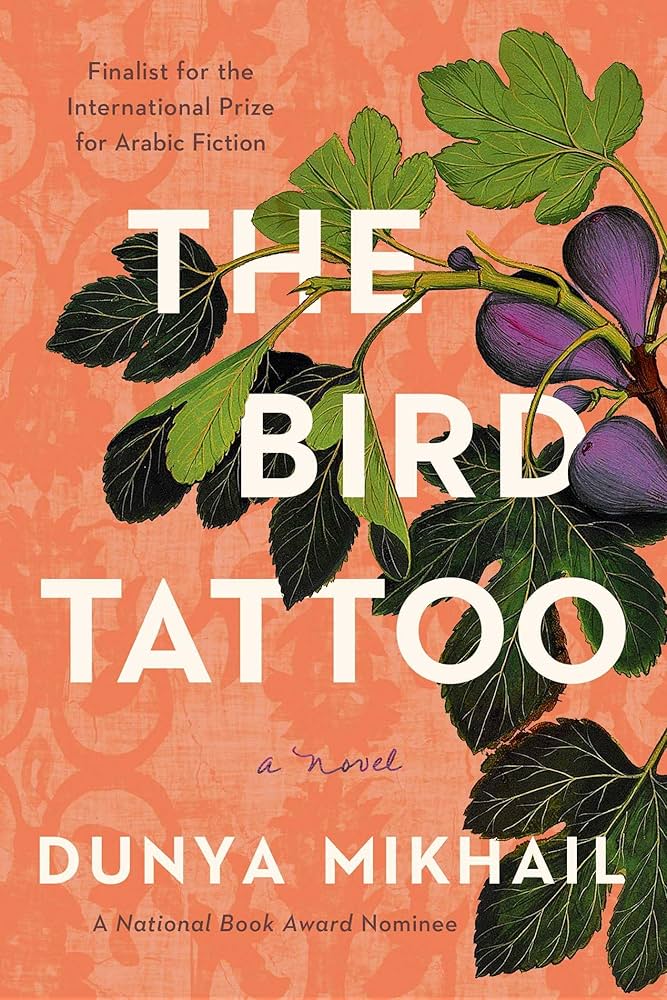
This novel devastated me. From its start to its end, I could not look away, though I wanted to put it down so many times, needed to put it down so many times for my own peace of mind. The pain of the characters was so real and tangible that I felt if I put down the book I was doing them an injustice. If I could — and I did — put down this book, that is proof I am privileged enough as to be able to switch off their suffering. And that really is an important point here because the subjects of this story and their histories is not a thing of the past. Mikhail’s tale is not a fiction, but the reality of a several thousand women in the world today.
The Bird Tattoo is about suffering and war, and what happens to women and children in times and places of war. The main character is a young wife and mother, a Yazidi woman who is kidnapped from her home in Iraq and sold into slavery, to be passed over and over again as an unwilling wife among the Islamic militants who have taken over her country. In her agonizing wait for rescue and her journey to freedom, both she and the reader encounter other women and children who are enslaved — and the men who enslave them. The conflict that the novel is premised is on is not made explicit; it doesn’t need to be. What is important is that it is contemporary and could be one of so many that are happening right now. That is Mikhail’s point in fact.
You are reading the words of someone’s life right now.
Some of the men who rule this cruel war-torn world are as expected: cruel and indifferent. Others are kind, in relative terms. Each are trapped within a terror not of their own making, the terror of states and governments bent on power and hatred. Some of the women are equally as surprising; some have developed Stockholm Syndrome, some are defeated and have given up, others are defiant. They are prisoners all the same. They, like the men, exist at the whims of others — for them, at the whim of their male masters, their new husbands. There are children too, some of the women are not women at all, but are children.
The novel is about the trust and the lack of trust between these individuals. It is gut-wrenchingly sad, but it is also hopeful. It is about resilience of the human soul and the human drive to survive. It is about resilience of humaneness and the power of kindness.
The Bird Tattoo is like so many classic novels (indeed, I think it is destined for that category) in the vein of Elie Wiesel’s Night or Uzodinma Iweala’s Beasts of No Nation: necessarily painful to read. The pain the reader will feel is the liminal ritual, the necessary rite of passage that allows us to recognize hope and the privilege of being alive and safe. Books like these make us thankful for the peace in our lives.
Books like these also inspire us to action. That is the manifestation of hope.
If there is one book you read this year, read this one.
Oh my goodness, this was a fun, fun, fun read! It was like reading an indie version of Ocean’s Eleven, but without the attractive people, fabulous clothes, or money$money$money! Ha! This is a Western, Noir, Stoner, Comedy novel rolled into one. There’s drugs, sex, manipulation, and crime in this swift-moving novel of criminal bungling.
The story revolves around a weed dispensary, its employees, and those within its seedy orbit. There is a plot, hatched by an amateur criminal, a woman who works at the dispensary. She ropes in her dimwitted boyfriend who also works there. (You can see where this is going!) They commit the crime and it’s off! There is bounty hunter and a chase to track them down and that’s what the zig zag is all about.
This is a very entertaining read. It leaves you feeling bemused, glad that you’re smarter than most of the characters in the novel, but don’t expect anything earth-shattering. Life most blockbuster films, the thrill is only as good as it lasts, and that’s OK.
What makes this enjoyable — just as it is with most films — is the writing. O’Brien’s prose is witty, humorous. This reads as smoothly as a screenplay, transiting from scene to scene ease. This novel is a perfect Sunday afternoon read; the kind that makes you happy about going to work the next day because where you work isn’t this HAHA!
The description states this is a feminist tale, what happens when women are ostracized, “cast out” from their communities. It does not disappoint. The characters and their lives challenge typical narratives of women in this historical era. Despite being several decades past the so-called Women’s History turn in the discipline, popular depictions of European women in the 17th century remain stagnant as powerless, subjects in a patriarchal world, and largely passive. Of course, we have seen and heard of the warrior women (queens), daring women (aristocrats), extraordinary women (those who chose to challenge norms); what we often lack are narratives of truly ordinary women. They remain (largely) relegated to a passive role in society.
Not so in Elizabeth Lee’s Cunning Women.
In this tale women lead the way despite living under a patriarchal yoke. The characters here are not heroines, they do not dismantle patriarchy, they must live within in it (as we all do) but they resist. It is this reality that Lee folds the reader into. Mother and daughters, even the sons of the village are bound within a system not of their own making. What makes Cunning Women feminist is that some characters find ways to resist, even when knowing their reality cannot deliver on desire. They resist anyway. Other characters find ways to resist by scraping by, by working within the system and in these ways — by merely surviving — challenge the patriarchy which binds them. These characters, in their hanging onto life, raise a fist to “the Man” so to speak. Even the characters who bow to the patriarchy find themselves at odds with it when the women in this tale earn their vengeance.
Cunning Women is a complex tale, one which appears deceptively simple in its plot. It is for that reason (I believe) the story moves slowly. Lee allows the reader time to digest and mull over, to reflect as the main character does on the parameters of a woman’s life in an English village in the 17th century. The love story necessarily moves slowly; this is not a rush of lust but an intellectual and emotional growth of love. Note: this is not a romance. No, this is much more realistic than that. Cunning Women is an account of a realistic life with all its banality and uncertainties.
I was excited to read this! I had seen it in Barnes and Noble and heard the buzz about the book on Reddit subs, so when I saw it at my community library I snapped it up! So, did it live up to the hype?
Yes! And no…
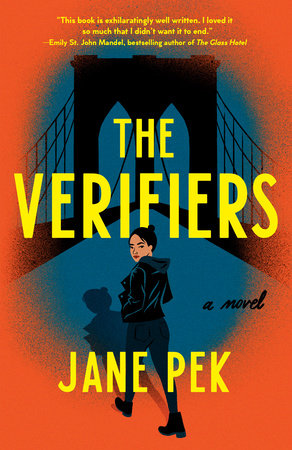
The novel takes place in some near future moment, one that is so social media infused that I wonder at the future aspect of it. The plot hinges on this, this world of internet connections, social media speculation, cell phone immediacy, reality television lives played out in reality. But for me, this is where the novel lost me. I’m a luddite in some ways; I mean, I have social media, I’m on the internet (clearly), but the world of The Verifiers, one in which people investigate potential partners and devolve into internet sleuthing is just a step too far out for me.
This is where the novel lost me. In what privileged world could someone possibly find the time to slink off during work hours to hunt down a potential killer? The gall and arrogance of believing that this is a calling of some kind derails the plot for me, which is unfortunate since that is the sum of the mystery here.
That said, there were aspects of this novel that struck chords with me: the immigrant narrative of the middle child, the striving for perfection and belonging, the need to prove oneself in a foreign world — that was appealing. I am a failed Business major, after all. (I also briefly contemplated a medical career until Organic Chem dissuaded me.)
The resolutions to both conundrums escapes me. I can’t remember what happens in the end of the novel, signs surely of a lackluster reading experience on my part. All in all, a decent read for passing the time.





 Dr JoAnn LoSavio