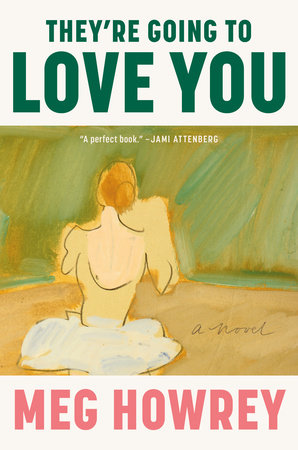
This one is a quiet burn, the kind of novel that leads to a swell of deep and intense emotion at the end. You’re left, Reader, with a sense of loss at the end, a feeling that you’ve experienced something very intimate, that maybe you shouldn’t have, but you had to — and you did — and now you’re left to think about the memory of the novel. They’re Going to Love You sticks in your mind like taffy to the roof of your mouth, a lingering taste of sweet and salty. Maybe a little sour.
They’re Going to Love You is a story about parenting, being a child, being a child to parents who are human and flawed. It is also a story about the fragility of relationships and the unpredictable strength of them. It’s a story about the trials of family, the values that are assumed in a family unit, assumed because of blood and marriage and birth. It is also a story of betrayal and grief, of not having what we assume we should have or of losing what we felt we should never have been able to lose.
The novel revolves around and is narrated through the eyes of a young girl who becomes a young woman and then a middle aged woman. She is a dancer and the daughter of dancers, ballet dancers in the heady and chaotic New York city scene of the mid-twentieth century. The father is a gay man, openly so, and there is a step-father. Then there is her mother, a former ballerina. The parents expect a lot from the girl. This is a story about expectations and hopes and dreams that are ours and also, not our own.
As the girl grows up there are things she learns about her privileged life and the expectations of her privileged life and the ways in which people look at her from outside her life. She learns about love from her parents and from their divorce and from their forced interactions on her account. She learns about love from her father’s gay friends. She learns about betrayal from her parents and what it means to forgive.
The novel is also about death and the finiteness of this life and of love. It is about realities underlying the fantasy of a ballet-infused, performed life.
Howrey’s prose is stark and cutting. It is dark and yet also childish, implying childhood is in fact a darker space and time than we are often led to believe. The characters are children and adults and you are not sure who is the adult and who is the child sometimes. The dialogue is authentic, sometimes painfully so, too reminiscent of our own familial traumas.
There is an element of this book that prickled me, for as much as I praise it: the characters are insufferably privileged. They are white, wealthy, part of the exclusive milieu of pretentious NYC. The main character is a nepo baby, whether she thinks so or not. So is her father. Intergenerational privilege abounds in this novel. This is a world that exists for a fraction of a fraction of a fraction of the world’s population. It’s not my world, for sure.
But, that is what novels are for (in part): entries into worlds unknown.
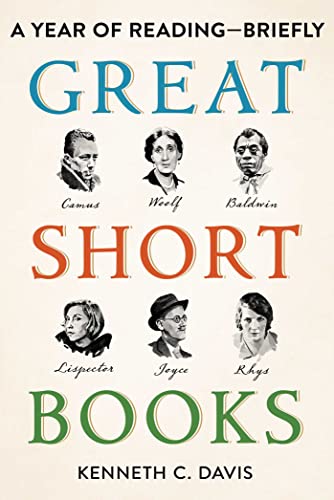
Great Short Books: A Year of Reading Briefly by Kenneth C. Davis
A book about books! I love it! I don’t usually read books that review other books, but I was interested in building up the classics in my TBR (To Be Read) list and thought, sure, why not? I am so glad I did because Davis’s short reviews, not only of the short book he recommends, but also the vignettes of the author and the tidbits about their other novels inspired me to produce a Classics Reading Challenge on my Storygraph page. [You can find it here.]
What I really enjoyed about Great Short Books were the depth of the reviews and discussion around the novel. Davis gave enough information about the novel to intrigue, but not too much as to spoil the desire to read it myself. The authors too, though I’d read many of them already, became more fully fleshed out in my mind as people, more than merely producers of the works I love to read.
If you’re looking to expand and explore new literary choices, Great Short Books delivers the perfect small-bites information you need to fuel your own adventure.
My New Classics Reading Challenge Inspired by Davis’ book:
The glitter and cynicism of Rome under Mussolini provide the background of what is probably Alberto Moravia’s best and best-known novel — The Woman of Rome. It’s the story of Adriana, a simple girl with no fortune but her beauty who models naked for a painter, accepts gifts from men, and could never quite identify the moment when she traded her private dream of home and children for the life of a prostitute.
Secrecy and Silence are second nature to Marcello Clerici, the hero of The Conformist, a book which made Alberto Moravia one of the world’s most read postwar writers. Clerici is a man with everything under control – a wife who loves him, colleagues who respect him, the hidden power that comes with his secret work for the Italian political police during the Mussolini years. But then he is assigned to kill his former professor, now exiled in France, to demonstrate his loyalty to the Fascist state, and falls in love with a strange, compelling woman; his life is torn open – and with it the corrupt heart of Fascism. Moravia equates the rise of Italian Fascism with the psychological needs of his protagonist for whom conformity becomes an obsession in a life that has included parental neglect, an oddly self-conscious desire to engage in cruel acts, and a type of male beauty which, to Clerici’s great distress, other men find attractive.
FIRST PUBLISHED in English in 1958, Two Women is a compassionate yet forthright narrative of simple people struggling to survive in war. The two women are Cesira, a widowed Roman shopkeeper, and her daughter Rosetta, a naive teenager of haunting beauty and devout faith. When the German occupation of Rome becomes imminent, Cesira packs a few provisions, sews her life savings into the seams of her dress, and flees with Rosetta to her native province of Ciociara, a poor, mountainous region south of Rome.
Cesira’s currency soon loses its value, and a vicious barter economy, fraught with shifty traffickers and thieves, emerges among the mountain peasants and refugees. Mother and daughter endure nine months of hunger, cold, and filth as they await the arrival of the Allied forces. Cesira scarcely cares who wins the war, so long as victory comes soon and brings with it a return to her quiet shopkeeper’s life.
Instead, the Liberation brings tragedy. While heading back to Rome the pair are attacked by a group of Allied Moroccan soldiers, who rape Rosetta and beat Cesira unconscious. This act of violence and its resulting loss of innocence so embitters Rosetta that she falls numbly into a life of prostitution. Throughout these hardships Moravia offers up an intimate portrayal of the anguish wrought by the devastation of war, both on the battlefield and upon those far from the fray.
In 1936 George Orwell travelled to Spain to report on the Civil War and instead joined the fight against the Fascists. This famous account describes the war and Orwell’s own experiences. Introduction by Lionel Trilling.
Running into a long-ago friend sets memories from the 1970s in motion for August, transporting her to a time and a place where friendship was everything—until it wasn’t. For August and her girls, sharing confidences as they ambled through neighborhood streets, Brooklyn was a place where they believed that they were beautiful, talented, brilliant—a part of a future that belonged to them.
But beneath the hopeful veneer, there was another Brooklyn, a dangerous place where grown men reached for innocent girls in dark hallways, where ghosts haunted the night, where mothers disappeared. A world where madness was just a sunset away and fathers found hope in religion.
Widowed at thirty, beautiful, resourceful Therese Lafirme is left alone to run her Louisiana plantation. When Therese falls in love with David Hosmer, a divorced businessman, her strong moral and religious convictions make it impossible for her to accept his marriage proposal. Her determined rejection sets the two on a tumultuous path that involves Hosmer’s troubled former wife, Fanny.
At Fault is set in the Post-Reconstruction rural South against a backdrop of economic devastation and simmering racial tensions. Written at the beginning of her career, it has parallels to Chopin’s own life and contains characters and themes that prefigure her later works, including The Awakening.
A powerful and passionate tale is set on a southern army post –a human hell inhabited by a sexually disturbed officer, his animalistic wife, her lover, and the driven young private who forces the drama to its climax…
Carson McCullers’ prodigious first novel was published to instant acclaim when she was just twenty-three. Set in a small town in the middle of the deep South, it is the story of John Singer, a lonely deaf-mute, and a disparate group of people who are drawn towards his kind, sympathetic nature. The owner of the café where Singer eats every day, a young girl desperate to grow up, an angry drunkard, a frustrated black doctor: each pours their heart out to Singer, their silent confidant, and he in turn changes their disenchanted lives in ways they could never imagine.
Black Boy is a classic of American autobiography, a subtly crafted narrative of Richard Wright’s journey from innocence to experience in the Jim Crow South. An enduring story of one young man’s coming of age during a particular time and place, Black Boy remains a seminal text in our history about what it means to be a man, black, and Southern in America.
Buddenbrooks, first published in Germany in 1901, when Mann was only twenty-six, has become a classic of modern literature.
It is the story of four generations of a wealthy bourgeois family in northern Germany facing the advent of modernity; in an uncertain new world, the family’s bonds and traditions begin to disintegrate. As Mann charts the Buddenbrooks’ decline from prosperity to bankruptcy, from moral and psychic soundness to sickly piety, artistic decadence, and madness, he ushers the reader into a world of stunning vitality, pieced together from births and funerals, weddings and divorces, recipes, gossip, and earthy humor.
In its immensity of scope, richness of detail, and fullness of humanity, buddenbrooks surpasses all other modern family chronicles. With remarkable fidelity to the original German text, this superb translation emphasizes the magnificent scale of Mann’s achievement in this riveting, tragic novel.
The Dry Heart begins and ends with the matter-of-fact pronouncement: “I shot him between the eyes.” As the tale—a plunge into the chilly waters of loneliness, desperation, and bitterness—proceeds, the narrator’s murder of her flighty husband takes on a certain logical inevitability. Stripped of any preciousness or sentimentality, Natalia Ginzburg’s writing here is white-hot, tempered by rage. She transforms the unhappy tale of an ordinary dull marriage into a rich psychological thriller that seems to beg the question: why don’t more wives kill their husbands?
Today F. Scott Fitzgerald is better known for his novels, but in his own time, his fame rested squarely on his prolific achievement as one of America’s most gifted writers of stories and novellas. Now, a half-century after the author’s death, the premier Fitzgerald scholar and biographer, Matthew J. Bruccoli, has assembled in one volume the full scope of Fitzgerald’s best short fiction: forty-three sparkling masterpieces, ranging from such classic novellas as “The Rich Boy,” “May Day,” and “The Diamond as Big as the Ritz” to his commercial work for the Saturday Evening Post and its sister “slicks.” For the reader, these stories will underscore the depth and extraordinary range of Fitzgerald’s literary talents. Furthermore, Professor Bruccoli’s illuminating preface and introductory headnotes establish the literary and biographical settings in which these stories now shine anew with brighter luster than ever.
Acclaimed by critics, beloved by readers of all ages, taught everywhere from inner-city grade schools to universities across the country, and translated all over the world, The House on Mango Street is the remarkable story of Esperanza Cordero.
Told in a series of vignettes – sometimes heartbreaking, sometimes deeply joyous–it is the story of a young Latina girl growing up in Chicago, inventing for herself who and what she will become. Few other books in our time have touched so many readers.
Every year, Ceyala “Lala” Reyes’ family–aunts, uncles, mothers, fathers, and Lala’s six older brothers–packs up three cars and, in a wild ride, drive from Chicago to the Little Grandfather and Awful Grandmother’s house in Mexico City for the summer. Struggling to find a voice above the boom of her brothers and to understand her place on this side of the border and that, Lala is a shrewd observer of family life. But when she starts telling the Awful Grandmother’s life story, seeking clues to how she got to be so awful, grandmother accuses Lala of exaggerating. Soon, a multigenerational family narrative turns into a whirlwind exploration of storytelling, lies, and life. Like the cherished rebozo, or shawl, that has been passed down through generations of Reyes women,Caramelo is alive with the vibrations of history, family, and love.
Set in the contemporary Paris of American expatriates, liaisons, and violence, a young man finds himself caught between desire and conventional morality. James Baldwin’s brilliant narrative delves into the mystery of loving with a sharp, probing imagination, and he creates a moving, highly controversial story of death and passion that reveals the unspoken complexities of the heart.
Primo Michele Levi was a chemist and writer, the author of books, novels, short stories, essays, and poems. His unique 1975 work, The Periodic Table, linked to qualities of the elements, was named by the Royal Institution of Great Britain as the best science book ever written.
Levi spent eleven months imprisoned at Monowitz, one of the three main camps in the Auschwitz concentration camp complex (record number: 174,517) before the camp was liberated by the Red Army on 18 January 1945. Of the 650 Italian Jews in his transport, Levi was one of only twenty who left the camps alive.
The Primo Levi Center, dedicated “to studying the history and culture of Italian Jewry,” was named in his honor.
For years, it had been what is called a “deteriorating situation.” Now all over South Africa the cities are battlegrounds. The members of the Smales family—liberal whites—are rescued from the terror by their servant, July, who leads them to refuge in his village. What happens to the Smaleses and to July—the shifts in character and relationships—gives us an unforgettable look into the terrifying, tacit understandings and misunderstandings between blacks and whites.
Mehring is rich. He has all the privileges and possessions that South Africa has to offer, but his possessions refuse to remain objects. His wife, son, and mistress leave him; his foreman and workers become increasingly indifferent to his stewarsship; even the land rises up, as drought, then flood, destroy his farm.
When the spring came the people – what was left of them – moved back by the old paths from the sea. But this year strange things were happening, terrifying things that had never happened before. Inexplicable sounds and smells; new, unimaginable creatures half glimpsed through the leaves. What the people didn’t, and perhaps never would, know, was that the day of their people was already over.
From the author of Lord of the Flies, The Inheritors is a startling recreation of the lost world of the Neanderthals, and a frightening vision of the beginning of a new age.
At the height of the London blitz, a naked child steps out of an all-consuming fire. Miraculously saved yet hideously scarred, tormented at school and at work, Matty becomes a wanderer, a seeker after some unknown redemption. Two more lost children await him: twins as exquisite as they are loveless. Toni dabbles in political violence, Sophy in sexual tyranny. As Golding weaves their destinies together, as he draws them toward a final conflagration, his book lights up both the inner and outer darknesses of our time.
Rutherford Calhoun, a newly freed slave and irrepressible rogue, is lost in the underworld of 1830s New Orleans. Desperate to escape the city’s unscrupulous bill collectors and the pawing hands of a schoolteacher hellbent on marrying him, he jumps aboard the Republic, a slave ship en route to collect members of a legendary African tribe, the Allmuseri. Thus begins a voyage of metaphysical horror and human atrocity, a journey which challenges our notions of freedom, fate and how we live together. Peopled with vivid and unforgettable characters, nimble in its interplay of comedy and serious ideas, this dazzling modern classic is a perfect blend of the picaresque tale, historical romance, sea yarn, slave narrative and philosophical allegory.
It is July 1962. Florence is a talented musician who dreams of a career on the concert stage and of the perfect life she will create with Edward, an earnest young history student at University College of London, who unexpectedly wooed and won her heart. Newly married that morning, both virgins, Edward and Florence arrive at a hotel on the Dorset coast. At dinner in their rooms they struggle to suppress their worries about the wedding night to come. Edward, eager for rapture, frets over Florence’s response to his advances and nurses a private fear of failure, while Florence’s anxieties run deeper: she is overcome by sheer disgust at the idea of physical contact, but dreads disappointing her husband when they finally lie down together in the honeymoon suite.
When Myriam, a French-Moroccan lawyer, decides to return to work after having children, she and her husband look for the perfect nanny for their two young children. They never dreamed they would find Louise: a quiet, polite, devoted woman who sings to the children, cleans the family’s chic apartment in Paris’s upscale tenth arrondissement, stays late without complaint, and hosts enviable kiddie parties. But as the couple and the nanny become more dependent on one another, jealousy, resentment, and suspicions mount, shattering the idyllic tableau.
Cain’s first novel – the subject of an obscenity trial in Boston and the inspiration for Camus’s The Stranger – is the fever-pitched tale of a drifter who stumbles into a job, into an erotic obsession, and into a murder.
This rich and moving novel traces the lives of two black heroines from their close-knit childhood in a small Ohio town, through their sharply divergent paths of womanhood, to their ultimate confrontation and reconciliation.
Nel Wright has chosen to stay in the place where she was born, to marry, raise a family, and become a pillar of the black community. Sula Peace has rejected the life Nel has embraced, escaping to college, and submerging herself in city life. When she returns to her roots, it is as a rebel and a wanton seductress. Eventually, both women must face the consequences of their choices. Together, they create an unforgettable portrait of what it means and costs to be a black woman in America.
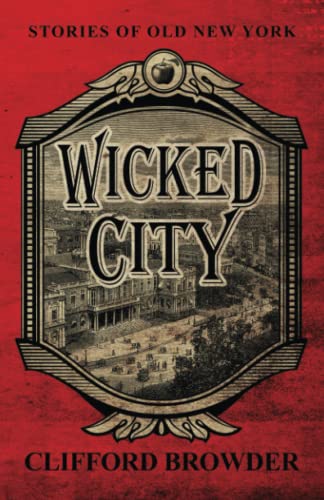
Wicked City: Stories of Old New York by Clifford Browder
Oooo! What a slick collection of grimy, gruesome peeks under the golden veneer of the Gilded Age! The prose and tales in Wicked City are as smooth as the criminal characters in its pages, which is to say, if you, Reader, are a fan of urban grit and historical fiction, then this is the collection of stories for you. Wicked City reads like a literary revision of The Gangs of New York, but instead of Daniel Day Lewis, the lead is a very chic Edith Wharton — if Edith had a side hustle as a brothel Madam and if the brothel was run out of the Waldorf Hotel.
Make of that what you will. (I love Edith Wharton’s refined snark and the grubbiness of Gangs of New York.)
The stories in Wicked City are historical, but some things have been updated since the actual Gilded Age. Many of the tales are infused with modern sensibilities, that is, there are more enlightened notions around race, racism, class, and gender in these pages than perhaps there were in history. For example, Browder includes tales from Chinatown and addresses interracial marriage. Jingoism and nativism abound and are present, but Browder does justice to history by highlighting the non-White version of events in his fictions.
Many of the stories interweave, though some of the connections are subtle; there is a sense of dispersed, urban community woven throughout the collection. True to Browder’s work, this is an homage to New York and its history.
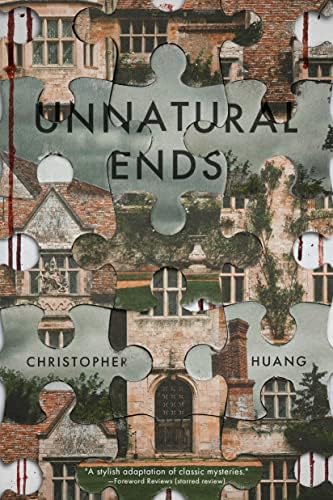
Unnatural Ends reads like a French six-course dinner prepared and delivered by the latest cohort of Top Chef, served in the very classy digs of Downton Abbey, while you and your guests find yourself flung into a live-action Gosford Park; in short, this novel is the quintessential English manor-murder-mystery, updated for the 2022 reader. There is a hint of Mavis Hay’s (1936) Santa Klaus Murder here, a bit of Agatha Christie, and a good strong nod to the immorality of the British Empire (though, nothing quite so dark as Kazuo Ishiguro’s Remains of the Day). This novel is unbelievably English.
I loved it.
It did take me a few chapters to fully dig into the thrill of the case, but the family was so immediately deranged and dysfunctional, I couldn’t look away any more than if I encountered a train accident and found it to be the wreckage of the Orient Express.
The story begins with the death of the patriarch — his ghastly murder — and the strange clause in his will that disproportionately favors any of his adopted children who solves the crime. The novel unfolds from that point on in a predictable fashion for any mystery, but the ending and the twists of blood, family, and the loyalties of genetics kept this reader on her toes. Just when this reader thought she’d solved it, something emerged which threw her off! Between the three siblings, the pathetic mother and widow, the overbearing and sadistic father, and the eye-rolling police, Unnatural Ends delivers a very witty enjoyable read from start to finish.
For the reader who enjoys more than mystery, the novel also possesses several threads of underlying social and historical commentary. Britain’s dark imperial history, rife with its undeniable racism and eugenic standards of morality, are key foundational elements of the plot. Indeed, the cruel history of eugenics and colonialism are integral to the constituency of its characters and the motivations behind the twists and ruts of this mystery. On that note, however, the novel is not pedantic or a history lesson: it is wholly a mystery novel.
Unquiet Spirits: Essays by Asian Women in Horror Edited by Angela Yuriko Smith & Lee Murray
I honestly wasn’t sure what to expect from this collection: Modern horror? Literary criticism? Traditional tales of terror? It intrigued me regardless.
What Unquiet Spirits delivers is a combination of all of the above. It is memoir, criticism, history, and ethnography in balanced fusion. Each chapter is written by an Asian female author and in it she discusses both her own writing, the cultural and historical inspiration for her characters, the origins of some feminine demon, ghost, or creepy — a unquiet spirit — which haunts her and the pages she has produced. In some chapters the author draws on a deeper well of literature of the past and ponders the future of the female spirit archetype that is the focus of their chapter.
The books is divided by and devotes its pages equally to feminine spirits across the Asian continent, from East to Southeast to South Asia. I was pleasantly surprised to see such attention given to Southeast Asian spirits and archetypes (my favorite was always the pontianak, the evil spirit of a woman who lurks in the dark under the protection of a banana tree. In my recollection, she can be “pinned” to the tree with a needle or a pin and made to do the pin-holder’s bidding. But, beware to that horrid individual if the offending metal is ever removed!)
While the collection examines different demons and feminine archetypes from across a swath of very diverse cultures, it ultimately makes a singular, united appeal to the reader. Their call to action is unmistakable: Asian women, as a whole, alive or dead, demonic or angelic, monstrous or victimized, are powerful beings. Asian women have been too long overlooked in the literary world and deserve more than the whispered, submissive voice they have been too long assigned by Orientalists; hear them shout, scream, screech!
For that reason alone, Unquiet Spirits is worth reading. But there is more.
The authors reveal facets of the Asian feminine that have rarely been visible, that is to Western audiences. To Asian women, we have always known they were there, even when our patriarchal societies told us to ignore them, to castigate them, to revile these demonic women as ill-influences on ourselves and our communities, yet still, Unquiet Spirits is sure to deliver novelties and new knowledge to Asian/Asian American readers.
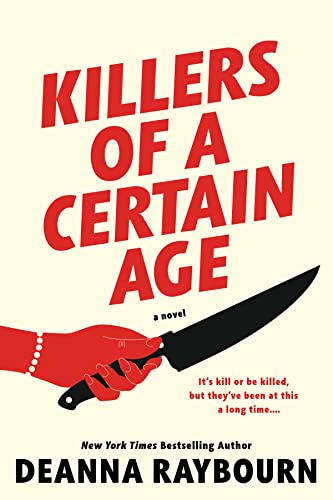
Killers of A Certain Age: A Novel by Deanna Raybourn
Oh, this was such a fun book to read! This novel plays out like a film. It’s got the panache of Ocean’s Eleven, the humor of Mr and Mrs Smith, and oozes a middle-aged version of the familiar camaraderie of The Golden Girls. It’s perfect.
The story traces the lives of a clannish posse of retirement-aged Charlie’s Angels, assassins who work for a clandestine international organization intended to keep the world’s evil at bay through extralegal and morally questionable means (murder). These women have devoted their lives – professional and personal – to this cause and vocation. They’re ready to throw in the proverbial towel, trade in the excitement and the deception for some much deserved rest and relaxation when they realize they’re the targets of assassination themselves.
Now they’ve got to figure out who, why, and what the hell.
And that’s the rest of the novel. It’s humorous and mysterious. It’s stylish and spy-savvy. It’s Jane Bond, darling. This reader was driven by the desire to find out who had set them up and why. There was no doubt they’d succeed, but the thrill was in reading how these feminine Chuck Norrises were going to get it done.
Like a film, this novel moves swiftly, propelled by witty prose and cutting dialogue between its the sharp-edged characters. The women in this story are nuanced, fleshy, sinful and deliciously flawed, but the reader should not necessarily expect depth; simply put, this novel isn’t about depth as much as it is a much needed op-ed on the awful way in which women are made invisible on account of their age in our patriarchal society. The onset of menopause — no, even just the briefest mention of hot flashes –and women middle-aged (and older) are suddenly recast in a dimmer light. Where once they were all-powerful Women, they suddenly are under-estimated, dismissed, erased. This novel does not seek to redress the issue, but does highlight it. As I said, an excellent comment on what is an on-going problem in our youth obsessed society. It weaves in a feminist commentary in parts, but this is not a serious work of feminist disruption.
This is a fun, entertaining read. And one I recommend.
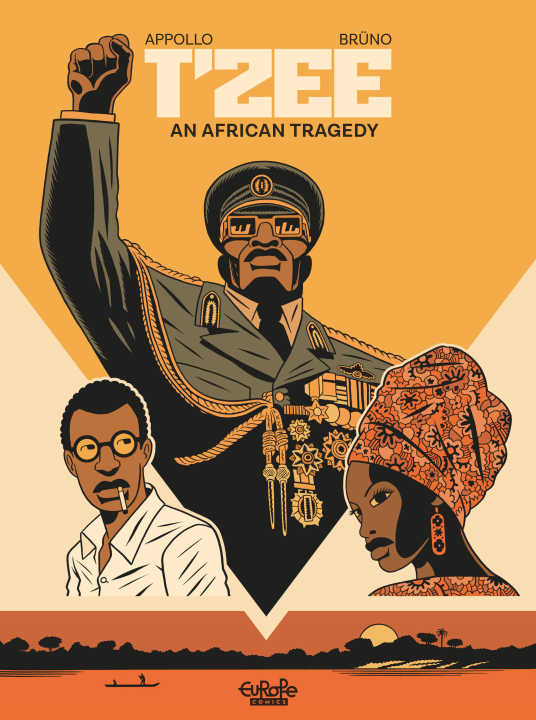
T’zee: An African Tragedy (A Graphic Novel) by Appollo (script) and Brüno (art)
T’zee is an action-packed, noir blockbuster in a graphic novel. It has all the makings of a Hollywood or Nollywood film: Post-colonial angst, corruption, family drama, illicit romance, sabotage, political violence. T’zee lacks actual history – it is all fiction — but its premise is grounded in real events of the twentieth century.
The story starts and ends with T’zee, the amoral dictator of an unnamed African nation struggling through its traumatic post-colonial afterbirth, but revolves around his young wife and youngest son, who each are coming to terms living with their larger-than-life husband and father and the roles they are supposed to play in this political drama. The former is a member of the new elite — but the limitations of gender and patriarchy force her into positions she might later regret. The latter is also a member of the new elite, the intellectual elite. During the typical educational sojourn young men of his class make in this era, T’zee’s son finds himself torn between his family and his morals. Politics, power, and ambition rule over both of them, force the wife and the son into decisions that are less of their own making than orders carried out under duress.
In three acts the reader witnesses the ebbs and flows of T’zee’s power, how his family fares in the pressure house of his politics, and the swiftness by which all their fates can change course.
This is an entertaining read. However, elements of its narrative promote a colonial logic which need to be addressed. T’zee is portrayed as a cruel and inept leader, one focused solely on his own aggrandizement and accumulation of wealth, at the expense of his people. His wife too is a woman focused solely on her own selfish advancement and fulfillment. The son is feckless and weak. Scenes of the city and the rural areas of this nation are memes of poverty and crime too often associated with the so-called “developing” or “under-developed” world, what has been classed so disparagingly as the “third world.”
I balk at depictions of African nations as cesspits of corruption, poverty, and crime. The implication that African peoples cannot rule themselves is one grounded so obviously in the so-called Civilizing Mission, that lynchpin of colonial logic; this is wholly inaccurate and stereotyping. I wish that elements of the story had addressed T’zee and his regime with more nuance; I wanted more decolonization in these pages. I cannot help but read as a historian, especially on a subject so close to my heart.
Still, this was a fun read and one I would suggest for casual consumption.
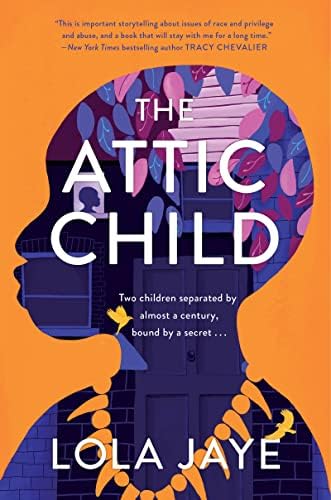
Something draws me to themes of tragedy and darkness in my choice of reading. The Attic Child might very well be one of the darker — if not darkest — novels I’ve read this year. This is a novel about strength, resilience shaped by necessity of survival and trauma; but it is not only the characters who must cultivate and wield this kind of strength, the novel requires the reader to be brave and hardy too. The reader must be to bear the suffering of reading about the suffering of others.
The pain is intentional. Jaye’s novel addresses, with unflinching realness, the lived trauma of colonialism by highlighting the literal theft of human beings European colonizers forced People of Color and colonial subjects to endure. The novel forces the reader to see how this history is very much present in our contemporary moment, that it is has caused intergenerational harm beyond measure.
As a historian of decolonization I am grateful for a novel like this — and happy to see that it was distributed on a platform as wide and well known as The Book of The Month Club (which is where I obtained it). We — those who come from parts of Europe’s former empires and those whose ancestors benefited from those empires, that is, everyone — need books like this, stories like this, voices like Jaye’s to declare that the grief and loss and wounds of colonialism are still not healed, closed, “over.”
The novel spans many generations and decades, beginning at the start of the twentieth century with a young boy who lives with his family on the African continent. He becomes the Attic Child, the first of many — children shut away, abused, neglected. He is robbed of his identity and his heritage. The story of a young woman who lives in a time closer to our present intertwines with his. The reader is aware there is a connection between the two, something hidden in the attic and the house in which both of these characters grow up, both of them “attic children.” The mystery the reader will find themselves embroiled in is how they are connected and why.
As the mystery unfolds it also deepens, its roots are long and twisted and dangerous. The mystery exposes the characters to pain and the possibility of new emotional wounds. The threat of scarring is real. But they are both hurtling through history and time and must live their lives. If there is a history lesson here, it is that we cannot escape history or making history, as we do so simply by living.
The novel does not pretend to heal the pain of this history. Reader should not expect to be bandaged or coddled in any way. But the novel does end as a historian might expect, with the lesson that history does not end, it goes on and on and therefore, that is itself a kind of closure. Perhaps, the ending is something more of a suture than a healing.
This is a tough and exacting book to read, but one which will not fail to provoke emotion. This is a significant novel.
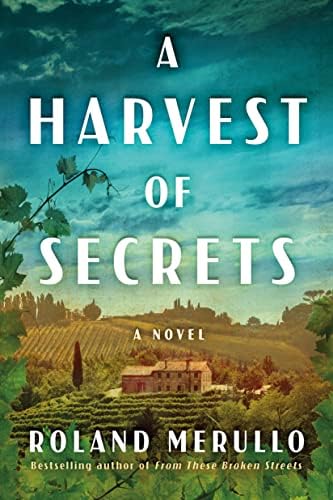
A Harvest of Secrets is a slow burner, then halfway it ignites like gunpowder and the end is an emotional and deeply satisfying explosion, uniting all the storylines of the novel together in a kind of literary bonfire.
The novel is set in WWII, fascist Italy when much of the country has fallen under the control of the Nazi regime. The story unfolds primarily in a rural northern village where an old, aristocratic family grows grapes and produces wine. The San Antonio family and their estate have been lords over the land and the people for generations. There are tensions between the family who own the winery and its workers, age old class-based tensions that threaten to erupt under the additional strain of wartime food shortages and unpredictable Nazi raids. The war has also brought about new factions and exacerbated pre-existing enmities: resistance fighters and saboteurs against Hitler’s Nazis and Mussolini’s Blackshirts, deserters from the Italian and German armies, Il Duce’s spies, and Nazi collaborators. Caught in the cross hairs between these conflicting factions are two young lovers: Vittoria, the daughter of the proud noble family and Carlo, the orphaned peasant boy she grew up playing with. There are also others who find themselves trapped on one side or the other of the war: Old Paolo, the foreman at the winery, Umberto San Antonio, the noble man who owns the land, Enrico San Antonio, his son and Vittoria’s brother, Eleonora, the Jewish woman in their midst. They each have their obligations to family, country, and to those who have sheltered, raised, and loved them. These obligations tear the lovers and their community apart — and bring everyone together in other ways.
Merullo’s novel is not only about the lovers; it also about the many individuals whose lives intertwine with theirs. Indeed, the novel is more of a broad panoramic view of Italian society in this fraught period of the twentieth century. Some of the people Carlo meets are sympathetic to Mussolini, others seek freedom from the politics that engulfs them all, others are victims of Il Duce’s ill-conceived plans and ambitions. Vittoria is likewise surrounded by those who would do her harm and protect her from it. There are resistance fighters, Nazi soldiers and officers, Nazi collaborators, and Mussolini’s spies lurking and active all over the countryside, waiting to strike or entrap her and other innocent Italians who simply want to do what is right for themselves and their families, and by their conscience. As a woman of this period, Vittoria’s options are limited. Italian patriarchy places shackles on her that are made for women alone. She is meant to be a good daughter, a good woman, a quiet woman — but in the chaos of the war Vittoria cannot remain silent.
Woven into this larger cultural, social, and political vista of Italian wartime life is a domestic drama and mystery. Vittoria’s dilemma is at the center of this. She must bargain her silence for her freedom, sacrifice her morals to be a good daughter. But she is also a product of a longer history of women like herself.
Secrets held for decades, the kind begotten by forbidden love, are as much a part of the estate and the fabric of life in the vineyards as the vines themselves. These unraveling mysteries push and pull Vittoria, Paolo, Umberto, and Carlo in all directions. The emotional and real famine of war force these long buried secrets to emerge on the surface. As the Americans and Allies bomb Italy in order to free it, Vittoria, Carlo, Paolo, Umberto San Antonio, and others scramble for safety and try, hard as they can, to keep these secrets under cover.
Overall, a good read, especially for readers who enjoy themes of class conflict, gender histories, and ensemble casts of characters, and domestic mysteries.
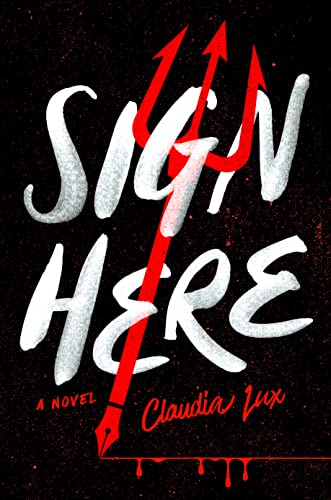
A departure from the more serious novels I’ve been reading lately, and perfect — if a little late — for the Spooky season. Still, if you are a horror fan, any time is a good time for a paranormal mystery, which is exactly what Sign Here is, with a generous injection of humor.
Sign Here is a combination of the television show, “The Good Place” and one of Simone St. James’s paranormal mysteries, the kind which unravels to reveal a multi-generational history. It’s laugh-out-loud funny and also deadly serious at the same time. I couldn’t have asked for a better post-Halloween read than this. It gripped me to very end.
The novel is set in two dimensions: Hell and Earth. The former is a bureaucrat’s heaven, a place where the radio station is constantly on commercial break and the music is every genre you can’t abide. There’s fun to be had in Hell, but no peace, utterly no reprieve from annoyance. Ever. One of the main protagonists of the novel is a demon who long lost his humanity and now deceives or manipulates souls in order to collect them for his hellish quota. His goal is to complete a “full set” of a family, one soul from each generation. And to find some measure of peace in the afterlife. The two objectives are not exclusive.
The family he has targeted is a wealthy and dysfunctional one, a collection of questionable traits has passed down from one generation to the next. They have a long history with this demon, a transactional history of quid pro quo. There is also trauma, murder, abuse, and just downright immorality in the family’s past; one might say, the stuff that Hell is made of. But they are lovable too. Their flawed histories and personalities make them all the more human, all the more recognizable, for all their privilege and wealth. The reader will get the impression there is something not quite right about them though, and as the novel progresses, it becomes clear that several of them have something to hide — even from the demon himself.
The novel is set at the start of the annual family vacation, a dreaded and welcome event. There’s a newcomer to the lake house with them: the new best friend of the daughter. She’s bright and curious — and may just force the family’s dark secrets into the light.
The two storylines intertwine: Will our demon be able to exploit the family to meet his quota? Will he ever escape his Hell? Will the family be able to keep their horrors safely hidden in the past? Someone’s soul is at stake. Will it be the father? The mother? One of the kids?
Sign Here ends explosively and satisfyingly. Everyone gets what they deserve.


 Dr JoAnn LoSavio