The Picture Bride: A Novel by Lee Geum-Yi

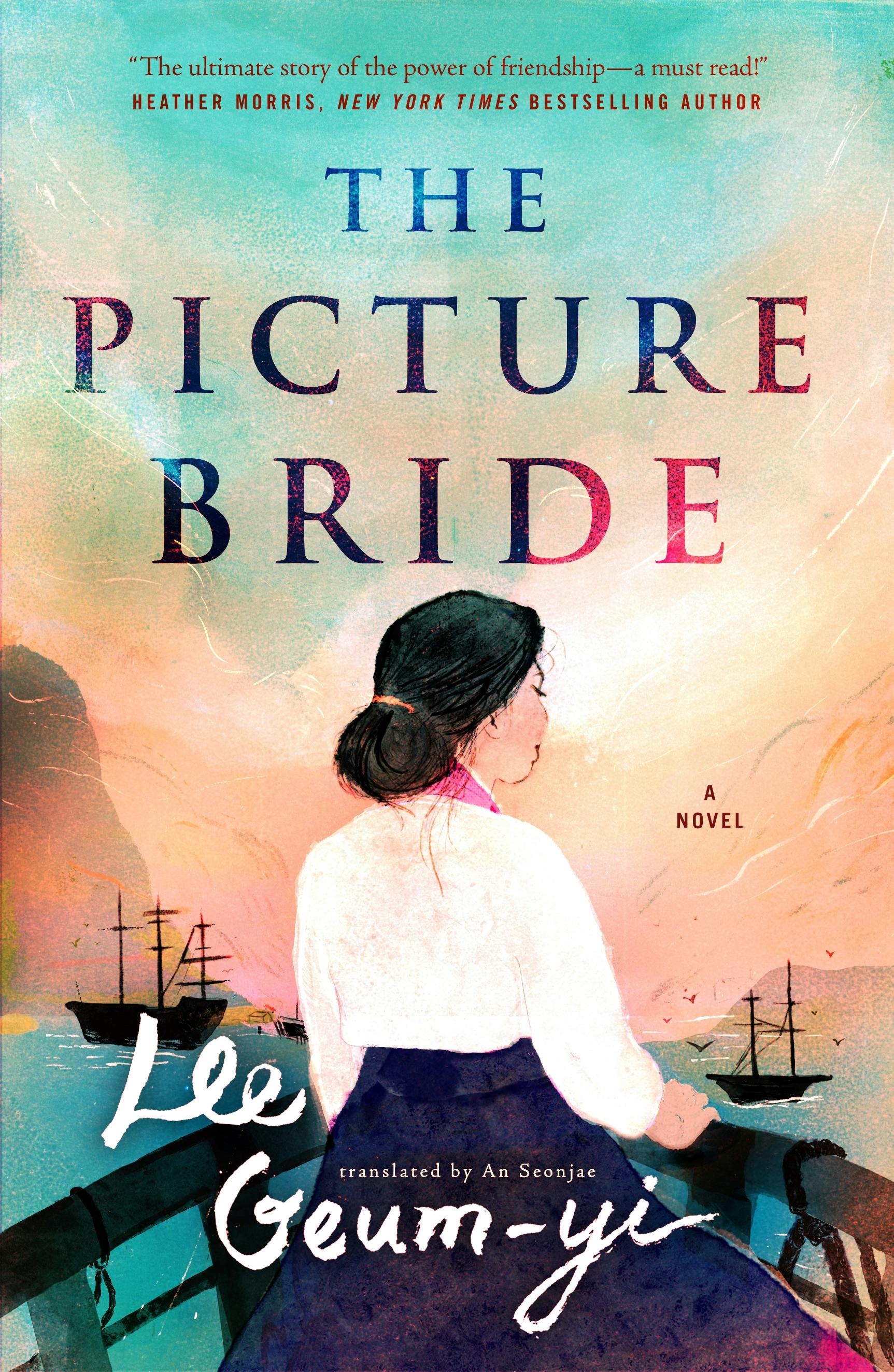
The Picture Bride: A Novel by Lee Geum-Yi

The Picture Bride is a historical novel that transcends its unique historical moment to touch on experiences and themes the reader will find familiar: the significance of family, the trials of marriage and love, loss and grief of loved ones lost to death or distance. The novel revolves around the migration of picture brides from East Asia to Hawai’i and the Western United States, a practice that was rampant in the early few decades of the twentieth century. Japanese and Korean men left their homelands to find work on Hawai’ian plantations, and as they accrued a little bit of wealth they found themselves in a primarily homosocial world, absent of East Asian women. To find love and fulfill their duty to wed, they would engage the services of a matchmaker and seek out a bride from their home country. The technology of the day limited the contact between potential bride and groom to correspondence and a photograph, hence the name given to this marital transaction: both the bride and groom would have nothing to more than a photograph to base their physical attraction on.

Many men who sought wives in this way were long past the typical marriage age of men in their home countries. Aware of their advanced age and how this might deter a young woman from wanting to marry them, they often used a fake photograph of someone else or a photograph from their youth. Picture brides discovered the deception on their arrival, too late to turn back — if they had the money to do so — without suffering humiliation or possible repudiation by their families.

Of course, such arrangements also resulted in personality mismatches and other deceptions of character, on both sides. In the end, all the migrants have no choice but to set those differences and loyalties aside; the people on the plantation and scattered across the islands become the only family they can have.

This is a story of the pain and joy of being an immigrant, of what lengths we have to go through to find our place in the world. The novel focuses on loss of family and the gaining of new ones. How these young women adapted, thrived, or wilted in their new homes so far away from their homelands is what unfolds in the novel. I won’t spoil it for you so I will stop my review here.

The Picture Bride is a novel about what it takes to live one’s life as best they can, with what they have and what they have lost.
The Haunting of Hajji Hotak and Other Stories by Jamil Jan Kochai

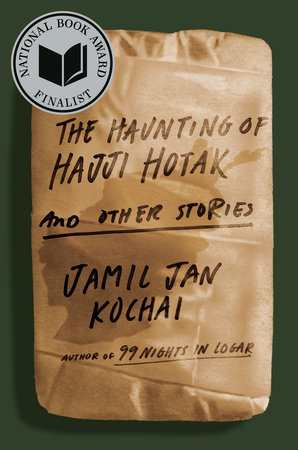
The Haunting of Hajji Hotak and Other Stories
by Jamil Jan Kochai

Living in the United States, the word “Afghanistan” crackles in the air when uttered. There is no escaping the politics of the word and, more often than not, insulting Orientalist and racist language in the larger context of that conversation (malicious or unintentional).

For that reason alone, Kochai’s collection of stories set in contemporary Afghanistan is powerful and worth any reader’s time and attention. The narratives and characters in this collection humanize a subject that has too long been objectified and rendered inferior. The tales bring Afghans to life, force the reader — in the best of ways — to see and think of them as living, feeling, bleeding individuals, as tangible and as intimate with ourselves as our sisters, brothers, uncles, aunts, parents, friends, lovers, husbands, wives, children. In these character’s voices we can hear our own. Our own desires and fears are mirrors of theirs.

The stories are embedded in Central Asian Islamic and Colonial culture and history, but they also revolve around universal principles: love, marriage, ambition, identity, belonging. Afghans in these stories are college students sharing the same interests and experiences of growing up and out like all college students — not merely tokenized international students who live on the periphery of campus life, transient and alien. In some of these stories there are young women seeking to understand their roles in society, in their families. They, like all of us, are torn by expectations imposed on us from within and without. The women in these stories are not foils to men or cutouts of the flattened, Orientalist idea of Islam; they are also not mindlessly rebellious, mimics of Western feminism. These women are accurate reflections of women everywhere and yet also unique in their Afghani-ness: contradictory, full of internal and external conflict, desirous and aware of obligation, selfish and selfless. The characters in Kochai’s fiction — women and men alike — do not need to trade their Afghani selves for a Western one or a vice versa, even if there is tension between these identities. It is a tension that enhances, rather than subverts the narratives here. Tradition and modernity are not at odds in the real, lived world anywhere; that false binary is the fiction here! Kochai’s nuanced depictions of women, youth, men, childhood, marriage, love, sex, and life-at-large made this a very satisfying read.

I also deeply appreciated that many stories depicted Afghans outside of Afghanistan in an authentic diasporic perspective. So frequently are Afghans (and other Asians and people of color in general) fixed into some faraway, non-Western, exotic location. In several of the stories Afghans are cosmopolitan, worldly figures, part of the global community in material ways beyond being an image on the television news. They are American, British, European in as much as they are Afghan. As with many other OwnVoice fiction, these stories make the poignant point that the hyphenated identity is true but simultaneously too simplistic of a label; national boundaries are not only porous, in cultural context they are fiction. (Of course, borders do exist in a material, political sense; passports are not obsolete artifacts!)

At the same time, there is a thread of distinctly Afghan experience threading through these tales, one that is grounded in global politics, colonial histories, Islam in its present forms, migration. That is its cohesion and its strength. The Haunting of Hajji Hotak and Other Stories is a must-read collection, especially for those who seek to understand a misunderstood community and want to excavate their identities beyond its contemporary political history and presence.

Berliners: A Novel by Vesper Stamper

Berliners: A Novel by Vesper Stamper

In 2019, before the madness of the Covid-19 pandemic, I got the chance to visit Berlin for a conference. I wasn’t there for long, but it was magical. I got to walk the bridges, stand under the Brandenburg gate, see some castles, and eat currywurst (all kinds of wursts!)

So when I saw this novel, I was immediately intrigued. The contents did not disappoint. But, first, a caveat: This is a Young Adult novel. The primary characters around which the story revolves, the brothers, Rudi and Peter, are in their early-mid teens and the story does not progress far into their adulthood. The prose, language, structure and so on are clearly written for a YA reader, but the historical and emotional content is potent and will suit a more mature reader.

The story is told from the two brothers’ perspectives; it is the tale of their parents and their lives after WWII has ended and German society — Berlin society — has settled into a kind of uncomfortable holding pattern, caught between the two ideologies and cultures of the American West and the Russian-controlled East. Vesper focuses on the interior perplexity in the boys’ minds: in a period of their lives when they are already grappling with puberty and teenage crises of identity, they are forced to also wrangle with the localized manifestations of external pressures of international politics, Cold War propaganda, and collective post-WWII German angst. They struggle with what anti-semitism means in this age, what Nazism had been and is now (Vesper makes this point clear: the end of the Second World War was now the end of Nazism or the hate that that regime promulgated. It lives on and remains as insidious as was), what socialism is and truly is, what the Russian and American regimes represent.

One brother awakens to an understanding that the Russians are selling them a false promise. The other brother believes the Americans are doing the same. One brother seeks the freedom of the West, the other seeks the stability and order of the East.

In the mean time, they are struggling against one another as well; competing as siblings for the attentions of their parents, for a kind of childish glory, for a sense of belonging within their own world.

They wrangle with the more mundane things of teenage life as well: understanding love in all its conflicting forms. Their parents are products of the war as much as they are; their relationship is fraught with tension, not unlike the kind of tension between the East and West: irreconcilable, ideological, built on a history that was not of their own making and borne out of the War. The brothers are also young men, their minds and bodies are tangled in novel feelings of love and sexuality. They are on the edge of adulthood and are testing out how they might victorious in this new domain; they experience losses, betrayals, and grief as the story unfolds — and failure, that first, very painful sting of rejection that is inevitably accompanied by new experience.

The novel follows Rudi and Peter as they navigate their parents’ and the city’s divergence. They eventually find themselves on opposite sides of the Berlin Wall, erected one night in secret.

This is a powerful YA novel that is also fulfilling for an older, more experienced reader. The moral and ethical dilemmas embedded in the politics and social interactions in this novel are ones that might be introduced to us at the YW stage of life, but they remain tangled in later adulthood too, so much of the conflict will be recognizable and moving for a maturer reader.

A Fig For All The Devils: A Novel by C.S. Fritz

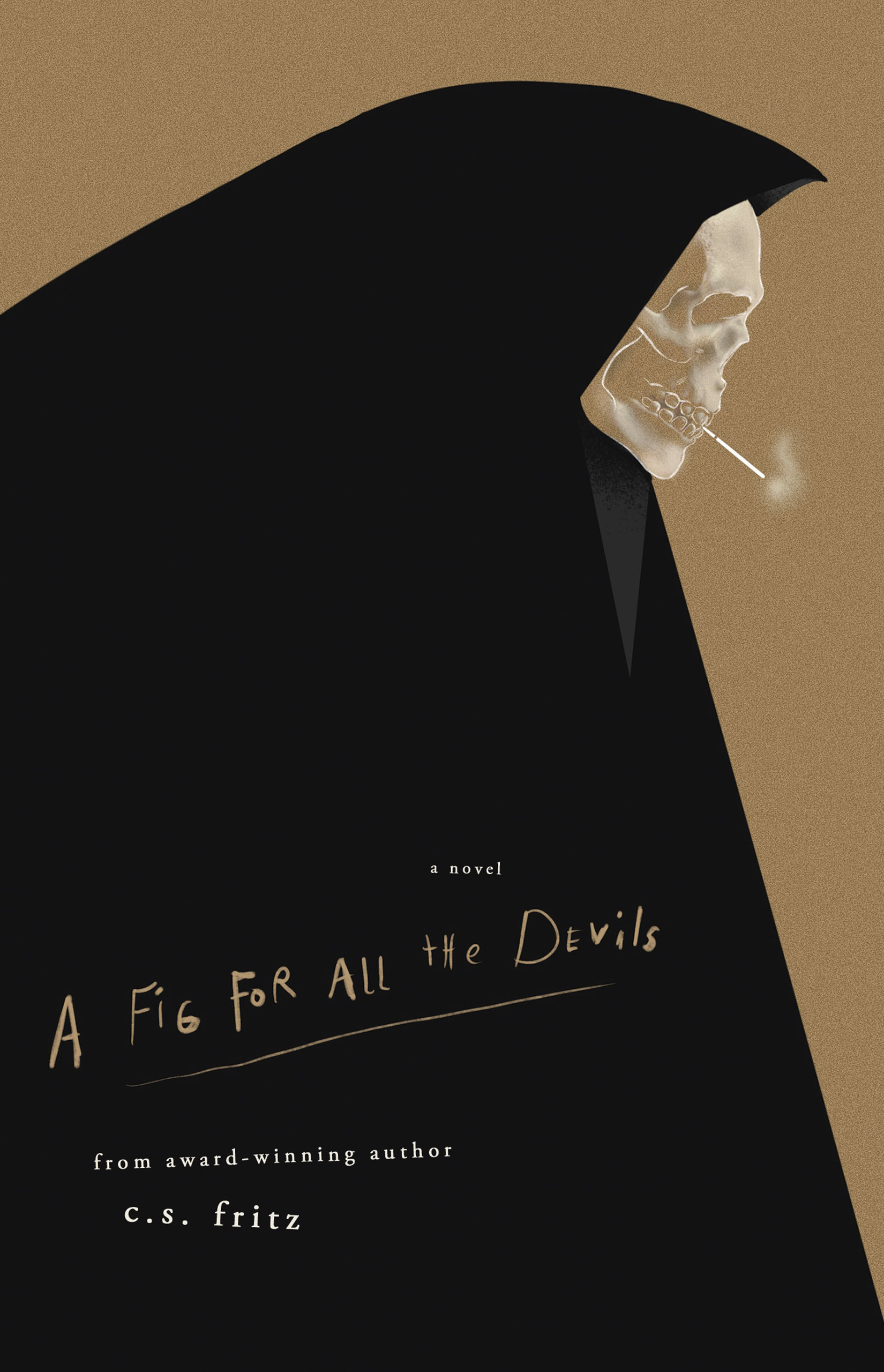
A Fig For All The Devils: A Novel by C.S. Fritz

The cover got me, I admit it. The Grim Reaper is one alluring fellow, I couldn’t help it. I buy my wine the same way too: the more morbid the label — reds, black, and intricate patterns of monstrous or predatory creatures — the more likely I’ll buy it. And if it’s under $10, so much the better, NGL.

A Fig For All The Devils delivers too. Like a robust cheap wine, it was dark — almost bloody — with scents of dark foggy Oregon pine (the novel is set in Tillamook), oaky smokiness (well, more like cigarette smokiness, but go along with me in this metaphor play), and a generous injection of alcohol (cigarettes aren’t the only narcotic drug in this novel). And, just like when you bring a cheap oversized bottle of wine to the party, A Fig For All The Devils is fun in a package.

The novel is spun around a teenaged boy, Sonny, who is unfortunately saddled with a less than stellar family life. His father is gone. His mother is… not present (to say the least). Sonny is left to his own devices, grappling with grief of loss of one (but really both) of his parents. The Grim Reaper finds his cue here. In need of an apprentice, the Grim Reaper makes himself and his proposition known to Sonny. The novel is premised on this encounter.

A Fig For All The Devils reads as Young Adult fiction, a dark bildungsroman. Sonny’s problems are appropriate for an adult world, but to be fair, the kinds of dilemmas Sonny encounters are probably commonplace for teenagers today (anthropomorphized, embodied Death excepted). The prose fits a YA reader as well, easily accessible and authentic in its teenaged voice. The story flows at a fast pace, yet slows at key points for the reader to engage with the interiority of the protagonist, Sonny. On that point, while Sonny is the main character and it is through his eyes that we witness this novel, the other characters are vivid. They are all tangible, visible to the reader in their flaws and virtues. Death even, a mythical being, comes to life (pun!) in this novel in a very human manifestation.

A very fun (early) Halloween Horror read! (I’m starting my Halloween Horror early this year. Check out my other horror reviews: The Ghosts That Haunt Me: Memories of a Homicide Detective by Steve Ryan and Anybody Home? A Novel by Michael J. Seidlinger to date.

More horror to follow (for example, Gallows Hill by Darcy Coates and Valley of Shadows by Rudy Ruiz — both coming out in September, 2022 — and more!) Follow me to get updates!)

Nights of Plague by Orhan Pamuk

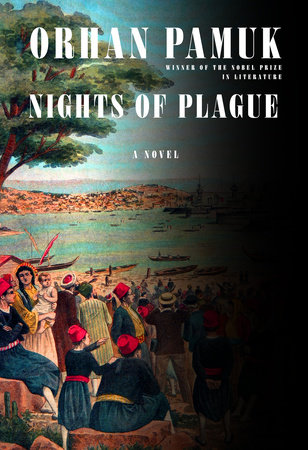
Nights of Plague by Orhan Pamuk

Pamuk’s latest translation from Turkish into English, Nights of Plague (coming out October 4th, 2022) is an epic both historical and contemporary. I need not remind anyone reading this that we are still, as a global community, navigating the Covid-19 pandemic (and monkey pox is making rounds again as well!) The timing must be viewed as deliberate; Pamuk’s commentary embedded within this novel can only be seen as prescient or proof of an uncanny insight into the human psyche as it relates to existential threat.

In short, Nights of Plague is epic.

The stories that unfolds within its pages are reminiscent of epic prose as well. Pamuk’s novel is spun around a royal Ottoman princess, Pakize and her husband, Prince Consort and medical doctor, Nuri; however, the tale is more accurately about the unravelling of a community and its denizens as they face possible annihilation and suffering from a breakout of plague. The locale of this event is a fictitious island, Mingheria, an outpost of the Ottoman empire that reflects the empire as a whole: multicultural in its constitution with ancient and new settlers of Greek, Muslim, Eastern European, African, Christian, and Colonial European descent; in precarious harmony with the multiple discordant voices, needs, and ambitions of politicians, medical professionals, ordinary citizens, foreign heads of state and their ambassadors, Ottoman royals, and immigrants; and gorgeous and complex in its rich history. Mingheria is a plague-beset limb of an empire popularly described as “the sick man.”

Pamuk’s tale of Mingheria does not confine itself to the accounts of elite royals, though it is ostensibly based on recently unearthed archival records and it is told as a historical monograph, through the eyes and pen of one of Princess Pakize’s descendants. Pamuk regales the reader with stories of its other denizens too: its merchants and common folk. There is the security guard of the local prison and the tale of him and his family as they struggle to survive and live their lives in the wake of plague and death. There are the doctors who work to eradicate the plague, demand quarantines. There is the governor too, all too human in his own ambition and fear.

Nights of Plague is about Mingheria and its people, how their present fears and dilemma(s) are shaped by their history of ethnic division and unity, religious and ideological differences, their universal humanity. They react based on their subjective desires, but are also creatures of their communities, their actions are shaped by the expectations of those around them, their enemies, their allies.

Our unknown narrator writes as a historian might do, providing context where necessary, but imbues the academic narrative with a novelist’s attention to texture, aroma, and the sensation of place. Mingheria is as real as the Ottoman Empire can be to a modern reader: the spicy, heady fragrance of a time and place that no longer exists is palpable.

Nights of Plague is a more gorgeous, more exotic — and historical — reflection of our own contemporary experience with Covid-19. The arguments between medical professionals, politicians, and the citizenry in this novel are all too familiar to anyone who has been watching the news for the past three years. The heated debates, the refusals to quarantine, the seeming indifference of the populace to the threat of death and suffering might make a reader feel queasy. The Lacanian recognition is jarring. But perhaps, for all of us, this is a necessary cognitive event in order to reconcile the past with the present and future. Pamuk delivers that lesson with poetic grace in Nights of Plague.