
Fatherland: A Memoir of War, Conscience, and Family Secrets by Burkhard Bilger

Fatherland: A Memoir of War, Conscience, and Family Secrets
by Burkhard Bilger

Fatherland: A Memoir is a must-read for readers who gravitate to histories of the European theater of WWII. The book is a case study, illuminating aspects of the human side of these histories which are often left in the dark: here, what happened to those millions of Germans who were caught up in the Nazi machine, willingly or otherwise? Significant numbers of the German citizenry did not support the Nazi party, but as the regime gained power Germans were pressured into adopting or participating in its politics in both minor and significant ways. Thousands were caught between survival and their beliefs, others benefited from the regime’s policies, witnessing no ill-effects as so many millions of others did.

War and ideological divides produce so much more intimate conflicts and consequences than politics would suggest. Fatherland makes this complexity abundantly clear, and more importantly, without being apologetic or sympathetic to Nazism. Indeed, it highlights the different between Nazi party members, Germans, and the Nazi state, forcing the reader to see beyond the inaccurate and unjustified conflation of these constituents with one another.

Bilger dives into their own family history to produce a prosopography, one which explores the complicated consequences of surviving the Nazi regime before, during, and after the war, especially for those who were forced or otherwise minor participants in state operations. Their family derives from a region of Europe straddling the often fluctuating boundary between France and Germany, Alsace and the region around the Black Forest. This geography has — and continues — to produce a culturally and politically fluid community. Bilger also looks beyond their own family, including the personal war-time histories of other German and French citizens in their proximity: for example, mayors of the myriad of French-German towns who were caught in the Nazi and French crossfire, and women who were forced to interact (in platonic and other ways) with German soldiers or Nazi officials.

During the interwar and WWII years, citizens found themselves dispossessed of either their French or German identities, subject to changes in language, dress, and culture as politics blew one way or the other. After the war Germans and French alike found themselves needed to pick up the pieces of their lives, and grapple with former enemies living in their midst. Questions of culpability rent communities and families apart in the aftermath of WWII as war crimes were being prosecuted; to what degree was Life and the Need to Survive responsible for the choices that people made? To what degree was circumvention of Nazi policies a resistance against Nazism? Did local officials and citizens pander to Nazis out of genuine belief in the regime or were their actions made under duress? Did neutrality absolve people from being responsible for war crimes that occurred?

Indeed, the years following the end of war were some of the hardest, perhaps even harder than during the war for some Germans and French. This aspect of Fatherland is, to this reader, its most poignant and significant contribution; war does not begin with a declaration, nor does it end with a surrender and a treaty. War begins so much earlier, the combat and physical destruction being only its peak, and it lingers on for years, even decades, afterward. Bilger reveals that in the case of Germans, the effects of WWII remain today; it is a scar stretched across multiple generations.

Two Houses, Two Kingdoms: A History of France and England, 1100-1300 by Catherine Hanley

Two Houses, Two Kingdoms: A History of France and England, 1100-1300
by Catherine Hanley

Of the books I’ve read lately, this is by the far the most academic and “historical” in subject, language, and depth of detail. Yet, at the same time, this is not strictly for an academic audience. Readers will find that Two Houses, Two Kingdoms is suitable and accessible for all adults interested in the Medieval age, the ins and outs of politicking and the martial exploits of kings, queens, and the nobility in Western Europe. (I say “adult readers” because this is really not accessible for a younger, less mature reader. Its audience is a small sliver of the total general reading population; children, juvenile, and young adult readers will likely find this plodding.)

The structure of the book follows a traditional, chronological form, moving from the 1100s to end at the beginning of the 14th century, allowing readers unfamiliar with the dynasties and generations of these royal houses to follow along with who was whom’s son, daughter, niece, cousin, and so on. It was a tangled mess of consanguineous relationships. This is a historical monograph in the traditional sense of the word.

The prose however, is refreshingly modern, flowing with an ease that many older monographs lack. In many ways, Hanley’s narrow focus on the royal and noble houses attached to them is what keeps the reader’s attention: the chapters read like episodes of a family drama. There is a soap opera like quality to the mechanics of politics in this age; there are kidnappings of maidens and children, sordid adult-minor affairs and marriages, betrayals of the deepest cuts, adulterous liaisons leading, The men and women Hanley depicts in these pages could achieve viral fame on The Jerry Springer Show or feature on a highlight of Judge Judy. No joke.

What the reader should not expect is a cultural or social history of the Medieval period; the ordinary, non-royal, non-noble classes do not make an appearance in this text, nor does it dwell on cultural norms or landscapes of the time. This is a political history focused on the highest classes of society at the time. Hanley is clear from the beginning this is what the book centers on.

As a text for the classroom then, this is potentially useful and not. For a course on Medieval history, say, a graduate level seminar, Hanley’s monograph would be perfect — except that by that stage in students’ careers, they are liable to be already familiar with its content. And Hanley does not delves into the historiographical literature or methodology. This is far less suitable for an undergraduate seminar. It is too long and dives too deeply into the nitty gritty for an introductory course. This is better suited to a general adult non-fiction audience than the classroom.

As a historian reading for pleasure, I found it enjoyable. The prose was smooth, flowing, logical, and concise. Hanley did not waste words; this economy delivered what was necessary to understand the course of events, the personalities involved, their ambitions and motivations. The depth of detail warrants praise; Hanley is an expert in this period and the level of research and analysis they invested in this scholarship is apparent, even if their methodologies were not. An excellent monograph well worth any interested reader’s attention and time.

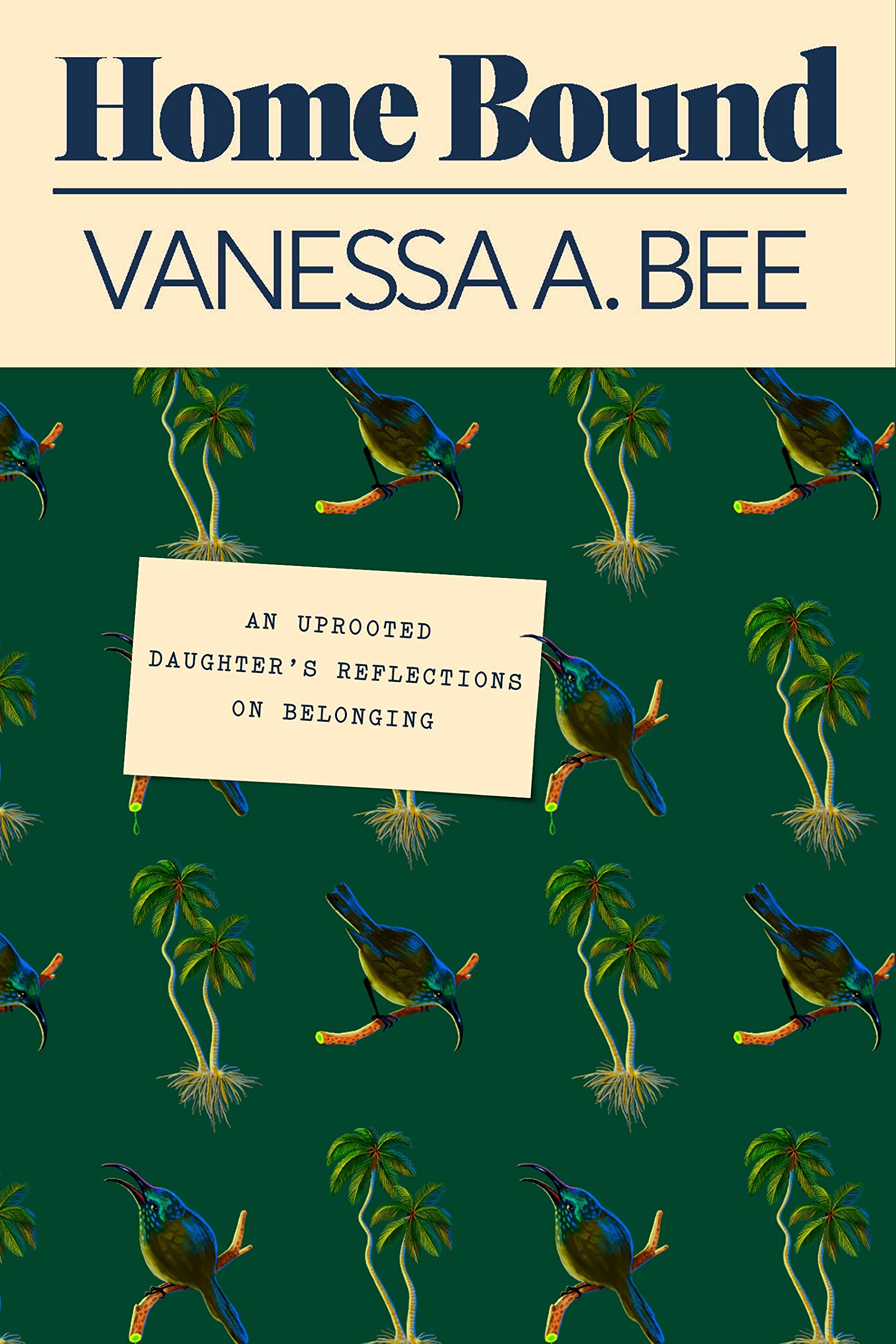
Homebound: An Uprooted Daughter’s Reflections on Belonging by Vanessa A. Bee

Homebound: An Uprooted Daughter’s Reflections on Belonging
by Vanessa A. Bee

It’s been a few days since I finished reading Home Bound and I’m still mulling it over in my head, turning the things Vanessa — can I call her that? Is it too familiar? — has told me. On the one hand, it feels like she and I have much in common: the Spice Girls and Hey, Arnold! are part of the memorabilia of my own 90s teenage years. Vanessa’s memoir strikes a familiar note in many ways. Home Bound is a memoir of movement and migration, transcultural and transnational switching and code switching, and the conflict of culture between places and communities and within a place and a single community. I know that. I’ve experienced that before and now, still.

Home Bound traces Vanessa’s life from her childhood through to the present, across time as well as space. Her life begins in Cameroon, a place she is ever drawn back to (is she as uprooted as the title suggests), but she grows up in France, in a number of places, in a number of homes and neighborhoods. Vanessa disabuses us of any romantic notions of France and how the French live. But then, she makes the point in her memoir that she is only partially French. Her memoir takes us to London where she was more French than English, a mix of Cameroonian and French depending on the location. Then to America, where she becomes domiciled in one of the most American of American states, Texas.

But, of course, Home Bound is more than just a travel log.

The book takes us into deep discussions about gender and what it means to be a woman, what it means to be a sexual being, a sexualized being or object, and how to object to that objectification. It explores mothering and growing up, coming-of-age and what that means when it is done across multiple cultures. The book is also about faith, the religious kind and the internal, subjective kind (“believing in yourself”). Vanessa boldly brings up being of mixed race heritage, discusses adoption and parentage. Lineage is a major thread that winds through the book, guides the reader. Ideas are intergenerational, travel through blood as well as through proximity, from a caregiver to their charge. Education is not merely academic, formal, institutionalized. Home Bound makes it clear that it is more complex than that, it is pervasive within and out of the classroom.

The classroom is a large part of Vanessa’s memoir. I should say, education is a large part of her memoir. The classroom is the locale of her education, the formal kind and the ideological kind. It is here, in the discussion of education and upbringing that Vanessa’s story departs from my own and I feel like I am watching a film of someone else. Someone who feels familiar but is not me.

There is familiarity in the the demise of her American dream. Its death is similar in some ways to what happened to my own. She says in one part how she had thought of herself in some ways as white, having been raised and lived among white people for so long. It’s not an uncommon experience. Fanon was onto something universal when he warned us of masks and disguises that fool no one but ourselves. Vanessa and I both woke up. Then our American dream died, unable to sustain in the reality of 21st century capitalism and American privatization, without a trust fund to help keep it breathing. The classroom had a lot to do with the deaths of our dreams.

I realize now, as I write this, why I call her Vanessa. It seems like Bee isn’t her name. Shouldn’t it is be Billé? And why “A.” and not “Assae”? I suspect this has something to do with the subtitle, Uprooted. For me, the subtitle, An Uprooted Daughter’s Reflections on Belonging, strikes me differently, perhaps because of my academic background in history. The subtitle calls to mind Oscar Handlin’s The Uprooted, that magnum opus of migration history that centered the migrant, their “peasant” origins, and their struggles to find their feet — plant new roots — in American soil. Did Vanessa mean to infer a kind of transition from peasantry into… educated bourgeoisie? I don’t know. I don’t think so. I can’t see it. But uprooted means something. Perhaps it is the violence of being separated from one’s comfortable ideas, coming to terms with the deflation of an illusion; in Vanessa’s case, of her fathers, her faith, her marriage, her trust in men, her color and all that “color” means as it is used to define us in others’ eyes and as we use it to define ourselves.

This is a complex memoir, as complicated as Vanessa’s personal history. It sprawls, but its many parts and tangents cohere to a single theme: Home Bound is about figuring out who your people are and realizing that we will not find a perfect fit in any community. We will belong in some ways, be alienated in others. Some times it is a matter of chronology; we belonged in the past, we cannot belong in the present. Sometimes we belong with strangers, sometimes those closest to us are not those who should have our trust. If I sound bleak, I do not mean to; Home Bound makes it clear that the journey — perhaps for all of us — is complicated — and sometimes it really helps to see how someone else navigated it.

Home Bound is a profound, nuanced memoir well-worth the reading.