
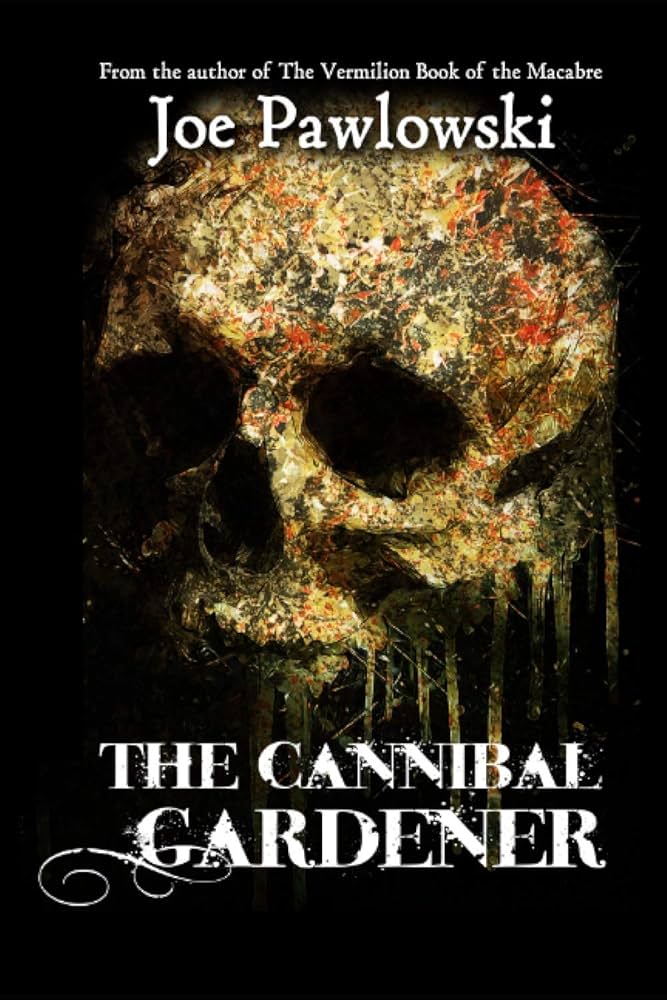
I am kicking myself for letting The Cannibal Gardener sit on my (ridiculously, 4-digit long) TBR List (To Be Read) for as long as I did. This novel delivered on all the horror and squeamish discomfort it promised. For readers who enjoy paranormal and historical elements, delight in having their own sense of security in the Righteous Ways of the World shaken, and well-delivered gore, this exploration into cannibalism and flesh-lust is a must-read.
That said, readers should be aware that gore here is not for the faint of heart. The subject matter, cannibalism, is already one which pings our most primal fears. The idea of consuming human flesh twigs an evolutionary nerve in our psyche the wrong way; we are social beings, needing the survival of others to secure our own. Even in a case of hyper-evolution of the competitive drive as individuals seek to enhance evolutionary fitness, human culture has developed an universal anathema to indulge in killing and eating a member of our own species. An odd quirk of humanity, as one character in the novel, Denise, notes.
This nauseating subject is also what makes this novel such a good horror read. And it is indeed, all about cannibalism. The novel is an entanglement of its characters’ diverse stories, each one eventually weaving together with another until all come together at the end. Their disparate lives are connected by this ugly, bloody practice in some way. Edmund, Denise, Milo, and George are the primary protagonists of the novel. Each of them engages in the profane act in some sense and this draws them into an ancient goddess’ cruel net.
Aside from the lurid story itself, Pawlowski’s fast-paced prose, adeptness at storytelling, and nuanced character development is an major appeal. The novel flows at a pace which fuels the urgency of events and, yet also linger on the characters’ voices and inner dialogue. The resultant surge and lull allows the reader to feel the thrill of a mystery and immerse themselves in the interior world of the characters. This is in part achieved by allotting each chapter to a different narrator.
The prose is mature, as is Pawlowski’s authorial voice. It is consistent, succinct, expressive. It is also clear Pawlowski’s journalistic experience enhances his craft. Not only have his observations of human behavior led him to create fleshy characters (forgive the pun!), his decisions of what to reveal and when reflect a deep understanding of his audience. I also much appreciated his vocabulary; the novel’s language borders on the intellectual. I mean this as a compliment. Its precision delivers a sharp image of events to the reader, leaving well-placed gaps that each one may organically fill in with their own imagination.
I look forward to Pawlowski’s other horror fiction…
 Dr JoAnn LoSavio