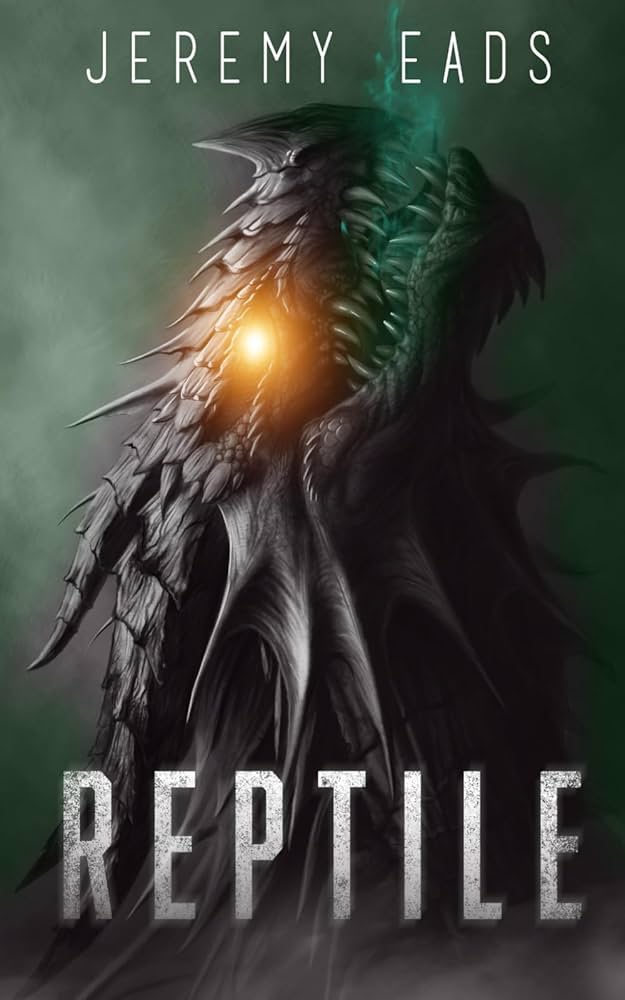
Reptile is a novel in the classic “monster” genre of horror fiction, the kind of novel that appeals to readers and fans of werewolves, vampires — or perhaps, more specifically — characters like Frankenstein. Like the latter, Reptile offers the reader and interior glimpse into the dark side, the monster’s perspective.
I have read Eads before (The Lodge) and he does not disappoint in Reptile. The writing is well and thoughtfully crafted, producing tangible, human, and horribly flawed characters, the sort of people you recognize, for better or worse. There is a perverse kind of thrill in watching these characters succumb to the terror, and watching the terror itself come into being and unravel.
This review is necessarily short; I don’t want to give away what happens to Mark as he transforms into this monstrous predator. That said, the appeal of the novel is less about “what happens” than about becoming invested in the people it happens to. Eads’ characters are sure to elicit various reactions from readers, whether it is nausea at their depravity or cheer at the demise (there were a few characters I enjoyed despising).
The Dead Don’t Speak is an entertaining read, especially for a late-night goosebump. At 75 pages, it makes for a fun-creepy bedtime story, something to cuddle down into the blankets with to scare the heebiejeebies out of you as you drift off — if you can afterwards!
The story focuses on a young man who has committed a serious and fatal crime, the victim of which begins to haunt him.
The novella unfolds as nearly all dialogue, which makes for a very quick read. That said, the depth of the characters remains somewhat shallow, and at times it is difficult to distinguish who said what, as the protagonist and their tormenter often share a similar voice. Olson’s prose is fairly well done, but the novella as a whole lacks a depth I expect from horror of this gothic-style, reflective genre.
What lingers afterwards is how wonderfully creepy this novel is. Readers will find These Things Linger a fantastic combination of paranormal horror and literary fiction. It is a tale of a haunting, but Franklin’s delivery and the depth of his characters make this a unique ghost story. Franklin unspools the terror in a fashion reminiscent of contemporary gothic literature, The Hacienda by Isabel Cañas or Silver Nitrate by Silvia Moreno-Garcia, except that the protagonist is male.
Alex is a young man on the edge of his future. He is starting a new career and building a prosperous, fulfilling life with his fiancé, Raychel and their soon-to-born child. He abandons a past and a world that he no longer belongs to, but then a family crisis forces him to confront those he has left behind. The novel immerses the reader in the trauma of its protagonist, framing the horror as deeply personal and intimate. Readers of classic gothic horror and literary fiction will appreciate the reflexivity and character-based approach Franklin takes; indeed, the unraveling of Alex’s sanity is what makes These Things Linger so successful as a horror novel.
Story aside, the novel is well-crafted. Franklin’s prose invokes more than just imagery, it builds an affect of fear, successfully persuading this reader to keep reading well into the night. Despite an occasional clichéd metaphor or turn of phrase, Franklin’s authorial voice is clear, confident, and distinct. Independently published novels often suffer from fractured writing, fuzzy characters, or clipped stories; but, These Things Linger does not. Alex, Lacey, Raychel, Uncle Matty, and Buzz are fully tangible characters. The novel’s tempo is swift (here is where it diverges from the typical gothic horror); the pace at which the secrets of Alex’s life are revealed to the reader produces a compulsion to read on.
These Things Linger deserves a spot in your To Be Read List. If it is already on your TBR, it ought to be moved up in the queue.
The Lover is the perfect short story for the winter season (which is not Christmas related). Readers who enjoy feminist retellings of fairy-tales or spins on classics will find The Lover deeply satisfying and empowering.
I read this as an audiobook, which is something new for me. I’m not good with audio. books; they tend to put me to sleep. but I gave this a go and found it an interesting experiences. Half way through this short story, I opted to return to physical reading. I think I enjoy the narration in my own voice rather than. someone else’s.
The tale is a fantasy combining Cinderella with Beauty and the Beast, Red Riding Hood, and something about Woodsmen that I am sure exists in some Grimm or folk literature. It revolves around two sisters and a young man who simultaneously comes between them and brings them together — albeit awkwardly. Like most traditional fairytales its ending deliver a moral message.
Moreno Garcia is well suited to this genre, her mastery of the gothic form and its creeping horror elevates this simple fairytale to the level of a modern horror, gore, sex, crime and all.
If you’re looking for some light entertainment with a wicked twist, The Lover if for you.
Moreno-Garcia not only understood the assignment, she did the extra credit! Silver Nitrate delivered all that a modern gothic horror should: slow, building ripples of doubt and uncertainty (the kind that make your eyebrows knit and you second-guess yourself), a female lead whose existence is threatened, a feminist focus in which oppression of the social kind is the baseline terror, actual monsters and gory scenes.
Silver Nitrate as the title suggests, reads like a film noir played out in intimate, literary detail. It is a must-read for film fanatics and bookish folks, alike.
The story revolves around a young woman and her best-friend, a man she grew up with and who also ended up in the film industry, and the tension between them. Both become friends with an elderly man, a former director of Mexican horror and their connection with him develops into an interesting — but ultimately deadly — project. The result of their collaboration opens up histories best left buried and occult forces beyond their control. Madness and death ensues.
Like true gothic horror, the novel and the madness unravels slowly, and the focus of the novel is character-driven. The reader is given a first row view into the woman’s mind, her desires, her fears, her past and present, as she slides into a dark world that was hiding all along within the one we all know and live in. It is, as with most good novels, a story about us and what lurks within. Moreno-Garcia is a pithy mistress of the genre.
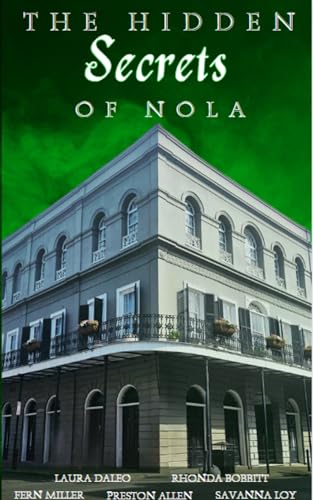
The Hidden Secrets of NOLA: Stories by Laura Daleo, Fern Miller, Savanna Loy, Rhonda Bobbitt, & Preston Allen
This was the perfect Halloween read and one that I’d been looking forward to for several weeks! I saw the book in one of the FB groups I’m in and I put in a pre-order for the ebook (something I rarely do). It did not disappoint! This anthology of five tales set in New Orleans conjures the mystique and history of that city’s famous French quarter; the stories force the reader to reconsider their notions of the supernatural, to wonder if darkness is really the evil we assume it is. Laura Daleo’s short story about what happens when Death meets an innocent is one of these tales which gets the reader wondering about the nature of evil and compassion, how they are two sides of the same coin. Rhonda Bobbit’s tale delivers the shivers; two sisters, Rose and Lydia are haunted by a family heirloom and an inheritance they did not expect. Fern Miller, a romance writer, takes us in another direction, trading on the lust and romance of New Orleans. It is a place where lovers escape to — or attempt to escape each other –but fate always has its plans for us. Preston Allen’s story, Crossed at the Cafe, was my favorite of the five; a story revolving the hoodoo that NOLA is famous for. Powerful curses and malevolent witches deliver the shivers in this tale. Savanna Loy’s Borrowed Bayou was my second favorite story here. This was a dark tale as well. The Laguerre family hides a terrible secret; they’ve made a pact that must be kept, or thousands might lose their lives.
This is a diverse collection of tales. Readers are sure to find at least one which appeals to them. They are, on the whole, well-written and conceived. Each one evokes a different characteristic of the city: its dark history, its romance, its mystery, its portals into the underbelly of humanity. These tales record the bargains we must make; here, these are the bargains New Orleans extracts from all who visit it. Some of pacts deliver unexpected happy endings. Certainly all of the stories here make the reader wonder what they might do in the same situation.
If you’re looking for a creeping, eerie read for the wintry months to come, Freshwater Fire must be on your to-be-read list. Forget Halloween, with its flashy, trashy gore, Mullins’ slim novella, with its sparse and evocative prose, and its fog-shrouded terror, brings out of the deepest of our fears as the decay of winter descends. This is a book to curl up to with candle light when the storm takes out the electricity. Or… maybe, that might just send you over the edge into madness. Read at your own risk, right?
I took this risk on this novella. I usually hesitate to spend money or time on independently published fiction; the gamble so often doesn’t pay off. But Mullins is a talented writer. With very few words, Freshwater Fire summons the smell of decay and manifests humanity’s darkest fears: that we are not alone in this world and worse, we are not as invincible as we would like to believe. Mullins builds a devastating sense of futility that the reader cannot shake off. This is a classic gothic horror.
The tale revolves around a lighthouse and its new keepers, sailors who quickly find the isolation of their task is more than a mental exercise in surviving entrapment. Their fears are more than simply psychological, they are real and monstrous. For readers who enjoy mythology, paranormal elements, and psychological thrillers, Freshwater Fire will deliver a satisfying reward.
The story aside, Mullins’ characters are fleshy, their dialogue and fear is palpable. Their reactions to their circumstances are more than plausible, revealing Mullins’ deep understanding of the human psyche and the lengths we will go, not only to survive but must do to overcome our fears. Terrifying as this novella is, it is also inspiring.
I look forward to Mullins’ other novels! They are on my wish list!
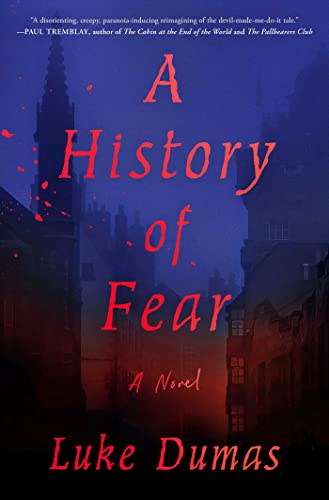
By page three, I was hooked. The ending comes to a perfect, organic conclusion — but I readily admit that if Dumas writes a sequel, I’m all in.
A History of Fear unfolds like Stoker’s Dracula, adopting an epistolary approach, delivering the story via journal entries, letters, official reports from doctors, prison officials, and newspaper articles. The novel dives deep into the most disturbing parts of human psychosis reminiscent of Dostoevsky’s Crime and Punishment. It delivers gothic horror too, in the manner of Shelley’s Frankenstein. In the end, the reader can’t be entirely sure of who is the monster, if demons are real, if evil is more human than we comfortable with. A History of Fear is a horror fan’s feast: gore and psychological terror stride side-by-side, the paranormal and the divine and the mundane intertwine to create a world the reader is never entirely sure is real. Illusion may very well be reality… or worse.
But the story is not fantasy; there is a real history embedded in this novel — and a commentary on a history of monstrous bodies, sexuality, religion, and intergenerational trauma. There is a reality underlying the one Dumas weaves for us. This is what makes the novel so appealing; there is a real horror here, one that we can recognize. This history is one that might be so common as to be truly terrifying because it might actually exist within ourselves. Or someone we know.
A History of Fear follows the main character’s slow descent into madness — or his ascent into clarity, depending on your interpretation. There is a true mystery here and this drives the story forward. The reader needs to discover what the main character also seeks: some sense of closure and parental acceptance. The main character is driven by a need to know themselves and their past. This is a genealogy of a family and the homophobic culture of the West. Dumas focuses on the psychological damage inflicted on those who deviated from the dominant norm and those who dared to question their place in it. The novel travels between the past and the present, each part of the jigsaw puzzle adds to the image of the whole of time, allowing the reader to witness the unraveling of the man’s mind and the suffering caused by intergenerational trauma.
The novel opens with the main character’s eventual, inevitable fate; this is the mystery. We know what happens to him. The mystery is why and how. The horror is the long arm of intergenerational trauma.
A wonderful book to have read in October, the Halloween month, but really, a fantastic gothic horror for any time of the year.
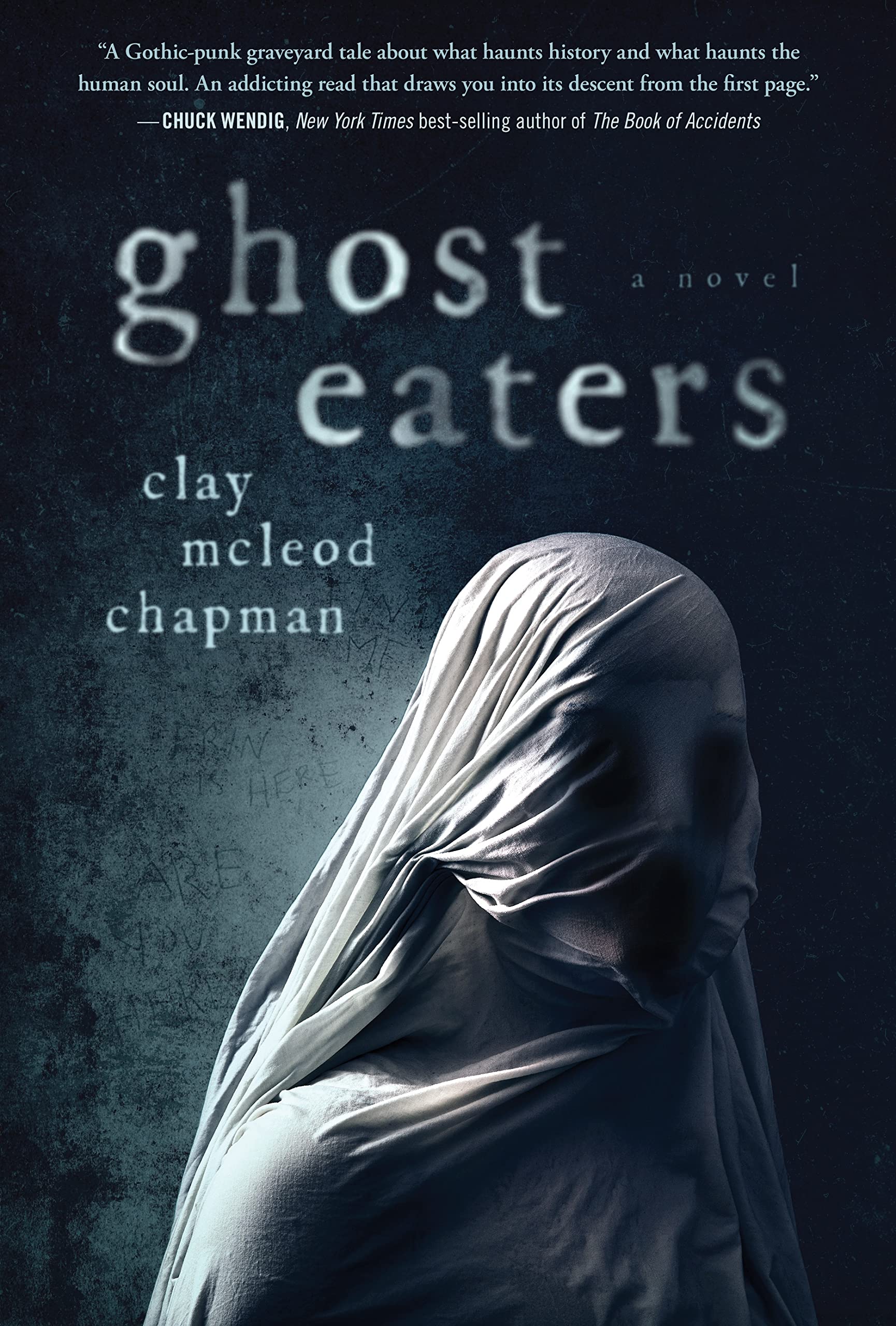
I was fully expecting a traditional ghost story. Maybe a haunted house. Something that is tried-and-true in the ghost story genre. And I don’t mean that as shade; I like ghost stories that follow a formula. They are still scary as F if they are written well. The creepy ethereality of gothic horror is my jam. And that’s what I thought Ghost Eaters was going to deliver.
Was I wrong in the most deliciously skin-crawling way! Ghost Eaters reads like a mature Young Adult novel that merges the horror of fresh-out-of-college, emergence-from-the-chrysalis loss with the ghostly supernatural. Chapman’s prose fits the YA genre; this novel borders on YA and contemporary adult horror. It feels like YA to me because, well, I’m not in my early twenties like the characters are. But the events and themes in the novel are better suited for an adult (if young adult) audience. There are mature themes here of death, grief, the loss of friends, parents, and loved ones. There is the threat of loss of the self: perception is a two-way mirror in this novel, and you’re never quite sure which side of the glass you’re on.
The story follows a young woman and is told from her perspective. Erin is a privileged, educated woman. She has family, family money, family connections, but despite this, she flounders in life. That’s the first horror, one that is banal and familiar to many. Erin is part of a group of friends; their leader has floundered in worse ways than Erin. Silas seems to be drowning in a drug-induced depression. When their social circle falls apart as the result of an untimely death, each one of them seeks to find meaning and reconnection in different ways.
Some of them take the task literally.
And that’s the second horror of this novel. The dark mental and physical adventure that ensues as Erin, Amaya, and Toby play dangerously with the line between living and dying, the present and the afterlife. I won’t ruin this for the reader. Just know that “ghost” in this novel has multiple meanings, and the loss that one associates with death is more than never seeing someone again.
A worthy Halloween horror read that haunts in multiple ways!
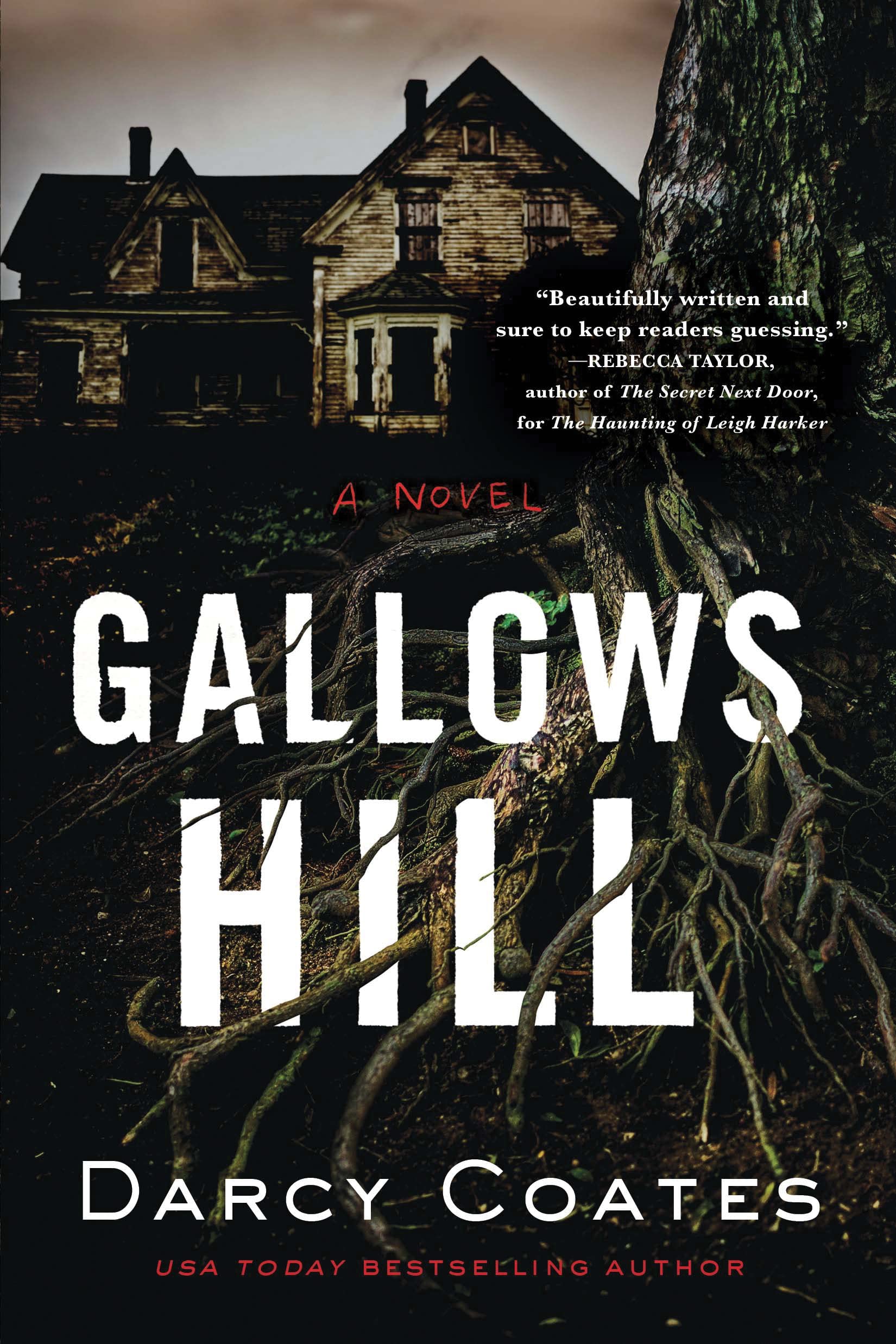
If you love horror movies and gothic horror this is a book for you. Gallows Hill reads like an independent, low-budget horror film that successfully builds tension out of nothing but silences and thoughts that teeter on the edge of madness.
The story begins with Margot at the funeral of her parents whom she’s never met. And no, she’s not adopted. That’s the first mystery. The rest is classic haunted house and horror flick stuff. Very gothic horror; the scares are all Margot’s. The story is told from her perspective, though in 3rd person not first. The readers are silent witnesses, like ghosts trailing her in her every move, watching her. Nothing is left out of the reader’s sight; chapters pick up exactly where they’ve left off. Every detail is accessible to the reader.
Coates evokes a proper sense of dread with well-chosen words; her descriptions are succinct and sparse, giving the images that are spun in the mind an appropriate filter of blue-grey darkness. There’s always a sense that Margot could escape this, that this is just all in her mind, and real life is just beyond the gate, down the road, in the town nearby. But the reader becomes quickly acquainted with Margot and knows that that’s not possible; like Margot, we are compelled to read on to discover the history of her, her family, this place.
The story unfolds in a matter of days. Most of the events take place at Gallows Hill and the house; it is the hill on which the house is built, the hill in which the cellars of the winery were dug. She inherits Gallows Hill, a winery and an estate that has belonged to her family for hundreds of years. That’s the second mystery; the people who work and live on the estate are a strange cast. Even the townsfolk are an odd bunch. Their interactions with the estate and the land will compel the reader to read on: What happens after dark? Why does the land need a blessing? The reasons given are mundane and reasonable; there’s a normal explanation for everything, but the reader — like Margot — will find them unsatisfactory.
The ending is satisfying. It is explosive and a tad Hollywood-esque. But it does answer every question and its brings the story to a complete and organic close. You’ll close the book feeling like Margot got what she needed. A really great, creepy Halloween read!




 Dr JoAnn LoSavio