
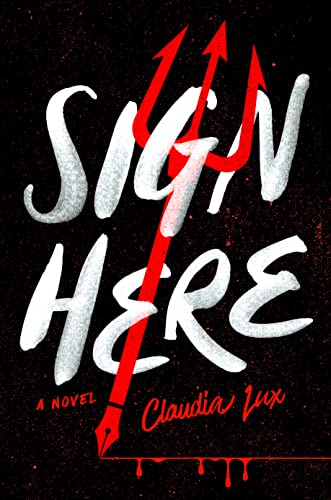
A departure from the more serious novels I’ve been reading lately, and perfect — if a little late — for the Spooky season. Still, if you are a horror fan, any time is a good time for a paranormal mystery, which is exactly what Sign Here is, with a generous injection of humor.
Sign Here is a combination of the television show, “The Good Place” and one of Simone St. James’s paranormal mysteries, the kind which unravels to reveal a multi-generational history. It’s laugh-out-loud funny and also deadly serious at the same time. I couldn’t have asked for a better post-Halloween read than this. It gripped me to very end.
The novel is set in two dimensions: Hell and Earth. The former is a bureaucrat’s heaven, a place where the radio station is constantly on commercial break and the music is every genre you can’t abide. There’s fun to be had in Hell, but no peace, utterly no reprieve from annoyance. Ever. One of the main protagonists of the novel is a demon who long lost his humanity and now deceives or manipulates souls in order to collect them for his hellish quota. His goal is to complete a “full set” of a family, one soul from each generation. And to find some measure of peace in the afterlife. The two objectives are not exclusive.
The family he has targeted is a wealthy and dysfunctional one, a collection of questionable traits has passed down from one generation to the next. They have a long history with this demon, a transactional history of quid pro quo. There is also trauma, murder, abuse, and just downright immorality in the family’s past; one might say, the stuff that Hell is made of. But they are lovable too. Their flawed histories and personalities make them all the more human, all the more recognizable, for all their privilege and wealth. The reader will get the impression there is something not quite right about them though, and as the novel progresses, it becomes clear that several of them have something to hide — even from the demon himself.
The novel is set at the start of the annual family vacation, a dreaded and welcome event. There’s a newcomer to the lake house with them: the new best friend of the daughter. She’s bright and curious — and may just force the family’s dark secrets into the light.
The two storylines intertwine: Will our demon be able to exploit the family to meet his quota? Will he ever escape his Hell? Will the family be able to keep their horrors safely hidden in the past? Someone’s soul is at stake. Will it be the father? The mother? One of the kids?
Sign Here ends explosively and satisfyingly. Everyone gets what they deserve.
 Dr JoAnn LoSavio