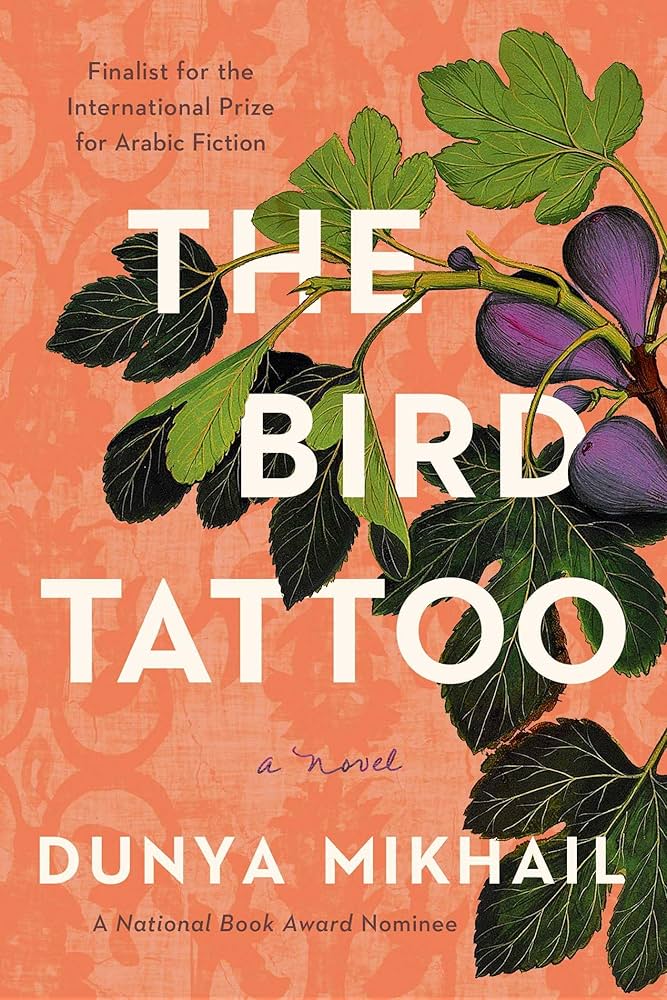
The Bird Tattoo: A Novel by Dunya Mikhail

The Bird Tattoo: A Novel by Dunya Mikhail

This novel devastated me. From its start to its end, I could not look away, though I wanted to put it down so many times, needed to put it down so many times for my own peace of mind. The pain of the characters was so real and tangible that I felt if I put down the book I was doing them an injustice. If I could — and I did — put down this book, that is proof I am privileged enough as to be able to switch off their suffering. And that really is an important point here because the subjects of this story and their histories is not a thing of the past. Mikhail’s tale is not a fiction, but the reality of a several thousand women in the world today.

The Bird Tattoo is about suffering and war, and what happens to women and children in times and places of war. The main character is a young wife and mother, a Yazidi woman who is kidnapped from her home in Iraq and sold into slavery, to be passed over and over again as an unwilling wife among the Islamic militants who have taken over her country. In her agonizing wait for rescue and her journey to freedom, both she and the reader encounter other women and children who are enslaved — and the men who enslave them. The conflict that the novel is premised is on is not made explicit; it doesn’t need to be. What is important is that it is contemporary and could be one of so many that are happening right now. That is Mikhail’s point in fact.

You are reading the words of someone’s life right now.

Some of the men who rule this cruel war-torn world are as expected: cruel and indifferent. Others are kind, in relative terms. Each are trapped within a terror not of their own making, the terror of states and governments bent on power and hatred. Some of the women are equally as surprising; some have developed Stockholm Syndrome, some are defeated and have given up, others are defiant. They are prisoners all the same. They, like the men, exist at the whims of others — for them, at the whim of their male masters, their new husbands. There are children too, some of the women are not women at all, but are children.

The novel is about the trust and the lack of trust between these individuals. It is gut-wrenchingly sad, but it is also hopeful. It is about resilience of the human soul and the human drive to survive. It is about resilience of humaneness and the power of kindness.

The Bird Tattoo is like so many classic novels (indeed, I think it is destined for that category) in the vein of Elie Wiesel’s Night or Uzodinma Iweala’s Beasts of No Nation: necessarily painful to read. The pain the reader will feel is the liminal ritual, the necessary rite of passage that allows us to recognize hope and the privilege of being alive and safe. Books like these make us thankful for the peace in our lives.

Books like these also inspire us to action. That is the manifestation of hope.

If there is one book you read this year, read this one.

Cunning Women: A Novel by Elizabeth Lee

Cunning Women: A Novel by Elizabeth Lee

The description states this is a feminist tale, what happens when women are ostracized, “cast out” from their communities. It does not disappoint. The characters and their lives challenge typical narratives of women in this historical era. Despite being several decades past the so-called Women’s History turn in the discipline, popular depictions of European women in the 17th century remain stagnant as powerless, subjects in a patriarchal world, and largely passive. Of course, we have seen and heard of the warrior women (queens), daring women (aristocrats), extraordinary women (those who chose to challenge norms); what we often lack are narratives of truly ordinary women. They remain (largely) relegated to a passive role in society.

Not so in Elizabeth Lee’s Cunning Women.

In this tale women lead the way despite living under a patriarchal yoke. The characters here are not heroines, they do not dismantle patriarchy, they must live within in it (as we all do) but they resist. It is this reality that Lee folds the reader into. Mother and daughters, even the sons of the village are bound within a system not of their own making. What makes Cunning Women feminist is that some characters find ways to resist, even when knowing their reality cannot deliver on desire. They resist anyway. Other characters find ways to resist by scraping by, by working within the system and in these ways — by merely surviving — challenge the patriarchy which binds them. These characters, in their hanging onto life, raise a fist to “the Man” so to speak. Even the characters who bow to the patriarchy find themselves at odds with it when the women in this tale earn their vengeance.

Cunning Women is a complex tale, one which appears deceptively simple in its plot. It is for that reason (I believe) the story moves slowly. Lee allows the reader time to digest and mull over, to reflect as the main character does on the parameters of a woman’s life in an English village in the 17th century. The love story necessarily moves slowly; this is not a rush of lust but an intellectual and emotional growth of love. Note: this is not a romance. No, this is much more realistic than that. Cunning Women is an account of a realistic life with all its banality and uncertainties.

All in all, well worth the read.

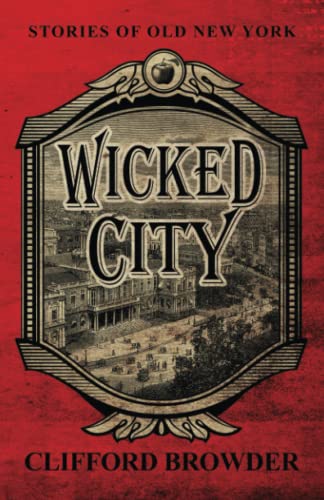
Wicked City: Stories of Old New York by Clifford Browder

Wicked City: Stories of Old New York by Clifford Browder

Oooo! What a slick collection of grimy, gruesome peeks under the golden veneer of the Gilded Age! The prose and tales in Wicked City are as smooth as the criminal characters in its pages, which is to say, if you, Reader, are a fan of urban grit and historical fiction, then this is the collection of stories for you. Wicked City reads like a literary revision of The Gangs of New York, but instead of Daniel Day Lewis, the lead is a very chic Edith Wharton — if Edith had a side hustle as a brothel Madam and if the brothel was run out of the Waldorf Hotel.

Make of that what you will. (I love Edith Wharton’s refined snark and the grubbiness of Gangs of New York.)

The stories in Wicked City are historical, but some things have been updated since the actual Gilded Age. Many of the tales are infused with modern sensibilities, that is, there are more enlightened notions around race, racism, class, and gender in these pages than perhaps there were in history. For example, Browder includes tales from Chinatown and addresses interracial marriage. Jingoism and nativism abound and are present, but Browder does justice to history by highlighting the non-White version of events in his fictions.

Many of the stories interweave, though some of the connections are subtle; there is a sense of dispersed, urban community woven throughout the collection. True to Browder’s work, this is an homage to New York and its history.

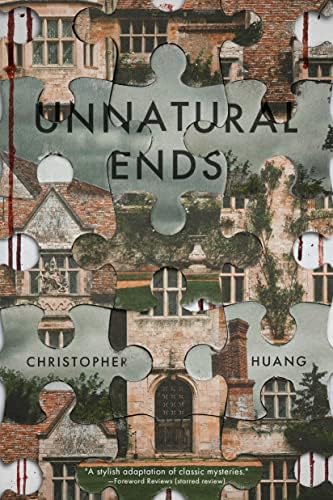
Unnatural Ends: A Novel by Christopher Huang

Unnatural Ends: A Novel
by Christopher Huang

Unnatural Ends reads like a French six-course dinner prepared and delivered by the latest cohort of Top Chef, served in the very classy digs of Downton Abbey, while you and your guests find yourself flung into a live-action Gosford Park; in short, this novel is the quintessential English manor-murder-mystery, updated for the 2022 reader. There is a hint of Mavis Hay’s (1936) Santa Klaus Murder here, a bit of Agatha Christie, and a good strong nod to the immorality of the British Empire (though, nothing quite so dark as Kazuo Ishiguro’s Remains of the Day). This novel is unbelievably English.

I loved it.

It did take me a few chapters to fully dig into the thrill of the case, but the family was so immediately deranged and dysfunctional, I couldn’t look away any more than if I encountered a train accident and found it to be the wreckage of the Orient Express.

The story begins with the death of the patriarch — his ghastly murder — and the strange clause in his will that disproportionately favors any of his adopted children who solves the crime. The novel unfolds from that point on in a predictable fashion for any mystery, but the ending and the twists of blood, family, and the loyalties of genetics kept this reader on her toes. Just when this reader thought she’d solved it, something emerged which threw her off! Between the three siblings, the pathetic mother and widow, the overbearing and sadistic father, and the eye-rolling police, Unnatural Ends delivers a very witty enjoyable read from start to finish.

For the reader who enjoys more than mystery, the novel also possesses several threads of underlying social and historical commentary. Britain’s dark imperial history, rife with its undeniable racism and eugenic standards of morality, are key foundational elements of the plot. Indeed, the cruel history of eugenics and colonialism are integral to the constituency of its characters and the motivations behind the twists and ruts of this mystery. On that note, however, the novel is not pedantic or a history lesson: it is wholly a mystery novel.

The Ruin of All Witches: Life and Death in the New World by Malcolm Gaskill

The Ruin of All Witches: Life and Death in the New World
by Malcolm Gaskill

Gaskill’s The Ruin of All Witches straddles the worlds of scholarship and fiction, the latter built on the solid foundations of the former. In doing so, this book takes the best of both literary domains to produce a richly detailed landscape of Puritan culture and society in England’s Old and New World. It centers on a Puritan couple, John and Mary, accused and tried for witchcraft in Thomas Pynchon’s New England. It starts long before their relationship begins and carries the reader through to its agonizing disintegration. Along the way, readers are engaged in the lives of a full cast of village denizens; this is a wonderfully immersive read.

Not merely backdrop to the main events, but integral for the reader’s understanding of the whys, whens, and hows of the witch hunts that followed, are the economic and political developments of Pynchon’s New England in the New World and the maneuverings of Royalists and Cromwellian supporters (rebels) in the Old. Gaskill delivers all the necessary context for the reader, leaving them with an almost palpable texture of English life in the 17th century (really, one can’t call this “American” in any sense of the word, though the New World does eventually become that.)

Readers should be prepared for a long read; detail like this does not come short, but the delivery is concise and succinct, leaving off unnecessary descriptions and fictions that do not add to the narrative. The descriptions that remain convey an authenticity, evidence of Gaskill’s skill of drawing out richness from (what is often, dry,) archival text. We can not only envision John and Mary, young and hopeful at the beginning, withered and waning at the end, but the humanity of their shortcomings are recognizable so as to make them and their community as near to us as our own flesh.

History, that remote and abstract object, comes alive in The Ruin of All Witches.

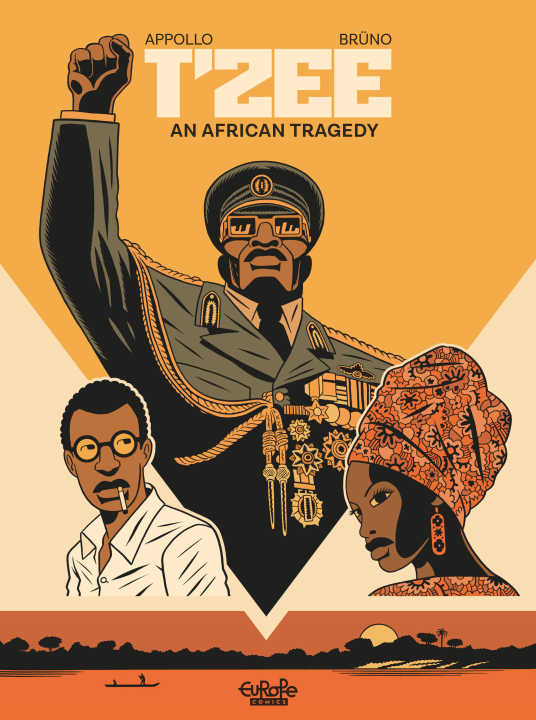
T’zee: An African Tragedy (A Graphic Novel) by Appollo (script) and Brüno (art)

T’zee: An African Tragedy (A Graphic Novel)
by Appollo (script) and Brüno (art)

T’zee is an action-packed, noir blockbuster in a graphic novel. It has all the makings of a Hollywood or Nollywood film: Post-colonial angst, corruption, family drama, illicit romance, sabotage, political violence. T’zee lacks actual history – it is all fiction — but its premise is grounded in real events of the twentieth century.

The story starts and ends with T’zee, the amoral dictator of an unnamed African nation struggling through its traumatic post-colonial afterbirth, but revolves around his young wife and youngest son, who each are coming to terms living with their larger-than-life husband and father and the roles they are supposed to play in this political drama. The former is a member of the new elite — but the limitations of gender and patriarchy force her into positions she might later regret. The latter is also a member of the new elite, the intellectual elite. During the typical educational sojourn young men of his class make in this era, T’zee’s son finds himself torn between his family and his morals. Politics, power, and ambition rule over both of them, force the wife and the son into decisions that are less of their own making than orders carried out under duress.

In three acts the reader witnesses the ebbs and flows of T’zee’s power, how his family fares in the pressure house of his politics, and the swiftness by which all their fates can change course.

This is an entertaining read. However, elements of its narrative promote a colonial logic which need to be addressed. T’zee is portrayed as a cruel and inept leader, one focused solely on his own aggrandizement and accumulation of wealth, at the expense of his people. His wife too is a woman focused solely on her own selfish advancement and fulfillment. The son is feckless and weak. Scenes of the city and the rural areas of this nation are memes of poverty and crime too often associated with the so-called “developing” or “under-developed” world, what has been classed so disparagingly as the “third world.”

I balk at depictions of African nations as cesspits of corruption, poverty, and crime. The implication that African peoples cannot rule themselves is one grounded so obviously in the so-called Civilizing Mission, that lynchpin of colonial logic; this is wholly inaccurate and stereotyping. I wish that elements of the story had addressed T’zee and his regime with more nuance; I wanted more decolonization in these pages. I cannot help but read as a historian, especially on a subject so close to my heart.

Still, this was a fun read and one I would suggest for casual consumption.

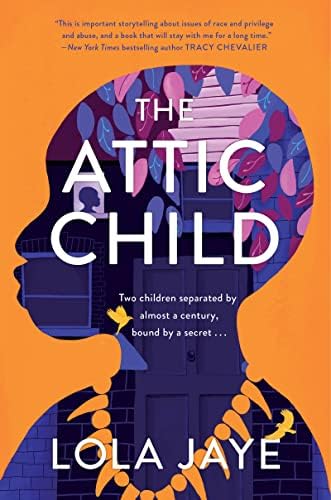
The Attic Child: A Novel by Lola Jaye

The Attic Child: A Novel by Lola Jaye

Something draws me to themes of tragedy and darkness in my choice of reading. The Attic Child might very well be one of the darker — if not darkest — novels I’ve read this year. This is a novel about strength, resilience shaped by necessity of survival and trauma; but it is not only the characters who must cultivate and wield this kind of strength, the novel requires the reader to be brave and hardy too. The reader must be to bear the suffering of reading about the suffering of others.

The pain is intentional. Jaye’s novel addresses, with unflinching realness, the lived trauma of colonialism by highlighting the literal theft of human beings European colonizers forced People of Color and colonial subjects to endure. The novel forces the reader to see how this history is very much present in our contemporary moment, that it is has caused intergenerational harm beyond measure.

As a historian of decolonization I am grateful for a novel like this — and happy to see that it was distributed on a platform as wide and well known as The Book of The Month Club (which is where I obtained it). We — those who come from parts of Europe’s former empires and those whose ancestors benefited from those empires, that is, everyone — need books like this, stories like this, voices like Jaye’s to declare that the grief and loss and wounds of colonialism are still not healed, closed, “over.”

The novel spans many generations and decades, beginning at the start of the twentieth century with a young boy who lives with his family on the African continent. He becomes the Attic Child, the first of many — children shut away, abused, neglected. He is robbed of his identity and his heritage. The story of a young woman who lives in a time closer to our present intertwines with his. The reader is aware there is a connection between the two, something hidden in the attic and the house in which both of these characters grow up, both of them “attic children.” The mystery the reader will find themselves embroiled in is how they are connected and why.

As the mystery unfolds it also deepens, its roots are long and twisted and dangerous. The mystery exposes the characters to pain and the possibility of new emotional wounds. The threat of scarring is real. But they are both hurtling through history and time and must live their lives. If there is a history lesson here, it is that we cannot escape history or making history, as we do so simply by living.

The novel does not pretend to heal the pain of this history. Reader should not expect to be bandaged or coddled in any way. But the novel does end as a historian might expect, with the lesson that history does not end, it goes on and on and therefore, that is itself a kind of closure. Perhaps, the ending is something more of a suture than a healing.

This is a tough and exacting book to read, but one which will not fail to provoke emotion. This is a significant novel.

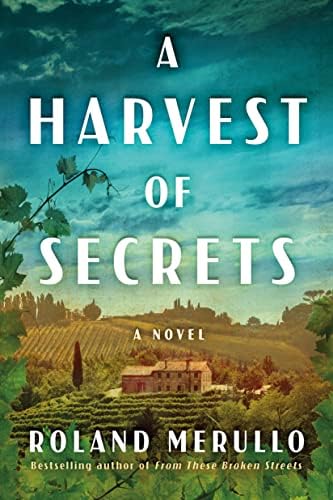
A Harvest of Secrets: A Novel by Roland Merullo

A Harvest of Secrets: A Novel
by Roland Merullo

A Harvest of Secrets is a slow burner, then halfway it ignites like gunpowder and the end is an emotional and deeply satisfying explosion, uniting all the storylines of the novel together in a kind of literary bonfire.

The novel is set in WWII, fascist Italy when much of the country has fallen under the control of the Nazi regime. The story unfolds primarily in a rural northern village where an old, aristocratic family grows grapes and produces wine. The San Antonio family and their estate have been lords over the land and the people for generations. There are tensions between the family who own the winery and its workers, age old class-based tensions that threaten to erupt under the additional strain of wartime food shortages and unpredictable Nazi raids. The war has also brought about new factions and exacerbated pre-existing enmities: resistance fighters and saboteurs against Hitler’s Nazis and Mussolini’s Blackshirts, deserters from the Italian and German armies, Il Duce’s spies, and Nazi collaborators. Caught in the cross hairs between these conflicting factions are two young lovers: Vittoria, the daughter of the proud noble family and Carlo, the orphaned peasant boy she grew up playing with. There are also others who find themselves trapped on one side or the other of the war: Old Paolo, the foreman at the winery, Umberto San Antonio, the noble man who owns the land, Enrico San Antonio, his son and Vittoria’s brother, Eleonora, the Jewish woman in their midst. They each have their obligations to family, country, and to those who have sheltered, raised, and loved them. These obligations tear the lovers and their community apart — and bring everyone together in other ways.

Merullo’s novel is not only about the lovers; it also about the many individuals whose lives intertwine with theirs. Indeed, the novel is more of a broad panoramic view of Italian society in this fraught period of the twentieth century. Some of the people Carlo meets are sympathetic to Mussolini, others seek freedom from the politics that engulfs them all, others are victims of Il Duce’s ill-conceived plans and ambitions. Vittoria is likewise surrounded by those who would do her harm and protect her from it. There are resistance fighters, Nazi soldiers and officers, Nazi collaborators, and Mussolini’s spies lurking and active all over the countryside, waiting to strike or entrap her and other innocent Italians who simply want to do what is right for themselves and their families, and by their conscience. As a woman of this period, Vittoria’s options are limited. Italian patriarchy places shackles on her that are made for women alone. She is meant to be a good daughter, a good woman, a quiet woman — but in the chaos of the war Vittoria cannot remain silent.

Woven into this larger cultural, social, and political vista of Italian wartime life is a domestic drama and mystery. Vittoria’s dilemma is at the center of this. She must bargain her silence for her freedom, sacrifice her morals to be a good daughter. But she is also a product of a longer history of women like herself.

Secrets held for decades, the kind begotten by forbidden love, are as much a part of the estate and the fabric of life in the vineyards as the vines themselves. These unraveling mysteries push and pull Vittoria, Paolo, Umberto, and Carlo in all directions. The emotional and real famine of war force these long buried secrets to emerge on the surface. As the Americans and Allies bomb Italy in order to free it, Vittoria, Carlo, Paolo, Umberto San Antonio, and others scramble for safety and try, hard as they can, to keep these secrets under cover.

Overall, a good read, especially for readers who enjoy themes of class conflict, gender histories, and ensemble casts of characters, and domestic mysteries.

The Master: A Novel by Patrick Rambaud

Translated by Nicole and David Ball

The Master: A Novel
by Patrick Rambaud

The Master is a stark novel, the kind that is absent of luxurious words and descriptions, but whose minimal lines imply a lush intellectual interior may lie beyond the text, if the reader is willing to linger on the line just a little longer than necessary.

The protagonist is Zhuang Zhou (also known as Zhaungzi), an actual historical figure, a Chinese philosopher who lived circa 369 BCE to 286 BCE and contributed greatly to the philosophy of Taoism. He is the eponymous master of this novel. It begins with his childhood and recounts the fictionalized events of his life, with especial attention to Zhaung’s moments of philosophical enlightenment. Zhuang is propelled, by his choice or by the whims of others, from one kingdom to another, finding his life and livelihood tied to the court, a recipient of a benefice from the king. In some periods of his life he welcomes this privileged position, living the abstracted life of the mind. At other times he rejects this and delves into more material pursuits. His experiences lead him to write the piece of scholarship he is known for, The Zhuangzi.

The novel reads like an ancient epic moving swiftly from one event to another. It does allow the reader some interiority into Zhuang’s mind, but only his, and only insofar as it pertains to his judgements on morality and ethical behavior. This is not a personal account of the interiority of his life in an emotional sense; the reader should not expect entree into Zhuang’s feelings, so much as his intellectual musings on morality and correct ways ruler should govern. (Indeed, the reader may get the impression Zhuang was a less than stellar parent and romantic lover.) Rambaud delivers the character with a kind of detachment, as if merely filtering a series of observations for the benefit of the reader and for the reader to analyze and judge Zhuang for themselves.

The purpose of the novel seems to be less focused on the man than his scholarship. I have the distinct impression I am meant to walk away with a fuller view of what the sage intended for us to understand about Taoism. But I admit, I was less impressed with Zhuang’s heavy handed pedagogy and deliberate elusiveness, and so the lesson missed me.

As a result, this reader notices a pedantic aspect to the book, which while it performs the conventions of Chinese philosophical writing authentic to its setting and protagonist, may read as supercilious to the modern reader. But then again, the philosophy of ethics is about passing judgement and imposing moral watermarks on society, so… I am left wondering if a book on a topic like this can ever be written without an element of condescension baked into it. If so, Rambaud is excused from any accusation of arrogance; indeed, Rambaud’s role in this novel is exemplary otherwise.

Rambaud’s portrayal of Zhuang follows an expected patriarchal narrative that is likely accurate; we are not given any historical evidence that the real Zhuang was a feminist, after all. To portray him as such would have been inauthentic (if satisfying as a disruption, a revolution). We can understand Rambaud’s role here as a messenger. His prose is beautiful in its sparseness; with few words an image of Zhuang — not his physical being but his essence — is apparent to the reader, as are his friends who accompany him, betray him, befriend him on the journey of his life. Rambaud delivers the tensions of the social landscape of ancient China well, without romanticizing or Orientalizing the place or people. It is a harsh world: peasants live and die at the whims of their lords, people live and die at the whims of nature via its tantrums in the form of floods or droughts. Rambaud transports the reader to this moment and place well.

Overall, The Master is an enjoyable read, one that informs and does what historical fiction ought to do: transport the reader across time.

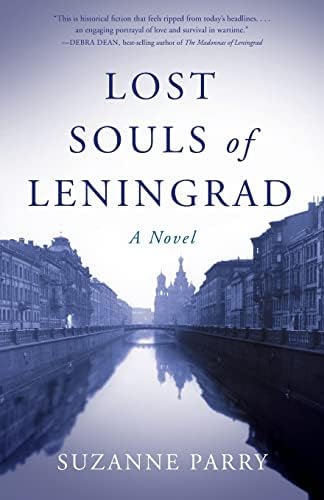
Lost Souls of Leningrad: A Novel by Suzanne Parry

Lost Souls of Leningrad: A Novel
by Suzanne Parry

Lost Souls of Leningrad is a rare novel about the Russian civilian experience of World War II. Even rarer, its primary protagonist — and the character through whose eyes this experience is filtered — is a late-middle aged woman, a widow. (I am not a fan of romantic WWII novels that involve beautiful young women who all wear red lipstick, have perfectly coiffed hair, and fabulous clothes in the middle of wartime. Hello? Rations? I mean, COME ON.)

Parry’s novel possesses a more realistic portrayal of wartime. Its setting is Russia, a nation besieged by Nazis. There is a tightrope tension, drawn even tauter by dwindling supplies of food and medicine. Lost Souls of Leningrad does not romanticize war; events and experiences that other novels paint in sepia tone, Parry swathes in a more authentic grey. The sense of loss, a grieving for the world that was, is palpable in Lost Souls of Leningrad in a way that makes it refreshing as a novel of WWII.

The story revolves around an aging, widowed violinist and her teenaged granddaughter. But the novel is not about them alone. Lost Souls of Leningrad is a landscape of a European city at war. Parry reveals to the reader the swift and terrible death and decay of an urban place and its people when the trappings of civilization are ripped off by war. Food and the lack of it, water and the lack of it, the stench and the unavoidable abundance of it. Fear from all the dark corners, lives cast into darkness in the absence of street lights, electricity, law and order. The other characters are Russian soldiers, mothers, wives, and orphaned children. All of them are the lost souls of the title, each of them has lost something, whether a loved one or a parent, or simply their sense of security in ordered society that they once had, even if imperfect. Loss and grief, not only as a result of war, but through political upheaval, are themes that imbue the book. The novel draws a line between the time before and the time after, the time of war, and afterwards, even when war is over, there remains a division of before and after.

While the novel does not romanticize war, there are romantic threads in its storylines. There is love in this novel in various forms: nurturing and mothering love, parental love, innocent and childish love, romantic love, the kind of love that is weathered by life. While a defeating hopelessness pervades the novel (it is war, after all), there is also an uplift via its characters’ resilience. This strength manifests in many forms but most prominently through love and kindness.

As a historical fiction, it portrays a more social version of history than a military or political one. Readers should not expect dates or events, but an overall texture of life in wartime Russia. This is not a historical fiction that relies heavily on the facts of history, though the timeline of events does follow authentically in line with actual history; this is a novel about the human experience of war, lived and sensed through the skin, the eyes, the nose, the tongue.

This a beautifully written novel about surviving loss of different kinds and the love we need to do so.