The Wintering Place by Kevin McCarthy

The Wintering Place by Kevin McCarthy

Five words or phrases to describe McCarthy’s The Wintering Place: Raw, Disturbing, Visceral, Emotionally Invasive, Riveting. This is a novel for fans of Donald Ray Pollock and Cormac McCarthy, readers who enjoy (perhaps with grimacing faces) the feel of dirt under the character’s nails, an odor of decaying blood lingering and fetid, the kind of novel that settles a deep chill in your bones and in your soul. The Wintering Place is a novel about resilience and survival and the cost of that survival on the human soul.

The novel is set in the 1840s on the American plains, in the rural hills and the long stretches of lonely woods. It revolves around two brothers, Irish immigrants, who have fought and lived according to a primal form of justice. They are army deserters, fugitives in more ways than one. Blood and death are on their hands, rightly or wrongly. A woman, the bride of one of the brothers, accompanies them — and together they are a kind of family, dependent on each other for their survival and security. There is a bond of love between, the kind that is weathered by the harshness of life, silent, sullen, and not always kind. The woman is like the brothers: alone in the world, a survivor of a place and time that beats women out of their dignity, power, and softness.

The three of them seek a wintering place. A place to hole up for the dark season. They need only to survive the weather — that is, until they encounter animals of their own kind who threaten them. Humanity is the evil that lurks in the shadows of the forest. The snow, wolves, and frost kill too, but humans pose the most danger.

The three of them encounter ruffians like themselves, Native Americans, officers of the law, traders and merchants who hold the power of life or death over all who dare to traverse the plains in winter. Everyone is seeking a safe wintering place in some way or another.

My description sounds stark, but McCarthy’s prose and the way he unpicks the fabric of the story and lets it unravel into its bare parts, is captivating. I read this novel compulsively, wanting always to know what happens next. Do they survive another day? Will one of them perish in the effort?

The characters were fleshy, real, and irresistible; the stink of their unwashed bodies and the smell of blood permeated the safety of my apartment as I read this book. It was as if I could sense them in the room with me. McCarthy uses an epistolary delivery, bringing the characters into dialogue with the reader directly; it is almost like having a conversation with them.

At the end of the novel, this reader even felt a little lost — as if there was a little death in the finishing of this book.

I must add one more word to the description: Haunting.

1794: The City Between the Bridges (A Novel) by Niklas Natt Och Dag

1794: The City Between the Bridges (A Novel) by Niklas Natt Och Dag

1794 is a deliciously dark journey through the underbelly of 18th century Stockholm. It’s the second novel in Natt och Dag’s Cardell series; but, the novel stands on its own. I didn’t read 1793: The Wolf and the Watchman where the characters, Jean Mickel Cardell and Anna Stina Knapp first appear, but that did not preclude my enjoyment of 1794.

The novel begins with Eric Three Roses, the second and less-loved son of a minor nobleman. Eric’s journey to Sweden’s only tropical colony, Saint Barthélemy and the mysterious, scuzzy individuals he meets there are the mystery that seeds the rest of the novel. What happens to Eric is tragic. Cardell is called upon to discover the crime and the criminal — and bring them to justice. He seeks out Cecil Winge, encounters Anna Knapp again, and slithers through the shadowy and crime-infested underworld of Stockholm, sorting through those who are struggling to survive and those who prey on others to survive.

This is a crime novel, one which reveals a seedy and complex weaving of lives, fortunes, and terrible fates that not only delivers the tension of a mystery but also, and perhaps more appealing to me personally, the texture of 18th century European urban society. Classes collide, fates are intertwined, and motives are never simple. Relationships function on transaction, but the currency people must pay can run the range from gold to love, from silver to power. Murderers murder for the sake of a love of violence. Fathers overlook the transgressions of their daughters for the sake of a peaceful existence. Brothers blind themselves to the follies of their siblings. Sanity and madness are two sides of the same coin.

1794 is not a story with happy endings, neat narratives wrapped up by the end; this is a reflection of life under a harsh light. The mystery lies in how we survive it.

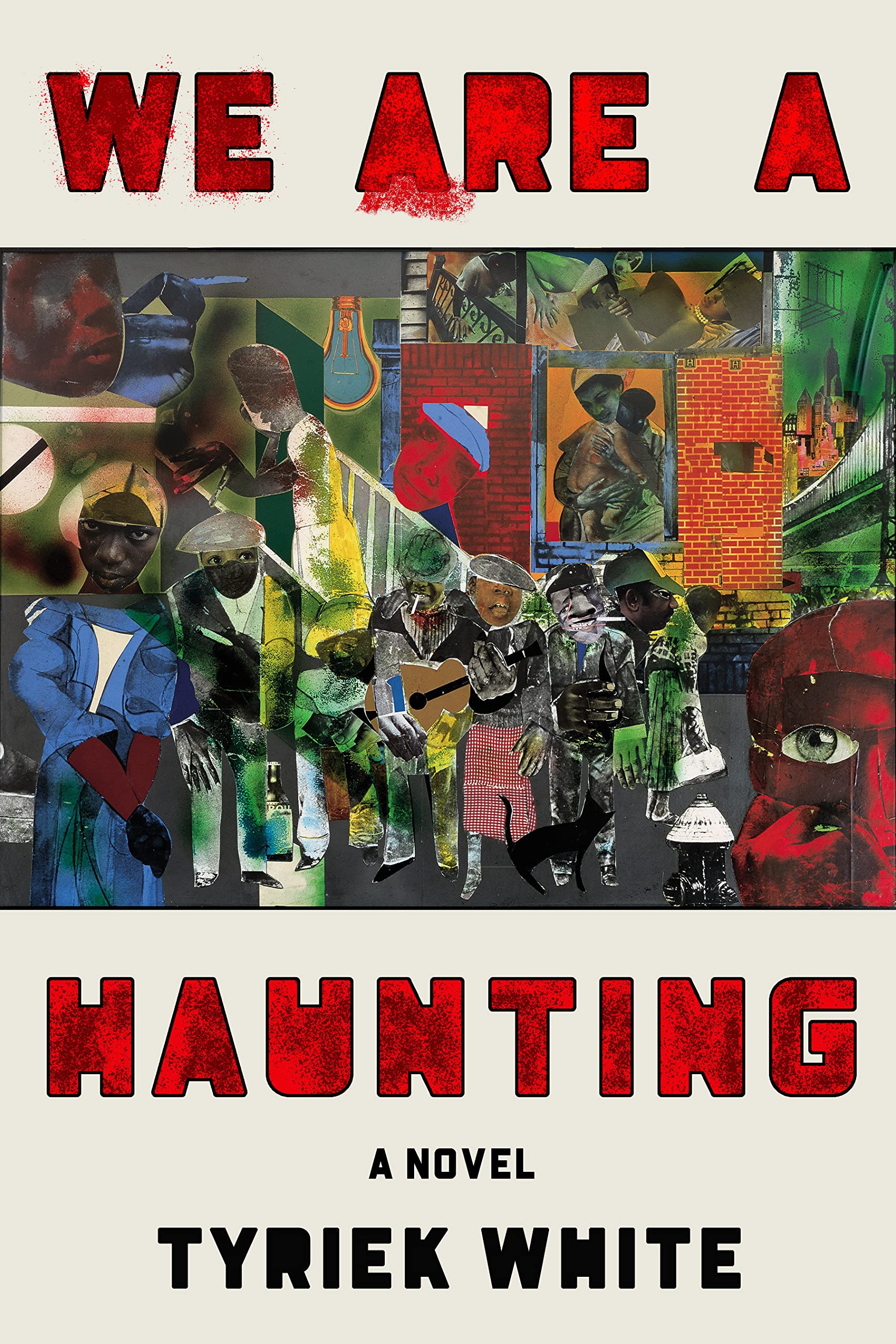
We Are A Haunting: A Novel by Tyriek White

We Are A Haunting: A Novel by Tyriek White

We Are A Haunting is a poetic song, like a siren that lured me into its world. Through the eyes of three generations of a black family living in New York City: Colly, Key, and Audrey, and the unraveling of their lives in a world rife with systemic racism, poverty, violence, grief, loss, readers are treated to a story that flows seamlessly between decades and generations.

White’s novel toggles forward and back in time. Characters float — as ghosts — between the past and the present. As the space between these three generations contracts and expands, the reader’s construction of time and history is reshaped, no longer a linear thing but a fluid matrix in which they live, all together, simultaneously at once. As a historian, We Are A Haunting reminds me that the past is never past, the present is merely a locus in history’s path.

The language which binds all these moments and spirits together is history, emotion, and experience: suffering and longing, obligations and promises kept or broken, strength and compromise, the ability to survive and a sense of defeat under the unwavering boot of poverty and racism. This is a complicated world in which awful events — such as getting fired and losing one’s income — is a nonevent warranting no reaction because of how useless it is to express emotion over it. This is just how life is. But, at the same time, such events are also gateways, paths that lead elsewhere, to better futures.

The interactions of the main characters with others in their lives: friends, fathers, husbands, children, and the dead or dying create the bonds which constitute the community and are the paths along which history travels. Each generation seeks to identify for themselves who they are and what they want, but they are also inevitably bound to the previous generation. Just as the living and the dead move seamlessly between their worlds in this novel, birth and death are a window that lets light in and keeps out the wind. Key, in her community, serves as a kind of gateway for life, possessing the ability to see things others cannot and in the capacity of a doula.

We Are A Haunting is not just about the black community itself, as an insular, discrete object in a vacuum. Then novel situates these black histories and experiences within the context of American material culture and history. Colly, Key, and Audrey and those around them are embedded in a world that has and continues to be assaulted by colonial institutions and racist systems. The deaths — those both metaphorical and physical — in We Are A Haunting are caused by this abuse and indifference. Casual micro-aggressions are tiny cuts and death is caused by a thousand of them.

This is a complex novel. For all its historical meaning, this is not a historical fiction in an informative sense; the time-bending, paranormal elements and the focus on characters’ and their emotional lives make this a more literary work than a historical narrative. This is not a novel that brings all its narrative arcs to happy, organic closures; un-repaired relationships, unfulfilled desires, and falsehoods are part of its characters’ lives. Morose, resentful endings are, after all, part of the colonial experience (at least from the perspective of the colonized.) In no way is this a detraction; this honest harshness is an authentic portrayal of racialized America.

The prose is literary. It is singularly focused on its characters more than its plot, though the unfolding of events lead to the characters’ interactions that shape their experiences. The characters are tangible, flawed, and powerfully written in each their own voices. Readers will have access to their interiority, but this is not an easy read in that the characters are — as real people are — guarded, afraid, unwilling to be vulnerable. Readers should not expect to be told what to think; this reader had to work to understand the motives and meanings of their conversation, their actions. The work, however, is worth it.

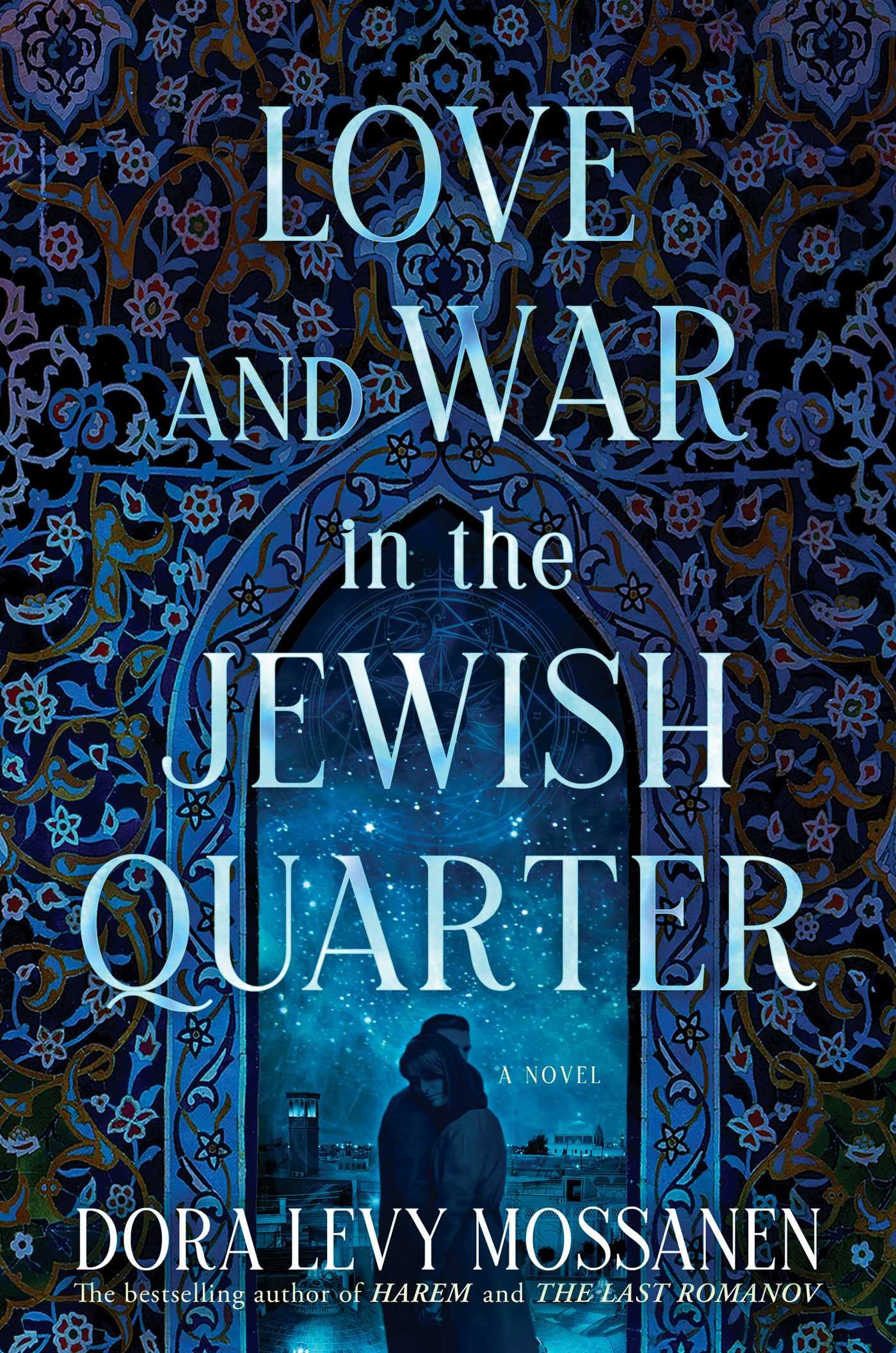
Love and War in the Jewish Quarter: A Novel by Dora Levy Mossanen

Love and War in the Jewish Quarter: A Novel by Dora Levy Mossanen

Set in Iran in the 1940s, Love and War in the Jewish Quarter captures Jewish life and culture as it existed in tense contest and precarious harmony with and within the majority, ruling Islamic community. On the fringes of World War II, but dangerously within the political reach of the Nazi regime and Soviet pressures, Iranian Jews must balance their interactions with Muslims even more carefully than they always had. The Allies are a distant factor; they are not a guarantee of safety as news of Hitler’s internment of Jews creeps ever closer.

[For those interested in the Jewish experience of WWII in this region of the world, One Hundred Saturdays: Stella Levi and a search for a Lost World by Michael Frank is about Rhodes and its Jewish community before and during WWII.]

It is in this tension that Jewish dentist, Dr Soleiman Yaran, finds himself. He is trapped in the conflicting intersection between his Jewish community and roots, the powerful Iranian royal family and governors of the land, his family, and his personal desires. The novel revolves around his attempt to unravel and reconcile his responsibilities and his personal happiness. Embedded in these tensions are deeper, more global undercurrents: as a medical professional schooled in Paris, Yaran also finds himself — as an agent of a Westernized modernity — at odds with ethnic, religious traditions, Jewish and Muslim alike. The war is not the only conflict highlighted in this novel; friction also exists in culture between the traditional past and the modern present. There is a shedding of superstition and tradition in favor of new technologies and practices, beliefs about the roles of men and women in their communities. Gendered expectations, visible through the performances of wife, husband, child, lover, parent, elder, and filial piety, duty to one’s community, and duty to one’s self are strong themes throughout.

Mossanen delivers this internal and historical drama through a romantic storyline, but readers will be disappointed if they expect a historical romance, for a romance it is not. This is a love story about love in the real and brutal world, where individuals are buffeted by cultural and community expectations and traditions. Its realistic setting and story are the novel’s appeal; the unpredictability of life will keep you, Reader, on your toes throughout.

The characters too, are fascinating — multi-faceted and tangible — because they are reflections of real internal conflicts. They are flawed and spurred on to their actions by subjective logics, some which make little sense, except when viewed within the larger landscape of this history and cultural context. The villains in this novel are human in their cruelties. The heroes and heroines are human, unable to manifest impossible archetypes.

A worthy read for all fans of historical fiction of the 20th century.

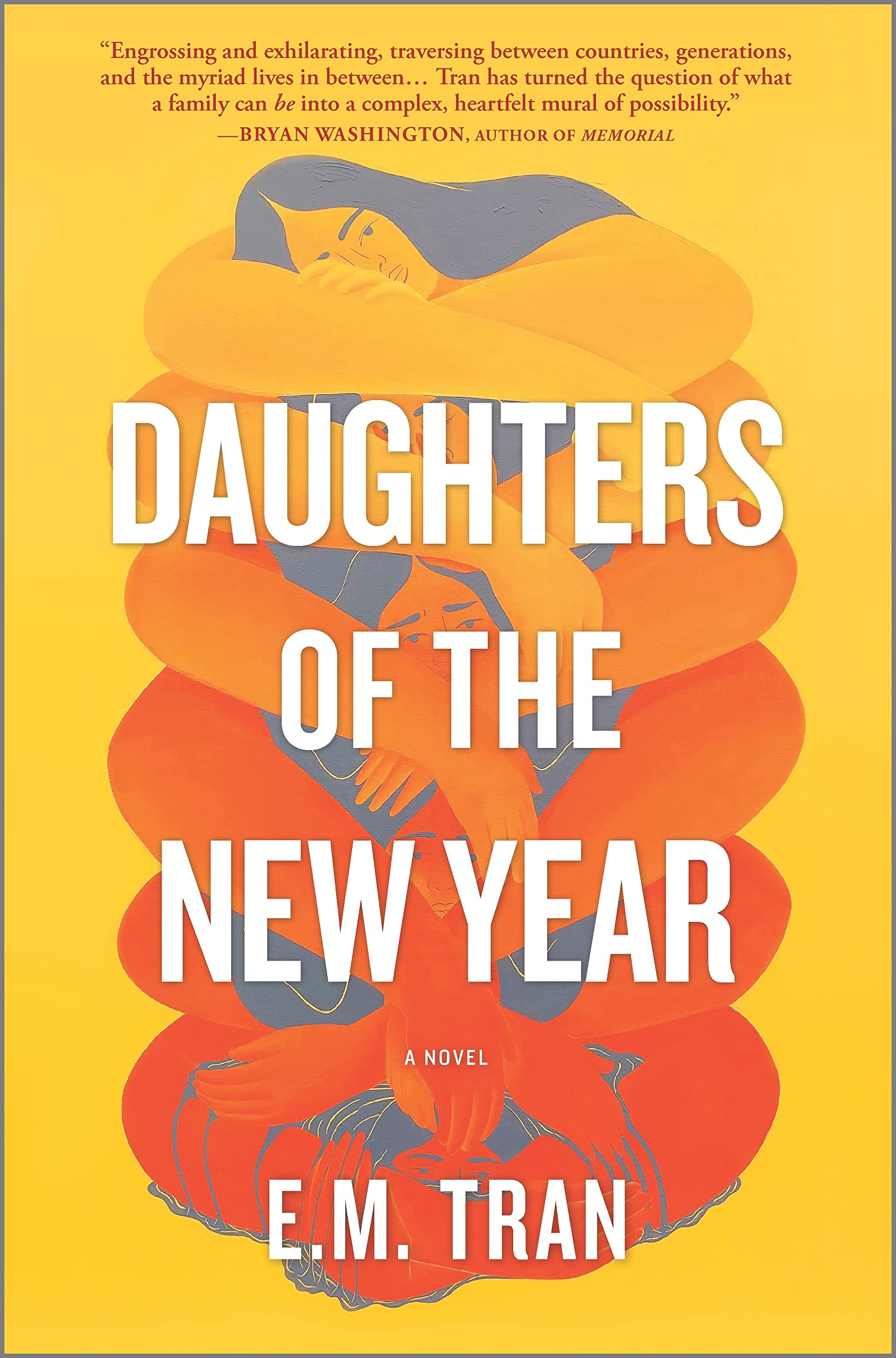
Daughters of the New Year: A Novel by E.M. Tran

Daughters of the New Year: A Novel by E.M. Tran

I am a sucker for a slow, immersive, multi-generational historical fiction. I love the unwinding of family secrets and histories. Families are spaces of ordinary and extraordinary trauma; intense love also breeds intense regret, jealousies, animosities. Tragedy binds and creates familial bonds stronger than blood. And, of course, as a historian I love getting a glimpse into a past where the reasons and logics behind piety, duty, and love are complex, sometimes contradictory, colored with personal suffering, traditions, and the institutions of humanity-at-large — as in this case, French colonialism and Confucian patriarchy.

That is the hinge around which Daughters of the New Year swivels. This novel is an honest portrait of the brutal historical and cultural complexities that shape familial love.

The reader is given a privileged view into the minds, hearts, and philosophies of several generations of Vietnamese women. It is a novel about why and how mothering, motherhood, and filial duty are never straightforward, why these acts of love are volatile constructions of history and culture. Time and place alter the modes by which we care for one another, show each other love. What is an expression of affection for one generation is manipulation to the next. What is piety to one generation is an empty gesture for another. The reasons why mothers do what they do, why sometimes their love crushes their daughters, are molded by forces beyond their control: war, racism, patriarchy. Yet, for all those differences, there is one motivation behind these acts: the desire to provide the next generation with more than what the previous had. This is the love embedded in families.

The reader is given a privileged view of an excavation of familial love through Vietnamese and American history. Through chapters narrated by a daughter of this family, daughters descended through a matriarchal bloodline, the reader gets an interior view of the characters’ minds. Each of them has a different voice in this novel. EM. Tran’s prose is a beautiful thread throughout, binding their stories together, but each of the characters speak with their own, unique voice. Each chapter reveals its narrator’s logic, their historical context; explains why they did the things they did — even perhaps knowing that those acts would somehow traumatize the next generation.

There is Nhi and her sisters, the American generation. There is their mother, Xuan; their aunt, Xuan’s sister; there is their grandmother; a line of women, as if holding hands, unbroken, their spirits resiliently swaying in the winds of change and time going all the way back to the epic and legendary Trung sisters. Daughters of the New Year is about these women.

Fans of Yaa Gyasi’s Homegoing, Amy Tan’s Joy Luck Club, or Min Jin Lee’s Pachinko will enjoy Tran’s Daughters of the New Year.

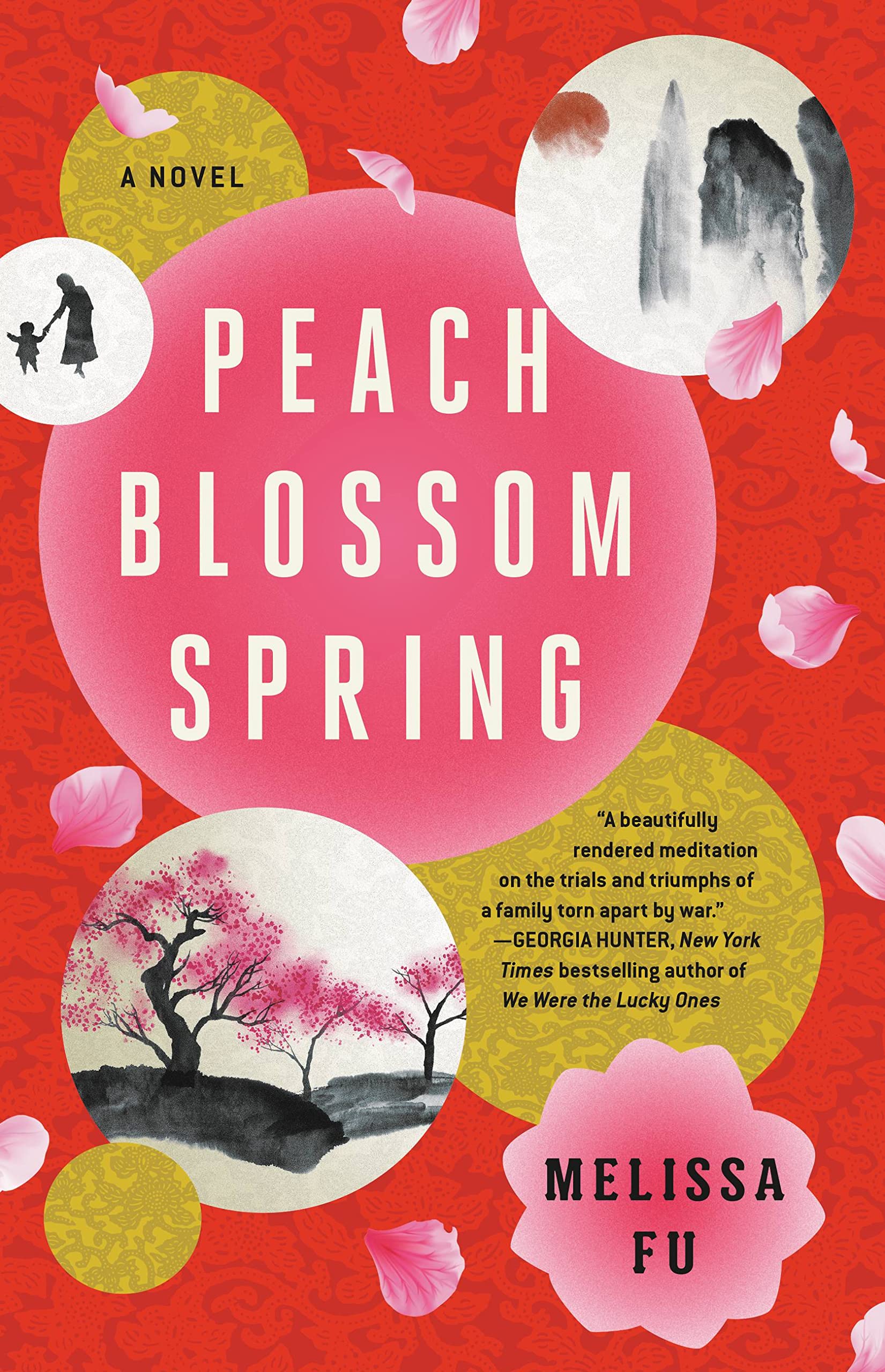
Peach Blossom Spring: A Novel by Melissa Fu

Peach Blossom Spring: A Novel by Melissa Fu

I’ll be honest; the first 60 pages of this novel did not impress me. There was nothing wrong specifically, it’s just that nothing stood out to me in terms of character development or plot. But persistence paid off and by the end of the book I was in tears, ugly crying over the lifetime of grief, loss, and intergenerational trauma that history forced on the characters. This is a book I will never part with; I want my children and grand children to read this book.

The novel begins in the 1930s when China has been ravaged by European encroachments on its sovereignty; internal fractures between peasants, warlords, and the rising middle class; and the Japanese, who are gaining ground and support for their own imperializing campaigns. The Dao family are much like many others of their class: they own an antiques business, they are merchants living prosperous urban lives. Then the Japanese arrive and they are forced to flee. Meilin and her young, suddenly fatherless son, Renshu escape with her brother-in-law, her husband’s brother, Dao Longwei and his wife, Wenling and their two daughters. But the war continues and despite Longwei’s protection, Meilin and Renshu are separated from the other Dao family members.

The war with the Japanese slides into World War II and then into China’s Civil War. The seams between these conflicts are invisible to those like Meilin and Renshu who survive in the semi-peaceful interstices and spaces between them. The novel traces their journey across space and time, from China to the United States, and is marked by the people and things they lose along the way. This sense of loss — particularly of the loss of family, identity, and belonging — is the fulcrum around which the novel revolves.

Meilin, Renshu, and eventually Renshu’s daughter, Lily narrate their own and the Dao family story across several decades, three generations who experience the their subjective transnational, migration history and the larger, tragic events of Chinese history very differently. The reader is given a glimpse into living wounds of war, the kind that fester long after the battle has been lost, a world in which those who bear the brunt of war are not the combatants but the bystanders, even the truly innocent, those as yet unborn at the time of war. Like Yaa Gyasi’s Homegoing (which I read, but did not review here), Mother of Strangers by Suad Amiry, and Moth by Melody Razak this is a story of the effects of war and politics on those who had little to do with battle.

Loss and the grief of never being able to “go back” to be again what you once were, to have what you once had, and the especially painful suffering of being a transnational person, an immigrant belonging to two places at once and never fully to any one of them is a key theme in the novel. This is embedded in the title of the novel, which is premised on a scroll that Meilin inherits from her husband and a story she draws from it and tells to her son. In each their own ways, Meilin, Renshu, and Lily can never truly be whole in the way they want. History imposes on them, forces them to be split, to grieve for something or some part of them they cannot have, cannot be.

In comparison to Moth and Mother of Strangers, Peach Blossom Spring is less literary in prose and style, but no less powerful or profound. Fu’s style and language is more accessible to the casual reader of historical fiction; it is succinct, but deeply emotionally evocative. Indeed, the emotional build up is slow and steady. I didn’t realize how attached I’d become to the characters until the end, when events forced me to confront the idea of losing them. Fu is a shrewd and talented writer, and the emotional cuts her words make leave tender scars.

Although those first 60 pages did leave me wondering where exactly events were heading… I now wonder if that lull was deliberate. Perhaps the explosion of my interest performative of the dramatic effect of war on the characters. The lull before the storm…

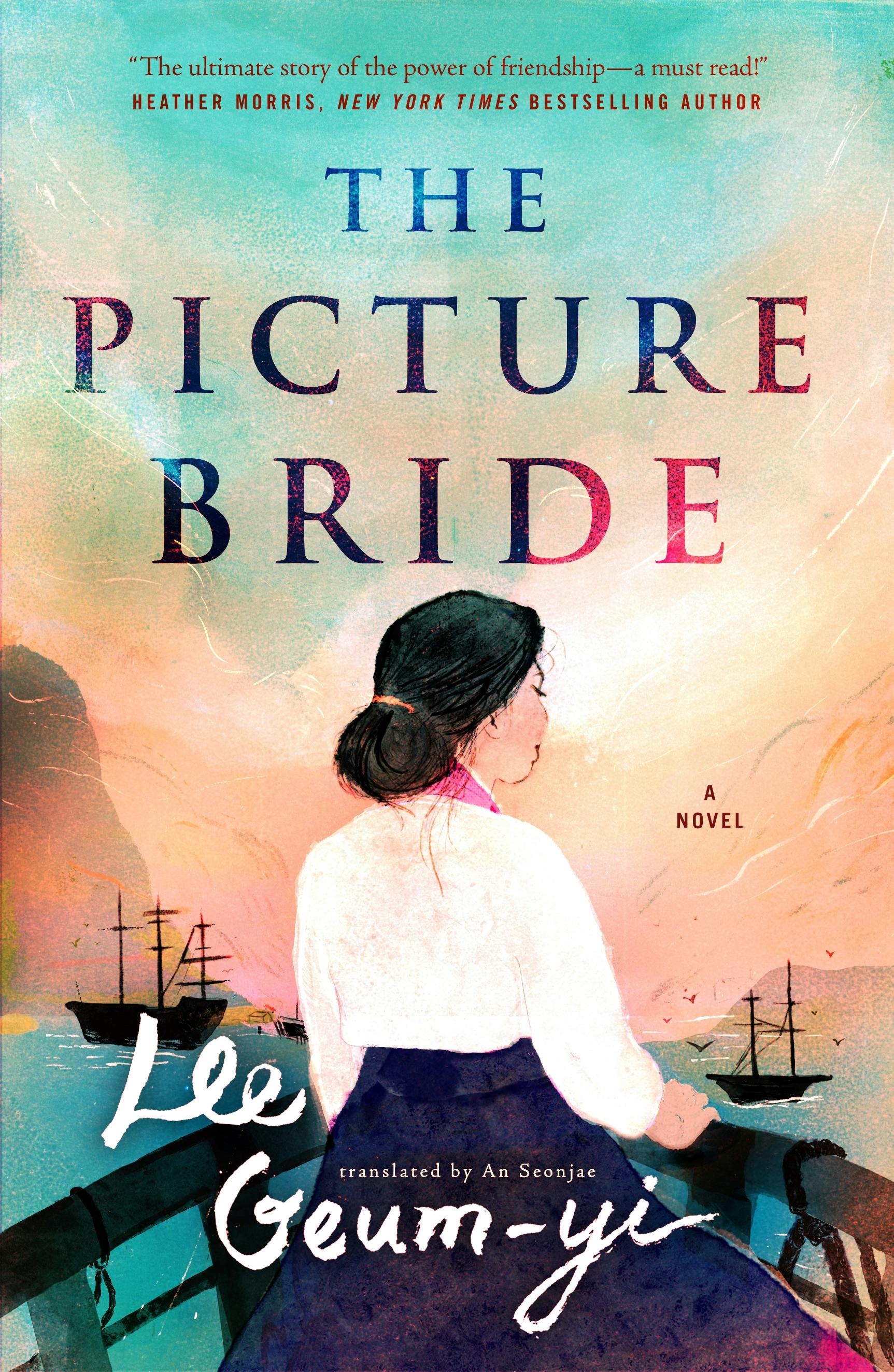
The Picture Bride: A Novel by Lee Geum-Yi

The Picture Bride: A Novel by Lee Geum-Yi

The Picture Bride is a historical novel that transcends its unique historical moment to touch on experiences and themes the reader will find familiar: the significance of family, the trials of marriage and love, loss and grief of loved ones lost to death or distance. The novel revolves around the migration of picture brides from East Asia to Hawai’i and the Western United States, a practice that was rampant in the early few decades of the twentieth century. Japanese and Korean men left their homelands to find work on Hawai’ian plantations, and as they accrued a little bit of wealth they found themselves in a primarily homosocial world, absent of East Asian women. To find love and fulfill their duty to wed, they would engage the services of a matchmaker and seek out a bride from their home country. The technology of the day limited the contact between potential bride and groom to correspondence and a photograph, hence the name given to this marital transaction: both the bride and groom would have nothing to more than a photograph to base their physical attraction on.

Many men who sought wives in this way were long past the typical marriage age of men in their home countries. Aware of their advanced age and how this might deter a young woman from wanting to marry them, they often used a fake photograph of someone else or a photograph from their youth. Picture brides discovered the deception on their arrival, too late to turn back — if they had the money to do so — without suffering humiliation or possible repudiation by their families.

Of course, such arrangements also resulted in personality mismatches and other deceptions of character, on both sides. In the end, all the migrants have no choice but to set those differences and loyalties aside; the people on the plantation and scattered across the islands become the only family they can have.

This is a story of the pain and joy of being an immigrant, of what lengths we have to go through to find our place in the world. The novel focuses on loss of family and the gaining of new ones. How these young women adapted, thrived, or wilted in their new homes so far away from their homelands is what unfolds in the novel. I won’t spoil it for you so I will stop my review here.

The Picture Bride is a novel about what it takes to live one’s life as best they can, with what they have and what they have lost.

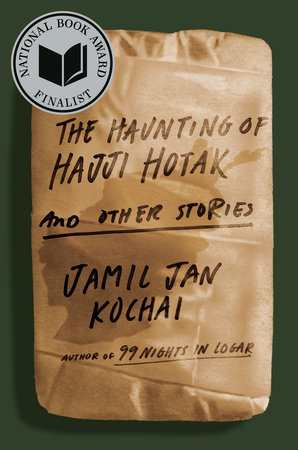
The Haunting of Hajji Hotak and Other Stories by Jamil Jan Kochai

The Haunting of Hajji Hotak and Other Stories
by Jamil Jan Kochai

Living in the United States, the word “Afghanistan” crackles in the air when uttered. There is no escaping the politics of the word and, more often than not, insulting Orientalist and racist language in the larger context of that conversation (malicious or unintentional).

For that reason alone, Kochai’s collection of stories set in contemporary Afghanistan is powerful and worth any reader’s time and attention. The narratives and characters in this collection humanize a subject that has too long been objectified and rendered inferior. The tales bring Afghans to life, force the reader — in the best of ways — to see and think of them as living, feeling, bleeding individuals, as tangible and as intimate with ourselves as our sisters, brothers, uncles, aunts, parents, friends, lovers, husbands, wives, children. In these character’s voices we can hear our own. Our own desires and fears are mirrors of theirs.

The stories are embedded in Central Asian Islamic and Colonial culture and history, but they also revolve around universal principles: love, marriage, ambition, identity, belonging. Afghans in these stories are college students sharing the same interests and experiences of growing up and out like all college students — not merely tokenized international students who live on the periphery of campus life, transient and alien. In some of these stories there are young women seeking to understand their roles in society, in their families. They, like all of us, are torn by expectations imposed on us from within and without. The women in these stories are not foils to men or cutouts of the flattened, Orientalist idea of Islam; they are also not mindlessly rebellious, mimics of Western feminism. These women are accurate reflections of women everywhere and yet also unique in their Afghani-ness: contradictory, full of internal and external conflict, desirous and aware of obligation, selfish and selfless. The characters in Kochai’s fiction — women and men alike — do not need to trade their Afghani selves for a Western one or a vice versa, even if there is tension between these identities. It is a tension that enhances, rather than subverts the narratives here. Tradition and modernity are not at odds in the real, lived world anywhere; that false binary is the fiction here! Kochai’s nuanced depictions of women, youth, men, childhood, marriage, love, sex, and life-at-large made this a very satisfying read.

I also deeply appreciated that many stories depicted Afghans outside of Afghanistan in an authentic diasporic perspective. So frequently are Afghans (and other Asians and people of color in general) fixed into some faraway, non-Western, exotic location. In several of the stories Afghans are cosmopolitan, worldly figures, part of the global community in material ways beyond being an image on the television news. They are American, British, European in as much as they are Afghan. As with many other OwnVoice fiction, these stories make the poignant point that the hyphenated identity is true but simultaneously too simplistic of a label; national boundaries are not only porous, in cultural context they are fiction. (Of course, borders do exist in a material, political sense; passports are not obsolete artifacts!)

At the same time, there is a thread of distinctly Afghan experience threading through these tales, one that is grounded in global politics, colonial histories, Islam in its present forms, migration. That is its cohesion and its strength. The Haunting of Hajji Hotak and Other Stories is a must-read collection, especially for those who seek to understand a misunderstood community and want to excavate their identities beyond its contemporary political history and presence.

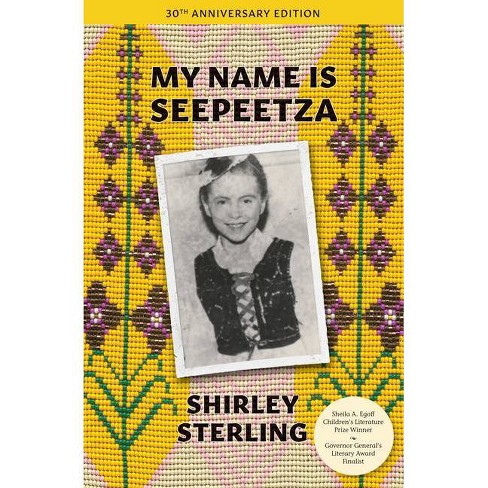
My Name is Seepeetza by Shirley Sterling (30th Anniversary Edition)

A student recently asked me in class, “Why are there reprints of books? Why do they get reprinted?” Among the reasons I gave them was this one: “Sometimes new information emerges and something important needs to be added. Or, sometimes, the content of the book becomes relevant again, given certain events or things that are happening right now.” I added, “Remember, history is less about the past, than it is a reflection of our present moment or our desire for what we want our future to look like.”

Sterling’s My Name is Seepeetza, the 30th anniversary edition epitomizes this reason. The recent discovery of several hundred bodies of indigenous children buried and hidden at several residential schools across Canada — Fort Pelly, St Phillip, St John, just to name three — is a heavy reminder that the state sanctioned annihilation of Canada’s indigenous culture and peoples over the past four centuries is not a remnant of the past, but a living monster that still lives and looms over the lives of the 150,000 children and their countless descendants.

This is a living trauma, its horror and long reach remain unknown.

For this reason alone, I am considering using this book in my next iteration of a 100-level history course I teach to undergraduates for this reason.

Sterling’s accessible, authentic prose in the voice of a young girl only gives me more reason to assign it as a course reading. The length is perfect for a semester and the format in epistolary style as a diary allows me to use this in class, for small group work within the time constraints of a class session or for short individual activities.

The content though is the main appeal here. Sterling’s own experiences makes My Name is Seepeetza all the more powerful, opens an avenue for an educator to discuss this in more depth as a primary source, as a part of historical record, opens the door for historical discussions and framing it within a larger landscape of indigenous history, gendered and racial violence. My Name is Seepeetza hits on the major nerves: language weaponized, education as violence, eugenics, parenting as cultural intervention, skin color and its tormented relationship with race and ethnic autochthony. History.

A reprint is not merely a revival, it is a reflection and delivery of knowledge we need right now.

The Fortune Men by Nadifa Mohamed

The Fortune Men
by Nadifa Mohamed

A colleague recommended this book to me and oh my, do I owe them BIG now! The Fortune Men is devastating in every way. The story, without question, is a profound lesson in the paradoxes and insidiousness of racism, the tragedy of putting faith in a prejudiced judicial system, how thin the line is between life and death, past and future, the awfulness of history.

The novel revolves around a young Somali man who has found his way to Britain and built a life for himself there, complete with a wife and children. He is an ordinary man, a flawed man, but not a bad man; his morals are imperfect but not malicious. In his Welsh town, there is a sundry shop, owned and run by a Jewish woman. She is murdered. He is arrested. The novel spins from that point around his trial and his incarceration.

The details of the crime and his arrest are revealed, it becomes clear that things are not so black and white, literally and figuratively, according to the shade of his skin. In this Welsh neighborhood, there has been the recent in flux of many immigrants: those from the Caribbean — coming off the HMS Windrush — as well others like him, from Somalia, parts of West Africa, Nigeria, South Asians from India, Pakistan. There are Jews, Muslims, Christians. And then there are the White Welsh and English. The only thing they seem to have in common is their denizenship in a working class milieu: they are each trying to survive in their own ways, struggling with the constraints put upon them by their race, the color of their skin, their gender.

Mohamed’s prose weaves together the multiple layers of this crime, both the murder and the crime of injustice via complex characters who each come to this place armed with their own ambitions and hampered by their past experiences; they are as flawed as the main protagonist — and like him, we can see that they are not truly “bad” people, but merely making decisions based on the ethnic, racial, and class based expectations put on them. Reader, you will weep for all the characters in The Fortune Men, for they are as trapped as the prisoner in his cell.

It is hard to write a review of this book without giving away its ending, because its ending is really the beginning of the question that led to its creation. It is based on a true story, which is what makes this even more tragic and heart-rending.

All I can say is: You must read this. You must weep for the man, the woman, his wife, his children, the families torn apart by the events that took place in 1952-1953 in this small Welsh town. And you must be angry.