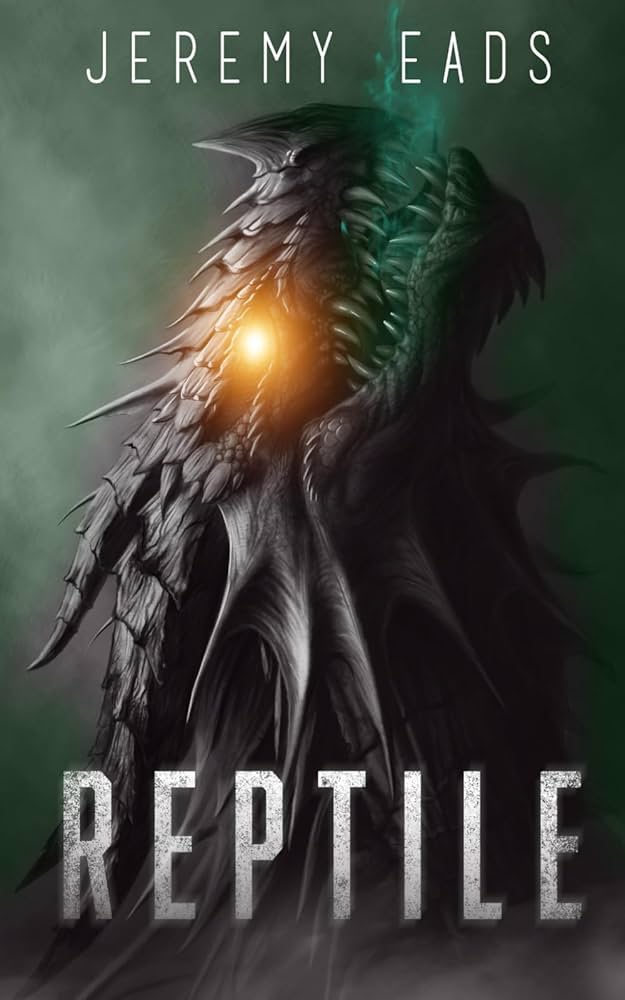
Reptile: A Novel by Jeremy Eads

Reptile: A Novel by Jeremy Eads

Reptile is a novel in the classic “monster” genre of horror fiction, the kind of novel that appeals to readers and fans of werewolves, vampires — or perhaps, more specifically — characters like Frankenstein. Like the latter, Reptile offers the reader and interior glimpse into the dark side, the monster’s perspective.

I have read Eads before (The Lodge) and he does not disappoint in Reptile. The writing is well and thoughtfully crafted, producing tangible, human, and horribly flawed characters, the sort of people you recognize, for better or worse. There is a perverse kind of thrill in watching these characters succumb to the terror, and watching the terror itself come into being and unravel.

This review is necessarily short; I don’t want to give away what happens to Mark as he transforms into this monstrous predator. That said, the appeal of the novel is less about “what happens” than about becoming invested in the people it happens to. Eads’ characters are sure to elicit various reactions from readers, whether it is nausea at their depravity or cheer at the demise (there were a few characters I enjoyed despising).

A History of Hangings: A Novel by A. M. Rau

A History of Hangings: A Novel
by A. M. Rau

A History of Hangings is an indigenous horror thriller. It is the kind of novel that hooks you in from the start. It’s creepy and mysterious, but what really delivers the chills is its depth of history, so ever-present in the novel even though it is never fully explained. It is, in a sense, that shrouded, veiled element of indigenous history, emphasized by the erasure of indigenous rights and history that is so compelling, so horrific; I think that underlying premise makes the book palpably terrifying.

Indeed, the novel and its horror can’t be understood without an acknowledgement of what has happened to indigenous communities in North America. As a reader and historian I greatly appreciate Rau’s attention to indigenous experiences, and the way in which Rau weaves in those awful legacies of settler colonialism.

The novel runs on two timelines: Toby, Faye, and Braxton in one thread of time, Edna Bland in the other, bound together by the captives of the Kesseene people of Oklahoma (a fictitious indigenous tribal community and tribe) in a small, rural Oklahoma town that has disintegrated into poverty and isolation. The Kesseene People’s vengeance has become embodied in something — or someone — and this is the terror Toby, Faye, Braxton, and Edna encounter. I’ll leave it at that; the novel is well-worth the read to discover what happens to them and to the Kesseene people. I finished A History of Hangings in less than a day; I had to know what was going on, who was creeping around, why Toby and Faye were so unwelcome — and what would happen to them.

Rau’s story, compelling as it is, is also very well-crafted and this is a major attraction of the book. Rau’s prose is descriptive, and evocative, with a few well-chosen words; Toby, Faye, Edna, Gil, Tim Jim, and the Sheriff — and even the minor characters they encounter — are fully tangible to the reader. The mood is perfectly captured and sustained throughout the book. Rau’s pace is swift too, delivering the reader to the end where all is explained; it is a satisfying and perplexing ending, perfect for a novel of this genre.

The Dead Don’t Speak: A Novella by Aaron Olson

The Dead Don’t Speak: A Novella by Aaron Olson

The Dead Don’t Speak is an entertaining read, especially for a late-night goosebump. At 75 pages, it makes for a fun-creepy bedtime story, something to cuddle down into the blankets with to scare the heebiejeebies out of you as you drift off — if you can afterwards!

The story focuses on a young man who has committed a serious and fatal crime, the victim of which begins to haunt him.

The novella unfolds as nearly all dialogue, which makes for a very quick read. That said, the depth of the characters remains somewhat shallow, and at times it is difficult to distinguish who said what, as the protagonist and their tormenter often share a similar voice. Olson’s prose is fairly well done, but the novella as a whole lacks a depth I expect from horror of this gothic-style, reflective genre.

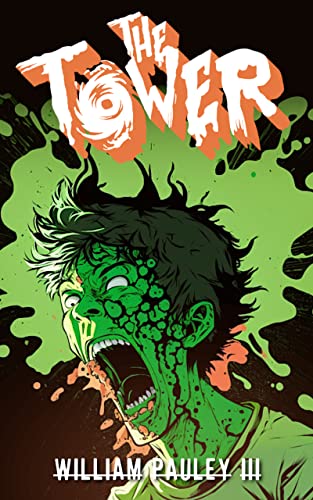
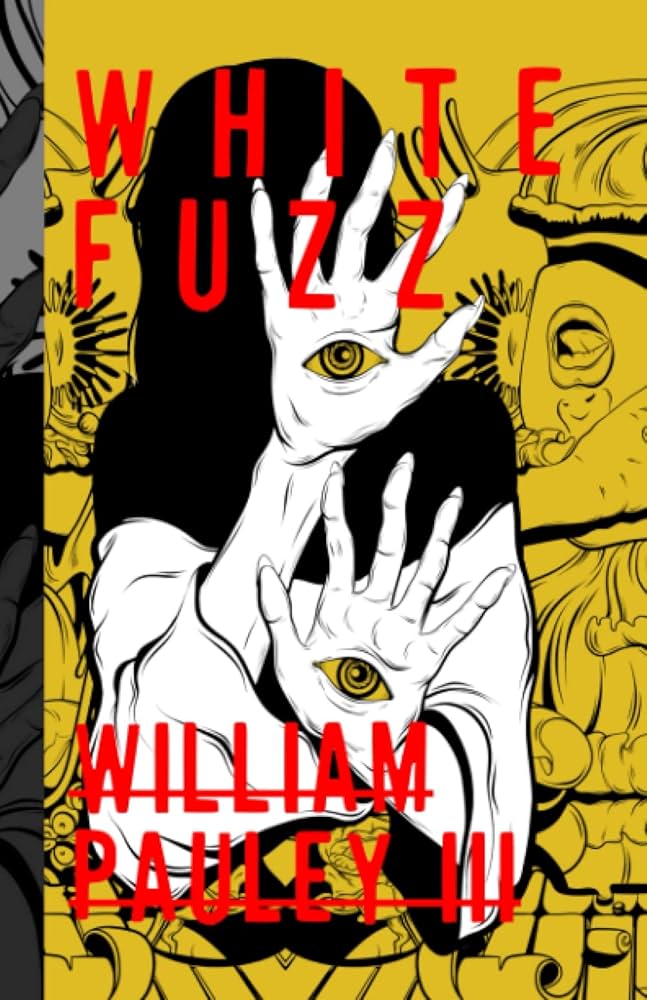
The Tower & White Fuzz: Bedlam Bible #1 and #2 by William Pauley III

Bizarre is the only word to describe these stories. The Bedlam Bible series, of which The Tower and White Fuzz are the first two novellas, revolve around a residential building in which the residents are trapped. Strange, monstrous things happen to them. They are often themselves the monsters. There is a sense of gothic madness in these tales.

In The Tower, we are introduced to the building, the Eighth Block Tower, where these events occur. The Tower consists of three stories: “Hypanogogia,” “The Invalids”, and “Under Green Brain”, while White Fuzz is its own standalone story.

I hesitate to tell you any more, because it really would ruin the surprise and shock of reading them yourself. Readers who enjoy speculative fiction, horror, or science fiction are likely to enjoy the otherworldliness of these stories. Collectively, they ride the border of horror and science fiction. Readers will find them reminiscent of Kafka and Kavan in that there is an internal insanity at play here. Or, if television is your thing, one might liken them to American Horror Story or particular grotesque version of Black Mirror.

These Things Linger: A Novel by Dan Franklin

These Things Linger: A Novel by Dan Franklin

What lingers afterwards is how wonderfully creepy this novel is. Readers will find These Things Linger a fantastic combination of paranormal horror and literary fiction. It is a tale of a haunting, but Franklin’s delivery and the depth of his characters make this a unique ghost story. Franklin unspools the terror in a fashion reminiscent of contemporary gothic literature, The Hacienda by Isabel Cañas or Silver Nitrate by Silvia Moreno-Garcia, except that the protagonist is male.

Alex is a young man on the edge of his future. He is starting a new career and building a prosperous, fulfilling life with his fiancé, Raychel and their soon-to-born child. He abandons a past and a world that he no longer belongs to, but then a family crisis forces him to confront those he has left behind. The novel immerses the reader in the trauma of its protagonist, framing the horror as deeply personal and intimate. Readers of classic gothic horror and literary fiction will appreciate the reflexivity and character-based approach Franklin takes; indeed, the unraveling of Alex’s sanity is what makes These Things Linger so successful as a horror novel.

Story aside, the novel is well-crafted. Franklin’s prose invokes more than just imagery, it builds an affect of fear, successfully persuading this reader to keep reading well into the night. Despite an occasional clichéd metaphor or turn of phrase, Franklin’s authorial voice is clear, confident, and distinct. Independently published novels often suffer from fractured writing, fuzzy characters, or clipped stories; but, These Things Linger does not. Alex, Lacey, Raychel, Uncle Matty, and Buzz are fully tangible characters. The novel’s tempo is swift (here is where it diverges from the typical gothic horror); the pace at which the secrets of Alex’s life are revealed to the reader produces a compulsion to read on.

These Things Linger deserves a spot in your To Be Read List. If it is already on your TBR, it ought to be moved up in the queue.

A Short Stay in Hell: A Novella by Steven L. Peck

A Short Stay in Hell: A Novella by Steven L. Peck

This is one of the weirdest stories I’ve ever read. Weird, but good. Weird and thought provoking. Weird and depressing. The novella is a thought exercise, a what-if-what-would-I-do? immersion activity.

The story is simple enough: after death we go to hell where we discover what the “right” religion was, and where we have to perform a series of tasks to get out of hell. There are rules in hell. And interminable tasks that promise an end, but test the limits of our boredom. Hell is exactly what it sounds like: hell.

In the course of traversing hell, the characters explore what it is to essentially still be alive and somewhat immortal. Just as in life, they find they have to traverse paths they would rather not, navigate ethical dilemmas, and deal with an incredible amount of boredom.

Peck’s prose is deft; with few words he develops the story, builds the claustrophobic, suffocating environment and duly immerses the reader in hell.

It is likely I will think of this book on my deathbed.

Silver Nitrate: A Novel by Silvia Moreno Garcia

Silver Nitrate: A Novel by Silvia Moreno Garcia

Moreno-Garcia not only understood the assignment, she did the extra credit! Silver Nitrate delivered all that a modern gothic horror should: slow, building ripples of doubt and uncertainty (the kind that make your eyebrows knit and you second-guess yourself), a female lead whose existence is threatened, a feminist focus in which oppression of the social kind is the baseline terror, actual monsters and gory scenes.

Silver Nitrate as the title suggests, reads like a film noir played out in intimate, literary detail. It is a must-read for film fanatics and bookish folks, alike.

The story revolves around a young woman and her best-friend, a man she grew up with and who also ended up in the film industry, and the tension between them. Both become friends with an elderly man, a former director of Mexican horror and their connection with him develops into an interesting — but ultimately deadly — project. The result of their collaboration opens up histories best left buried and occult forces beyond their control. Madness and death ensues.

Like true gothic horror, the novel and the madness unravels slowly, and the focus of the novel is character-driven. The reader is given a first row view into the woman’s mind, her desires, her fears, her past and present, as she slides into a dark world that was hiding all along within the one we all know and live in. It is, as with most good novels, a story about us and what lurks within. Moreno-Garcia is a pithy mistress of the genre.

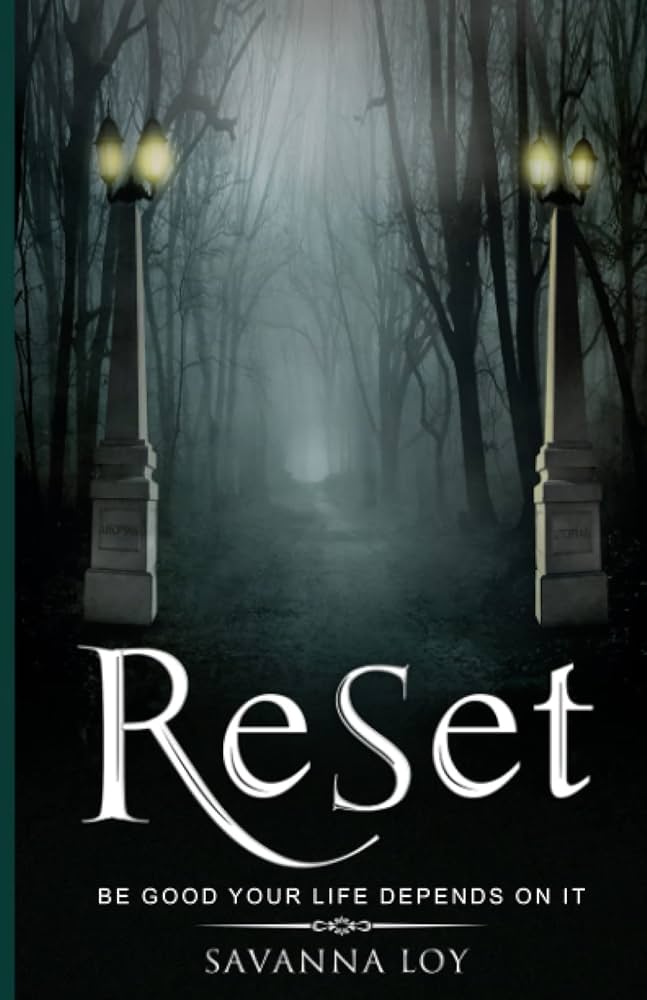
ReSet: Be Good, Your Life Depends On It by (A Novel) by Savanna Loy

ReSet: Be Good, Your Life Depends On It by (A Novel) by Savanna Loy

A horror/dystopian novel premised on a popular trope — but delivered from a novel perspective. In ReSet the world as we know it has come to an end and a new oligarchy has come into power. A committee of a few men now decide who lives and dies and the terms which everyone must now abide. Failure to do otherwise results in the collective execution of whole communities, a reset. The novel reveals all through the eyes of one of its elite families, those chosen to plan and carry out the gruesome task of resetting.

The premise is inherently intriguing, given the climate change, political and social turmoil of the American nation at present; one cannot help but wonder what consequences we may need to confront — and perhaps sooner than we would like to admit. ReSet plays on those fears. In that vein, the novel is reminiscent of Margaret Atwood’s Handmaid’s Tale and the eugenically driven political world of Gilead. A central theme of the novel is the corruption of power and the terrible consequences this can lead to.

For all its unique perspective, I found the narrative arc of the story predictable and the peak of the novel, its crescendo, slightly disappointing and less explosive than promised. The drama of that moment is confined to a small circle, decreasing the visibility of its larger impact on society. Given the drastic shift in culture that the apocalypse created, I expected a greater dramatic backlash or swing in equal measure. The ending suggests a sequel, and perhaps this is where the novel leads — rather than to a terminal ending.

On the whole, the novel was well-written, though there were some parts which unfolded in confusion — deliberately, I suspect — which detracted from the flow of the novel for this reader. Nonetheless, this is a minor complaint. Likewise, characters are well-developed and tangible, though some better than others. On the whole, an intriguing read for readers who enjoy dystopian possibilities.

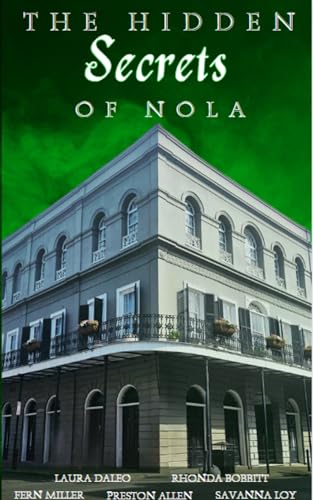
The Hidden Secrets of NOLA: Stories by Laura Daleo, Fern Miller, Savanna Loy, Rhonda Bobbitt, & Preston Allen

The Hidden Secrets of NOLA: Stories by Laura Daleo, Fern Miller, Savanna Loy, Rhonda Bobbitt, & Preston Allen

This was the perfect Halloween read and one that I’d been looking forward to for several weeks! I saw the book in one of the FB groups I’m in and I put in a pre-order for the ebook (something I rarely do). It did not disappoint! This anthology of five tales set in New Orleans conjures the mystique and history of that city’s famous French quarter; the stories force the reader to reconsider their notions of the supernatural, to wonder if darkness is really the evil we assume it is. Laura Daleo’s short story about what happens when Death meets an innocent is one of these tales which gets the reader wondering about the nature of evil and compassion, how they are two sides of the same coin. Rhonda Bobbit’s tale delivers the shivers; two sisters, Rose and Lydia are haunted by a family heirloom and an inheritance they did not expect. Fern Miller, a romance writer, takes us in another direction, trading on the lust and romance of New Orleans. It is a place where lovers escape to — or attempt to escape each other –but fate always has its plans for us. Preston Allen’s story, Crossed at the Cafe, was my favorite of the five; a story revolving the hoodoo that NOLA is famous for. Powerful curses and malevolent witches deliver the shivers in this tale. Savanna Loy’s Borrowed Bayou was my second favorite story here. This was a dark tale as well. The Laguerre family hides a terrible secret; they’ve made a pact that must be kept, or thousands might lose their lives.

This is a diverse collection of tales. Readers are sure to find at least one which appeals to them. They are, on the whole, well-written and conceived. Each one evokes a different characteristic of the city: its dark history, its romance, its mystery, its portals into the underbelly of humanity. These tales record the bargains we must make; here, these are the bargains New Orleans extracts from all who visit it. Some of pacts deliver unexpected happy endings. Certainly all of the stories here make the reader wonder what they might do in the same situation.

Freshwater Fire: A Novella by Hubert L. Mullins

Freshwater Fire: A Novella by Hubert L. Mullins

If you’re looking for a creeping, eerie read for the wintry months to come, Freshwater Fire must be on your to-be-read list. Forget Halloween, with its flashy, trashy gore, Mullins’ slim novella, with its sparse and evocative prose, and its fog-shrouded terror, brings out of the deepest of our fears as the decay of winter descends. This is a book to curl up to with candle light when the storm takes out the electricity. Or… maybe, that might just send you over the edge into madness. Read at your own risk, right?

I took this risk on this novella. I usually hesitate to spend money or time on independently published fiction; the gamble so often doesn’t pay off. But Mullins is a talented writer. With very few words, Freshwater Fire summons the smell of decay and manifests humanity’s darkest fears: that we are not alone in this world and worse, we are not as invincible as we would like to believe. Mullins builds a devastating sense of futility that the reader cannot shake off. This is a classic gothic horror.

The tale revolves around a lighthouse and its new keepers, sailors who quickly find the isolation of their task is more than a mental exercise in surviving entrapment. Their fears are more than simply psychological, they are real and monstrous. For readers who enjoy mythology, paranormal elements, and psychological thrillers, Freshwater Fire will deliver a satisfying reward.

The story aside, Mullins’ characters are fleshy, their dialogue and fear is palpable. Their reactions to their circumstances are more than plausible, revealing Mullins’ deep understanding of the human psyche and the lengths we will go, not only to survive but must do to overcome our fears. Terrifying as this novella is, it is also inspiring.

I look forward to Mullins’ other novels! They are on my wish list!