Street Corner Dreams: A Novel by Florence Reiss Kraut
Street Corner Dreams is a heart-aching tale about Jewish immigrants in New York City in the first quarter of the twentieth century. Readers who are looking for a tearful, emotional read will find the novel delivers; by its end, readers will find they have lived lifetimes of suffering and joy alongside the characters.
This is a novel perfect for undergraduates and readers new to this genre of immigration literature as it offers an introduction to the lived experience of this period, as well as highlighting the historical context of the age: WWI and the Interwar Years before WWII, American nativism, anti-semitism, and the Prohibition Era of the 1920s. Edifying as it is, Kraut’s approach is literary, making it an easy, entertaining read at the same time. Sweet Corner Dreams fits into the genre of novels I read during my own undergraduate years: Out of This Furnace by Thomas Bell, The Jungle by Upton Sinclair.
The novel begins with Morty, who is born on the voyage over from Europe to America, and the tribulations his aunt and parents face as they navigate the hardships of building a new life in the United States for him and themselves. Morty represents the clash of generations and cultures; as he matures he finds himself torn between tradition and survival, caught up in the criminal and deadly world of NYC in the days of Prohibition. This is also a world of multiethnic plurality: denizens of differing — sometimes conflicting — religions and worldviews must find a way to coexist, recognize their shared humanity. celebrate their diversity.
The story is immediately captivating, and readers will find their interest sustained by the depth of Kraut’s characters. These are people we would recognize today among our own friends and families.
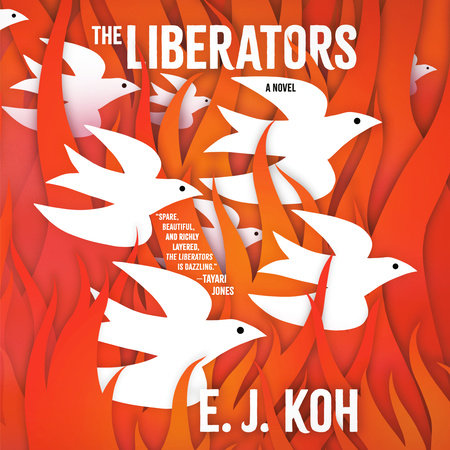
The Liberators is a powerful punch of a novel packed into a mere 240 pages. With an economy of words, almost bordering on stinginess, Koh delivers full fleshed characters and a tragedy of relationships and history. This is a masterful work of historical fiction.
The novel revolves around two intertwined narratives, one historical and the other intimate. The division between North and South Korea is the constant thread of grief and loss that plays against a more personal tragedy in the form of a young couple’s romance, marriage, and slow death thereof as the husband and wife are separated through migration and tradition. Nation here becomes an actor itself; the North and the South, like siblings or lovers torn apart by foreign forces, growing in ever divergent directions. This parting is mimicked by the husband and wife, until at last reconciliation seems impossible.
Here is a complex interweaving of expectations and desires that become thwarted by forces of history and culture in ways that are beyond any individual’s control.
I have never read anything by Isabel Allende before this novel. I know she’s a well-known, well-respected author, critically acclaimed and with a string of best-sellers. I just hadn’t come across her books before — and so, when I got the chance to read this, I was thrilled to!
The novel is a historical and contemporary work of literary fiction; weaving together multiple, seemingly disparate threads, across time and distance. This is a story of multigenerational, intergenerational trauma and the power of found family, the connections we build through shared experience and history. The novel begins with a young boy, left bereft by World War II and the holocaust, then segues into the latter end of the 20th century, refocusing on a young woman whose own life was torn apart by political and real warfare in El Salvador. The paths of these two individuals merge together in 2017 when the United States begins its policy of deporting refugees and refusing asylum to those at the Mexican-US border.
This is a harrowing story, one designed to evoke an emotional response, to serve as an act of resistance and resilience, a political statement and work of activism. It delivers on all these points.
To meet the novel’s objectives, Allende writes simply. The language is straightforward and direct, with little metaphor or room for interpretation; it is accessible in order to reach diverse readers. The prose possesses a determined clarity, one which all readers will appreciate. But readers should not confuse simplicity for lack of depth; Allende’s writing is emotionally charged, it reveals a deep awareness of human frailty and response to trauma.
It is this reader’s opinion that few readers will able to walk away from this novel unmoved by its content and message.
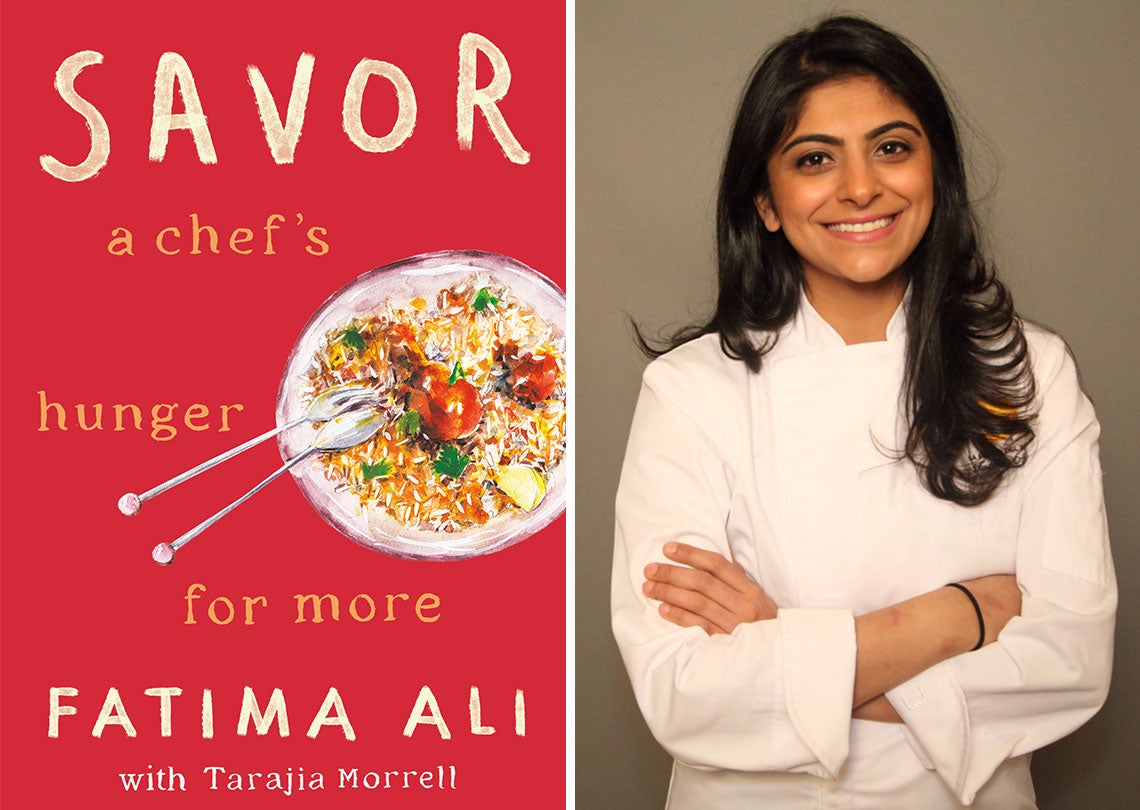
Savor: A Chef’s Hunger for More: A Memoir by Fatima Ali with Tarajia Morrell
It’s extremely difficult to write a review for this memoir. Aside from the tragedy of its author and subject dying from cancer, the content itself is emotionally fraught. But perhaps, for these same reasons, a review should be written as this would be an acknowledgement of Ali’s legacy.
For those who are not familiar with the author and subject, Fatima Ali was a chef and a celebrity one, competing on Top Chef. She sadly and tragically passed away in 2019, before the age of 30. This is her memoir, written with Taraji Morrell who completed it after Ali’s death. The memoir covers the breadth of Ali’s life, from childhood to the very end, with a substantial focus on her career as a chef. The memoir also incorporates Ali’s mother’s perspective, each chapter bounces between Ali and her mother, offering the reader a view into more than Ali’s life alone.
The inclusion of Farezeh Durrani, Ali’s mother and the complex and emotional story of mother and daughter, as Pakistani Muslim women, makes this memoir especially poignant and moving. Through Durrani’s eyes we experience not only the loss of a child and the grief of that event, but also the power and strength of being a woman and a woman of color in a deeply patriarchal and racist world. The intergenerational threads make this memoir, more than a memoir, more than the story of a single person. Savor captures modern experiences of divorce, immigration, transcultural identity, race and racism, gendered expectations and sexism, career and ambition. Ali leaves a legacy with her life and this memoir.
For readers who seek inspiration, emotional connections with their books, Savor will exceed your expectations.
Unlike my usual reviews, this is an older book, published in 1998. I found it on sale from the University of Hawai’i Press and since I enjoyed Pak’s other novel, Children of a Fireland by Gary Pak I had to read it. Like Pak’s other works, A Rice Paper Airplane is set in Hawai’i and revolves around one of its communities. In this case, the story centers of Koreans who migrated to the islands to seek better employment or escape from Japanese persecution during the period of the latter’s occupation of the former’s country.
The novel unfolds like origami, turning backwards and forward in time according to the scattered memories of an old man, Uncle, as he recounts his life for his nephew. Threaded through his memories are histories of Hawai’i and its many residents, Korean, Japanese, White, Indigenous. The novel also folds across geography, taking place in both Hawai’i and Korea. This is a novel about conflict, both cultural and political; desires, both of the individual kind and the ambitions of states; resistance and fighting spirit, in body and mind, through success and failure.
This is an emotional novel. Readers should expect to feel grief and sorrow. But also the hope and resilience of Korean migrants in cultures, circumstances, and places not of their own making and wholly according to history and fate.
For these reasons alone, this is a very worthwhile read. It is little known, but ought to rank with the best sellers of today in the vein of intergenerational, multi-generational historical fiction: Yaa Gyasi’s Homegoing for example.
But that is not the only reason to read A Ricepaper Airplane: Pak’s prose is also an appeal. The novel’s dialogue is written in Hawai’ian pidgin, a creole language that is unique to the islands, lending authentic voice and substance to the characters and the story itself. The exposition is unfussy, straightforward, yet also flowing. Pak leaves the reader with poetic silences that fill with organic emotion.
This is an incredible novel, one which deserves greater recognition.
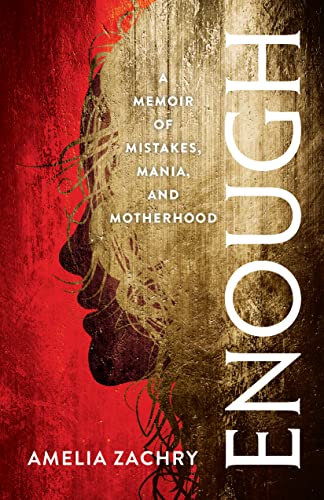
Enough: A Memoir of Mistakes, Mania, and Motherhood by Amelia Zachry
This was an incredibly difficult memoir to read, but I am grateful that I did. Part of the hand-to-my-throat factor for me was how close Zachry’s experiences were to my own. Like her I am a Malaysian woman, one who entered the slipstream of migration and has become a transcultural, transnational creature with feet and hands in multiple worlds.
I also recognized the gaslighting and the gendered physical and psychological violence embedded in Malaysian culture. I recognized the gaslighting and gendered violence she experienced embedded in human society everywhere.
This was hard, so hard, to read at so many points. I had to put this book down multiple times. But the discomfort it caused was also what forced me to return to it. The kind of emotional disturbance Zachry’s memoir inflicts is that which can only be excised by pushing through all the way to the end.
I am glad I returned to it, acknowledged her pain my own (caused by reading it) and kept going in spite of all that. There is more than suffering in this memoir. Zachry illuminates a healing path too.
Zachry’s memoir is not a Malaysian one, although this is a cultural aspect of her experience that cannot be brushed aside. In this I recognized Zachry’s heritage as akin to my own; women told to swallow their pride, their pain, their voices. It is a world in which women remain — and are expected to remain — invisible. And this is true across Malaysia’s many cultures, ethnicities, and religious communities. For all the lovely tropical lushness of Malaysia, it is not a paradise for everyone; feminism is throttled by legal manipulations, feminists ostracized as social pariahs (even when Western-style feminism is eschewed in favor of local versions of feminism.)
But, I digress; Enough is not a memoir of a culture. Zachry’s experience is one that is all too familiar and common across cultures and in all societies. It is an extraordinary story of a crime that is horrendously ordinary. Hers was a life lived by many people; that’s what makes Enough so memorable, so relatable, so important to read.
Zachry’s memoir begins at her beginning, with childhood, then takes the reader into her teenage and early adult years. It is then that Zachry’s life is altered by an event that haunts her (even now after she has found ways to manage it). The bulk of this memoir is devoted to Zachry’s struggle with the trauma of this event, her path to a recovery, and it ends with a substantial section on her present life which shifts the focus to the traumas of migration and the development of her transcultural identity. Zachry’s journey to a happy place is not one filled with woo-woo cures or unattainable magic pills. Zachry documents how hard work, emotional work punctuated by slips and backslides is the tried and true path; one accessible to all of us, at least in theory.
This is a memoir for all women because this is a story we all know, first-hand, second-hand, or otherwise.
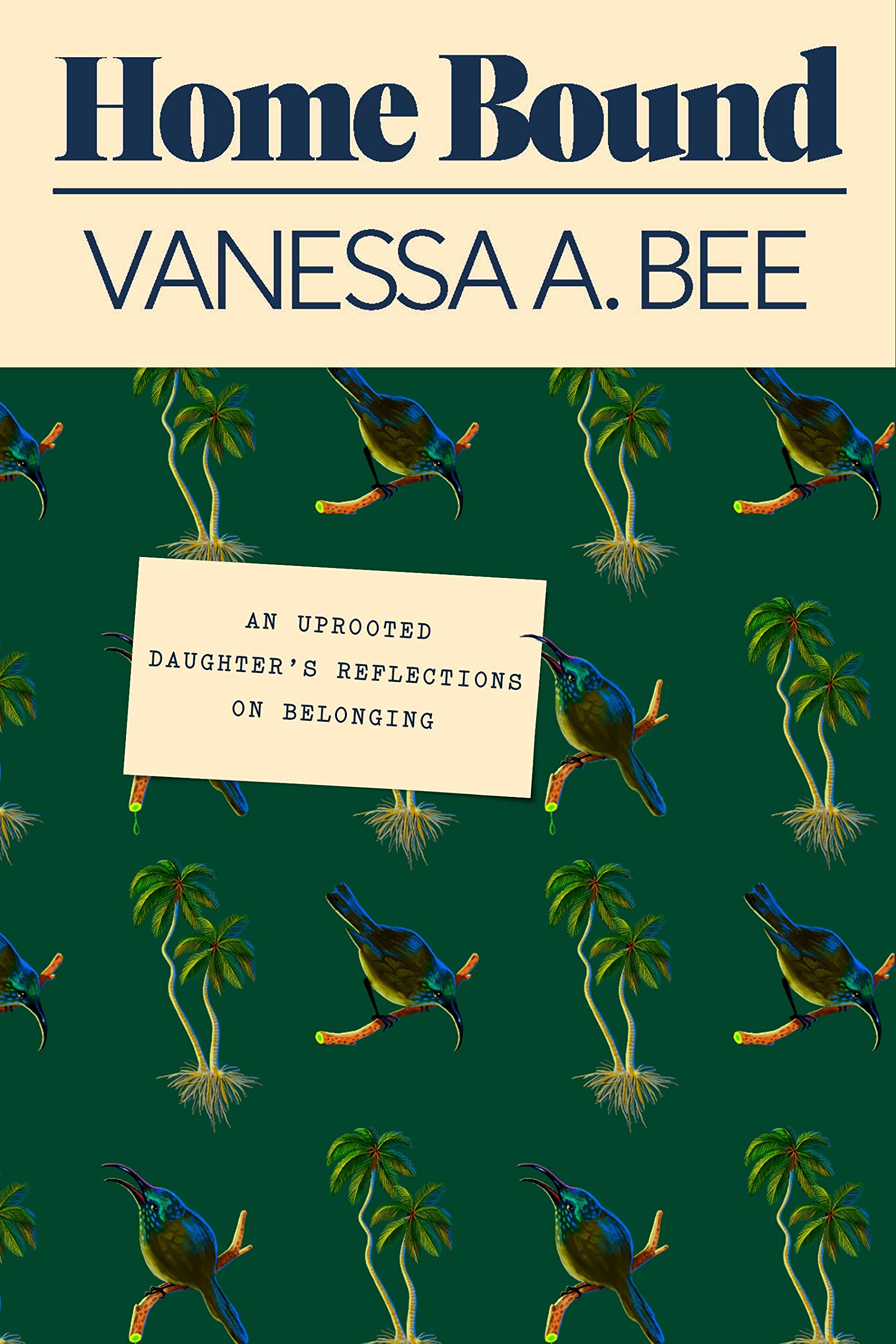
Homebound: An Uprooted Daughter’s Reflections on Belonging by Vanessa A. Bee
It’s been a few days since I finished reading Home Bound and I’m still mulling it over in my head, turning the things Vanessa — can I call her that? Is it too familiar? — has told me. On the one hand, it feels like she and I have much in common: the Spice Girls and Hey, Arnold! are part of the memorabilia of my own 90s teenage years. Vanessa’s memoir strikes a familiar note in many ways. Home Bound is a memoir of movement and migration, transcultural and transnational switching and code switching, and the conflict of culture between places and communities and within a place and a single community. I know that. I’ve experienced that before and now, still.
Home Bound traces Vanessa’s life from her childhood through to the present, across time as well as space. Her life begins in Cameroon, a place she is ever drawn back to (is she as uprooted as the title suggests), but she grows up in France, in a number of places, in a number of homes and neighborhoods. Vanessa disabuses us of any romantic notions of France and how the French live. But then, she makes the point in her memoir that she is only partially French. Her memoir takes us to London where she was more French than English, a mix of Cameroonian and French depending on the location. Then to America, where she becomes domiciled in one of the most American of American states, Texas.
But, of course, Home Bound is more than just a travel log.
The book takes us into deep discussions about gender and what it means to be a woman, what it means to be a sexual being, a sexualized being or object, and how to object to that objectification. It explores mothering and growing up, coming-of-age and what that means when it is done across multiple cultures. The book is also about faith, the religious kind and the internal, subjective kind (“believing in yourself”). Vanessa boldly brings up being of mixed race heritage, discusses adoption and parentage. Lineage is a major thread that winds through the book, guides the reader. Ideas are intergenerational, travel through blood as well as through proximity, from a caregiver to their charge. Education is not merely academic, formal, institutionalized. Home Bound makes it clear that it is more complex than that, it is pervasive within and out of the classroom.
The classroom is a large part of Vanessa’s memoir. I should say, education is a large part of her memoir. The classroom is the locale of her education, the formal kind and the ideological kind. It is here, in the discussion of education and upbringing that Vanessa’s story departs from my own and I feel like I am watching a film of someone else. Someone who feels familiar but is not me.
There is familiarity in the the demise of her American dream. Its death is similar in some ways to what happened to my own. She says in one part how she had thought of herself in some ways as white, having been raised and lived among white people for so long. It’s not an uncommon experience. Fanon was onto something universal when he warned us of masks and disguises that fool no one but ourselves. Vanessa and I both woke up. Then our American dream died, unable to sustain in the reality of 21st century capitalism and American privatization, without a trust fund to help keep it breathing. The classroom had a lot to do with the deaths of our dreams.
I realize now, as I write this, why I call her Vanessa. It seems like Bee isn’t her name. Shouldn’t it is be Billé? And why “A.” and not “Assae”? I suspect this has something to do with the subtitle, Uprooted. For me, the subtitle, AnUprootedDaughter’s Reflections on Belonging, strikes me differently, perhaps because of my academic background in history. The subtitle calls to mind Oscar Handlin’s The Uprooted, that magnum opus of migration history that centered the migrant, their “peasant” origins, and their struggles to find their feet — plant new roots — in American soil. Did Vanessa mean to infer a kind of transition from peasantry into… educated bourgeoisie? I don’t know. I don’t think so. I can’t see it. But uprooted means something. Perhaps it is the violence of being separated from one’s comfortable ideas, coming to terms with the deflation of an illusion; in Vanessa’s case, of her fathers, her faith, her marriage, her trust in men, her color and all that “color” means as it is used to define us in others’ eyes and as we use it to define ourselves.
This is a complex memoir, as complicated as Vanessa’s personal history. It sprawls, but its many parts and tangents cohere to a single theme: Home Bound is about figuring out who your people are and realizing that we will not find a perfect fit in any community. We will belong in some ways, be alienated in others. Some times it is a matter of chronology; we belonged in the past, we cannot belong in the present. Sometimes we belong with strangers, sometimes those closest to us are not those who should have our trust. If I sound bleak, I do not mean to; Home Bound makes it clear that the journey — perhaps for all of us — is complicated — and sometimes it really helps to see how someone else navigated it.
Home Bound is a profound, nuanced memoir well-worth the reading.
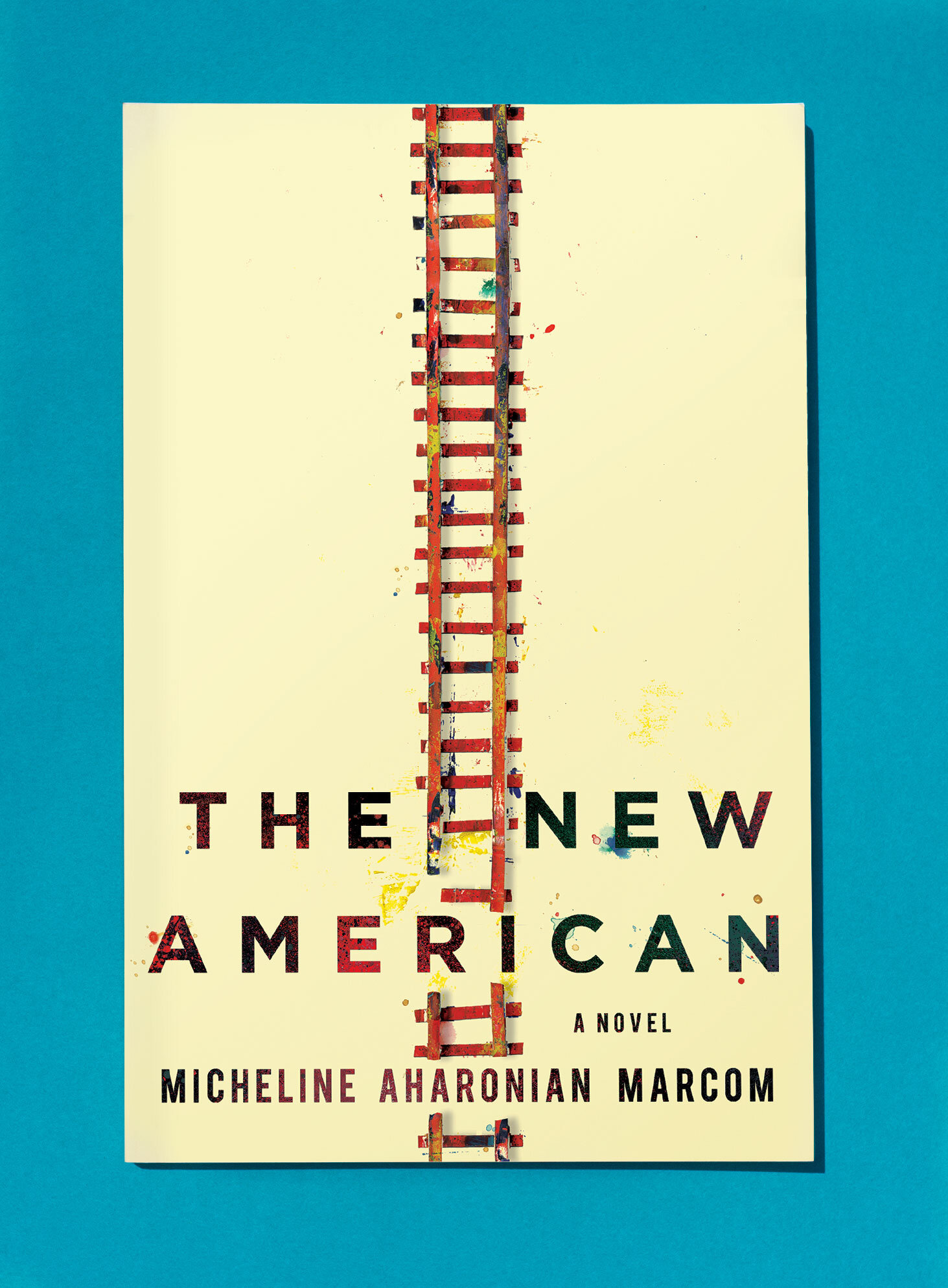
I found this novel by chance, sifting through the remainder books stacked on a Dollar Tree shelf. (Now a dollar TWENTY-FIVE tree due to Covid-19 caused inflation. Still, a steal.) I was searching for scavenger hunt rewards for my Summer class. The title caught my eye and as I picked it up I wondered if I would regret it. In these increasingly divisive days, the word “American” conjures a dark and paranoid shadow, a hidden figure that vaguely appears to be toting a gun. It is a hateful individual with movements that jerk unpredictably, violently. I could not help but take a pause to wonder at my assumptions: Who is the New American? I am one, but I don’t recognize the person in my vision. Who would Aharonian Marcom’s American be? Hopefully they are not merely a rehashed version of the old American. Never buy a book without reading the front and back flaps. My hope was vindicated. “Dreamer”, “Migrant”, the synopsis told me. I bought two copies. One for myself, one for a scavenger-hunt-winning student.
Aharonian Marcom’s The New American did not disappoint. It seized me and would not let go until I finished it. I wanted to finish it. I had to. The New American is a novel of our moment, the turn of the 21st century. It is unashamed and bold in its title; the novel captures the determination of the human spirit and the suffering of being an American. The latter is inextricable from the former. As an immigrant myself, I saw parts of my own experience in the novel, though my own journey was far less deadly, far less bloody.
The plot is straightforward, a clever ruse for a very complicated discussion of identity, belonging, desire, and survival. The story begins and ends with Emilio, a DREAMER who grew up in California, became a student at UC Berkeley, and then was deported when authorities outside the university sanctuary city boundaries discovered he was undocumented. Emilio is deported to Guatemala, stuck in a legal limbo he cannot see a way out of. He decides — with the typical brashness and fearlessness and naïveté of a college kid — to find a way back to the United States and his former life. His journey takes him through Mexico and the Sonoran Desert. On the way he meets and befriends other migrants: Matilde, Pedro, Jonatan and others. The story follows their feet as they walk miles upon miles upon miles to the deadly trains that carry them across Mexico, follows their feet as they suffer through the heat and aridity of the Sonoran Desert.
The characters seem simple at first, but they are facsimiles of real individuals and as such, the reader will find them complex, confusing, irrational. They are not guided solely by emotion or by avarice or by ambition or by necessity. They are driven by a combination of those things and more. Aharonian Marcom’s prose is succinct but powerful; Milo and Mati are visible to the reader, the pain in their hearts is within reach of their fingers. You could almost detect the odor of their sweat as you read, but then you realize it’s your own because you’re so tense and concerned about what will happen to these young migrants. You know this is a not a love story, that there is no happy ending guaranteed.
The New American‘s back flap told me about Aharonian Marcom and helped seal my desire to read this. They are a professor of Creative Writing at the University of Virginia, a founder and Creative Director of The New American Story Project [NASP], which hosts the website, New American Story. Aharonian Marcom’s research and professional engagements inform the content of the novel, fiction as it is.
I could not help but be reminded of a book I’d read a long time ago, which had changed me: Rubén Martinez’s Crossing Over: A Mexican Family on the Migrant Trail (2013). This was in my own undergraduate days, when I had just begun questioning for myself what it meant to be an American. Aharonian Marcom’s novel reads as the updated version: more YA-oriented, more college freshmen friendly, with a deeper interiority than Martinez’s. Both are wonderful; Martinez’s book still echoes. Almost a decade after it came out, it remains relevant. While there are so many books in the same vein out there now than there were before, it and The New American still have much work to do to bring stories of our humanity — in its glory and deadliness — to new readers. All of them are worth reading, including The New American.




 Dr JoAnn LoSavio