I read it all in one night. I couldn’t stop until I learnt what happened to Ah’SaWei. NePa’WeXo, and their children MaNa’AnGwa and O’Sai WaBus. I had to know, I couldn’t sleep without knowing.
Afterwards, I found I could not sleep, now knowing.
1666 was a hard book to read, even for me, a historian of decolonization. I teach students about the Doctrine of Discovery every semester. I highlight resistance to systems of oppression, especially colonization. Still, for all that I know, 1666 eviscerated me. I continued to read it because it is a work of resistance, because the women of the Patawomeck/PaTow’O’Mek tribe deserve to be read and seen and remembered. Awful as it is for me to read it, that in no way compares to the pain they lived and the pain that continues in indigenous communities today.
The story begins and ends with the PaTow’O’Mek women and it is told entirely from their perspective; it is the narrative of the massacre of their people, their enslavement, and their resistance against the British who destroyed them. Readers who were moved by Beast of No Nation by Uzodinma Iweala, Elie Wiesel’s Night, The Bird Tattoo by Dunya Mikhail — or more topically pertinent — Texaco by Patrick Chamoiseau will find 1666 an equally powerful read.
As an educator, I consider 1666 a valuable college level read. It is ideal, lengthwise, for an undergraduate course (at just over 200 pages, and with glossary and explanations of terms). Harrowing as the subject matter is, it is highly relevant and provides a number of points for discussion, historical examination, and resistance in the classroom. Chilton’s writing is also highly accessible, her prose smooth and flowing, her characters full of depth and humanity.
The Education of Augie Merasty: A Residential School Memoir by Joseph Auguste Merasty and David Carpenter
Every memoir is significant, on the basis that it documents a part of the human experience — and in the end, what do have if not an experience of life? In the context of the universe, this is what makes our existence unique — but there are some memoirs, some human experiences that possess a weightiness absent in others. That is, they reveal a humanity that transcends individual experience. The Education of Augie Merasty is one of these memoirs.
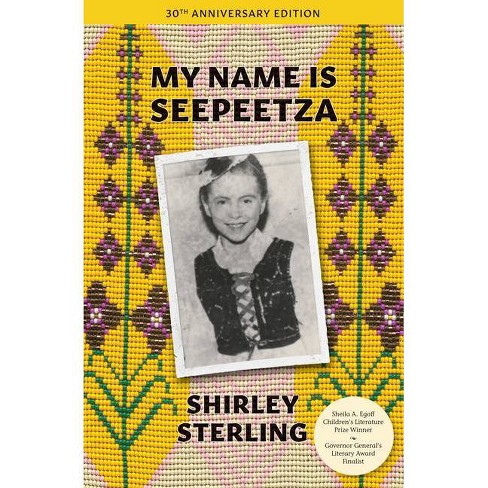
The cruel history of colonial settlement isn’t newly discovered — but it was hidden, deliberately and systematically for centuries. In the past fifty years and much more recently, excavations of memories, land, and archives have revealed the depth to which this erasure was taken. Merasty’s memoir is one of these excavations. [My Name is Seepeetza by Shirley Sterling (30th Anniversary Edition) is another memoir of residential schools and colonialism in Canada I’ve read this year, if you’re interested.]
I have an especial interest in these kinds of historical documents, not only as a historian of decolonization, but as an educator; the utility of the historical documents in the classroom are invaluable to convey the real effects of racism, colonialism, the power of the state in shaping our lives. Students often see the government as some kind of abstracted, remote thing, a hovering object over their lives that merely casts a shadow every once in awhile. Memoirs of this nature reveal how wrong that assumption is; the state is neither above nor below, it is embedded in every part of our lives and beings — even our DNA and the genomes that make up ourselves and our ancestry have been shaped by states and power. The Education of Augie Merasty is proof of the depth of the state in shaping human experience.
What makes The Education of Augie Merasty poignant is not only the memories he shares with the reader, but the whole of the story of this memoir’s making. The convoluted path and necessary involvement of the writer, David Carpenter — who serves as historian here — is a testament to the damage and legacy of settler colonialism in North America. The incompleteness of the stories, the silences and gaps in time and memory, as well as Augie’s language, preserved here by Carpenter, are evidence of the zigzag pathway that history is recorded, preserved, interpreted and ultimately used. As a tool to teach historical methodology, The Education of Augie Merasty is a fantastic case study.
The chronology of the memoir too, in the way it links the past to the present, is invaluable. Too often students see history as a static, buried thing of the past. That myth is a hard one to kill. But kill it we must, because history is not only the root of the present, it is also a reflection of our present selves and world. That is a key characteristic of history: Carpenter’s presence in these pages and the unresolved ending (unlike many memoirs, this is not posthumously produced) help to deliver this lesson.
Other aspects of the memoir make it even more perfect for classroom and course use: its length is short, its language is accessible, its story is compelling and shocking. The absence of larger historical events occurring in Canada and the world are also bonuses here too, allowing the instructor to compliment the text as appropriate to the course level.
Merasty’s memoir is one I will be considering for use in my courses.
A student recently asked me in class, “Why are there reprints of books? Why do they get reprinted?” Among the reasons I gave them was this one: “Sometimes new information emerges and something important needs to be added. Or, sometimes, the content of the book becomes relevant again, given certain events or things that are happening right now.” I added, “Remember, history is less about the past, than it is a reflection of our present moment or our desire for what we want our future to look like.”
Sterling’s My Name is Seepeetza, the 30th anniversary edition epitomizes this reason. The recent discovery of several hundred bodies of indigenous children buried and hidden at several residential schools across Canada — Fort Pelly, St Phillip, St John, just to name three — is a heavy reminder that the state sanctioned annihilation of Canada’s indigenous culture and peoples over the past four centuries is not a remnant of the past, but a living monster that still lives and looms over the lives of the 150,000 children and their countless descendants.
This is a living trauma, its horror and long reach remain unknown.
For this reason alone, I am considering using this book in my next iteration of a 100-level history course I teach to undergraduates for this reason.
Sterling’s accessible, authentic prose in the voice of a young girl only gives me more reason to assign it as a course reading. The length is perfect for a semester and the format in epistolary style as a diary allows me to use this in class, for small group work within the time constraints of a class session or for short individual activities.
The content though is the main appeal here. Sterling’s own experiences makes My Name is Seepeetza all the more powerful, opens an avenue for an educator to discuss this in more depth as a primary source, as a part of historical record, opens the door for historical discussions and framing it within a larger landscape of indigenous history, gendered and racial violence. My Name is Seepeetza hits on the major nerves: language weaponized, education as violence, eugenics, parenting as cultural intervention, skin color and its tormented relationship with race and ethnic autochthony. History.
A reprint is not merely a revival, it is a reflection and delivery of knowledge we need right now.



 Dr JoAnn LoSavio