
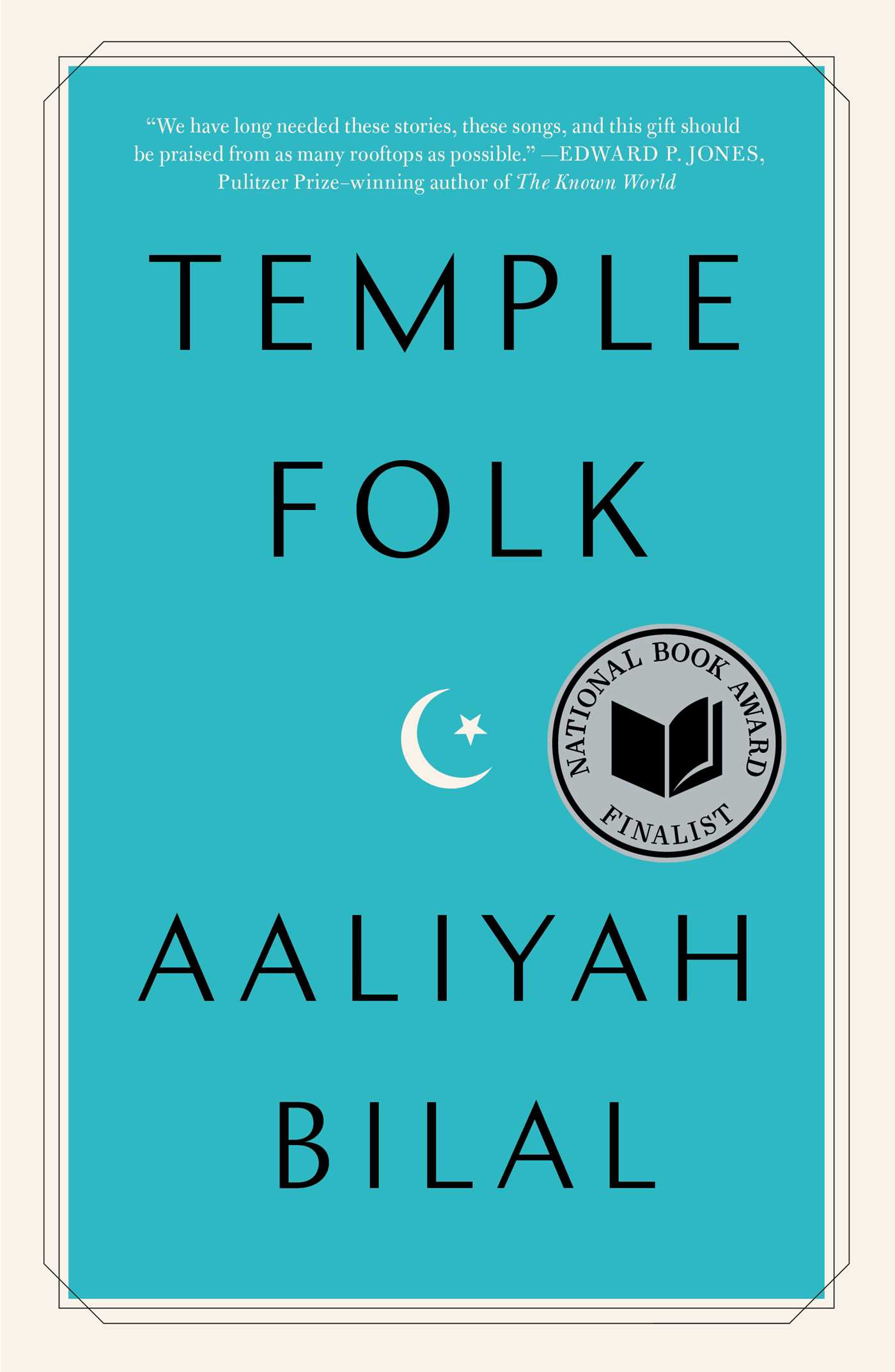
Temple Folk: Stories by Aaliyah Bilal

Temple Folk: Stories by Aaliyah Bilal

Marketing being often exaggerations, I rarely pay attention to the endorsement blurbs on covers; but, in this case, the quote is right and right on target. We — society as a whole, and especially readers of color — have long needed stories like these in Bilal’s collection, stories which reflect a way of thinking and life beyond the literal pale (read: whiteness) that has so long been taken as the norm in literature.

Literary canons still rarely feature writers and stories of diverse backgrounds, genders, and identities, and the term still conjures an Eurocentric image. Bilal’s collection is a balm, not a bandaid; a healing wound, not a scar; a mark of beauty, not a blemish. It highlights this paucity in modern literature and offers a concrete solution towards developing a greater oeuvre of our human experience.

The opening tale in Temple Folk orients the landscape of the collection as a whole: it centers on an interstate bus ride. The bus is filled with faithful black and white Muslim-American women, chartered to bring them from their small hometown, across a rural and white-dominated expanse, to Chicago where a Muslim conference will be held. This is a community unto itself, though it exists — consciously — as a part of white, Christianized America. Readers are given a privileged view into this world within a world.

The other tales highlight the daily, lived experiences of the citizens of the Nation of Islam. As a whole, these stories bring to the fore the intersection where NOI citizens, black denizens within their world, and the non-NOI, non-Muslim white world meet. Bilal presents the reader with scenarios where the whiteness of a child confronts the blackness of a woman, and what this might mean within the context of a religion that is often positioned adjacent and not central to the black/white politics of our era. Bilal pokes at the humor and seriousness of dating in the muslim world, knowing the gendered expectations of muslim women and men the reader is likely to filter her tales through. Bilal encourages a shift away from that pockmarked lens, offering a clearer view if the reader is willing to remove the glass from their eyes.

Indeed, most of my favorite stories were premised on a collision of modern, American ideas of empowerment and feminine identity, with Orientalist stereotypes of Islam and Muslims. But, the unique feature Bilal brings is a side-sweep which softens the collision and creates instead, a merger. Modern Muslim identity is not at odds with Islamic traditions and cultures (though it can be), nor do modern muslims (men, women, children, and all alike) need to make choices between their Blackness, modernity, and Islamic identities. In performing this clever maneuver, Bilal introduces the reader to a much more nuanced world of Black Islam, likely one that they have not seen before. Certainly, for this reader, this was the case.
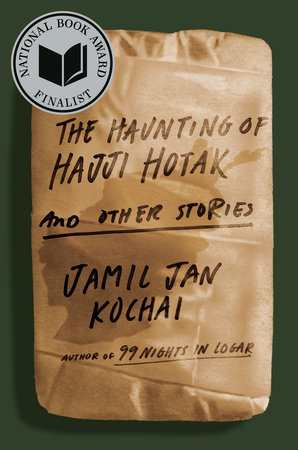
The Haunting of Hajji Hotak and Other Stories by Jamil Jan Kochai

The Haunting of Hajji Hotak and Other Stories
by Jamil Jan Kochai

Living in the United States, the word “Afghanistan” crackles in the air when uttered. There is no escaping the politics of the word and, more often than not, insulting Orientalist and racist language in the larger context of that conversation (malicious or unintentional).

For that reason alone, Kochai’s collection of stories set in contemporary Afghanistan is powerful and worth any reader’s time and attention. The narratives and characters in this collection humanize a subject that has too long been objectified and rendered inferior. The tales bring Afghans to life, force the reader — in the best of ways — to see and think of them as living, feeling, bleeding individuals, as tangible and as intimate with ourselves as our sisters, brothers, uncles, aunts, parents, friends, lovers, husbands, wives, children. In these character’s voices we can hear our own. Our own desires and fears are mirrors of theirs.

The stories are embedded in Central Asian Islamic and Colonial culture and history, but they also revolve around universal principles: love, marriage, ambition, identity, belonging. Afghans in these stories are college students sharing the same interests and experiences of growing up and out like all college students — not merely tokenized international students who live on the periphery of campus life, transient and alien. In some of these stories there are young women seeking to understand their roles in society, in their families. They, like all of us, are torn by expectations imposed on us from within and without. The women in these stories are not foils to men or cutouts of the flattened, Orientalist idea of Islam; they are also not mindlessly rebellious, mimics of Western feminism. These women are accurate reflections of women everywhere and yet also unique in their Afghani-ness: contradictory, full of internal and external conflict, desirous and aware of obligation, selfish and selfless. The characters in Kochai’s fiction — women and men alike — do not need to trade their Afghani selves for a Western one or a vice versa, even if there is tension between these identities. It is a tension that enhances, rather than subverts the narratives here. Tradition and modernity are not at odds in the real, lived world anywhere; that false binary is the fiction here! Kochai’s nuanced depictions of women, youth, men, childhood, marriage, love, sex, and life-at-large made this a very satisfying read.

I also deeply appreciated that many stories depicted Afghans outside of Afghanistan in an authentic diasporic perspective. So frequently are Afghans (and other Asians and people of color in general) fixed into some faraway, non-Western, exotic location. In several of the stories Afghans are cosmopolitan, worldly figures, part of the global community in material ways beyond being an image on the television news. They are American, British, European in as much as they are Afghan. As with many other OwnVoice fiction, these stories make the poignant point that the hyphenated identity is true but simultaneously too simplistic of a label; national boundaries are not only porous, in cultural context they are fiction. (Of course, borders do exist in a material, political sense; passports are not obsolete artifacts!)

At the same time, there is a thread of distinctly Afghan experience threading through these tales, one that is grounded in global politics, colonial histories, Islam in its present forms, migration. That is its cohesion and its strength. The Haunting of Hajji Hotak and Other Stories is a must-read collection, especially for those who seek to understand a misunderstood community and want to excavate their identities beyond its contemporary political history and presence.