This novel took me by surprise — and in that wonderful way that good books often do. Goyhood opened me up to new perspectives, reminded me of the strangeness of life and its myriad twists.
The novel lies beyond my usual fare. I tend toward historical fiction, historical non-fiction, and rarely take on contemporary fiction. But the opportunity came my way, and I found a perfect balance of history, culture, and contemporary life in this novel.
Goyhood calls into question the ways in which we build our narratives, our identities, and how those stories can cheat us of who we really are and who we want or could be. The story revolves a young man on the edge of his life, one which he has cultivated carefully and meticulously, and an event which forces him to abandon it. This is the story of his angst and (re)discovery of self. It is also the story of siblinghood, the tumult that comes from deeply embedded family secrets.
It is also, like most stories, one about love, the depths of it and the lengths we take to protect those we love and the love we desire to maintain.
This is also a book about jewishness, though I am in no position to review on that point. I can only say that I found the book informative and am delighted to know more about what it means to be Jewish in America.
What more could I say about this classic work of the Shoah? I’ll start with when and how I obtained my copy. I won it as part of a Goodreads giveaway in 2022, when Maus was hitting its school/library book ban (to date) and the book was featured in all sorts of news media, for better or worse, and copies of it were whizzing off online and physical booksellers’ shelves (a good thing!)
I was thrilled to get a copy as I had never read it, though of course, I know and teach the Holocaust in my classroom.
Reading it humbled me, as all novels and non-fiction of the Holocaust does and should, but the visual aspect of the graphic novel did it in ways I had not expected. As one can guess from its iconic and unforgettable cover, Maus is populated with mice, cats, and dogs rather than humans. The dehumanization of the Jewish people by the Nazi regime was no less poignant for this swap. Perhaps it is even more powerful; animals are an obvious metaphor: the hunters and the hunted, the obedient and the illicit.
Aside from the personal, intimate view into the Holocaust experience, I deeply appreciated Spiegelman’s portrayal of adjustment to emigration, and the struggle of the following generation to understand the depth and pain of those who had suffered through it. What happens afterward is equally worthy of attention as the event(s) of the Holocaust itself; really, these are not discrete events. These scenes made it clear the Holocaust is not a finished incident, but a deep intergenerational open wound spanning decades.
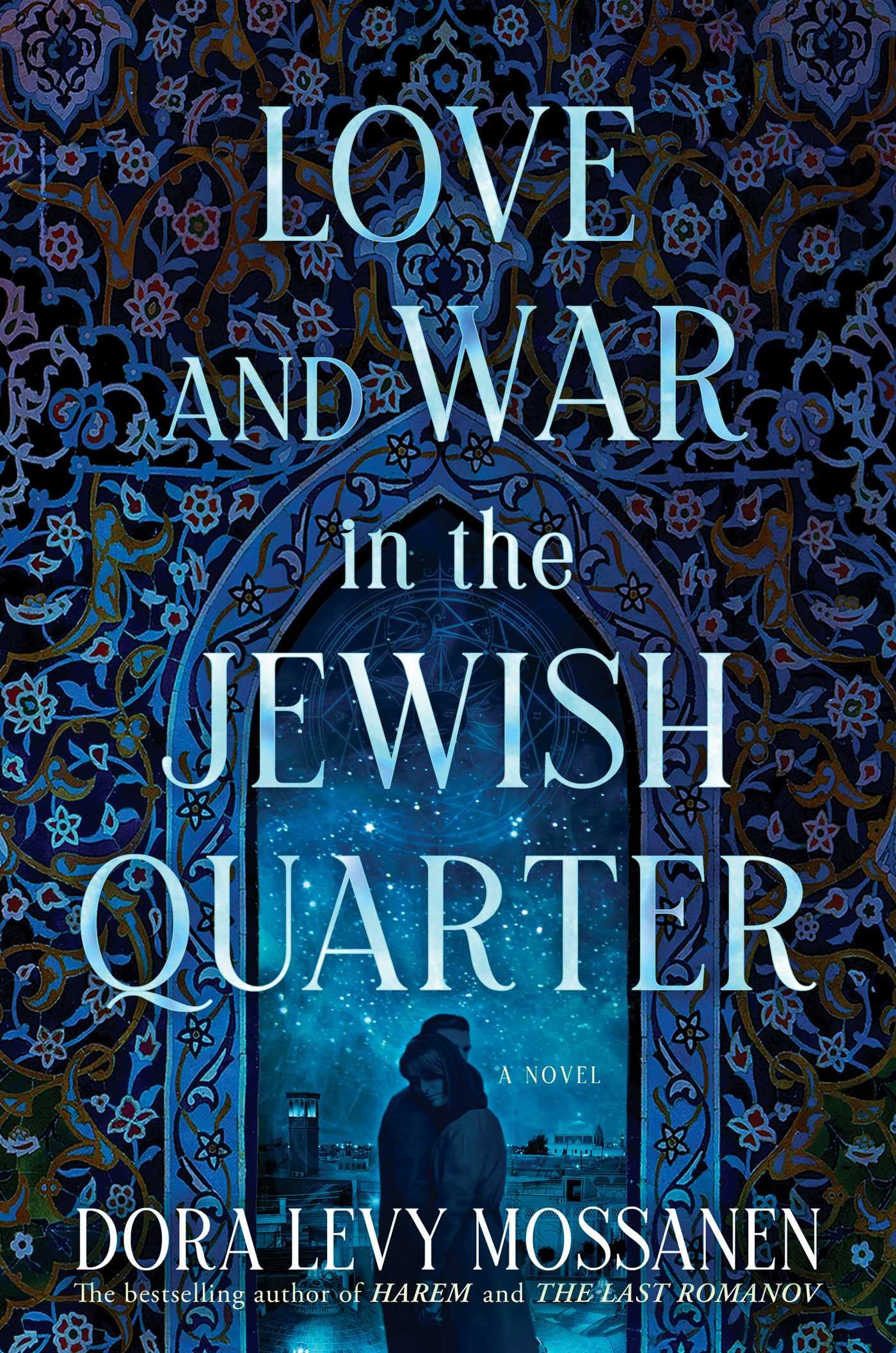
Love and War in the Jewish Quarter: A Novel by Dora Levy Mossanen
Set in Iran in the 1940s, Love and War in the Jewish Quarter captures Jewish life and culture as it existed in tense contest and precarious harmony with and within the majority, ruling Islamic community. On the fringes of World War II, but dangerously within the political reach of the Nazi regime and Soviet pressures, Iranian Jews must balance their interactions with Muslims even more carefully than they always had. The Allies are a distant factor; they are not a guarantee of safety as news of Hitler’s internment of Jews creeps ever closer.
It is in this tension that Jewish dentist, Dr Soleiman Yaran, finds himself. He is trapped in the conflicting intersection between his Jewish community and roots, the powerful Iranian royal family and governors of the land, his family, and his personal desires. The novel revolves around his attempt to unravel and reconcile his responsibilities and his personal happiness. Embedded in these tensions are deeper, more global undercurrents: as a medical professional schooled in Paris, Yaran also finds himself — as an agent of a Westernized modernity — at odds with ethnic, religious traditions, Jewish and Muslim alike. The war is not the only conflict highlighted in this novel; friction also exists in culture between the traditional past and the modern present. There is a shedding of superstition and tradition in favor of new technologies and practices, beliefs about the roles of men and women in their communities. Gendered expectations, visible through the performances of wife, husband, child, lover, parent, elder, and filial piety, duty to one’s community, and duty to one’s self are strong themes throughout.
Mossanen delivers this internal and historical drama through a romantic storyline, but readers will be disappointed if they expect a historical romance, for a romance it is not. This is a love story about love in the real and brutal world, where individuals are buffeted by cultural and community expectations and traditions. Its realistic setting and story are the novel’s appeal; the unpredictability of life will keep you, Reader, on your toes throughout.
The characters too, are fascinating — multi-faceted and tangible — because they are reflections of real internal conflicts. They are flawed and spurred on to their actions by subjective logics, some which make little sense, except when viewed within the larger landscape of this history and cultural context. The villains in this novel are human in their cruelties. The heroes and heroines are human, unable to manifest impossible archetypes.
A worthy read for all fans of historical fiction of the 20th century.



 Dr JoAnn LoSavio