
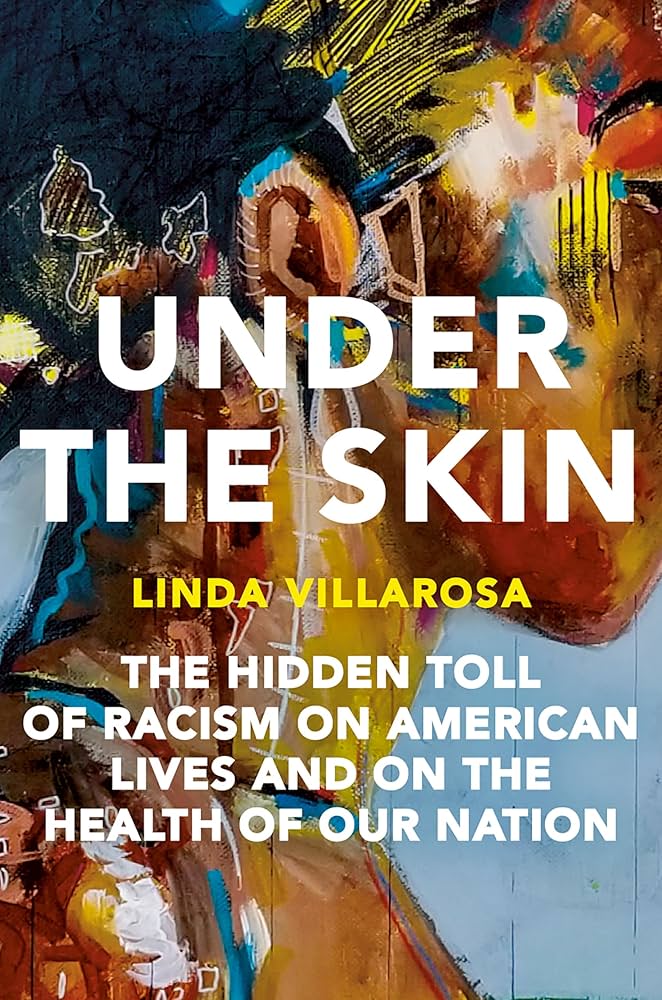
Under the Skin: The Hidden Toll of Racism on American Lives and on the Health of Our Nation by Linda Villarosa

Under the Skin: The Hidden Toll of Racism on American Lives and on the Health of Our Nation by Linda Villarosa

Under the Skin is the kind of book you dread to read, but once you start, you’re compelled to see it through — not because you like its contents, but because it would be immoral to look away. Indeed, it would be more than a little awkward to say that I liked the things I learned in Villarosa’s documentary of healthcare in America today. It is more accurate to say these were things I needed to know to in order to live in America today.

I read this for a book club at work; I work at a university so some of the messaging of Under The Skin felt like preaching to the choir, but it was, nonetheless, a lesson worth learning again. What lesson is that? Racism is not “over” and it hasn’t “ended” in any kind of definitive way. Anti-blackness especially is a legacy that remains and it’s tentacles are long and far reaching.

Indeed, its toll is not as hidden as it appears. Its toll is a scar and a fresh wound in living flesh.

This is a book worth reading at least once, and I would say, especially for women of color, for whom the tax of racism is higher, more exacting, even sometimes fatal.
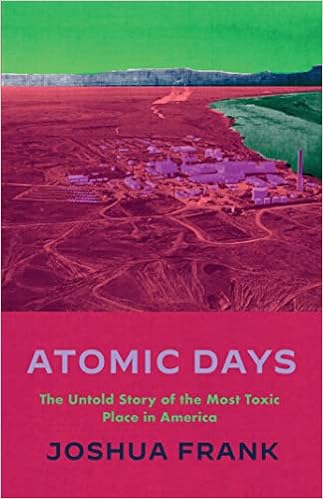
Atomic Days: The Untold Story of the Most Toxic Place in America by Joshua Frank

Atomic Days: The Untold Story of the Most Toxic Place in America by Joshua Frank

My local community library hosts reading events and they gave copies of this book, Atomic Days away as part of one of them. The program includes an event with the author and other experts on the subject. One of my colleagues was part of this. I had hoped to participate in the events, but couldn’t on the day of. I did, however, read the book.

For a resident of the PNW Atomic Days is a disturbing read, its eponymous locale is a mere few hours drive from where I live and work. My usual landscape is serene: mountains, verdant pines, blue-grey skies, the sound of fresh water pelting down from the sky or rushing in the creeks and rivers everywhere around here. Atomic Days is a harsh concrete disruption, a whiplash to reality. This work of investigative journalism exposes a danger in our plain sight: the Hanford nuclear power plant near the TriCities in Washington state.

Riding on the same wave of documentaries like “Meltdown: Three Mile Island”, Atomic Days highlights serious nuclear accidents and the potential for future serious public health concerns arising from the United States government’s Cold War policies and decisions. Frank’s research unfolds the history of these decisions, their outcomes, and their potential for future disaster through oral histories, archival research, and interviews with stakeholders on all levels. The chapters focused on individuals’ experiences, those who have been intimately involved in the plant and its operations, its workers and residents of the immediate vicinity are especially riveting and profound.

Justifiably, there is a warning tone in Frank’s account. It is not one we should ignore as difficult as it is to read about such threats to our mortality and way of life. But Frank’s prose is not pedantic; the language is accessible and written for a general audience — for everyone, as with a doubt, what Frank highlights is very much everyone’s concern.