The House of Doors: A Novel by Tan Twan Eng

The House of Doors: A Novel by Tan Twan Eng

I was very excited to read The House of Doors, being Malaysian (though now living the diaspora). Tan did not disappoint in any way. I was profoundly moved; the setting of the novel, in high colonial era Penang, evoked a sense of lost history for me, being so far from Malaysia, and culturally divorced from all that home invokes, but I also suffered for the characters and felt the grief of their romantic losses.

This novel is a romantic anti-romance, the kind of romantic novel that mimics tragic, realistic romance in life, with all the attendant unhappy endings and disappoints, guilt and regret, nostalgia and memory that romance actually delivers.

There are two intertwined stories here, that of Lesley Hamlyn, a middle aged British woman living in Penang with her lawyer husband, and “Willie” Somerset Maugham, the novelist who comes to stay with them for a short holiday (which turns into a research and writing expedition). They are products of their British Colonial culture; this is the 1920s, the peak of British rule in Malaya, and they represent the elite class that enjoys all Asia has to offer.

Lesley and Willie form an unusual friendship, and in doing so, the stories of their respective romances is unveiled and threatens both of them and their place in society. Love brings both of them pain and escape; traps them and offers them a way out.

Tan tackles tough subjects: queerness, interracial romance, sexuality and sex, gendered expectations — all things the British were (are?) notorious for suppressing at home and abroad. Tan does this with great skill; the writing is gorgeous. A particular ocean scene utterly devastated me; I was as submerged as the characters in it.

This is a book I will need for my personal library.
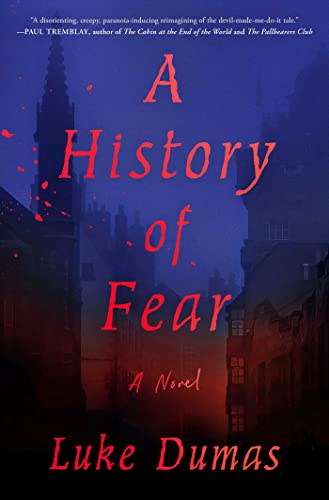
A History of Fear: A Novel by Luke Dumas

A History of Fear: A Novel
by Luke Dumas

By page three, I was hooked. The ending comes to a perfect, organic conclusion — but I readily admit that if Dumas writes a sequel, I’m all in.

A History of Fear unfolds like Stoker’s Dracula, adopting an epistolary approach, delivering the story via journal entries, letters, official reports from doctors, prison officials, and newspaper articles. The novel dives deep into the most disturbing parts of human psychosis reminiscent of Dostoevsky’s Crime and Punishment. It delivers gothic horror too, in the manner of Shelley’s Frankenstein. In the end, the reader can’t be entirely sure of who is the monster, if demons are real, if evil is more human than we comfortable with. A History of Fear is a horror fan’s feast: gore and psychological terror stride side-by-side, the paranormal and the divine and the mundane intertwine to create a world the reader is never entirely sure is real. Illusion may very well be reality… or worse.

But the story is not fantasy; there is a real history embedded in this novel — and a commentary on a history of monstrous bodies, sexuality, religion, and intergenerational trauma. There is a reality underlying the one Dumas weaves for us. This is what makes the novel so appealing; there is a real horror here, one that we can recognize. This history is one that might be so common as to be truly terrifying because it might actually exist within ourselves. Or someone we know.

A History of Fear follows the main character’s slow descent into madness — or his ascent into clarity, depending on your interpretation. There is a true mystery here and this drives the story forward. The reader needs to discover what the main character also seeks: some sense of closure and parental acceptance. The main character is driven by a need to know themselves and their past. This is a genealogy of a family and the homophobic culture of the West. Dumas focuses on the psychological damage inflicted on those who deviated from the dominant norm and those who dared to question their place in it. The novel travels between the past and the present, each part of the jigsaw puzzle adds to the image of the whole of time, allowing the reader to witness the unraveling of the man’s mind and the suffering caused by intergenerational trauma.

The novel opens with the main character’s eventual, inevitable fate; this is the mystery. We know what happens to him. The mystery is why and how. The horror is the long arm of intergenerational trauma.

A wonderful book to have read in October, the Halloween month, but really, a fantastic gothic horror for any time of the year.

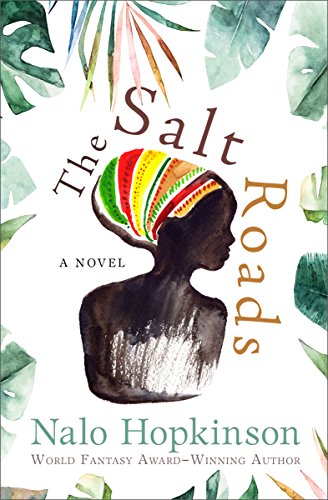
The Salt Roads: A Novel by Nalo Hopkinson

The Salt Roads: A Novel by Nalo Hopkinson

The Salt Roads is a bold statement about black womanhood across historical space and time past. The novel unfolds in magical chronology; it is a fantasy/magical realist novel that is grounded in history, but woven together through the movements of a spirit-being, Ezili and the Ginen goddess, Lasirén. The spiritual relationship is never fully explained — adding to the magical aspect — between Ezili, Lasirén and the human women whose bodies these spirits inhabit at various moments in time. The salt roads of the title is the trail of tears black women have cried, the salt of those tears having dried and laid a path for all those who came after. It is a well-trod path. Ezili and Lasirén live and relive, walk and walk again on that same path, possessing different bodies.

The plot revolves around three disparate stories, loosely connected by a shared history of racism, gendered suffering, and life-affirming black sexuality. The first lifetime that the novel opens with is that of Mer, an old Ginen woman, a respected elder and healer in the enslaved community in an unnamed French colony in the West Indies. Through her eyes and hands, Mer/Ezili helps the Ginen on the plantation survive their white master’s rages, their unpredictable cruelties. In this lifetime we also encounter Makandal, the male counterpart to Mer/Ezili, another magical being who also seeks to help the Ginen survive, but in different ways. Mer is the female, the feminine, the woman who knows what other women in this oppressed world need to survive. Makandal is the male, the masculine, the combative counterpart.

The second body Ezili occupies belongs to a mixed-race woman in France in 1842, Jeanne Duval (aka Lemer and Prosper). Jeanne is a dancer, an actress, a courtesan, the mistress of a white man. She embodies black sensuality and sexuality in all its forms. Here I think is Hopkinson’s great contribution: the boldness of her sexual prose disrupts the negative images history has painted of black women’s sex. Historical depictions of black women as sexual beings pose Her as savage, deviant, an object to possess. Hopkinson wipes that away. Jeanne Duval is a powerful sexual woman, human and frail and vibrant in her sexuality. She is a temptress, but sex is her weapon, one she has full control over.

The third manifestation of Ezili/Lasirén is called Thais, Meritet, Mary, and Pretty Pearl. Her time is in ancient Egypt. As in Mer’s lifetime, Thais’ experiences are deeply gendered; her body is a sexual, reproductive source and her life is shaped by oppression under forces larger than herself.

Hopkinson’s prose is beautiful, song-like in parts, especially in the sections where Ezili and Lasirén’s voice(s) narrate events. Their spirit presence is attached to, but not fully part of their human manifestation’s consciousness. They are experiencing humanity through the bodies they possess as much as they are imparting their power and strength to these women.

The novel is not a historical fiction in the traditional sense; it is not factually informative, but it conveys the affect and emotional experience of enslaved, black, women’s history. It conveys the psychological tensions of this history. It also shows the reader a different way to view the historical enslaved black woman, a woman who has become an archetype. Hopkinson revises Her, suffuses Her with a humanity through raw sexuality and the materiality of her womb.