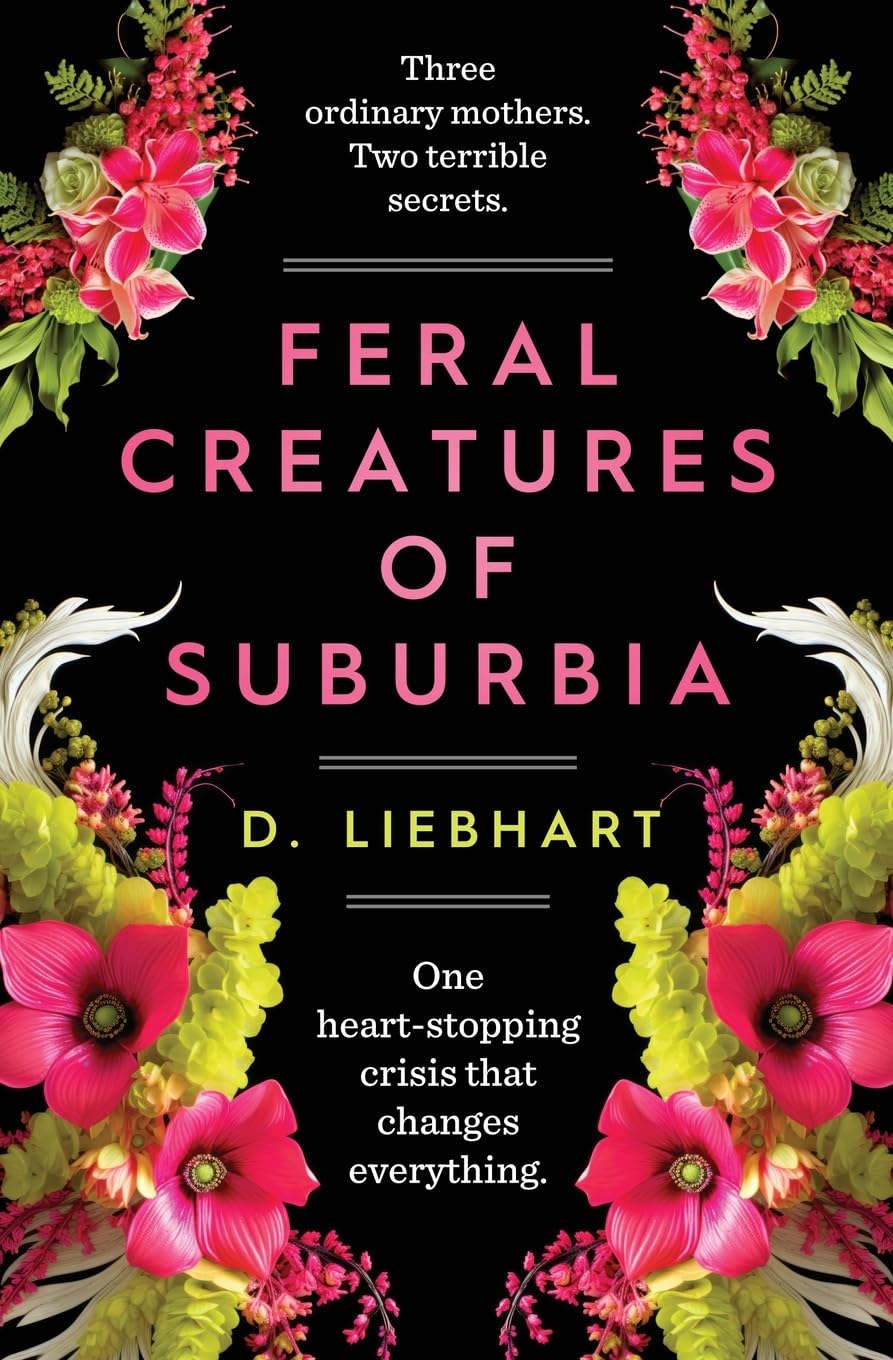
This is the second book of D. Liebhart’s I have read and I can’t wait for the next. Contemporary fiction isn’t my usual genre, but Liebhart’s introspective and acutely insightful style borders on literary fiction. This isn’t a casual novel for the lighthearted; Feral Creatures will rip a hole in your soul and leave a scar. But it will be one you treasure as a reader, one that will change your perspective on life and the world — and perhaps how you read. It did for me.
This is, in large part, due to Liebhart’s skill as a writer. The prose is simultaneously lyrical and straightforward, soothing and incisively sharp. There were several moments I had to pause reading, just to take a breath. But the urge to know what happens, the need for resolution drove me back.
The story moves slowly, but the pace is measured and deliberate — and warranted. The story unfolds in overlapping parts, revolving around three women: Julie, Crystal, and Varvara, and their children: Logan, Mateo, and Myra. Their lives are ordinary — recognizable as our own. It is the tragic intersection of their relationships with one another that the novel builds toward. It is a situation we have all — at one point or another — dreaded to prepare for.
Grief, loss, and the hardship of loving their children are the major themes of these women’s’ lives — indeed, of ALL our lives.
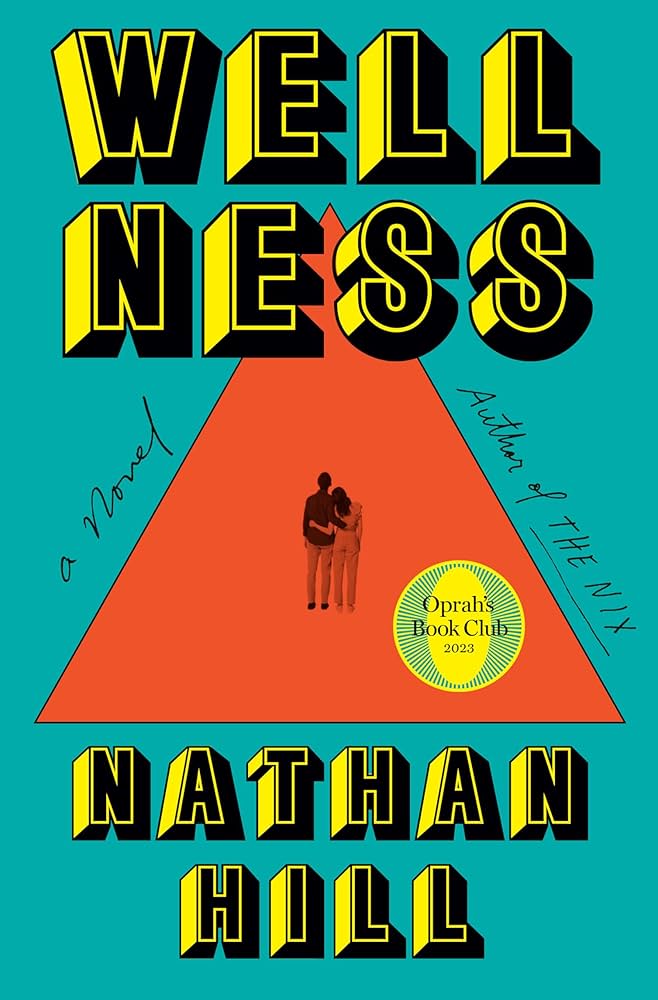
The best – BEST – book I have read in awhile. This novel deserves all the awards, and I’m not only saying that because I lived in Chicago-land, where the novel is set, but because the story and the story-telling is so amazingly delivered. To borrow a phrase from Spinal Tap‘s Nigel Tufnel, “this one goes to 11.”
Wellness revolves around the romance, marriage, demise of said-romance, and self-discovery of a couple, Jack and Elizabeth. Their 9-year old son, neighbors, old friends, and parents also play — as to be expected — significant roles in this account of their mid-life crisis. It’s a mundane and perhaps all-too-familiar tale of life lived and regretted, of the parts of ourselves we lose along the way. This is the draw of the book; it is immensely relatable — at least for those of us of a certain age. There are bits of Jack and Elizabeth in us all, and for those of us who parents, the novel highlights the agony of parenting, especially as mother.
It’s the story of what you do when life doesn’t seem to have delivered what you promised yourself, and — as the novel progresses — it’s the story of why that happened.
At 600+ pages, this is a doorstopper of a novel, but Hill’s prose is so smooth, the story so compelling, the characters so intriguing, that I finished the book in about a week, roughly a hundred a pages a night. A feat given that I read this book during and just after Finals Week of the semester when I had to knuckle down and grade.
And Hill is hilarious. Several parts and dialogue made me laugh out loud; not only could I see myself at the Metro (been there, yes) and some of the other places where Jack and Elizabeth lived out their romance, but Hill allowed me to laugh at myself and my past a little bit. Readers of my generation are likely to find some humor in the pretentiousness of our younger selves in this. I did, and loved the confrontational reflection I had with myself afterwards.
The book will date you and itself, but I think it’s destined to be a classic of our moment.
I can’t stop thinking about this love affair. It’s been months since I finished reading the book, but Allison and Eyal (and Timor, Aisha, Talia, and so many others) continue to occupy my thoughts, not least because the war in Gaza and the horrors that plague Palestine and Palestinians, Israeli and Israelis, remains on-going.
The Lover is a timely novel, as one which revolves around that very political and cultural conflict. But the novel offers a social perspective on how politics hits the ground, how real lives are shaped by the tragedy. The short of it, as I think most people understand, is that the situation is messy. Israelis and Palestinians, Jewish, Arab, each and every one, is woven into a fabric that cannot be unpicked, their threads too tightly interlaced for any one to be extracted without fraying, snapping, leaving a scar in the cloth. The Lover highlights that messiness, the ethical messiness, the material messiness, the psychological and emotional turmoil of Palestine and Israel.
The Lover is a love story, a romance between Allison, a half-Jewish American graduate student who has come to Israel for a semester abroad, and Eyal, a soldier in the Israeli army. To fulfill his military duty, Eyal must conduct missions in Gaza, while Allison frets and waits for his return. But there is another romance here: Allison’s as she becomes enraptured with Israel and the tensions between Jews and Arabs. This is a novel about the ethics of love, what authentic compatibility means, and the difference between passion and compassion between lovers.
What makes The Lover so compelling is that the intertwined romances here force us to confront our own biases in this or other situations. This is a story we cannot turn away from, because even as outsiders watching the news, looking in on the events in Gaza, its messiness forces us to consider what we each might do, might have to do in a similar situation.
The story, as darkly riveting as it is, is not the novels only attraction. The Lover is superbly written. This is literary fiction at its most devastating. Sacks has also clearly done an incredible amount of research, and what might be understood as ethnographic observation; the novel’s environs are so real as to transport the reader to that place, to Israel, to Gaza. The tension Sacks develops through combining research with literature results in a palpable immersion for the reader.
Moreover, Sacks’ characters are fleshy, flawed, and real. Allison is its main protagonist; it is through her voice, her thoughts, that the story is narrated (though she is not its only narrator). Readers cannot help but feel her anxiety, her excitement; as Allison falls deeper in love with Israel, readers may find they are uncomfortably immersed in Allison’s mind. This is a testament to Sacks skill with words.
The Lover is a novel I will likely return to again, perhaps more than once.
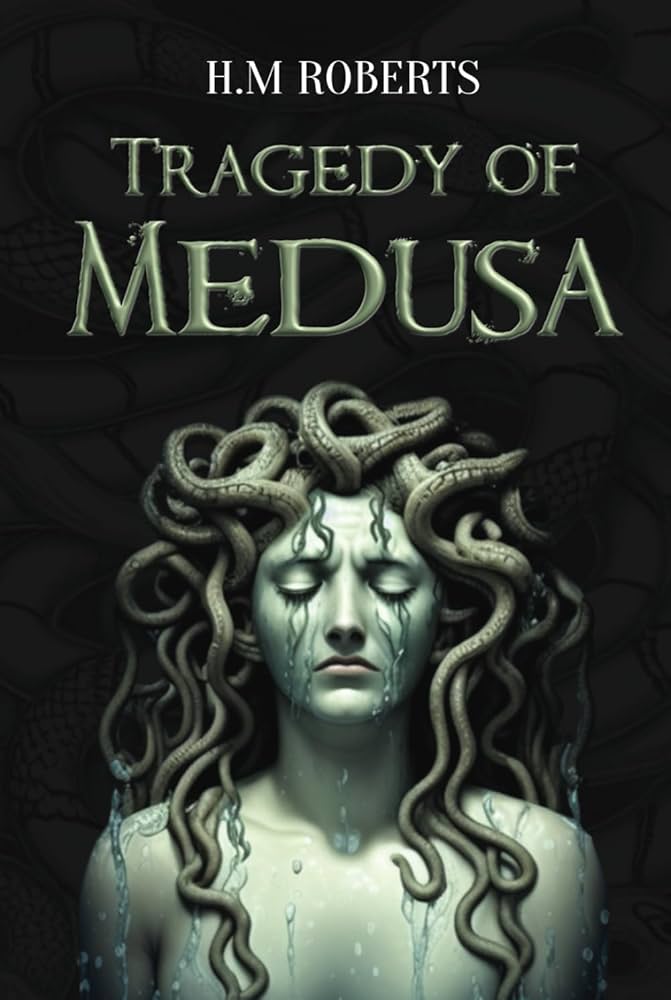
At under 200 pages, The Tragedy of Medusa is deceptively thin. H.M. Roberts delivers a powerful and emotional alternate narrative to the myth of this complicated woman through a swiftly moving story and with a succinct use of words.
Readers should know that the novel spans the length of a lifetime, and will immerse them thoroughly in its magical timeline. I emerged from the novel feeling a kind of grief; as if I had lived alongside the woman, Medusa, herself. Having a familiarity with the original myth of Medusa is not required here; Roberts uses the mythology as a guide, but deviates from its rules to develop a compelling, deeply human tale. Through Roberts’ prose and storytelling I lived the tragedy of Medusa myself.
Readers who enjoy historical fiction, fantasy, and mythology will appreciate Roberts’ equal attention to research and reality on one hand, magic and lore on the other. As a historian and as a pleasure-reader, I appreciated how well-researched it was without being pedantic. Small details about dress and life brought a tangibility to the interactions between characters, put the story in historical context. But the novel remained focused on its story and characters, and this is ultimately what made it so compelling: Medusa, her sisters, and family were nuanced, imperfect and human, for all their divine origin, the mortal characters transcended time, feeling all too familiar despite the historical difference. Fans of literary fiction will find the deep reflection and well-crafted characters of this novel as appealing as story. Roberts’ TheTragedy of Medusa cuts across the boundaries of genre.
I thoroughly enjoyed this indie read, and would not hesitate to recommend this to other readers.
I picked up this book by chance, walking past it in my local public library. I know we’re not “supposed” to judge books by their covers, but I do. When I turned the inner flap to read the synopsis, I knew immediately I had to read it.
The premise is that a member of a high school debate team commits suicide later in life, and a former team mate and friend sees this on social media. In the suicide post left behind, is an accusation against the teacher who ran the debate team, that he had said some awful things. What follows is a series of enlightening conversations between the surviving friends, revealing that all the team mates experienced some kind of denigrating treatment at the hands of the debate teacher.
As an educator, I know that the words I say have an incredible impact on my students, for the better and for the worse, though I hope for the former. Sometimes I say things I wish I had said differently, or not at all. The semester before I read Speech Team I had a student breakdown in my office during a private meeting. They were debilitatingly afraid of submitting their assignments to me, for fear that I’d be disappointed. They told me that in middle school, they overheard a teacher telling someone else how disappointed the teacher was in them, thinking that the subject wouldn’t hear. The teacher had expected more of my student and was complaining to another person. It cut deep and my student never forgot it, and it ruined their experience of school forever.
The story is supported by Murphy’s excellent prose. Like most literary fiction, it is deeply introspective and thoughtful in its content and approach. Murphy excavates what has become a quotidian trauma — the rod-wielding nun, the grouchy math teacher, the demanding and unyielding debate team teacher — drawing out complex feelings, leading to even more complex and perplexing actions/reactions. Readers will find a piece of themselves in these characters, perhaps more than one.
This is an extraordinary tale of an ordinary epiphany: what happens when we discover there is more than one authentic version of our past, sometimes hidden from ourselves by ourselves, and that the view of it looks different from other angles and through other eyes. That sometimes it takes time to understand our traumas.
Speech Team struck a nerve. I couldn’t put it down. I had to know what happened. If you’re a teacher of any kind, read this, and re-read it.
I utterly love, love, love this book. I never knew about or read any of Ellen Cooney’s fiction before, but I am a fan now. And to think, I only found this novel by mere chance. I happened to visit a branch of my local library system that I used to go to quite a bit, but hadn’t for awhile, and I happened to walk past the new arrivals shelf. The title, so striking, so challenging immediately appealed to me. I picked it up, felt its heft in my hand (slim novel as it is) and decided it was coming home with me.
I read it in a day and half. I couldn’t tear myself away. I felt so connected to this woman, felt her latent simmering dissatisfaction so keenly, I had to keep reading.
The novel revolves around a woman who leads an ordinary life, as most of us do: she works for a local company, a office job, and she’s married with kids. She’s hitting her middle years. She’s good at what she does professionally. She is encouraged to and does apply for a promotion. She doesn’t get it, which would be devastating enough — but the kick in the head is that the job goes to a man who is clearly under-qualified for it. It all comes to a head at the company’s annual banquet, held at a famous, local restaurant.
The woman walks in one way, walks out another.
That’s all I’ll say. You have to read this book.
Cooney’s words are knives and silk ribbons. Perhaps they are silk ribbons with edges as sharp as knives; they slice and soothe all at the same time. Women of this age — or, really, of any age once they’ve had a taste of the patriarchal world in which we all must live — will find this novel tragically relatable. It is so nice to hear a chorus of voices bounce back to us, to know what sounds like an echo is not merely our own voice, but the sound of many others screaming same complaints, announcing the same snubs and hurts and disrespects that have been inflicted on ourselves. The isolation Trisha Donahue, the novel’s protagonist, lives is a dark we all know. Cooney shows us that though we may not see each other, she does.
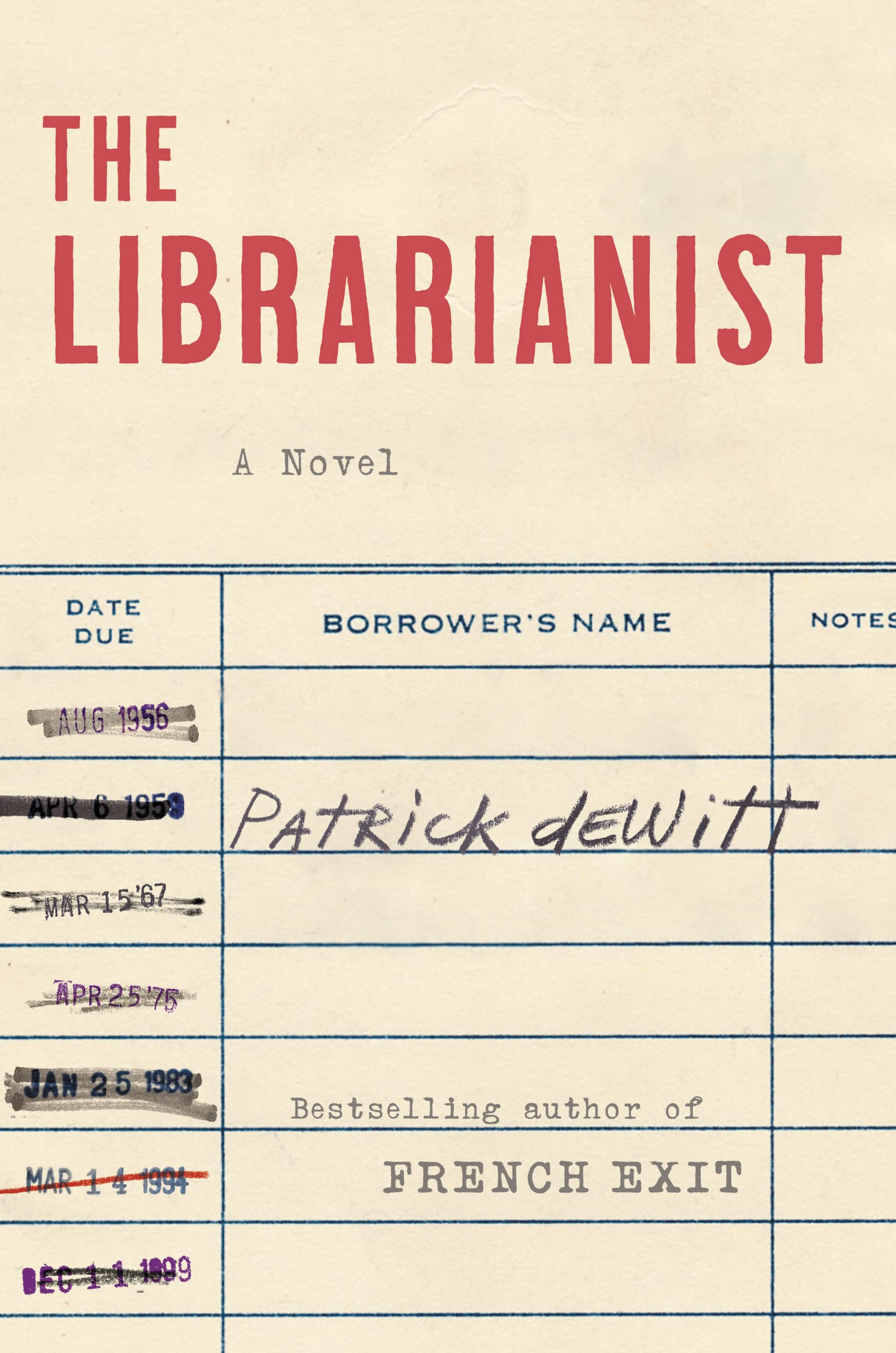
The setting of the novel and its title intrigued me; it’s set in Portland, OR, near where I live and I love books and libraries. Is this a book about books? About loving reading? About libraries?
No, it isn’t. It isn’t about any of that, not at all.
If there is any relation to books at all, it is that the novel is about the chapters that make up the narratives of our lives. Well, Bob Comet’s life, to be specific. Bob is a quiet man, a retired and retiring kind of man, who becomes entangled in the drama and lives of the residents of a kind of retirement home near his own. While there, his interactions with the attendants and residents force him to reconsider the trajectory and decisions of his own life.
In the course of his discoveries about himself, he finds he must witness a direction his life did not take, a love lost and unrecovered.
The Librarianist is a melancholy glimpse into life and its traumas, large and small. This novel makes me think of rain in the Pacific Northwest: ever-present and daily probable, quietly dripping dripping dripping, a small cluster of molecules that is incredibly important to life. Like rain, the quotidian in The Librarianist is vital. The life that unfolds in this novel reminds me of the verdant luxury of green in moss, pine, conifer that emerges after the flush of rain.
Readers who love Stoner by John Williams or Pnin by Vladimir Nabokov will appreciate the life deWitt writes for us.
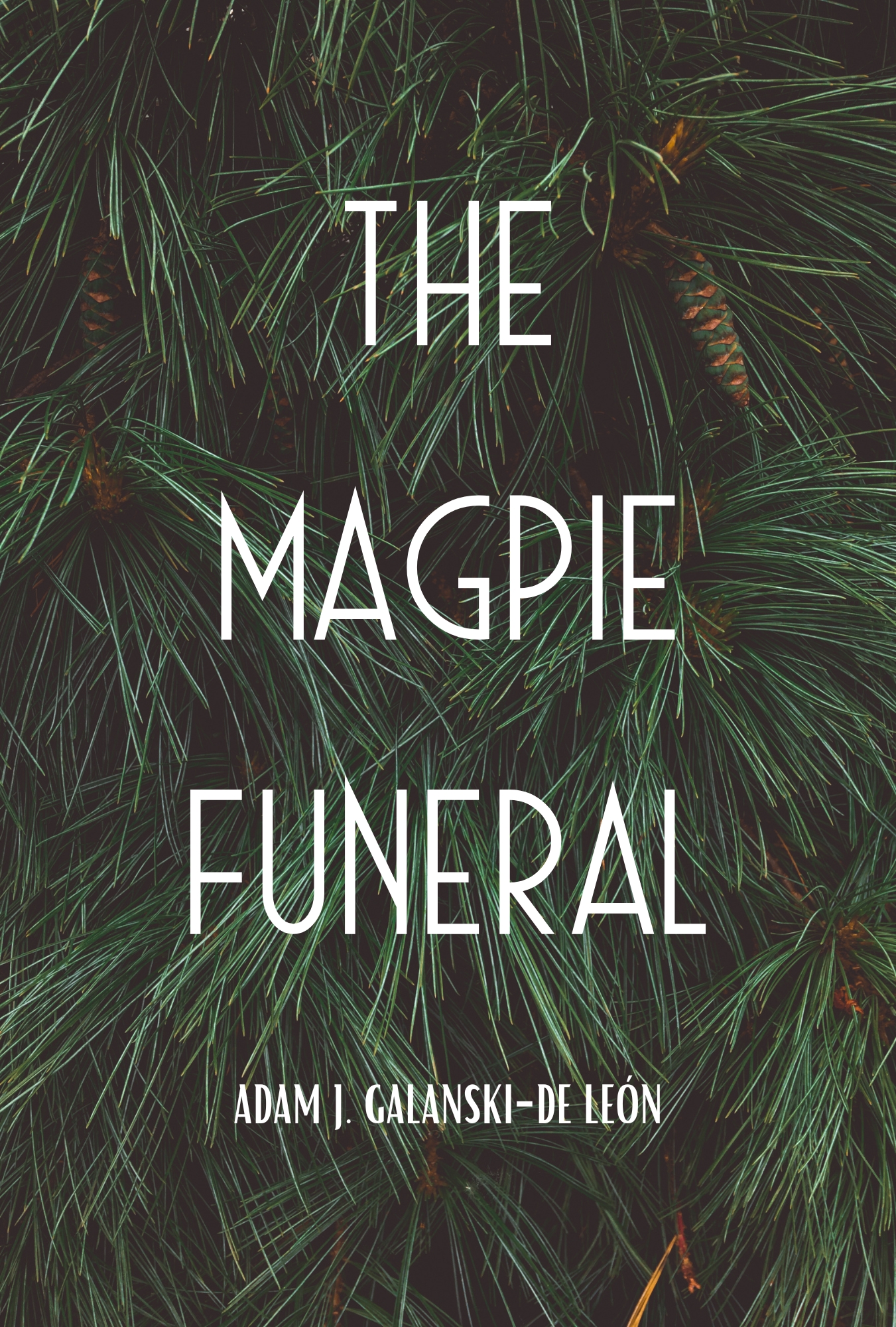
The Magpie Funeral: A Novella by Adam Galanski-De León
A short, but poignant and profoundly moving story about family and the spaces between us that we must navigate, the narratives we tell ourselves and others, the ways in we lose our connections to one another. There are many ways to read The Magpie Funeral, many ways to interpret the events and the silences the characters leave behind.
This is one of the strengths of the novella; its ability to mean different things to different readers.
On its surface, this is a story about a man trying to connect to his heritage, his roots, by seeking out a grandfather who abandoned his family. The man is searching for an answer to some missing piece of his life. This is the story of what he finds and the people he encounters along that path.
This is a very literary novel, one that mimics life and its harsh realities. Readers who seek coziness and comfort should expect to have their hopes dashed. Reader who enjoy realism and the unpredictability of reality will be intrigued by the novella’s turns. Readers who enjoy reflection will encounter a myriad of emotions as the characters — lifelike as they are — are not the perfectly self-aware beings we might wish them to be. Readers will experience some form of loss in reading this book, a performative element of the story itself.
The Shoe Box Waltz is the story of lives intertwined, each one shaped by the others it touches. Each of these lives is in turn shaped by single defining moments, a moment that we never expect to possess such impact. This is a novel of the power of such encounters, seemingly so fleeting and unimportant at the time, as they become amplified. While its author, Kathleen Patrick, labels this a psychological novel, I am inclined to class it as a literary fiction: character-centric and deeply reflective, rather than psychological in the academic or manipulative sense.
The novel revolves around a young woman, Cora, and takes us through three interlocking periods of her life: her youth, her childhood, and her adult life after a traumatic event. As she moves through these periods of her life, she encounters people whose decisions shape the course of her own experience: Nancy, Caitlyn, Maureen, and later, Ian and Ray. There is also an unnamed external narrator, perhaps a sentient persona in Cora’s subconscious. This reader found the novel to focus heavily on the experience of being a woman and the trials of womanhood; a topic I enjoy and appreciate as a woman. A note: Readers should be aware they may find elements of the novel triggering; but, as women generally know, a woman’s life in this patriarchal world is inherently fraught with trauma.
Divided in two parts, bifurcated as Cora’s life becomes, the reader is given a view into the inner perspectives of each of these individuals in Cora’s life, as well as a her own. Each chapter is narrated by a different individual, some also switch position from 1st to 2nd to 3rd, offering the reader a wholly different voice and understanding of Cora’s story. In some cases, the switch of perspective is jarring, but overall, the mechanism works to deliver an unusual reading experience.
Patrick’s prose is literary; thoughtful and evocative, stealthily drawing emotion from the reader. That said, some descriptions and phrases read poorly, dated, and somewhat cliché: “shapely legs” for instance, provides no real fleshy image for this reader. Despite this, I was compelled to read on, finishing the novel in the space of three days. Cora’s story — and Nancy’s intervention in it — was magnetic.
Readers who enjoy historical literary fiction, with a feminist tint, will be sure to find The Shoe Box Waltz a moving and emotional experience, well-worth the effort of reading it.
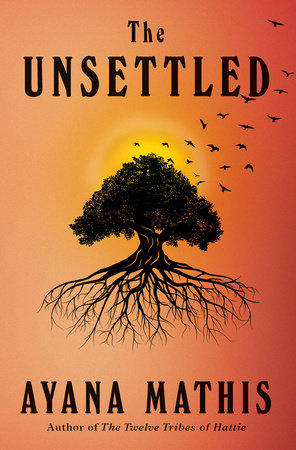
This novel gut-punched me in ways that only good novels can. I could feel tears sting along those nerves behind my eyes. Sometimes I felt my skin get sweat-clammy. The Unsettled unsettles, just like Mathis wants it to.
Right from the start, The Unsettled knocks you down and it doesn’t let up. Its breathless, relentless struggle, the way it forces the reader to keep grasping for relief mimics the feeling that its protagonists feel, trapped in a transient limbo of poverty and abuse and disappointment. This is a novel about what it is to be black and working class in urban America.
The novel revolves around a young boy and his mother, forced to live in temporary housing because of an abusive stepfather and husband, because of racist, classist inequities, because life has dealt them a harsh hand. The novel documents their life before and during their stay in this housing, the people they encounter there, at school, in their former and current neighborhoods. Interwoven between these grim chapters is the story of the mother’s past, her mother and a different world of an all-black enclave in the deep south. In this place too, there is the struggle for blackness to simply exist. The two stories are linked by several threads, the most salient of which is the structural oppression of blackness in America; both stories eventually merge into one, culminating in an explosive end.
Mathis writes with a machete, its edge as sharp as a scalpel. The prose in The Unsettled is blunt, straightforward, and will absolutely cut you down. But the pace of this beating does not exhaust; I was compelled to return to the book again and again until it was done with me (and not I done with it). Its characters were there with me, around me, so fleshy and tangible. I read mostly in bed, where I feel warm and safe, and there were more than a few times when I put down the book and nearly cried, wishing they did not have to live in such an unsafe, cold, grey place.





 Dr JoAnn LoSavio