House on Fire: A Novel by D. Liebhart

House on Fire: A Novel by D. Liebhart

House on Fire utterly gutted me; I very nearly cried — and I am not easily moved. As a historian I am immersed in our collective debris, the ugliness of humanity constantly. But this novel’s humanity, the harsh, honest, and all too familiar trauma of the human experience it brings to the fore struck me hard, so much so the reader in me dreaded and welcomed its final pages. Several times I had to set down this novel, take in a breath, take a break.

House on Fire belongs to that category of novel which epitomizes literature’s ideal. Like Ian McEwan’s moral-bending work or Nadifa Mohamed’s The Fortune Men, House on Fire forces the reader to reflect deeply, demands the reader challenge their own existence, choices, life. Its tagline is apt: How far would you go to keep a promise? This novel forced me to consider my own ethics, my own values, the relationships of my own life.

I will not forget this book.

The opening line alone will arrest you. It delivers the novel’s premise, one which confronts the reader and its protagonist immediately: Bernadette, an ICU nurse is asked to euthanize a man by his wife, but this is beyond a professional request: the man is her father, the wife her mother. The reader becomes witness to a far more complicated situation that one of abstract ethics, should she or shouldn’t she? It becomes personal in much deeper ways. The reader is immersed in the life of a family, chapters retreating back in time provide a full view of Bernadette; her sister Colleen and brother Adam; her mother and father. Bernadette’s life is, like our own, far more entangled than it would seem; there is also her “ex”, Shayne and her son, Jax, her best friend and colleague, Kara, Kara’s husband, Eliot, Colleen’s husband, Liam and their nine children. Their relationships and struggles, as portrayed in House on Fire identify and challenge the obligations and bonds between parents and children, children to their parents, between siblings, between spouses. What do we owe? What are we owed in return? Is “owe” even the right word here? Maybe, maybe not.

The novel unfolds over the course of a few weeks, but transports us to other times and places as well; in that short and interminable length of the time, a number of events occur, both traumatic and mundane, devastating and reconciliatory. A House on Fire is a portrait of real life.

The beginning conundrum is one which threads through the entire book: Will Bernadette help euthanize her father? Will fate force her decision? Is her decision even hers to make? The ending will leave the reader — as it did this one — in tears or close to it. This reader found these to be tears of relief and sadness, tears of grief for the loss of the past and tears of gratitude for what has been gained in return.

House of Fire was published March, 2023 and can be purchased from Amazon here for $12.99 for the paperback, $2.99 for the Kindle, or free with Kindle Unlimited. The novel is 274 pages.

After the Funeral and Other Stories by Tessa Hadley

After the Funeral and Other Stories
by Tessa Hadley

What an amazing collection of short stories! I couldn’t find one that I did not enjoy or that did not make me wonder about my own life, those around me, and just the state of humanity as a whole. Readers who enjoy the creativity and perspective of Margaret Atwood or the incisiveness of Meg Wolitzer are likely to find Hadley’s After the Funeral and Other Stories equally as well-written, equally as insightful into the human experience. And like Atwood and Wolitzer, there is an undercurrent of the uncomfortable in this collection of Hadley’s work, something that makes one wonder about the moral state of our species.

The stories range wide in terms of their narrators and protagonists. In some stories the narrator is a child, in others adult women, adult men. These are stories that clip a slice of a group of someones lives: some pinpoint a long moment of grief or the sharp cut of a sudden loss. There is death and all the attendant fears of delivering the news of death, of getting on after the loss, of not feeling much of anything and what that means about oneself. There are stories here of indifference, a death of a different kind amongst our very social species. There are stories of disloyalty and infidelity, yet again, another kind of death. Indeed, the title of the collection, while signaling the title of one of its stories, is also telling of the content of the collection. After the Funeral and Other Stories is about what happens after there has been a resignation of some kind, a real or metaphorical death and the putting to bed of that corpse. In some of these tales, there is proof of an afterlife.

The characters in these stories do unexpected things, sometimes things that shouldn’t be done but are done anyway, with and without shame. Readers will find themselves wondering at the end of a story, “Oh, that’s just not right…. is it?” Or, is it? That is the draw of this collection of Hadley’s work.

Story aside, Hadley’s prose should also be an attraction for readers. This is delicious literary fiction; Hadley’s turns of phrase are crisp and succinct; the description of the squelch of plimsoll shoes in the rain is enough to invoke a multitude of elements necessary to the reader’s experience: a sense of activity, the image of the character, the mind of the narrator — and more profound, the poignancy of the moment.

I would normally list my favorite stories, but honestly, I enjoyed each and every one of these.

The Vales: A Story of Love, Evil, and Redemption by George Graziani

The Vales: A Story of Love, Evil, and Redemption
by George Graziani
I encountered The Vales through a Facebook group I'm in, where I serve as a reviewer of (mostly) independently published books. Organized by the admins of this group, the review event takes place bimonthly, and involves reviewers submitting a short biography to the organizer. Authors who are looking for reviews of their work reply to the organizer, selecting the reviewer of their choice. Reviewers then select which authors and books they'd agree to review based on the descriptions of the books. 

My review: ⭐️⭐️⭐️⭐️ for prose and writing, ⭐️⭐️⭐️ for storytelling. ⭐️⭐️⭐️⭐️⭐️ for character development. An overall rating of ⭐️⭐️⭐️.75

The Vales is an intensely character-driven novel revolving around two, intertwined stories, and taking place over the course of a long weekend. The first centers on a family gathering at the home of the grandparents, while the other is a criminal misadventure. Both stories run parallel — until they collide, drawing the innocent family into chaos. Both tales unfold through first person accounts of the events in real time, each chapter devoted to the perspective of one of the characters.

The Vales comprise of Grace and Joseph, the matriarch and patriarch of the family. It is their home where the weekend gathering takes place. Their children, Eva and Bobby, are middle-aged adults with families of their own. Eva has her husband, Adam and a wild teenage daughter, Ziggy. Bobby has his wife, Renata, and two boys, Danny and Roland, who are a little younger than their cousin.

This is a novel seeking to excavate the layers of motivation — emotional, cultural, and pragmatic — behind an individual’s actions. Each narrator exposes their most vulnerable selves in these pages, with a deeply intimate result. The reader is privy to each narrator’s desires, secrets, and fears — even those they are unwilling to acknowledge themselves. The flawed natures of the characters are sure to evoke a sense of empathy in the reader; there’s someone we recognize in each of them, our own mothers, aunts, uncles, friends.

The prose throughout the novel therefore changes voice frequently; the pitch and tone of Danny’s chapters reflect the concerns of a boy on the edge of puberty, while Bobby’s are the stuff of adult-sized angst. The prose is very well-crafted, but this reader found this recurrent shift in voice created a superfluousness that did not pay an eventual reward. This was also due, in part, to the content of each narrator’s chapter.

Because of the story unfolds through the eyes of several narrators and each one provides an account of events in the present tense, there is a redundancy in the retelling of events which the reader already knew about. The telling and multiple retelling of the same events by different narrators did not progress the story. Instead this tendency caused the novel to sag in several parts. It was unfortunate that the different perspectives did not add conflict or dramatic effect to the events.

The intense interiority of each narration also produced other jarring effects. Perhaps the author submerged this reader too well, too deeply, with their intimate prose because the the shifts in narrators pulled this reader from the depths of a character’s mind too soon, leading to breaks in the mood of the moment. The other effect, also a consequence of the deep interior view into the character’s mind, was the character’s mental wandering into tangential domains; the result was the introduction of many supporting characters, too many for this reader to keep track of. Were they important enough to remember? This reader found that many of them were there to serve as foils to the characters themselves, and as such they did not add to the story significantly.

My verdict on The Vales is therefore mixed. On the one hand, it is very well-written and full of well-crafted characters. The character-driven aspect of the work is apparent and very much appreciated. On the other hand, the delivery of the story stagnated at several points and ultimately did not pay out on the promise made in the subtitle: Love, Evil, and Redemption. Of the three, love was most visible. Evil was present, though the events did not quite merit that extreme of a description. Redemption felt rushed at the end; the point at which the two stories slam into each other possessed a moment of conflict that was (to this reader) under-dramatized. The events bringing the Vales into contact with a sordid reality deserved greater attention, not in terms of a play-by-play of the events themselves, but in terms of their meaning to the characters involved.

I am nonetheless glad for the experience of reading it. If you would like to, you can find the novel for sale here. Currently, The Vales is available for purchase at the price of $29.99 for a hardback, $14.93 for a paperback, and $7.46 for the Kindle ebook version. To learn more about the author, you may click here.

The Nakano Thrift Shop: A Novel by Hiromi Kawakami

The Nakano Thrift Shop: A Novel
by Hiromi Kawakami

I saw this book at the library and the cover was so cute, I just couldn’t resist checking it out. I know, I know, I shouldn’t judge a book by its cover, but who doesn’t? Really? That said, the description also hooked me: I love thrift stores and I love Japanese fiction.

The Nakano Thrift Shop did not disappoint. The novel follows in that great Japanese literary tradition of deeply intimate writing. The story was simple, but poignant; it was recognizable and human in its simplicity, in its ordinariness. The events of the novel could have happened anywhere and to anyone, and that’s what makes it so relatable and so touching. Readers will find a part of themselves here in some way.

The novel revolves — unsurprisingly — around Nakano’s thrift store, a kind of junk store that sells amazing and banal things, and its employees. A young woman, a worker at the store, is the protagonist through whose eyes we view this small world. Her interactions with Nakano, a quiet young man who is her colleague, the shop owner’s sister, customers, and others within the orbit of the shop are the focus of the novel. This novel is about capturing a short moment in time, a time and world bracketed by the opening and closing of the store; it is a slice of their interconnected lives.

The events that take place are mundane: sales, returns, fixations on objects in the shop, the comings and goings of certain customers, falling in and out of love, the opening and closing of the store. Nothing “happens” but the slightest of events change the dynamics of the shop and its denizens, revealing a new perspective. The novel reveals how thin our veneers are, and how small actions can suddenly strip away our layers. The reader is treated to that peeling away, gets to witness characters in their most human and vulnerable form. That is the brilliance and appeal of this novel.

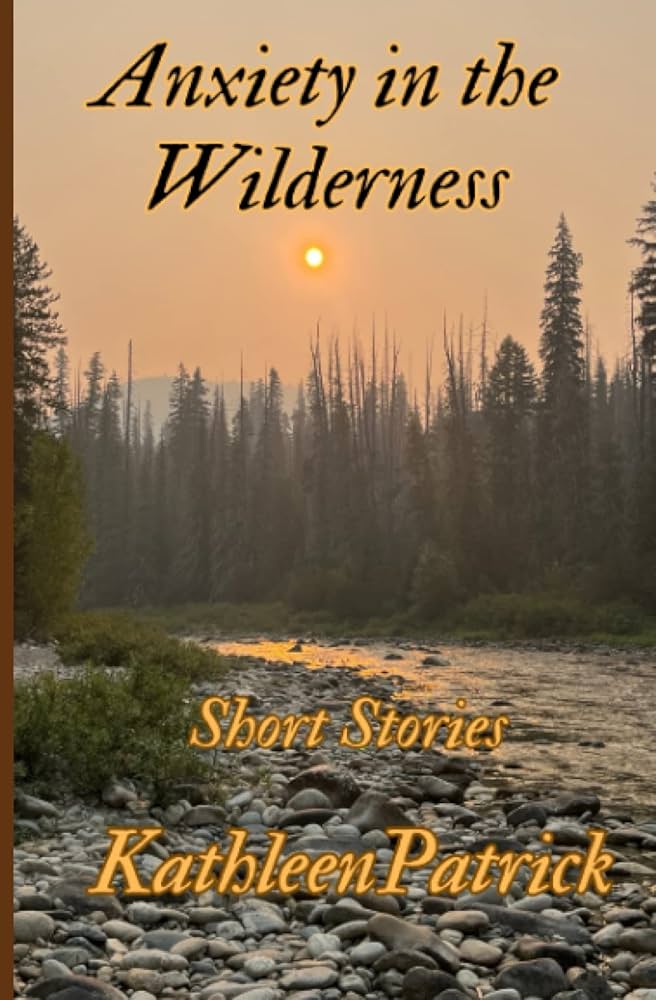
Anxiety in the Wilderness: Short Stories by Kathleen Patrick

Anxiety in the Wilderness: Short Stories
by Kathleen Patrick

I’ll start with context, not about the book, but about how I came to review it. I don’t typically read independently published novels and books for a variety of reasons. But I decided to join a Facebook group, one which has an active review program organized by the administrators. On a whim and by chance, I joined in.

The process began with contacting the organizing administrator. Every reviewer wrote a short biography of themselves as readers.

Hello! My name is JoAnn. I'm located in the USA. I'm an academic in the humanities and a huge reader (it's part of the work I love to do!) I actively review books and galleys, both professionally and for my own pleasure. I review Non-Fiction and Fiction. I prefer physical print copies. For NF I read history and historical archaeology. In fiction, my preferred genres are: Historical Literary Fiction, Literary Fiction, Multicultural/OwnVoices, multigenerational fiction. I especially enjoy Asian-American, Immigration, BIPOC stories/themes. I do not gravitate toward romance, thrillers, horror, or contemporary fiction as much, but on occasional will read slipstream and mysteries."
Then I waited…

Each participating author scrolled through the post to find a reader they thought would match their novel or manuscript and commented below their name. [While some reviewers had several interested authors, I did not. In fact, Patrick had not selected me as a reader for her collection, but I saw her book offered to another reviewer and I asked the organizer if I could review it.] Reviewers could then choose three authors or books they wanted to review. The organizing administrator then connected the authors to the reviewers via direct messaging.

Anxiety in the Wilderness: Short Stories was one of the books I had the privilege to review. I am glad I got the chance to do so; Patrick’s collection of stories is well-worth the read and the price (at present USD $9.99 for the paperback, $0.99 for Kindle ebook, $15.99 for the hardback edition). [Indeed, Patrick’s collection of tales causes me to consider reading more independently published fiction.] The collection, at a total of 161 pages, comprises of seventeen stories and two poems, a few of which have been published in journals elsewhere.

The stories collected in this volume cohere under the theme suggested in its title. These are vignettes clipped from a variation of lives. Each story captures a personal moment of anxiety, ranging from the life-changing to the merely inconvenient. In these tales individuals lose some part of themselves or worry about the possibility of doing so: In Fire, a woman assesses what part of her life is measured in the material goods she owns; in Anxiety in the Wilderness what it means to watch someone lose their life forces a woman to review her value to her spouse. In other stories mothers look upon their children and weigh their love for them against their love for their husbands, wives question the strength of their husband’s love, children face the loss of a parent. Patrick’s stories reflect the small and large gravities in our lives like a mirror.

Like a reflection in a mirror, Patrick’s prose possesses clarity and crispness; in its simple lines there is an element of accuracy in her portrayals of human worry. This lends a literary quality to the collection as a whole. Patrick’s words are deliberately sparse, and in this, she allows the reader a rare privilege: To imagine themselves in the precarious positions the characters are in. It is this small inflection permitted to the reader which I find most appealing about Patrick’s work; she holds back from telling the reader what to feel and so the reader’s own fears organically merge with those of the characters in her tales. The effect is a profound empathy on the part of the reader for the individuals in these tales. Some of the stories left me with an intense poignancy, which I do not regret; this depth of feeling is a testament to the stories and Patrick’s skill as an author. The reader is left feeling “seen” and the result is one of both discomfort (from the anxiety around which the story revolves) and assurance that we are not alone in our worries. Like many of the tales here, there is a bittersweet end for the reader.

Patrick states these stories were written over many years; perhaps drawing from different periods and experiences in her own life. There is a breadth of experience in these stories, expressed in both the varied ages and genders of the characters Patrick produces, and in the range of events and concerns around which the stories revolve. Some stories focus on youthful worries: love, romance, ambition, belonging. Others hone in on more mature causes of unease: death, aging, marriage, adultery, loneliness. I appreciate this variation deeply; I think most readers will find at least a few stories that move them. This is a collection for adult readers across the age spectrum.

On a more personal level, I enjoyed “Letters Home”, “The Dancer”, and “Storm” most, though all of the stories had each their own attractions. There was not one story which I wanted to skip, nor one I disliked, none I found out of place, or which evoked less than a thoughtful pause at its end.

If you’re interested in purchasing Anxiety in the Wilderness, you can do so from Amazon. You’ll find it here.

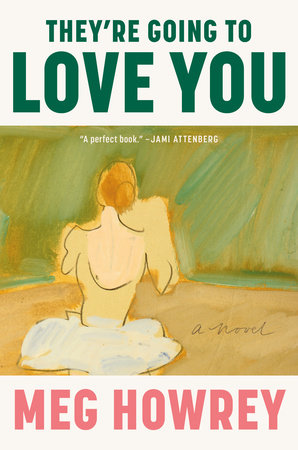
They’re Going to Love You: A Novel by Meg Howrey

They’re Going to Love You: A Novel by Meg Howrey

This one is a quiet burn, the kind of novel that leads to a swell of deep and intense emotion at the end. You’re left, Reader, with a sense of loss at the end, a feeling that you’ve experienced something very intimate, that maybe you shouldn’t have, but you had to — and you did — and now you’re left to think about the memory of the novel. They’re Going to Love You sticks in your mind like taffy to the roof of your mouth, a lingering taste of sweet and salty. Maybe a little sour.

They’re Going to Love You is a story about parenting, being a child, being a child to parents who are human and flawed. It is also a story about the fragility of relationships and the unpredictable strength of them. It’s a story about the trials of family, the values that are assumed in a family unit, assumed because of blood and marriage and birth. It is also a story of betrayal and grief, of not having what we assume we should have or of losing what we felt we should never have been able to lose.

The novel revolves around and is narrated through the eyes of a young girl who becomes a young woman and then a middle aged woman. She is a dancer and the daughter of dancers, ballet dancers in the heady and chaotic New York city scene of the mid-twentieth century. The father is a gay man, openly so, and there is a step-father. Then there is her mother, a former ballerina. The parents expect a lot from the girl. This is a story about expectations and hopes and dreams that are ours and also, not our own.

As the girl grows up there are things she learns about her privileged life and the expectations of her privileged life and the ways in which people look at her from outside her life. She learns about love from her parents and from their divorce and from their forced interactions on her account. She learns about love from her father’s gay friends. She learns about betrayal from her parents and what it means to forgive.

The novel is also about death and the finiteness of this life and of love. It is about realities underlying the fantasy of a ballet-infused, performed life.

Howrey’s prose is stark and cutting. It is dark and yet also childish, implying childhood is in fact a darker space and time than we are often led to believe. The characters are children and adults and you are not sure who is the adult and who is the child sometimes. The dialogue is authentic, sometimes painfully so, too reminiscent of our own familial traumas.

There is an element of this book that prickled me, for as much as I praise it: the characters are insufferably privileged. They are white, wealthy, part of the exclusive milieu of pretentious NYC. The main character is a nepo baby, whether she thinks so or not. So is her father. Intergenerational privilege abounds in this novel. This is a world that exists for a fraction of a fraction of a fraction of the world’s population. It’s not my world, for sure.

But, that is what novels are for (in part): entries into worlds unknown.

Lost in the Long March: A Novel by Michael X. Wang

Lost in the Long March: A Novel by Michael X. Wang

If you love multigenerational historical novels, the kind that invoke profound and simultaneous sensations of sadness, regret, and compassion or which bring to light uncomfortable truths about ourselves, our objects of love, our innermost desires, then Lost in the Long March is for you.

At first pass, Lost in the Long March did not grip me; the first few chapters were interesting, but did not give a clue to the deeper nuances that would come later. I am glad I persevered and read on; I was rewarded. By the last page I was very nearly in tears. There is deep heart-wrenching pain in this novel, the kind that is brought on by very common, mundane processes, in this case, the heartbreak of being a parent, the heart ache for the love of one’s child.

Wang’s novel is about the banal horrors of war; not the violence of combat, but the long arm of suffering that extends beyond the battlefield, long after the skirmish is over, when the victor is fooled by the passing of time into believing that they have won. They have not. Lost in the Long March revolves around the conflicts of the Chinese Civil War between the Kuomintang and the Communists (the Long March occurred in 1934-1935) and the Second Sino-Japanese War (1937-1945); but this is really a novel about compassion and humanity and the ways in which wars and political movements can destroy them or create situations for their manifestation. Friendship, love, connection, loyalty — the interconnections between people — this is the core of this novel.

It is Wang’s unwavering focus on this universal core of the human experience which makes the novel so powerful, so moving, so profound. Wang’s prose delivers the message with perfect pacing and with ease; the prose is succinct, but the words and the silences Wang leaves between them could cut open a vein with deadly accuracy. On occasion, it took this reader a moment or two to feel the new wound, so sharply and subtly were the words and their meaning delivered. By the time I reached the end of the novel, as Wang came to the story’s inevitable end, I was unsure if I could survive it. I will not give the ending away, but I will say that it did leave this reader in a state of metaphorical exsanguination.

Lost in the Long March is well-worth the grief. As with many good books, it is the heavy sense of loss they inflict which is the reader’s gain.

The Beckoning World: A Novel by Douglas Bauer

The Beckoning World: A Novel by Douglas Bauer

The Beckoning World is a complex novel: intelligent and sentimental in equal measure, carefully restrained and yet brimming with emotion, grounded in reality but fanciful in its fantasy of baseball celebrity. This is a tale of ordinary desire, ambition, failure, and the sacrifices of love that we can recognize in others and in the society at large, and yet there is enough fiction here to allow us to deny the existence of this tragedy in our own lives.

If you love Stoner by John Williams or Pnin by Vladimir Nabokov, Reader, you’ll appreciate the agony of life Bauer portrays here, the quotidian kind, the slow descent into ordinariness that we all must confront, whether we accept it or not. The Beckoning World is as much a tale of the world beyond our borders as it is the world within our constraints that we cannot escape. The call is not always one to adventure, but a tether.

That is not to say this novel lacks adventure for it does not, it has adventure in buckets. The Beckoning World is also a coming-of-age journey, tracing that phenomenon’s mental and physical challenges and explorations. There is a real adventure here — and the kind of fantasy that some of us only dream of. Reader, you’ll live vicariously through Henry’s eyes, live through the fantasy of childhood — his and perhaps your own.

It is hard to pinpoint what The Beckoning World is about for to outline its plot captures only a small part of its appeal. Its characters are the real attraction here: Earl, Emily, Henry, Babe, Gehrig, Walsh, Lottie, Rooster. They are manifestations of persons in our lives; flawed and perfect. Bauer develops them with succinct, incisive prose that, in silences, invites the reader’s imagination to participate. Bauer captures our investment quickly, and Reader, you’ll be rewarded quickly; the story moves at a steady pace even as it lingers in some moments longer than others. Like Williams and Nabokov, novels of that mid-20th century period, Bauer’s prose is the sort I enjoy: narrative, descriptive (but not overly so), structured.

The novel is set in Midwest America in the early 20th century. There is a pastoral quality to it, one that is generic, recognizable, comforting. This element of the novel is cast in a sepia light, historical and still otherworldly: this is a time and place lost to us and only visible through a veil of nostalgia. It begins with Earl, a young man from the Midwest who — like many of us — is faced with the choices of adulthood and responsibility. Emily, a young woman from the same rural background must make the same decisions, balance desire with practicality. The result is Henry, who becomes the central focus of the novel and who is the focus of the great baseball adventure that ensues.

Through a fantastical encounter with baseball, Babe Ruth, and Lou Gehrig and a journey across the country Earl and Henry come to terms with their loss, life, and future. This is a bildungsroman of the American kind.

A highly enjoyable, thoughtful read. The Beckoning World is a wonderful addition to the genre of the classic American novel.

Enduring Love by Ian McEwan

Enduring Love by Ian McEwan

Despite Ian McEwan’s apparent success in the literary and film worlds, I’ve never read any of their novels. I do veer towards literary fiction, but McEwan was never on my radar. Until “Matt”, a staff member at my nearest public library branch chose it for one of their Staff Picks last month. I typically review newer, about-to-be-published books here, but every once in awhile a backlist is worth a review. This is one of them.

So that’s how I came across this slim, unassuming novel. The title suggests romance. It’s not. (Well… not a traditional romance anyway.) The cover, an image of a hot air balloon in a clear sky, suggests flights of fancy, a pleasant day out in nature. It’s not. (So easily do we forget that nature is not the sanguine overlord as we anthropomorphize it to be. If it were a being it would be a vicious beast, not a nurturing mother.) But, something encouraged me to slide it off the shelf and turn it over for the synopsis.

Before reading further, you must know I enjoy perusing the library, literally just meandering the stacks and sliding interesting books into my arms. Going to the library is better than midnight shopping on Amazon, better than a trip to my local bookstore even — because it’s FREE! I can load up my bag and literally be the richer for it.

The words “hot air balloon accident” and “obsession” caught my eye. Hints of a moral and mental disintegration. Hmm. Intrigued. “Matt’s” pick did not disappoint. I was hooked from the first three pages and I could not rest until Joe’s dilemma had been resolved somehow.

I prepared myself for a hideous ending. I got it.

Reader, if you enjoy unreliable narrators, epistemological head twists, and stories of encounters with the utter strangeness of life, Enduring Love has it. From the start the story is a deluge, an unstoppable interior pouring of thoughts expressed in sharp, authentic prose. Joe is the narrator, a witness and involuntary participant in the hot air balloon incident. A survivor, you might say. But it is what happens afterward that is truly disturbing. Reader, you might be tempted to exclaim, “How many odd things can happen to one person?” But, there is where McEwan’s skill lies, the oddness of it all is entirely believable. Things like this do happen, all the time. Just watch the news. And what happens after with Jed Parry? That too is as mundane as the Monday evening edition. (I won’t recount the plot details since this is an older novel. Find it here.)

The thing that draws us into this novel is this: We might surmise that our actions in the face of such tragedy and dissonance might be different, but Joe’s authenticity as a human being (some brilliant character development on McEwan’s part) forces us to consider that we might feel the same, even if we might react the same way. (There is so much to unpack in this novel, this review is just one possible view of the thing.) Who is mad and who is sane here becomes confused. What constitutes madness and sanity are questions left unanswered. Reader, you’ll wonder where the line between the two exists — if it exists.

At the end of this you might find yourself shying away from social interaction, feeling a bit of anxiety about what someone at the grocery store might want of you if they smile at you. You might stop smiling back for awhile. Most of us have a tinge of social anxiety; this novel reminds me why that can be a good thing. It also made me a tad more paranoid than I usually am about whether I should leave my blinds open or not.

I’ll leave it at that. Read this novel. Gorgeous prose and a compelling plot propel this novel forward inexorably (much like the wind behind a hot air balloon…) Recognizable characters leave the sensation of voyeuristic experience; Reader, you’ll have a front seat view of a journey to madness.

Cold Enough for Snow by Jessica Au

Cold Enough for Snow by Jessica Au

A beautiful, character-driven tale of mothering and daughtering; that is, the ways in which we mother our children and the ways in which daughters express and manifest themselves as the offspring their mothers. This is a quiet, assuming novel about the ways in which we express parental and filial love, the unspoken reasons why we come to expect love in particular ways.

The plot follows a touristic vacation for the narrator and her mother in Tokyo, Japan. It begins and ends with this short episode in their lives, but the novel reveals their lifetimes of emotional involvement with one another and draws other family members into these reflections. The reader is given a privileged view of this family’s most private interior relationships.

Au’s choice of a touristic holiday is perfect for the discussion of belonging and not, of generational divide and continuity that fills the narrator’s thoughts. A history of immigration, transnational, and transcultural trauma and identity-building is threaded into the fabric of the novel; the events of the mother-daughter duo’s traipses around the Japanese city and its sights are the perfect backdrop to this commentary.

This is book no one could possibly regret reading. If regret is invoked, it is because one missed its slim presence on a shelf.