ReSet: Be Good, Your Life Depends On It by (A Novel) by Savanna Loy

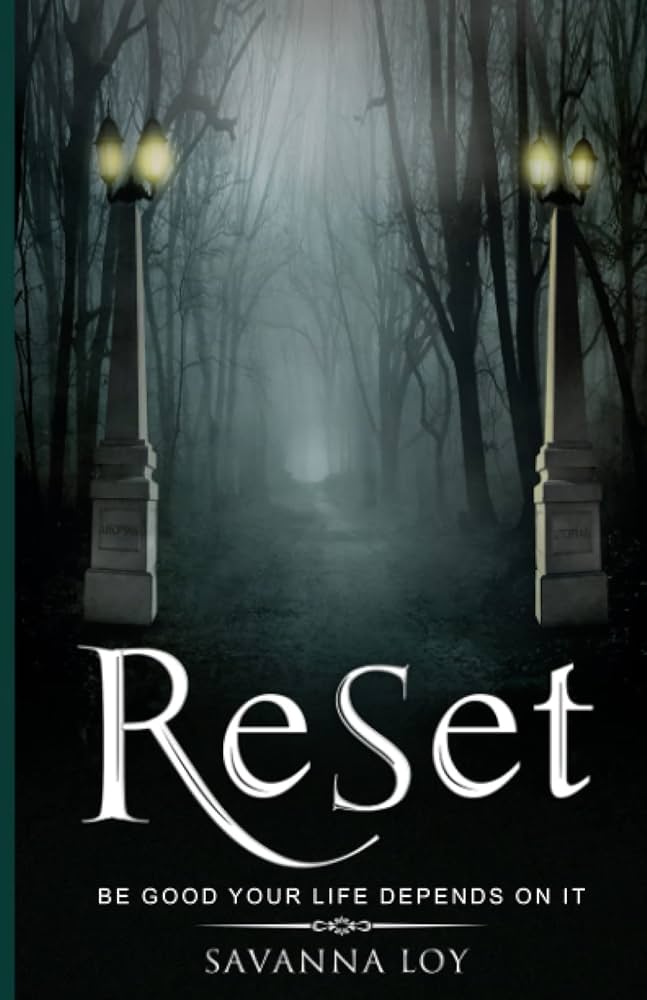
ReSet: Be Good, Your Life Depends On It by (A Novel) by Savanna Loy

A horror/dystopian novel premised on a popular trope — but delivered from a novel perspective. In ReSet the world as we know it has come to an end and a new oligarchy has come into power. A committee of a few men now decide who lives and dies and the terms which everyone must now abide. Failure to do otherwise results in the collective execution of whole communities, a reset. The novel reveals all through the eyes of one of its elite families, those chosen to plan and carry out the gruesome task of resetting.

The premise is inherently intriguing, given the climate change, political and social turmoil of the American nation at present; one cannot help but wonder what consequences we may need to confront — and perhaps sooner than we would like to admit. ReSet plays on those fears. In that vein, the novel is reminiscent of Margaret Atwood’s Handmaid’s Tale and the eugenically driven political world of Gilead. A central theme of the novel is the corruption of power and the terrible consequences this can lead to.

For all its unique perspective, I found the narrative arc of the story predictable and the peak of the novel, its crescendo, slightly disappointing and less explosive than promised. The drama of that moment is confined to a small circle, decreasing the visibility of its larger impact on society. Given the drastic shift in culture that the apocalypse created, I expected a greater dramatic backlash or swing in equal measure. The ending suggests a sequel, and perhaps this is where the novel leads — rather than to a terminal ending.

On the whole, the novel was well-written, though there were some parts which unfolded in confusion — deliberately, I suspect — which detracted from the flow of the novel for this reader. Nonetheless, this is a minor complaint. Likewise, characters are well-developed and tangible, though some better than others. On the whole, an intriguing read for readers who enjoy dystopian possibilities.

The Invisible World: A Novel by Nora Fussner

The Invisible World: A Novel
by Nora Fussner

This is not your average haunted house story. It is your better than average haunted house story. Readers of literary fiction will absolutely love this spin on the haunted house trope for its deep character development and character-focused orientation.

The novel is simple enough in its premise: a couple invite pandemonium into their house when they have a television crew for a “ghost hunter” style show come to their home to document their haunting. The events take place around this misfit cast of producers, camera operators, show staffers, the homeowners, and the carious psychics they call on to flesh out the dramatics of the show. It is the interplay of their individual needs, desires (met and unmet) that form the basis for this novel. Underlying all this is the omnipresent question: Is the haunting real? Or a figment of everyone’s desires? Every actor here has a vested interest in the reality of this haunting, leading the reader on a pursuit for the truth and an authenticity which may be impossible to find. This is, after all, the premise of such television shows.

Fussner’s prose was also an incredible appeal; it is literary in its language, its unfolding. Fussner’s choice of words draws a performative veil over the novel, intriguing this reader at least. I was hooked from start to finish.

Night Side of the River: Stories by Jeanette Winterson

Night Side of the River: Stories by Jeanette Winterson

I thoroughly enjoyed this collection of ghostly tales, but then, I may be biased; I’m a sucker for a good haunting. Of course, I did have my favorites.

I especially enjoyed “A Fur Coat”, “App-Arition” and “The Spare Room”, primarily because the haunted in these stories isn’t necessarily the living, but the dead haunting themselves or one another. Indeed, that was the attraction for me in Winterson’s tales: they challenged the concept of haunting, yet remained authentic to the trope of the traditional ghost story. Readers shouldn’t expect to be thrown into a new genre here; this is not speculative horror, but tried-and-true revised into immersive stories.

And, of course, the revelations in these stories are more about the living than the dead, which is ultimately the mark of a good short story.

The collection as a whole is fantastic, and follows through on this tightrope balance between showing the reader something novel and satisfying their hankering and expectations of the “ghost story” trope. In some stories, Winterson brings in an element of the contemporary through technology and devices we use today, in other cases, it is the characters’ quotidian lives in the present — marred somehow with an encounter with death and the dead — that makes it clear to the reader there is an anachronistic meeting of time here.

Winterson’s writing is superb, well-suited to the genre of the short story form. With few words wasted on exposition and an emphasis on characters’ thoughts, Winterson quickly immerses the reader in the story. It is everything a reader wants from this short form.

Halloween has passed, but Winter is upon us; put this on your list for this year’s gloomy, deathly season.

One Last Waltz: A Novel by Peter Scholes

One Last Waltz: A Novel by Peter Scholes

This novel moved me to tears, which is a rare occurrence — and more than once. One Last Waltz takes the reader on a journey of several lifetimes. This novel is a rich emotional experience for the reader.

One Last Waltz is set in a retirement community/home for the elderly, The Acorns, and the stories of its residents are told through the eyes of one of its employees, a caregiver, Angie Tomlinson (Ang, to her clients and friends.) These are the days of their lives, as their lives arrive at their terminal point. The novel highlights their small moments and casual conversations, but this is not a quotidian experience for them or the reader; it is in these small, personal interactions that the most intimate exchanges are made. This is a novel about the depth that exists in the ordinary and mundane.

Over the course of three years, the novel takes us and the residents of the Acorns, to various locations. A field day for them is as much a field day for the reader. There is indeed, a final waltz, and it is a beautiful, inspiring thing to witness as a reader.

One Last Waltz is also gorgeously written. With few words — Scholes applies an economical approach to writing — he creates an emotive landscape and breathing characters. Readers should not expect verbose visual descriptions, rather, a starkness here allows the reader to fill the visual gaps with emotion; it is their joy and pain, regret and worry, contentment and satisfaction, that is the reward of this novel. Scholes handles chronological leaps easily, taking the reader back in time to witness the events of the elderly residents lives and the meaning these have had for them. Of course, their journeys are really for our benefit as readers, as we traverse the course of our own lives, parallels to theirs.

For readers at any stage of life, Our Last Waltz is an uplifting (yet deeply solemn) and profound novel well-worth the tears it will bring to the eyes.

Perilous Times: A Novel by Thomas D. Lee

Perilous Times: A Novel by Thomas D. Lee

This was, by far, the most imaginative novel I have read this year. This is speculative fiction at its very best. Perilous Times will keep you hooked from start to end.

The novel opens with a strange awakening. Kay, an Arthurian knight emerges from the earth, no longer a corpse, but alive and tasked with a mission to save Britain – only he has no clue what this means or what he has to do. Immediately, he becomes entangled with a young woman, Mariam, who is on her own mission: to rid the world of corrupt corporate leaders who are poisoning the world and leading its few remaining inhabitants closer to environmental ruin.

The novel is set in the near future, when our climate has been so altered that most of Britain is now underwater and our environment is a grey wreck. Small bands of people live in squatter-like conditions and even smaller bands of rebels have formed to bring order to the world.

Fracking and profit-greedy corporations run public operations. A magical cadre operates on the highest level of corruption and government, and they have a secret weapon: King Arthur and the immortal knights of his roundtable.

But… this all it seems? This is a world stripped of romance and chivalry, and the knights of this mythic time are no less human than those they are tasked to save.

I will leave my description there. If this has not intrigued you yet, well… Hmph.

The ending will also put you in a spiral.

Lee also delivers the story with tremendous skill, the right dollop of humor, and the perfect dry drip of British snark. This novel is a joy to read on multiple levels.

The Foreboding: A Novel by M.J. Foley

The Foreboding: A Novel by M.J. Foley

As with several other indie novels I’ve reviewed, I found this one through a FB group I am in.

The synopsis of the The Foreboding intrigued me. Here is the description from its Amazon webpage:

Destination drawn unceremoniously from a hat, quiet, bookish Shiloh leaves her cliché life and all the expectations that went with it without any intention of looking back. Upon arrival in her new city, a dark past lurks in her musty apartment and invades her subconscious. She is quickly enveloped into an unbelievable plot that turns her assumptions about the world upside down. When personal tragedy and evil unmask a long-standing plot for power and dominance, Shiloh is forced to confront the unharnessed potential of the human mind and the interconnectedness of the world she worked so hard to learn about in school. Through the painful introspection of early adulthood and eye-opening discovery of scientific truths beyond her wildest dreams, Shiloh must learn to trust her own instincts and an unlikely group of comrades to fight the power of obsession and control threatening to obliterate all she holds most dear.

The novel has a strong start. I was especially impressed with the quality of writing in the Author’s Note — and the novel premise of its story. However, and sadly for this reader, while the novel did deliver a story that bends and challenges our conceptions of physics and nature, the novel failed to engage me emotionally and create a landscape of possibility beyond the microcosmic world of its characters.

My personal preference is for character-based literary fiction, stories in which the human connection is the fulcrum around which the rest revolves. The Foreboding lacked the character development I wanted. Shiloh came through as a distinct, fleshy voice, a strong presence as the novel’s lead protagonist, but Margaret and the others felt flattened, making it difficult to understand their motivations and purpose in the novel, especially in their interactions with Shiloh. In some parts, the dialogue — even Shiloh’s — felt contrived; likely as a result of a lack of character development, their words sounded hollow, conveying the author’s voice and intent more than their own.

For this reader, the story required smoother introductions into its concepts and more nuanced context to both bring the landscape around its events to life, and highlight its events as a singular. The world Foley suggests is an unique and intriguing one, but this quality is obscured by a too-casual framing of those events.

All this said, The Foreboding delivers on other points. First, it is technically well-written. There are few, if any, typographical errors. Its syntax, grammar, structure, and organization are largely correct, and were clearly considered with care. Second, the author has an interesting, original, and creative premise. There is a story here worth the telling, even if this reader found its delivery lacking.

As such, my overall review is mixed. Readers should read The Foreboding themselves, as they may find their experience of it to differ from my own. The novel can be purchased on Amazon here. The paperback is $16.83, the hardback $27.43, and the ebook is available on Kindle Unlimited and for purchase for $3.99.

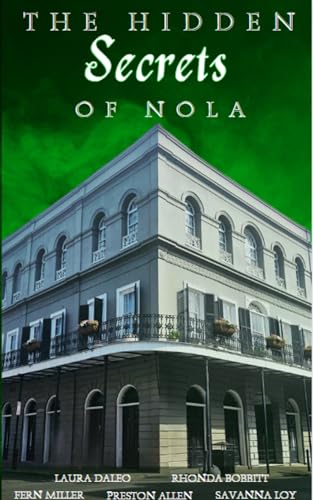
The Hidden Secrets of NOLA: Stories by Laura Daleo, Fern Miller, Savanna Loy, Rhonda Bobbitt, & Preston Allen

The Hidden Secrets of NOLA: Stories by Laura Daleo, Fern Miller, Savanna Loy, Rhonda Bobbitt, & Preston Allen

This was the perfect Halloween read and one that I’d been looking forward to for several weeks! I saw the book in one of the FB groups I’m in and I put in a pre-order for the ebook (something I rarely do). It did not disappoint! This anthology of five tales set in New Orleans conjures the mystique and history of that city’s famous French quarter; the stories force the reader to reconsider their notions of the supernatural, to wonder if darkness is really the evil we assume it is. Laura Daleo’s short story about what happens when Death meets an innocent is one of these tales which gets the reader wondering about the nature of evil and compassion, how they are two sides of the same coin. Rhonda Bobbit’s tale delivers the shivers; two sisters, Rose and Lydia are haunted by a family heirloom and an inheritance they did not expect. Fern Miller, a romance writer, takes us in another direction, trading on the lust and romance of New Orleans. It is a place where lovers escape to — or attempt to escape each other –but fate always has its plans for us. Preston Allen’s story, Crossed at the Cafe, was my favorite of the five; a story revolving the hoodoo that NOLA is famous for. Powerful curses and malevolent witches deliver the shivers in this tale. Savanna Loy’s Borrowed Bayou was my second favorite story here. This was a dark tale as well. The Laguerre family hides a terrible secret; they’ve made a pact that must be kept, or thousands might lose their lives.

This is a diverse collection of tales. Readers are sure to find at least one which appeals to them. They are, on the whole, well-written and conceived. Each one evokes a different characteristic of the city: its dark history, its romance, its mystery, its portals into the underbelly of humanity. These tales record the bargains we must make; here, these are the bargains New Orleans extracts from all who visit it. Some of pacts deliver unexpected happy endings. Certainly all of the stories here make the reader wonder what they might do in the same situation.

Believe Me: A Novel by Molly Garcia

Believe Me: A Novel by Molly Garcia

Believe Me is the kind of novel that defines its genre. It is the perfect psychological thriller, with all the twists and turns and impossible possibilities that make readers clench their teeth while reading.

The novel begins with an explosive arrest; Carrie is carted off while doing her weekly shopping. She is accused and then convicted of murdering three young children in the woods. But did she really do it? The novel revolves around the psychiatric report ordered for her parole hearing several years later, and the investigation Dr Quinn, her appointed psychiatrist, discovers he must conduct to properly write his assessment of her.

Did she do it? Why? Where are their little bodies buried? These are the questions that haunt the compassionate doctor — and the reader.

For readers who enjoy psychological thrillers in the vein of Tana French or Sue Grafton, Believe Me will deliver abundant satisfaction. I found myself comparing Garcia’s novel to Margaret Atwood’s Alias Grace, though this novel is set in the contemporary moment, and a far shorter read. Believe Me is a compact 184 pages, and very well-written. I found myself especially drawn to Garcia’s dialogue. The characters come alive through their conversations; their voices are clear and distinct. Garcia’s prose was smooth and evocative. This reader could feel the tension between Dr Quinn and his patient, between the doctor and the staff at the prison where Carrie is an inmate. The mood Garcia creates is a veil obscuring the truth, one the doctor and the reader will claw at.

Believe Me kept me tilting on the edge throughout its 184 pages — and the ending! What a twist!

The House of Doors: A Novel by Tan Twan Eng

The House of Doors: A Novel by Tan Twan Eng

I was very excited to read The House of Doors, being Malaysian (though now living the diaspora). Tan did not disappoint in any way. I was profoundly moved; the setting of the novel, in high colonial era Penang, evoked a sense of lost history for me, being so far from Malaysia, and culturally divorced from all that home invokes, but I also suffered for the characters and felt the grief of their romantic losses.

This novel is a romantic anti-romance, the kind of romantic novel that mimics tragic, realistic romance in life, with all the attendant unhappy endings and disappoints, guilt and regret, nostalgia and memory that romance actually delivers.

There are two intertwined stories here, that of Lesley Hamlyn, a middle aged British woman living in Penang with her lawyer husband, and “Willie” Somerset Maugham, the novelist who comes to stay with them for a short holiday (which turns into a research and writing expedition). They are products of their British Colonial culture; this is the 1920s, the peak of British rule in Malaya, and they represent the elite class that enjoys all Asia has to offer.

Lesley and Willie form an unusual friendship, and in doing so, the stories of their respective romances is unveiled and threatens both of them and their place in society. Love brings both of them pain and escape; traps them and offers them a way out.

Tan tackles tough subjects: queerness, interracial romance, sexuality and sex, gendered expectations — all things the British were (are?) notorious for suppressing at home and abroad. Tan does this with great skill; the writing is gorgeous. A particular ocean scene utterly devastated me; I was as submerged as the characters in it.

This is a book I will need for my personal library.

Perfume River: A Novel by Kathleen Patrick

Perfume River: A Novel by Kathleen Patrick

Perfume River is a New Adult bildungsroman, revolving around a young woman named Sam as she navigates her life around competing stakeholders: lovers, friends, herself. She is also wrestling with her past, specifically, her dysfunctional childhood and relationship with her parents. She encounters a young black boy, also suffering through his own life and problems. Together, they attempt to make sense of the world around them and the demands made upon them, to be adults, to grow up, to take on the consequences of others’ decisions. 

My review of the novel is mixed. On the one hand, the novel is well-written, in a technical sense; Patrick’s prose is smooth, even, and consistent. As with her other work, her use of words is sparse and succinct, leaving the reader to indulge in their own imaginings of the space and events. The pauses and silences are evocative. 

On the other hand, unlike Patrick’s other works, Mercy and Anxiety in the Wilderness, Perfume River lacks emotional depth. Overall, this novel does not deliver on its emotional promise, the one made in its synopsis. 

There are absences which flattened Sam and Rexel as individuals. The muteness of Rexel’s family and the superficial context of his life beyond his encounters and engagement with Sam were a detraction for this reader. The reader is treated to one facet of Rexel’s emotive life: his wariness, his diffidence, his armor. Sam doesn’t seem to really break through Rexel’s armor in a meaningful way so that the friendship benefits him. A deeper view into Rexel’s life beyond Sam, perhaps his own chapters, would flesh him out further as a primary actor in this story. (Or, perhaps, the story isn’t or shouldn’t be about him. Is this really Sam’s story and not his?)

Ultimately, for this reader, what is lacking in the story is change. Sam’s metamorphosis is too subtle, delivered too late in the novel. Much of the novel feels like it isn’t “going anywhere” as the events which are meant to serve as catalysts are given too brief of a treatment. This reader found it difficult to connect with the other characters in order to feel the tension between them and Sam. Much of the tension that exists is situational, but the internal psychological turmoil they cause is left unsaid; this absence hindered this reader’s ability to connect with Sam and these other characters. 

For this reader, the Prologue was the most compelling element of the novel; it was intriguing and suggests a story about dysfunctional families. However, the distance between Sam’s childhood and adulthood is not bridged by the remainder of the novel.

Overall, for this reader, the novel did not deliver on its synopsis’ promise; it feels unfinished, like it hasn’t had time to fully develop. Its characters feel under-developed, as if the author hasn’t had time to get to know them fully yet, and as a result, this story of their lives only skims their surfaces. 

All this said, I am a fan of Kathleen Patrick’s work and look forward to her next novel.