Unlike my usual reviews, this is an older book, published in 1998. I found it on sale from the University of Hawai’i Press and since I enjoyed Pak’s other novel, Children of a Fireland by Gary Pak I had to read it. Like Pak’s other works, A Rice Paper Airplane is set in Hawai’i and revolves around one of its communities. In this case, the story centers of Koreans who migrated to the islands to seek better employment or escape from Japanese persecution during the period of the latter’s occupation of the former’s country.
The novel unfolds like origami, turning backwards and forward in time according to the scattered memories of an old man, Uncle, as he recounts his life for his nephew. Threaded through his memories are histories of Hawai’i and its many residents, Korean, Japanese, White, Indigenous. The novel also folds across geography, taking place in both Hawai’i and Korea. This is a novel about conflict, both cultural and political; desires, both of the individual kind and the ambitions of states; resistance and fighting spirit, in body and mind, through success and failure.
This is an emotional novel. Readers should expect to feel grief and sorrow. But also the hope and resilience of Korean migrants in cultures, circumstances, and places not of their own making and wholly according to history and fate.
For these reasons alone, this is a very worthwhile read. It is little known, but ought to rank with the best sellers of today in the vein of intergenerational, multi-generational historical fiction: Yaa Gyasi’s Homegoing for example.
But that is not the only reason to read A Ricepaper Airplane: Pak’s prose is also an appeal. The novel’s dialogue is written in Hawai’ian pidgin, a creole language that is unique to the islands, lending authentic voice and substance to the characters and the story itself. The exposition is unfussy, straightforward, yet also flowing. Pak leaves the reader with poetic silences that fill with organic emotion.
This is an incredible novel, one which deserves greater recognition.
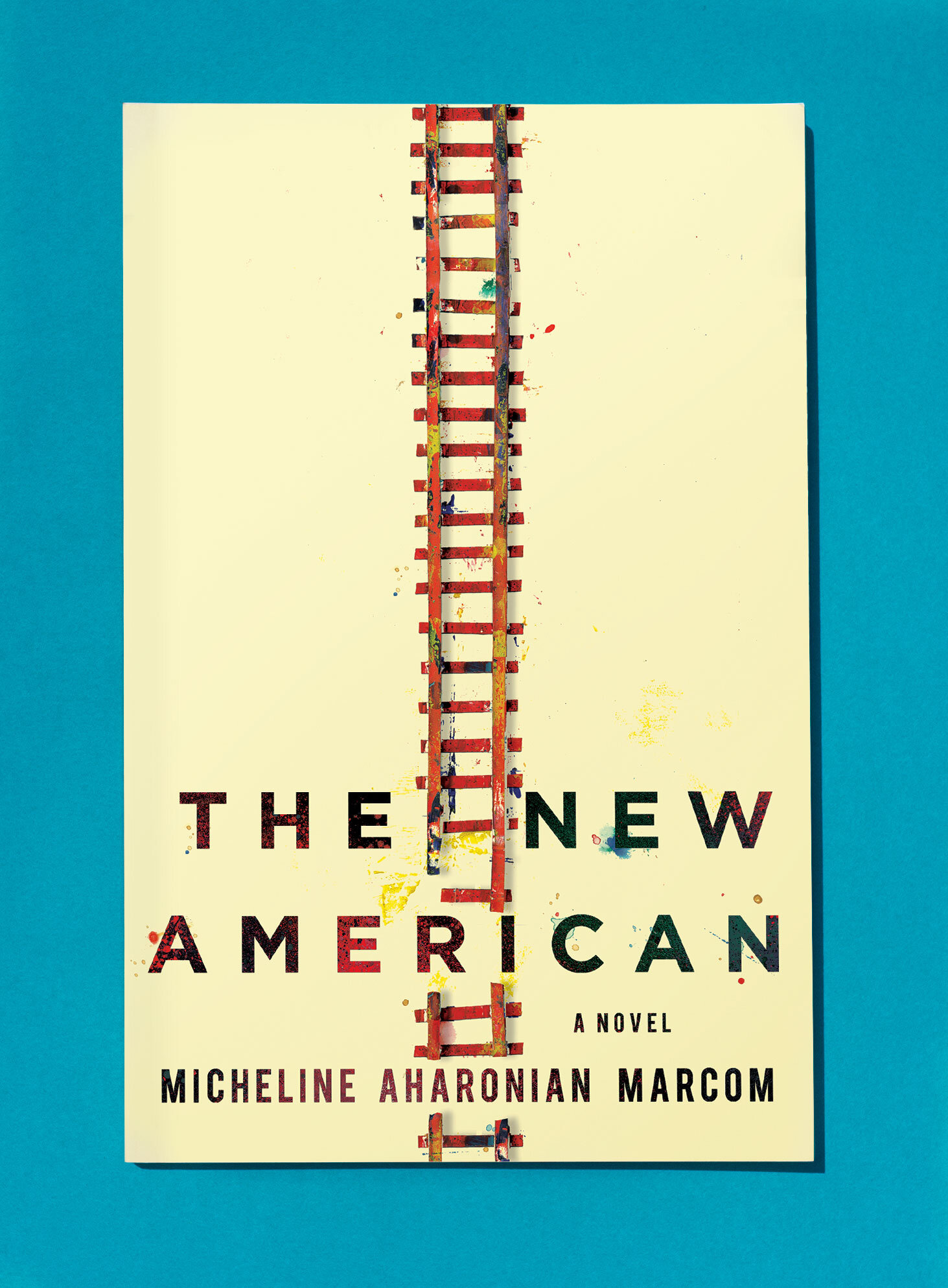
I found this novel by chance, sifting through the remainder books stacked on a Dollar Tree shelf. (Now a dollar TWENTY-FIVE tree due to Covid-19 caused inflation. Still, a steal.) I was searching for scavenger hunt rewards for my Summer class. The title caught my eye and as I picked it up I wondered if I would regret it. In these increasingly divisive days, the word “American” conjures a dark and paranoid shadow, a hidden figure that vaguely appears to be toting a gun. It is a hateful individual with movements that jerk unpredictably, violently. I could not help but take a pause to wonder at my assumptions: Who is the New American? I am one, but I don’t recognize the person in my vision. Who would Aharonian Marcom’s American be? Hopefully they are not merely a rehashed version of the old American. Never buy a book without reading the front and back flaps. My hope was vindicated. “Dreamer”, “Migrant”, the synopsis told me. I bought two copies. One for myself, one for a scavenger-hunt-winning student.
Aharonian Marcom’s The New American did not disappoint. It seized me and would not let go until I finished it. I wanted to finish it. I had to. The New American is a novel of our moment, the turn of the 21st century. It is unashamed and bold in its title; the novel captures the determination of the human spirit and the suffering of being an American. The latter is inextricable from the former. As an immigrant myself, I saw parts of my own experience in the novel, though my own journey was far less deadly, far less bloody.
The plot is straightforward, a clever ruse for a very complicated discussion of identity, belonging, desire, and survival. The story begins and ends with Emilio, a DREAMER who grew up in California, became a student at UC Berkeley, and then was deported when authorities outside the university sanctuary city boundaries discovered he was undocumented. Emilio is deported to Guatemala, stuck in a legal limbo he cannot see a way out of. He decides — with the typical brashness and fearlessness and naïveté of a college kid — to find a way back to the United States and his former life. His journey takes him through Mexico and the Sonoran Desert. On the way he meets and befriends other migrants: Matilde, Pedro, Jonatan and others. The story follows their feet as they walk miles upon miles upon miles to the deadly trains that carry them across Mexico, follows their feet as they suffer through the heat and aridity of the Sonoran Desert.
The characters seem simple at first, but they are facsimiles of real individuals and as such, the reader will find them complex, confusing, irrational. They are not guided solely by emotion or by avarice or by ambition or by necessity. They are driven by a combination of those things and more. Aharonian Marcom’s prose is succinct but powerful; Milo and Mati are visible to the reader, the pain in their hearts is within reach of their fingers. You could almost detect the odor of their sweat as you read, but then you realize it’s your own because you’re so tense and concerned about what will happen to these young migrants. You know this is a not a love story, that there is no happy ending guaranteed.
The New American‘s back flap told me about Aharonian Marcom and helped seal my desire to read this. They are a professor of Creative Writing at the University of Virginia, a founder and Creative Director of The New American Story Project [NASP], which hosts the website, New American Story. Aharonian Marcom’s research and professional engagements inform the content of the novel, fiction as it is.
I could not help but be reminded of a book I’d read a long time ago, which had changed me: Rubén Martinez’s Crossing Over: A Mexican Family on the Migrant Trail (2013). This was in my own undergraduate days, when I had just begun questioning for myself what it meant to be an American. Aharonian Marcom’s novel reads as the updated version: more YA-oriented, more college freshmen friendly, with a deeper interiority than Martinez’s. Both are wonderful; Martinez’s book still echoes. Almost a decade after it came out, it remains relevant. While there are so many books in the same vein out there now than there were before, it and The New American still have much work to do to bring stories of our humanity — in its glory and deadliness — to new readers. All of them are worth reading, including The New American.


 Dr JoAnn LoSavio