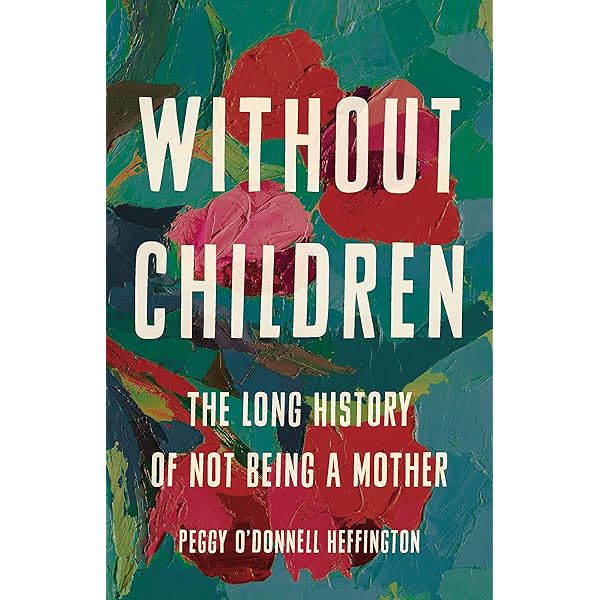
Without Children: The Long History of Not Being a Mother by Peggy O’Donnell Heffington

Without Children: The Long History of Not Being a Mother
by Peggy O’Donnell Heffington

I read this over Mother’s Day, so it was particularly poignant for me as I reflected on the fluidity of my own womanhood and ideas concerning mothering. It’s a profound read; readers should be prepared to question their notions of womanhood and mothering.

As a mother, I found this history of mothering, motherhood, and childlessness to be an amazing read, and on multiple levels. First, in terms of its content, O’Donnell Heffington lays out a compelling history, arguing for a revision in the way mothering is perceived, valued, and recognized. This is a history for anyone and everyone, regardless of their position on child-bearing, motherhood, or womanhood at large. Each chapter addresses a form of mothering or motherhood, expectations around these roles as they have changed through time, and historical factors which have influenced our collective image of Mother today. Throughout Without Children there are stories of mothers — of diverse kinds — embedded, evidence of O’Donnell Heffington’s arguments and research. The result is an intimate narrative history, one which toggles seamlessly between micro-history, prosopography, and discussions of the larger contexts of religion, politics, and gender.

Second, Without Children impresses in terms of its prose and language; it flows at a comfortable, easy pace, delivering what is a deeply contentious issue in straightforward terms. O’Donnell Heffington clearly has an agenda; what writer and what non-fiction does not? — but the book, to its credit, lacks superciliousness, pedantry, and jargon. Given the controversial topic and the heated debates among many women and mothers regarding having children or not, Without Children performs a miracle of balance.

At the root of the debate and ultimately at the root of this book, is the question and discussion of the constituency of womanhood as it is understood in most Euro-American Western societies. What makes a woman? (Some would have us believe it is motherhood.) What constitutes a mother then? (Some challenge the notion of birth and biology.) In a moment of gender fluidity and revolution of gender identity, Without Children asks us to suspend our ingrained understandings of gender to consider other definitions of motherhood and womanhood.
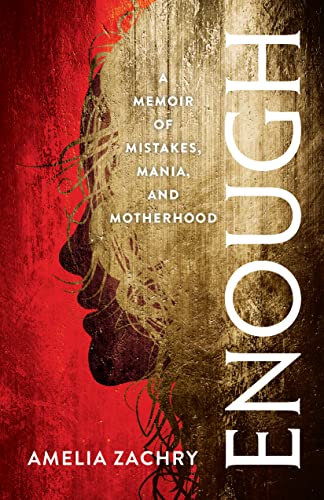
Enough: A Memoir of Mistakes, Mania, and Motherhood by Amelia Zachry

Enough: A Memoir of Mistakes, Mania, and Motherhood
by Amelia Zachry

This was an incredibly difficult memoir to read, but I am grateful that I did. Part of the hand-to-my-throat factor for me was how close Zachry’s experiences were to my own. Like her I am a Malaysian woman, one who entered the slipstream of migration and has become a transcultural, transnational creature with feet and hands in multiple worlds.

I also recognized the gaslighting and the gendered physical and psychological violence embedded in Malaysian culture. I recognized the gaslighting and gendered violence she experienced embedded in human society everywhere.

This was hard, so hard, to read at so many points. I had to put this book down multiple times. But the discomfort it caused was also what forced me to return to it. The kind of emotional disturbance Zachry’s memoir inflicts is that which can only be excised by pushing through all the way to the end.

I am glad I returned to it, acknowledged her pain my own (caused by reading it) and kept going in spite of all that. There is more than suffering in this memoir. Zachry illuminates a healing path too.

Zachry’s memoir is not a Malaysian one, although this is a cultural aspect of her experience that cannot be brushed aside. In this I recognized Zachry’s heritage as akin to my own; women told to swallow their pride, their pain, their voices. It is a world in which women remain — and are expected to remain — invisible. And this is true across Malaysia’s many cultures, ethnicities, and religious communities. For all the lovely tropical lushness of Malaysia, it is not a paradise for everyone; feminism is throttled by legal manipulations, feminists ostracized as social pariahs (even when Western-style feminism is eschewed in favor of local versions of feminism.)

But, I digress; Enough is not a memoir of a culture. Zachry’s experience is one that is all too familiar and common across cultures and in all societies. It is an extraordinary story of a crime that is horrendously ordinary. Hers was a life lived by many people; that’s what makes Enough so memorable, so relatable, so important to read.

Zachry’s memoir begins at her beginning, with childhood, then takes the reader into her teenage and early adult years. It is then that Zachry’s life is altered by an event that haunts her (even now after she has found ways to manage it). The bulk of this memoir is devoted to Zachry’s struggle with the trauma of this event, her path to a recovery, and it ends with a substantial section on her present life which shifts the focus to the traumas of migration and the development of her transcultural identity. Zachry’s journey to a happy place is not one filled with woo-woo cures or unattainable magic pills. Zachry documents how hard work, emotional work punctuated by slips and backslides is the tried and true path; one accessible to all of us, at least in theory.

This is a memoir for all women because this is a story we all know, first-hand, second-hand, or otherwise.