Snowbound: A Novel of Suspense by A.J. Questenberg

Snowbound: A Novel of Suspense by A.J. Questenberg

Snowbound is the slow exposure of a long-buried small town mystery. The arrival of a newcomer causes suspicions to rise, old questions are rehashed, and as truths become visible, the lives and community begin to unravel. The story begins with Sam Egar as she moves into a new home and begins to learn its quirks — and the quirks of her new neighbors, some of whom welcome her and others who… well, are a little shady. Soon Sam discovers the shade is far darker than she imagined.

Readers of slow, gothic-style horror will find Snowbound a deeply immersive tale, one which mimics the slow pace of rural life. The novel includes a large cast of characters, the various members of the community past and present, those who vanished and those left behind to sort through the mysteries of the others’ disappearances. (At times this reader found it hard to recall who was who and their place in this tale.)

The novel, compelling as the story is, was less to my personal taste than I had hoped. There were minor issues, which on their own are easily overlooked, however, collectively these errors made the reading less enjoyable for me. There was the occasional — forgivable — typographical or spelling error (“stock” instead of “stalk”, for example), which was jarring, but did not detract from the overall meaning intended (I think). Some parts of the exposition provided unnecessary details and therefore distracted me from the arc of the moment. The most dissonance (for this reader) was caused by structural gaps in characters’ knowledge, which undermined these characters’ development: these were things characters couldn’t know about one another (because they were, after all new to the community), turns of phrase which implied a foreknowledge that wasn’t explained. This is not a literary analysis; and readers, you may find these issues less invasive in your experience of the novel than I.

All this said, on the whole, the prose was well-crafted, if plodding and redundant in parts. The story itself is deeply intriguing, and well-paced to draw out the tension of the mystery. Snowbound is a fitting and fantastic read for those grey wintry months, when one isn’t quite sure what happens behind the closed doors of one’s neighbors…

Happiness Falls: A Novel by Angie Kim

Happiness Falls: A Novel by Angie Kim

I have such mixed feelings about Happiness Falls: On the one hand, it was a brilliant mystery and a dynamic, swift family drama. Equally, its attention to matters of ability and disability struck a profound note for this reader. On the other, the flaws of its characters annoyed the hell out of me. Still, hats off to Kim who wove the story and its characters so seamlessly together that I compulsively — and sometimes against my will — read to the very end.

The noel revolves around a mixed race, Asian and White American family: parents (Hannah and Adam), two young adult children (Mia and John), and an adolescent son (Eugene) who has a mental disability and is non-speaking. One day Adam and Eugene go missing. Eugene returns, injured and unable to articulate what has happened to his father. As the police, authorities, and the family attempt to unravel Adam’s last know whereabouts and uncover the mystery of his disappearance — and hopefully, his safe recovery — family secrets, fears, and flaws come to the surface.

A distinctive appeal of the novel is how Kim embeds a discussion of ability/disability rights and the treatment of persons with disabilities into this tale. What assumptions do normatively abled persons make about those who express themselves differently, about those who are deemed “disabled”, and about the parents and their responsibilities to society and their loved ones with disabilities? It is this element of the novel which makes it so resoundingly relevant and contemporary to our moment.

What then did I find so irritating about the novel? Mia. I found Mia irritating. I found myself annoyed with her youth and rigidity. I have little patience for inflexibility in fictional characters (ironic and hypocritical, I know, but there I am). Still, I could understand her position, and Kim speaks through Mia, as the primary narrator of the novel, with a depth of skill I can only envy as a writer.

The resultant dissonance makes Happiness Falls an engrossing read, one which I could not tear myself from until I reached its end.

Yolk: A Novel by Mary HK Choi

Yolk: A Novel by Mary HK Choi

Yolk made me feel things, not all of which was pleasant. Nonetheless, I was drawn to finish it, indeed, compelled to finish it.

The novel revolves around two twenty-something Korean American sisters, June (the elder) and Jayne (the younger) living in New York City. June has graduated from college and begun what appears to be a flourishing, successful career, while Jayne is struggling through college. Both are new adults, learning how to navigate relationships and new responsibilities. Both fail the task. But find themselves needing and relying on the other to come to terms with their limitations, desires, their shared history of being yellow and first generation immigrant kids. The reader is treated to a front view of the wreckage of their attempts, watching the sisters bungle every decision as they try to find their way in the world and figure out who they are.

There were parts of this novel I loved, and parts I utterly despised.

I liked the focus on family, and the ways in which being a child of immigrants and the immigrant experience unfolded here, not in a pedantic way that highlights only the awful or only the positive, but all of it. I liked that. But I loved how Choi turned this multifaceted way of looking at the immigrant experience — already great — into a journey that reveals belonging as both a positive and negative transformative factor. I love that Choi acknowledges there is no reconciliation here, no transcending “final” outcome that makes it all perfect in the end.

I liked Jayne and June’s closeness, the assumption of sisterhood. I enjoyed being a voyeur to their dysfunctional relationship.

I hated their privilege, and their obliviousness to it. To be blunt, I hated Jayne. Jayne reeked of “I am the main character” vibes and I couldn’t stand her immaturity. June wasn’t a favorite either. But that said, I appreciated Choi’s ability to make such a horrible characters so readable. Much as I hated the sisters, I had to know what happened to them, how it all resolved in the end.

I don’t think I’d ever want to read Yolk again, but I’m glad I did read it once.

The River We Remember: A Novel by William Kent Krueger

The River We Remember: A Novel by William Kent Krueger

As a reader, we all yearn for those novels that truly take us to another moment in time and hold us there until we feel like our own world is strange. We are lost when we return to our reality, feeling a little fuzzy in the head. I felt that way with this novel.

The River We Remember is a historical murder mystery, a story that is almost a cliché: the cowboy-like detective of a small, rural town, embroiled in the politics and corruption that all small towns seem to have and own proudly, must cut through all that to discover the truth. Along the way he has to confront his own loyalties, his own foibles, his own prejudices. He’s a flawed human being. Indeed, that’s part of Krueger’s skill here as a story-teller. His characters are fleshy, flawed beings, each with their own set of ambitions and darkness.

The River We Remember documents the seediness of life in a small town that looks perfect and serene on the exterior. That’s the kind of atmosphere Krueger builds here. Exposure of what lies in the shade. The crime rips away the comfort of that darkness, makes everything come into the glaring light.

The brilliance of the story aside, Krueger’s prose and dialogue, both the internal reflection of its protagonist and what is voiced, creates a lively world. Readers can almost hear the breath of the characters as they brush past the invisible reader in their midst.

Antiques and Drinks: A Novel by KC Bellinger

Antiques and Drinks: A Novel
by KC Bellinger

It’s cute. And cozy. And there is a mystery lurking in this suburban-y, bougie town. Antiques and Drinks delivers on its promise. For readers who enjoy light mystery with a bit of cheeky humor, this novel will be a delight.

The novel revolves around a middle-aged woman, alone and without family, who runs an antique shop in a tourist town. A set of plates is brought on to be put on consignment, but the owner of the plates rescinds the deal. The plates are not as they seem. They are enchanted and the results are fatal. This is how the mystery — and the fantasy — begins.

I did not enjoy it as much as I hoped to. However, I think this is more about myself as a reader, than the merits or demerits of the novel itself.

On that note, a few things which lessened my enjoyment of it. First, I could not get a full sense of place or person through the dialogue or exposition; the novel failed to flesh out the physical environment of the town, the store itself, and the atmosphere of the place. Similarly, the characters did not come to life for me; they were unique, but did not become tangible in a way that would bring me into their world. Second, there were elements of the story that felt like reaching, or seemed to me to be so outrageous as to feel like farce.

On a more positive note: the novel is amusing and the twists of its mystery are unexpected and — perhaps because of their absurdity — compel the reader to keep going, if only to see what on earth could happen next. Another factor in its favor: Bellinger writes well. The expectation here is not for literary prose, but the prose is clear and thoughtful. It is perfect for a cozy mystery.

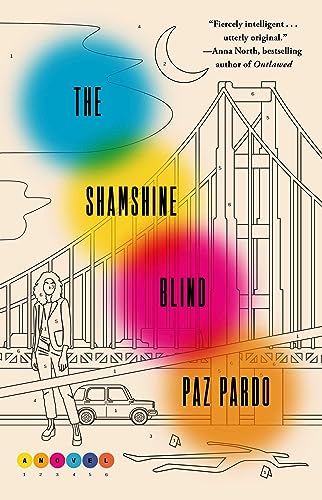
The Shamshine Blind: A Novel by Paz Pardo

The Shamshine Blind: A Novel
by Paz Pardo

I absolutely love love LOVE this novel. That said, it took me four attempts to actually become immersed in it. My first attempt told me that this was a gorgeously written novel; I could tell immediately that the prose is sharp, precise as a scalpel, so on point that one could cut diamonds with these words. But my mind wasn’t in the right place; I couldn’t focus on the investigation, my mind wandered. It happened again on the second and third attempts.

And yet, I refused to give up on this novel. I shelved it, but I kept picking it up. I knew something good was in it, but my head wasn’t in the right space. Could there be some truth behind Pardo’s emotion counts? Do feelings linger in the atmosphere?

My fourth plunge into this novel was as deep as I could get. I finished it in two and half days, prolonged because work interrupted my reading.

This novel is everything a reader could possibly want. The Shamshine Blind is amazingly original in its concept and delivery, even while it builds on the roman noir, hard-boiled detective trope. Its guts make it a mystery and thriller, but the prose that flows is literary liquid.

Its landscape is foreign and familiar, its world is one of speculative fiction; the setting is 2009 in an alternate reality where the Argentines won the war against the United Kingdom for the Falkland Islands — the Malvinas — and then went on to decimate the rest of the world. The Argentines’ weapon of mass destruction was a work of chemical genius: capturing emotion and concentrating it into a deadly debilitating bullet. The science didn’t stop there and in this reality society must now grapple with mind-altering drugs, psychopigments, which alter our emotions, our reactions and responses, our behavior. “Your Emotions Are Not Your Own” is a warning repeated in the novel.

Kay Curtida is the detective put on a psychopigment case, a homicide — which, when its layers are peeled away, reveals something much larger and far more corrupting than simple murder is at foot.

And I’ll leave you hanging there. Go read it.

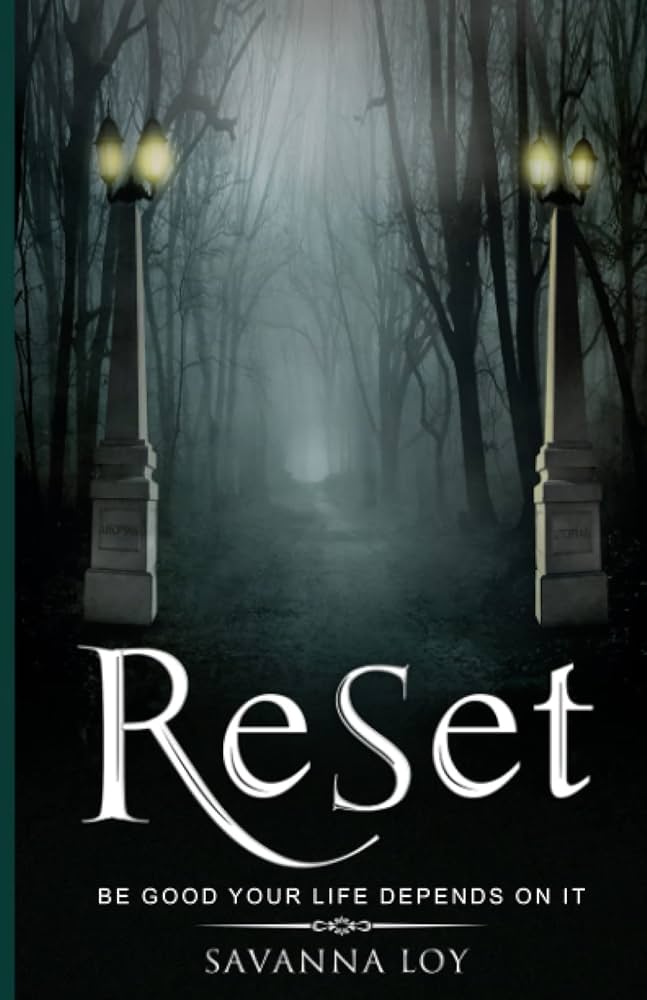
ReSet: Be Good, Your Life Depends On It by (A Novel) by Savanna Loy

ReSet: Be Good, Your Life Depends On It by (A Novel) by Savanna Loy

A horror/dystopian novel premised on a popular trope — but delivered from a novel perspective. In ReSet the world as we know it has come to an end and a new oligarchy has come into power. A committee of a few men now decide who lives and dies and the terms which everyone must now abide. Failure to do otherwise results in the collective execution of whole communities, a reset. The novel reveals all through the eyes of one of its elite families, those chosen to plan and carry out the gruesome task of resetting.

The premise is inherently intriguing, given the climate change, political and social turmoil of the American nation at present; one cannot help but wonder what consequences we may need to confront — and perhaps sooner than we would like to admit. ReSet plays on those fears. In that vein, the novel is reminiscent of Margaret Atwood’s Handmaid’s Tale and the eugenically driven political world of Gilead. A central theme of the novel is the corruption of power and the terrible consequences this can lead to.

For all its unique perspective, I found the narrative arc of the story predictable and the peak of the novel, its crescendo, slightly disappointing and less explosive than promised. The drama of that moment is confined to a small circle, decreasing the visibility of its larger impact on society. Given the drastic shift in culture that the apocalypse created, I expected a greater dramatic backlash or swing in equal measure. The ending suggests a sequel, and perhaps this is where the novel leads — rather than to a terminal ending.

On the whole, the novel was well-written, though there were some parts which unfolded in confusion — deliberately, I suspect — which detracted from the flow of the novel for this reader. Nonetheless, this is a minor complaint. Likewise, characters are well-developed and tangible, though some better than others. On the whole, an intriguing read for readers who enjoy dystopian possibilities.

The Foreboding: A Novel by M.J. Foley

The Foreboding: A Novel by M.J. Foley

As with several other indie novels I’ve reviewed, I found this one through a FB group I am in.

The synopsis of the The Foreboding intrigued me. Here is the description from its Amazon webpage:

Destination drawn unceremoniously from a hat, quiet, bookish Shiloh leaves her cliché life and all the expectations that went with it without any intention of looking back. Upon arrival in her new city, a dark past lurks in her musty apartment and invades her subconscious. She is quickly enveloped into an unbelievable plot that turns her assumptions about the world upside down. When personal tragedy and evil unmask a long-standing plot for power and dominance, Shiloh is forced to confront the unharnessed potential of the human mind and the interconnectedness of the world she worked so hard to learn about in school. Through the painful introspection of early adulthood and eye-opening discovery of scientific truths beyond her wildest dreams, Shiloh must learn to trust her own instincts and an unlikely group of comrades to fight the power of obsession and control threatening to obliterate all she holds most dear.

The novel has a strong start. I was especially impressed with the quality of writing in the Author’s Note — and the novel premise of its story. However, and sadly for this reader, while the novel did deliver a story that bends and challenges our conceptions of physics and nature, the novel failed to engage me emotionally and create a landscape of possibility beyond the microcosmic world of its characters.

My personal preference is for character-based literary fiction, stories in which the human connection is the fulcrum around which the rest revolves. The Foreboding lacked the character development I wanted. Shiloh came through as a distinct, fleshy voice, a strong presence as the novel’s lead protagonist, but Margaret and the others felt flattened, making it difficult to understand their motivations and purpose in the novel, especially in their interactions with Shiloh. In some parts, the dialogue — even Shiloh’s — felt contrived; likely as a result of a lack of character development, their words sounded hollow, conveying the author’s voice and intent more than their own.

For this reader, the story required smoother introductions into its concepts and more nuanced context to both bring the landscape around its events to life, and highlight its events as a singular. The world Foley suggests is an unique and intriguing one, but this quality is obscured by a too-casual framing of those events.

All this said, The Foreboding delivers on other points. First, it is technically well-written. There are few, if any, typographical errors. Its syntax, grammar, structure, and organization are largely correct, and were clearly considered with care. Second, the author has an interesting, original, and creative premise. There is a story here worth the telling, even if this reader found its delivery lacking.

As such, my overall review is mixed. Readers should read The Foreboding themselves, as they may find their experience of it to differ from my own. The novel can be purchased on Amazon here. The paperback is $16.83, the hardback $27.43, and the ebook is available on Kindle Unlimited and for purchase for $3.99.

Believe Me: A Novel by Molly Garcia

Believe Me: A Novel by Molly Garcia

Believe Me is the kind of novel that defines its genre. It is the perfect psychological thriller, with all the twists and turns and impossible possibilities that make readers clench their teeth while reading.

The novel begins with an explosive arrest; Carrie is carted off while doing her weekly shopping. She is accused and then convicted of murdering three young children in the woods. But did she really do it? The novel revolves around the psychiatric report ordered for her parole hearing several years later, and the investigation Dr Quinn, her appointed psychiatrist, discovers he must conduct to properly write his assessment of her.

Did she do it? Why? Where are their little bodies buried? These are the questions that haunt the compassionate doctor — and the reader.

For readers who enjoy psychological thrillers in the vein of Tana French or Sue Grafton, Believe Me will deliver abundant satisfaction. I found myself comparing Garcia’s novel to Margaret Atwood’s Alias Grace, though this novel is set in the contemporary moment, and a far shorter read. Believe Me is a compact 184 pages, and very well-written. I found myself especially drawn to Garcia’s dialogue. The characters come alive through their conversations; their voices are clear and distinct. Garcia’s prose was smooth and evocative. This reader could feel the tension between Dr Quinn and his patient, between the doctor and the staff at the prison where Carrie is an inmate. The mood Garcia creates is a veil obscuring the truth, one the doctor and the reader will claw at.

Believe Me kept me tilting on the edge throughout its 184 pages — and the ending! What a twist!

Trail of the Lost: The Relentless Search to Bring Home the Missing Hikers of the Pacific Crest Trail by Andrea Langford

Trail of the Lost:
The Relentless Search to Bring Home the Missing Hikers of the Pacific Crest Trail by Andrea Langford

This work of true crime utterly possessed me; I am torn between wanting my hiking friends to read it, because I don’t want any of these awful things to happen to them, or not wanting them to read it, because it will terrify them into never venturing into the wilds again. (I am probably going to buy a few copies of this book this Christmas as gifts for those same friends!) Anyone who knows someone who hikes or camps or goes “off trail” for any reason should have an eye out for this book.

The depth of Lankford’s research, the number of interviews and observations, and the countless hours and days and weeks spent in Search and Rescue to make this book happen is staggering; that alone is a draw for anyone interested in this kind of crime non-fiction. Lankford themself is well-positioned to write on the subject. As a former ranger involved in several S&R investigations, Lankford is more than a hiker. Here, Lankford takes on the role of investigative journalist, detective, social worker, and friend.

The book focuses on the disappearances of three men (primarily) from the Pacific Crest Trail, which runs along the West Coast, from California up to and through Washington State. Kris Fowler, David O’Sullivan, and Chris Sylvia vanished from the trail in mysterious circumstances and have yet to be found, alive or otherwise.

But, of course, the book is about more than them and their individual cases; Trail of the Lost is also about their families and loved ones, the grief and pain of their loss, the process and protocols of police and other investigations into vanishings, and — perhaps this is where the book truly shines and connects with readers on a wholly different level — the culture of the trail and of extreme hiking. By giving readers a view into the the lure of these activities and the perils they entail, Trail illuminates certain flaws in our societal ideals and in the normative flows of life around work-family-friendship-community. Lankford highlights what might be missing in our urban/suburban spaces that trails like this offer. Chapters that seemingly veer off onto tangential subjects, like the Yellow Deli Group, or suspicious and creepy “trail trolls” in fact, draw attention to deeply inclusive, welcoming, altruistic, and connected the culture of the PCT and hiking is (or can be).

The irony is, of course, that individuals take on these hikes individually; they seek isolation — and yet, the culture of the trail highlights the deep dependence we, as humans, have on each other, and our need for social contact, a sense of belonging with others, a sense of community.