
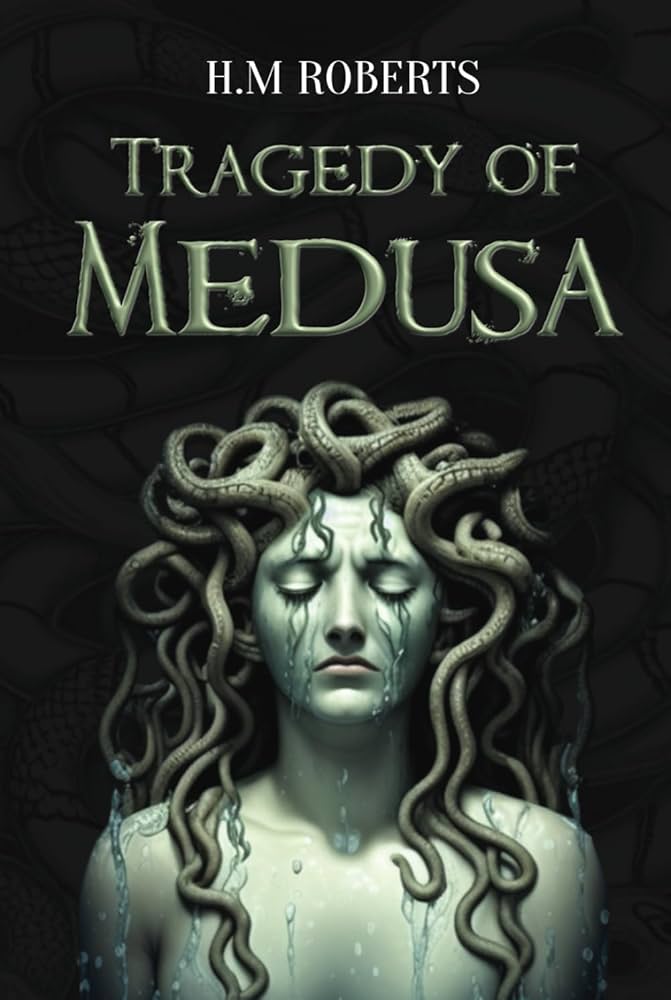
The Tragedy of Medusa: A Novel by H.M. Roberts

The Tragedy of Medusa: A Novel by H.M. Roberts

At under 200 pages, The Tragedy of Medusa is deceptively thin. H.M. Roberts delivers a powerful and emotional alternate narrative to the myth of this complicated woman through a swiftly moving story and with a succinct use of words.

Readers should know that the novel spans the length of a lifetime, and will immerse them thoroughly in its magical timeline. I emerged from the novel feeling a kind of grief; as if I had lived alongside the woman, Medusa, herself. Having a familiarity with the original myth of Medusa is not required here; Roberts uses the mythology as a guide, but deviates from its rules to develop a compelling, deeply human tale. Through Roberts’ prose and storytelling I lived the tragedy of Medusa myself.

Readers who enjoy historical fiction, fantasy, and mythology will appreciate Roberts’ equal attention to research and reality on one hand, magic and lore on the other. As a historian and as a pleasure-reader, I appreciated how well-researched it was without being pedantic. Small details about dress and life brought a tangibility to the interactions between characters, put the story in historical context. But the novel remained focused on its story and characters, and this is ultimately what made it so compelling: Medusa, her sisters, and family were nuanced, imperfect and human, for all their divine origin, the mortal characters transcended time, feeling all too familiar despite the historical difference. Fans of literary fiction will find the deep reflection and well-crafted characters of this novel as appealing as story. Roberts’ The Tragedy of Medusa cuts across the boundaries of genre.

I thoroughly enjoyed this indie read, and would not hesitate to recommend this to other readers.

Freshwater Fire: A Novella by Hubert L. Mullins

Freshwater Fire: A Novella by Hubert L. Mullins

If you’re looking for a creeping, eerie read for the wintry months to come, Freshwater Fire must be on your to-be-read list. Forget Halloween, with its flashy, trashy gore, Mullins’ slim novella, with its sparse and evocative prose, and its fog-shrouded terror, brings out of the deepest of our fears as the decay of winter descends. This is a book to curl up to with candle light when the storm takes out the electricity. Or… maybe, that might just send you over the edge into madness. Read at your own risk, right?

I took this risk on this novella. I usually hesitate to spend money or time on independently published fiction; the gamble so often doesn’t pay off. But Mullins is a talented writer. With very few words, Freshwater Fire summons the smell of decay and manifests humanity’s darkest fears: that we are not alone in this world and worse, we are not as invincible as we would like to believe. Mullins builds a devastating sense of futility that the reader cannot shake off. This is a classic gothic horror.

The tale revolves around a lighthouse and its new keepers, sailors who quickly find the isolation of their task is more than a mental exercise in surviving entrapment. Their fears are more than simply psychological, they are real and monstrous. For readers who enjoy mythology, paranormal elements, and psychological thrillers, Freshwater Fire will deliver a satisfying reward.

The story aside, Mullins’ characters are fleshy, their dialogue and fear is palpable. Their reactions to their circumstances are more than plausible, revealing Mullins’ deep understanding of the human psyche and the lengths we will go, not only to survive but must do to overcome our fears. Terrifying as this novella is, it is also inspiring.

I look forward to Mullins’ other novels! They are on my wish list!