
The Color of Gravity: A Novel by Alison Huff

Book 1 of the Liminal Sigh Series
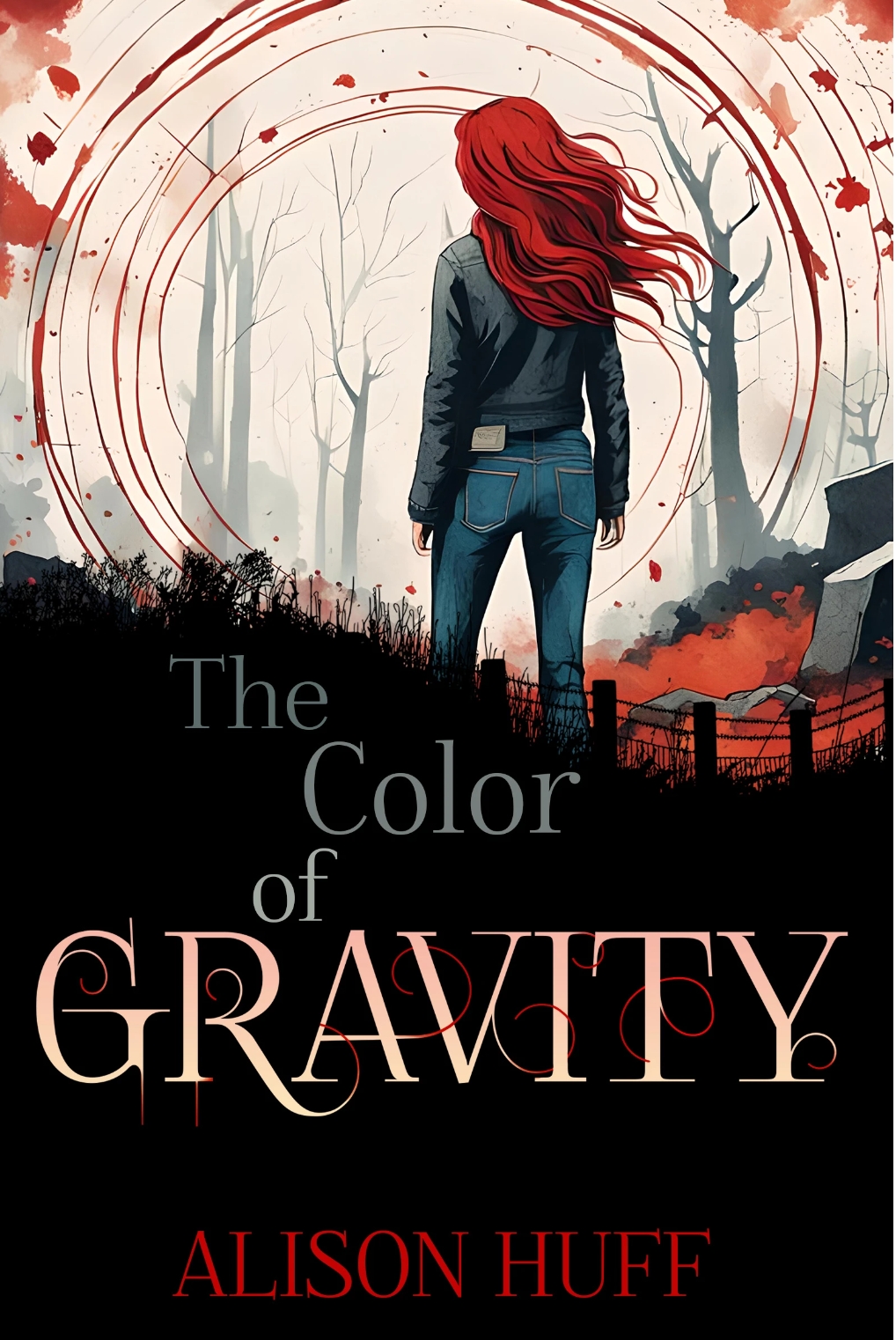
The Color of Gravity: A Novel by Alison Huff

Fans of Young Adult fantasy who love the genre, with its emphasis on the discovery of self and coming-of-age stories, but who prefer a more mature protagonist will find The Color of Gravity a perfect read!

Seralynn and Bellamy are adult sisters, torn apart by the latter’s sudden and mysterious disappearance. Seralynn tries to come to terms with the loss of her sibling and her grief, but is finding it hard to let go. Then she encounters a rift in the world, one which offers her the possibility of finding Bellamy. Though torn between her grief and yearning for her sibling and fear of the unknown, Seralynn finds herself in a strange and magical world, one that is both wondrous and dark.

At the heart of this novel are the two sisters, connected together and yet, at odds, with one another as each woman seeks her own path, sometimes at the other’s expense…

Huff takes the reader into a fantasy realm; there is significant attention to world-building here — and at times the story is buried — but readers are likely to appreciate the depth Huff creates. And ultimately, the story of Seralynn and Bellamy re-emerges. Woven into their story are others Seralynn encounters on her journey: Fadrial, Asmodeus, and Tobian, among others. The novel creates a sense of community among these strange bedfellows: demons, humans, monsters, and magical creatures.

Huff’s novel is the first book in a series. I am not usually a fan of books series, simply because I do not have the attention span for it. That said, the sisters’ adventures — together or apart — will likely yield a fascinating sequel.

Yolk: A Novel by Mary HK Choi

Yolk: A Novel by Mary HK Choi

Yolk made me feel things, not all of which was pleasant. Nonetheless, I was drawn to finish it, indeed, compelled to finish it.

The novel revolves around two twenty-something Korean American sisters, June (the elder) and Jayne (the younger) living in New York City. June has graduated from college and begun what appears to be a flourishing, successful career, while Jayne is struggling through college. Both are new adults, learning how to navigate relationships and new responsibilities. Both fail the task. But find themselves needing and relying on the other to come to terms with their limitations, desires, their shared history of being yellow and first generation immigrant kids. The reader is treated to a front view of the wreckage of their attempts, watching the sisters bungle every decision as they try to find their way in the world and figure out who they are.

There were parts of this novel I loved, and parts I utterly despised.

I liked the focus on family, and the ways in which being a child of immigrants and the immigrant experience unfolded here, not in a pedantic way that highlights only the awful or only the positive, but all of it. I liked that. But I loved how Choi turned this multifaceted way of looking at the immigrant experience — already great — into a journey that reveals belonging as both a positive and negative transformative factor. I love that Choi acknowledges there is no reconciliation here, no transcending “final” outcome that makes it all perfect in the end.

I liked Jayne and June’s closeness, the assumption of sisterhood. I enjoyed being a voyeur to their dysfunctional relationship.

I hated their privilege, and their obliviousness to it. To be blunt, I hated Jayne. Jayne reeked of “I am the main character” vibes and I couldn’t stand her immaturity. June wasn’t a favorite either. But that said, I appreciated Choi’s ability to make such a horrible characters so readable. Much as I hated the sisters, I had to know what happened to them, how it all resolved in the end.

I don’t think I’d ever want to read Yolk again, but I’m glad I did read it once.

Perfume River: A Novel by Kathleen Patrick

Perfume River: A Novel by Kathleen Patrick

Perfume River is a New Adult bildungsroman, revolving around a young woman named Sam as she navigates her life around competing stakeholders: lovers, friends, herself. She is also wrestling with her past, specifically, her dysfunctional childhood and relationship with her parents. She encounters a young black boy, also suffering through his own life and problems. Together, they attempt to make sense of the world around them and the demands made upon them, to be adults, to grow up, to take on the consequences of others’ decisions. 

My review of the novel is mixed. On the one hand, the novel is well-written, in a technical sense; Patrick’s prose is smooth, even, and consistent. As with her other work, her use of words is sparse and succinct, leaving the reader to indulge in their own imaginings of the space and events. The pauses and silences are evocative. 

On the other hand, unlike Patrick’s other works, Mercy and Anxiety in the Wilderness, Perfume River lacks emotional depth. Overall, this novel does not deliver on its emotional promise, the one made in its synopsis. 

There are absences which flattened Sam and Rexel as individuals. The muteness of Rexel’s family and the superficial context of his life beyond his encounters and engagement with Sam were a detraction for this reader. The reader is treated to one facet of Rexel’s emotive life: his wariness, his diffidence, his armor. Sam doesn’t seem to really break through Rexel’s armor in a meaningful way so that the friendship benefits him. A deeper view into Rexel’s life beyond Sam, perhaps his own chapters, would flesh him out further as a primary actor in this story. (Or, perhaps, the story isn’t or shouldn’t be about him. Is this really Sam’s story and not his?)

Ultimately, for this reader, what is lacking in the story is change. Sam’s metamorphosis is too subtle, delivered too late in the novel. Much of the novel feels like it isn’t “going anywhere” as the events which are meant to serve as catalysts are given too brief of a treatment. This reader found it difficult to connect with the other characters in order to feel the tension between them and Sam. Much of the tension that exists is situational, but the internal psychological turmoil they cause is left unsaid; this absence hindered this reader’s ability to connect with Sam and these other characters. 

For this reader, the Prologue was the most compelling element of the novel; it was intriguing and suggests a story about dysfunctional families. However, the distance between Sam’s childhood and adulthood is not bridged by the remainder of the novel.

Overall, for this reader, the novel did not deliver on its synopsis’ promise; it feels unfinished, like it hasn’t had time to fully develop. Its characters feel under-developed, as if the author hasn’t had time to get to know them fully yet, and as a result, this story of their lives only skims their surfaces. 

All this said, I am a fan of Kathleen Patrick’s work and look forward to her next novel.