A History of Hangings: A Novel by A. M. Rau

A History of Hangings: A Novel
by A. M. Rau

A History of Hangings is an indigenous horror thriller. It is the kind of novel that hooks you in from the start. It’s creepy and mysterious, but what really delivers the chills is its depth of history, so ever-present in the novel even though it is never fully explained. It is, in a sense, that shrouded, veiled element of indigenous history, emphasized by the erasure of indigenous rights and history that is so compelling, so horrific; I think that underlying premise makes the book palpably terrifying.

Indeed, the novel and its horror can’t be understood without an acknowledgement of what has happened to indigenous communities in North America. As a reader and historian I greatly appreciate Rau’s attention to indigenous experiences, and the way in which Rau weaves in those awful legacies of settler colonialism.

The novel runs on two timelines: Toby, Faye, and Braxton in one thread of time, Edna Bland in the other, bound together by the captives of the Kesseene people of Oklahoma (a fictitious indigenous tribal community and tribe) in a small, rural Oklahoma town that has disintegrated into poverty and isolation. The Kesseene People’s vengeance has become embodied in something — or someone — and this is the terror Toby, Faye, Braxton, and Edna encounter. I’ll leave it at that; the novel is well-worth the read to discover what happens to them and to the Kesseene people. I finished A History of Hangings in less than a day; I had to know what was going on, who was creeping around, why Toby and Faye were so unwelcome — and what would happen to them.

Rau’s story, compelling as it is, is also very well-crafted and this is a major attraction of the book. Rau’s prose is descriptive, and evocative, with a few well-chosen words; Toby, Faye, Edna, Gil, Tim Jim, and the Sheriff — and even the minor characters they encounter — are fully tangible to the reader. The mood is perfectly captured and sustained throughout the book. Rau’s pace is swift too, delivering the reader to the end where all is explained; it is a satisfying and perplexing ending, perfect for a novel of this genre.

South of Sepharad: The 1492 Jewish Expulsion from Spain (A Novel) by Eric Z. Weintraub

South of Sepharad: The 1492 Jewish Expulsion from Spain (A Novel)
by Eric Z. Weintraub

While early modern Europe isn’t my area of expertise, the Spanish Inquisition — as it is for many people — is an event of especial morbid and humanitarian interest. As a scholar of decolonization and the related topic of race and racism, this period in Jewish and Iberian history intrigues me endlessly.

South of Sepharad delivers the history, as well as telling a profoundly moving story, one whose historical subjects are tangible and human and fully recognizable to contemporary readers. Readers who are unfamiliar with this history are likely to find the novel a fantastic introduction to the topic; instructors will find it is perfect for an undergraduate course as it palatably delivers the history and offers multiple points for discussion and debate in the classroom.

The novel revolves around a Jewish family, whose patriarch is one of Granada’s physicians. When the Moorish city falls to the Catholic Kings (though they are not yet called by title), Isabel, Queen of Castille and Ferdinand, King of Aragon, the Jewish community is forced to evacuate, having been given an ultimatum to convert to Christianity or forfeit their right to live within the kingdom. The ha-Rofeh family is torn between the two choices they face, and the novel focuses on the outcomes of their decisions. The family must also face the ways in which this decree destroys their community and their collective sense of Jewish identity. Theirs and their leaders’ ethics are tested, leading to a myriad of personal and collective grief.

Weintraub’s characters, while not as internally reflective as I usually like in my fiction, bring this history to life. Their motivations are much like our own; we can see ourselves reflected in their actions and words. Readers will find themselves understanding the texture of this history, as they experience the expulsion with the ha-Rofehs.

Land of Milk and Honey: A Novel by C Pam Zhang

Land of Milk and Honey: A Novel
by C Pam Zhang

Land of Milk and Honey is a haunting novel, the kind that consumes you long after you think you’re done with it. Certainly, it reverses the usual process: where a reader typically consumes, by the end, I felt consumed.

That said, for this reader, my initial attempt to read it caused a slow and uncomfortable indigestion, and I was tempted to abandon the book several times. I found Zhang’s prose felt overwritten, pretentious, too academically literary as if it had been pummeled, shaped, and reshaped in an MFA workshop where Zhang had been too eager to please an implacable professor. The food too, its descriptions and imagery, was overly reminiscent of the kind of unsatisfying fare one might find at Alinea or on Top Chef Season 2,349,349, pretty without satiety. But, in retrospect, having reached the end of the novel: that was the point.

I am glad I did not DNF the novel, and followed it through to the last “course.” It was well worth the patience.

Land of Milk and Honey is a speculative, near-future earth-bound science fiction. Written during the 2020-2023 Covid pandemic when the world had shut down and shut in, Zhang built an insular microcosm of our contemporary world. It is the same, yet different: more intensely bleak, more virulently violent, more callous. Readers, myself included, will easily recognize our pandemic selves in the characters of the novel.

The events of the novel take place in a bleak “what if” landscape, a world which is ravaged by climate change and late-stage capitalism, having never progressed further in its decolonization than our present. Food as we know it is scarce, GMO crops abound out of necessity. Nationalist and populist fears of scarcity have made political borders impermeable, except where power and money create porosity. A young Asian American professional cook trapped in immigrant, stateless limbo in Europe finds herself posing as a chef and working for a strange and shady corporation, one whose mission is evolutionary revolution. This is eugenics gone awry (as it historically has, no surprise here).

1666: A Novel by Lora Chilton

1666: A Novel by Lora Chilton

I read it all in one night. I couldn’t stop until I learnt what happened to Ah’SaWei. NePa’WeXo, and their children MaNa’AnGwa and O’Sai WaBus. I had to know, I couldn’t sleep without knowing.

Afterwards, I found I could not sleep, now knowing.

1666 was a hard book to read, even for me, a historian of decolonization. I teach students about the Doctrine of Discovery every semester. I highlight resistance to systems of oppression, especially colonization. Still, for all that I know, 1666 eviscerated me. I continued to read it because it is a work of resistance, because the women of the Patawomeck/PaTow’O’Mek tribe deserve to be read and seen and remembered. Awful as it is for me to read it, that in no way compares to the pain they lived and the pain that continues in indigenous communities today.

The story begins and ends with the PaTow’O’Mek women and it is told entirely from their perspective; it is the narrative of the massacre of their people, their enslavement, and their resistance against the British who destroyed them. Readers who were moved by Beast of No Nation by Uzodinma Iweala, Elie Wiesel’s Night, The Bird Tattoo by Dunya Mikhail — or more topically pertinent — Texaco by Patrick Chamoiseau will find 1666 an equally powerful read.

As an educator, I consider 1666 a valuable college level read. It is ideal, lengthwise, for an undergraduate course (at just over 200 pages, and with glossary and explanations of terms). Harrowing as the subject matter is, it is highly relevant and provides a number of points for discussion, historical examination, and resistance in the classroom. Chilton’s writing is also highly accessible, her prose smooth and flowing, her characters full of depth and humanity.

Street Corner Dreams: A Novel by Florence Reiss Kraut

Street Corner Dreams: A Novel by Florence Reiss Kraut

Street Corner Dreams is a heart-aching tale about Jewish immigrants in New York City in the first quarter of the twentieth century. Readers who are looking for a tearful, emotional read will find the novel delivers; by its end, readers will find they have lived lifetimes of suffering and joy alongside the characters.

This is a novel perfect for undergraduates and readers new to this genre of immigration literature as it offers an introduction to the lived experience of this period, as well as highlighting the historical context of the age: WWI and the Interwar Years before WWII, American nativism, anti-semitism, and the Prohibition Era of the 1920s. Edifying as it is, Kraut’s approach is literary, making it an easy, entertaining read at the same time. Sweet Corner Dreams fits into the genre of novels I read during my own undergraduate years: Out of This Furnace by Thomas Bell, The Jungle by Upton Sinclair.

The novel begins with Morty, who is born on the voyage over from Europe to America, and the tribulations his aunt and parents face as they navigate the hardships of building a new life in the United States for him and themselves. Morty represents the clash of generations and cultures; as he matures he finds himself torn between tradition and survival, caught up in the criminal and deadly world of NYC in the days of Prohibition. This is also a world of multiethnic plurality: denizens of differing — sometimes conflicting — religions and worldviews must find a way to coexist, recognize their shared humanity. celebrate their diversity.

The story is immediately captivating, and readers will find their interest sustained by the depth of Kraut’s characters. These are people we would recognize today among our own friends and families.

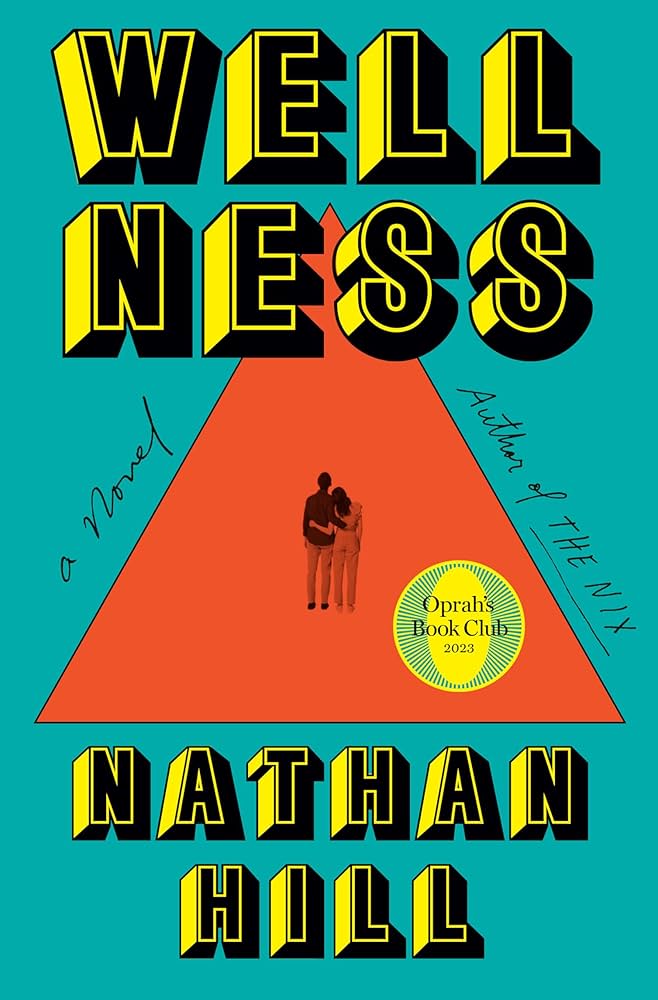
Wellness: A Novel by Nathan Hill

Wellness: A Novel by Nathan Hill

The best – BEST – book I have read in awhile. This novel deserves all the awards, and I’m not only saying that because I lived in Chicago-land, where the novel is set, but because the story and the story-telling is so amazingly delivered. To borrow a phrase from Spinal Tap‘s Nigel Tufnel, “this one goes to 11.”

Wellness revolves around the romance, marriage, demise of said-romance, and self-discovery of a couple, Jack and Elizabeth. Their 9-year old son, neighbors, old friends, and parents also play — as to be expected — significant roles in this account of their mid-life crisis. It’s a mundane and perhaps all-too-familiar tale of life lived and regretted, of the parts of ourselves we lose along the way. This is the draw of the book; it is immensely relatable — at least for those of us of a certain age. There are bits of Jack and Elizabeth in us all, and for those of us who parents, the novel highlights the agony of parenting, especially as mother.

It’s the story of what you do when life doesn’t seem to have delivered what you promised yourself, and — as the novel progresses — it’s the story of why that happened.

At 600+ pages, this is a doorstopper of a novel, but Hill’s prose is so smooth, the story so compelling, the characters so intriguing, that I finished the book in about a week, roughly a hundred a pages a night. A feat given that I read this book during and just after Finals Week of the semester when I had to knuckle down and grade.

And Hill is hilarious. Several parts and dialogue made me laugh out loud; not only could I see myself at the Metro (been there, yes) and some of the other places where Jack and Elizabeth lived out their romance, but Hill allowed me to laugh at myself and my past a little bit. Readers of my generation are likely to find some humor in the pretentiousness of our younger selves in this. I did, and loved the confrontational reflection I had with myself afterwards.

The book will date you and itself, but I think it’s destined to be a classic of our moment.

These Things Linger: A Novel by Dan Franklin

These Things Linger: A Novel by Dan Franklin

What lingers afterwards is how wonderfully creepy this novel is. Readers will find These Things Linger a fantastic combination of paranormal horror and literary fiction. It is a tale of a haunting, but Franklin’s delivery and the depth of his characters make this a unique ghost story. Franklin unspools the terror in a fashion reminiscent of contemporary gothic literature, The Hacienda by Isabel Cañas or Silver Nitrate by Silvia Moreno-Garcia, except that the protagonist is male.

Alex is a young man on the edge of his future. He is starting a new career and building a prosperous, fulfilling life with his fiancé, Raychel and their soon-to-born child. He abandons a past and a world that he no longer belongs to, but then a family crisis forces him to confront those he has left behind. The novel immerses the reader in the trauma of its protagonist, framing the horror as deeply personal and intimate. Readers of classic gothic horror and literary fiction will appreciate the reflexivity and character-based approach Franklin takes; indeed, the unraveling of Alex’s sanity is what makes These Things Linger so successful as a horror novel.

Story aside, the novel is well-crafted. Franklin’s prose invokes more than just imagery, it builds an affect of fear, successfully persuading this reader to keep reading well into the night. Despite an occasional clichéd metaphor or turn of phrase, Franklin’s authorial voice is clear, confident, and distinct. Independently published novels often suffer from fractured writing, fuzzy characters, or clipped stories; but, These Things Linger does not. Alex, Lacey, Raychel, Uncle Matty, and Buzz are fully tangible characters. The novel’s tempo is swift (here is where it diverges from the typical gothic horror); the pace at which the secrets of Alex’s life are revealed to the reader produces a compulsion to read on.

These Things Linger deserves a spot in your To Be Read List. If it is already on your TBR, it ought to be moved up in the queue.

Yolk: A Novel by Mary HK Choi

Yolk: A Novel by Mary HK Choi

Yolk made me feel things, not all of which was pleasant. Nonetheless, I was drawn to finish it, indeed, compelled to finish it.

The novel revolves around two twenty-something Korean American sisters, June (the elder) and Jayne (the younger) living in New York City. June has graduated from college and begun what appears to be a flourishing, successful career, while Jayne is struggling through college. Both are new adults, learning how to navigate relationships and new responsibilities. Both fail the task. But find themselves needing and relying on the other to come to terms with their limitations, desires, their shared history of being yellow and first generation immigrant kids. The reader is treated to a front view of the wreckage of their attempts, watching the sisters bungle every decision as they try to find their way in the world and figure out who they are.

There were parts of this novel I loved, and parts I utterly despised.

I liked the focus on family, and the ways in which being a child of immigrants and the immigrant experience unfolded here, not in a pedantic way that highlights only the awful or only the positive, but all of it. I liked that. But I loved how Choi turned this multifaceted way of looking at the immigrant experience — already great — into a journey that reveals belonging as both a positive and negative transformative factor. I love that Choi acknowledges there is no reconciliation here, no transcending “final” outcome that makes it all perfect in the end.

I liked Jayne and June’s closeness, the assumption of sisterhood. I enjoyed being a voyeur to their dysfunctional relationship.

I hated their privilege, and their obliviousness to it. To be blunt, I hated Jayne. Jayne reeked of “I am the main character” vibes and I couldn’t stand her immaturity. June wasn’t a favorite either. But that said, I appreciated Choi’s ability to make such a horrible characters so readable. Much as I hated the sisters, I had to know what happened to them, how it all resolved in the end.

I don’t think I’d ever want to read Yolk again, but I’m glad I did read it once.

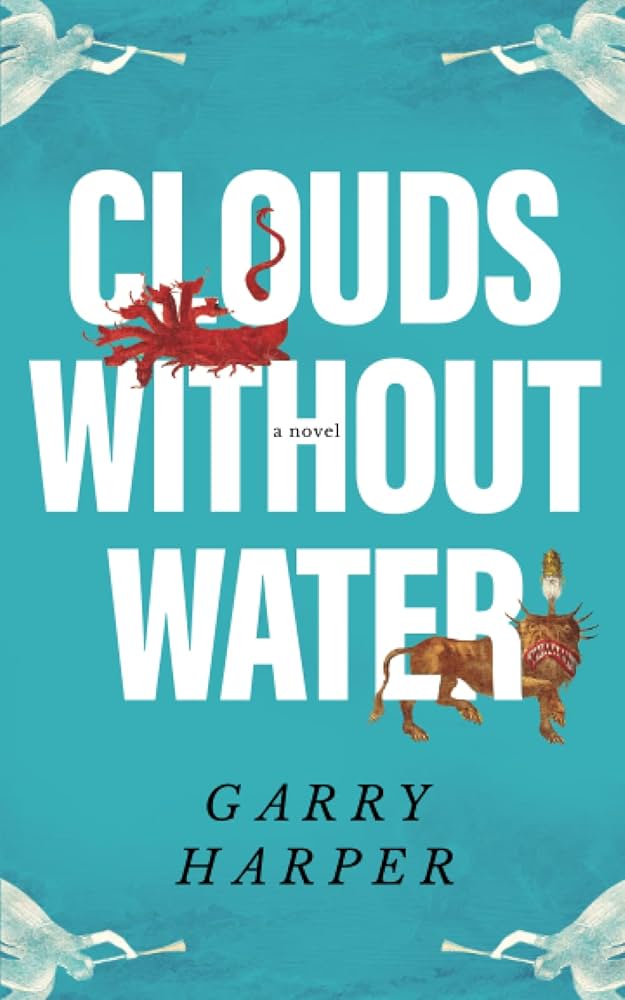
Clouds Without Water: A Novel by Garry Harper

Clouds Without Water: A Novel by Garry Harper

Clouds Without Water was a slow burn for me, but it did burn bright — especially in the second half — compelling me to keep reading to discover what happens to Calvary and its more independent-minded denizens.

The novel is a fiction around true events, The Millerite Movement of 1844, in which the Second Coming of Christ and the end of the world was predicted for October 22nd 1844, and The Great Disappointment, when the predicted end did not materialize. Delivered in two parts, Clouds Without Water delivers a portrayal of the community and town at the epicenter of these events, Calvary, NY, where the Millerite Movement begins under the direction of its eponymous leader, Reverend William Miller. Part One focuses on the rise of Miller’s influence, Part Two on what happens when the Apocalypse fails to occur, the subsequent social fallout.

The story the novel promises is fascinating. But Harper’s prose… Well, this was the novel’s “great disappointment.” Harper is heavy-handed in Part One, and the voice behind the writing feels biblical in a supercilious sort of way. There is a plodding sensation, an awkwardness in Part One. Harper has a penchant for long or obscure words, wordy words: “concatenation”, “incredulity”, “entropy”, which made the prose dense and feel overly structured. The characters, so vibrant in Part Two, are underdeveloped in Part One. Indeed, I DNFed this book three times before reading it a fourth time, and completing it.

Although the novel is, particularly in Part One, pedantic the strength of Harper’s story and his characters do seed a tension which prevailed on this reader to keep reading. Interestingly, the Reverend Miller himself is almost a supporting figure in this novel; though he is the hinge around which the movement develops and Harper deftly crafts his portrayal of Miller’s fervor and charisma, the reader does not witness events through his eyes. Indeed, we are never treated to an internal view of Miller’s mind or heart. The result is a rather one-dimensional Reverend.

That said, while Miller is somewhat flattened, Harper’s other characters shine and are fleshy representations of people most readers would recognize: the Smith family headed by Henry, his children Abigail, Rosemary, and Benji, the town doctor, Dr Clarke, its newspaperman, Josiah Young, Marigold Chandler, descendent of the town’s founders, and Nathaniel Hawthorne, who owns the general store. It is through these characters’ eyes that the reader is treated to a deeply disturbing facet of religious passion. Part Two draws and holds the reader because of them.

Overall, Clouds Without Water delivers.

You Make It Feel Like Christmas: A Novel by Toni Shiloh

You Make It Feel Like Christmas: A Novel by Toni Shiloh

I’m not a reader of romances. It’s not that I completely eschew a romantic twist in the tale; it’s fine if it’s interconnected to the tale, forwards the motives of the characters, adds some tension to he dialogue. But generally, I don’t seek out romance novels, the kind in which love or lust are the primary objectives of the story.

So I took a chance on You Make It Feel Like Christmas. It’s — as the title makes obvious — a Christmas romance, to boot. These things usually follow a formula (as I understand it), so I expected something similar to what I’ve watched on Netflix around Christmastime; y’know, the Reese Witherspoon-look alike kind of rom-com movies that are all about feeling good after feeling bad about family, love, marriage, some kind of expectation or the failure to deliver it. You know the type.

I was not disappointed. Readers of contemporary holiday romance will likely find You Make It Feel Like Christmas a perfect reflection of the genre. They will walk away from reading it with a sense of wholesomeness, like things are the way they should be. It’s a feel-good read that delivers.

Starr Lewis and family friend, Waylon Emmerson are the fated lovers, but there is also Starr’s whole immediate family, a cast of characters who are equal parts infuriating and endearing. This is family goodness, right here.

Because of the wholesomeness of this romance, readers should not expect high octane, reality-tv-show drama (though there are moments when a particular sister might drive the reader to throw something); but, there is tension and the romance does not flow in a smooth linear fashion from point A to point B. Moreover, there are not only tensions between the lovers, but also within the Lewis family as its members navigate the stress of the holiday and other momentous events.

What is smooth and linear is Shiloh’s prose. The story is delivered in a straightforward manner, though with finesse and her own style, making the novel a pleasant read. It’s perfect for de-stressing during the holiday season, as the reader might need to navigate their own family dramas.