I was very excited to read The House of Doors, being Malaysian (though now living the diaspora). Tan did not disappoint in any way. I was profoundly moved; the setting of the novel, in high colonial era Penang, evoked a sense of lost history for me, being so far from Malaysia, and culturally divorced from all that home invokes, but I also suffered for the characters and felt the grief of their romantic losses.
This novel is a romantic anti-romance, the kind of romantic novel that mimics tragic, realistic romance in life, with all the attendant unhappy endings and disappoints, guilt and regret, nostalgia and memory that romance actually delivers.
There are two intertwined stories here, that of Lesley Hamlyn, a middle aged British woman living in Penang with her lawyer husband, and “Willie” Somerset Maugham, the novelist who comes to stay with them for a short holiday (which turns into a research and writing expedition). They are products of their British Colonial culture; this is the 1920s, the peak of British rule in Malaya, and they represent the elite class that enjoys all Asia has to offer.
Lesley and Willie form an unusual friendship, and in doing so, the stories of their respective romances is unveiled and threatens both of them and their place in society. Love brings both of them pain and escape; traps them and offers them a way out.
Tan tackles tough subjects: queerness, interracial romance, sexuality and sex, gendered expectations — all things the British were (are?) notorious for suppressing at home and abroad. Tan does this with great skill; the writing is gorgeous. A particular ocean scene utterly devastated me; I was as submerged as the characters in it.
This is a book I will need for my personal library.
Easily the best novel I have read this year. Or, at least, the most engaging and ire-provoking one. If you haven’t yet read Yellowface, you must. The novel is one of those you just can’t put down because you are dying to know what next wreck is going to happen.
The main character is a woman you’ll hate. The victim is also pretty unlovable. And the psychological twists lead to an unpredictable and yet oh-so-predictable ending. I know I’m being coy. Just read the book. You won’t regret it.
The novel revolves around two authors, one who plagiarizes another in the most god-awful way possible. And then more or less gets away with it. Sort of. That’s it. That’s the book.
But oh, the way Kuang tells it is so deliciously witty. The snark and sharp edginess of resentment and guilt and hate is palpable in Kuang’s prose. It’s the kind of writing that stirs up hot and fiery anger in the reader. I loved it.
Read it.
Get on that ridiculously long library hold list and wait for this book. So worth it.
Perfume River is a New Adult bildungsroman, revolving around a young woman named Sam as she navigates her life around competing stakeholders: lovers, friends, herself. She is also wrestling with her past, specifically, her dysfunctional childhood and relationship with her parents. She encounters a young black boy, also suffering through his own life and problems. Together, they attempt to make sense of the world around them and the demands made upon them, to be adults, to grow up, to take on the consequences of others’ decisions.
My review of the novel is mixed. On the one hand, the novel is well-written, in a technical sense; Patrick’s prose is smooth, even, and consistent. As with her other work, her use of words is sparse and succinct, leaving the reader to indulge in their own imaginings of the space and events. The pauses and silences are evocative.
On the other hand, unlike Patrick’s other works, Mercy and Anxiety in the Wilderness, Perfume River lacks emotional depth. Overall, this novel does not deliver on its emotional promise, the one made in its synopsis.
There are absences which flattened Sam and Rexel as individuals. The muteness of Rexel’s family and the superficial context of his life beyond his encounters and engagement with Sam were a detraction for this reader. The reader is treated to one facet of Rexel’s emotive life: his wariness, his diffidence, his armor. Sam doesn’t seem to really break through Rexel’s armor in a meaningful way so that the friendship benefits him. A deeper view into Rexel’s life beyond Sam, perhaps his own chapters, would flesh him out further as a primary actor in this story. (Or, perhaps, the story isn’t or shouldn’t be about him. Is this really Sam’s story and not his?)
Ultimately, for this reader, what is lacking in the story is change. Sam’s metamorphosis is too subtle, delivered too late in the novel. Much of the novel feels like it isn’t “going anywhere” as the events which are meant to serve as catalysts are given too brief of a treatment. This reader found it difficult to connect with the other characters in order to feel the tension between them and Sam. Much of the tension that exists is situational, but the internal psychological turmoil they cause is left unsaid; this absence hindered this reader’s ability to connect with Sam and these other characters.
For this reader, the Prologue was the most compelling element of the novel; it was intriguing and suggests a story about dysfunctional families. However, the distance between Sam’s childhood and adulthood is not bridged by the remainder of the novel.
Overall, for this reader, the novel did not deliver on its synopsis’ promise; it feels unfinished, like it hasn’t had time to fully develop. Its characters feel under-developed, as if the author hasn’t had time to get to know them fully yet, and as a result, this story of their lives only skims their surfaces.
All this said, I am a fan of Kathleen Patrick’s work and look forward to her next novel.
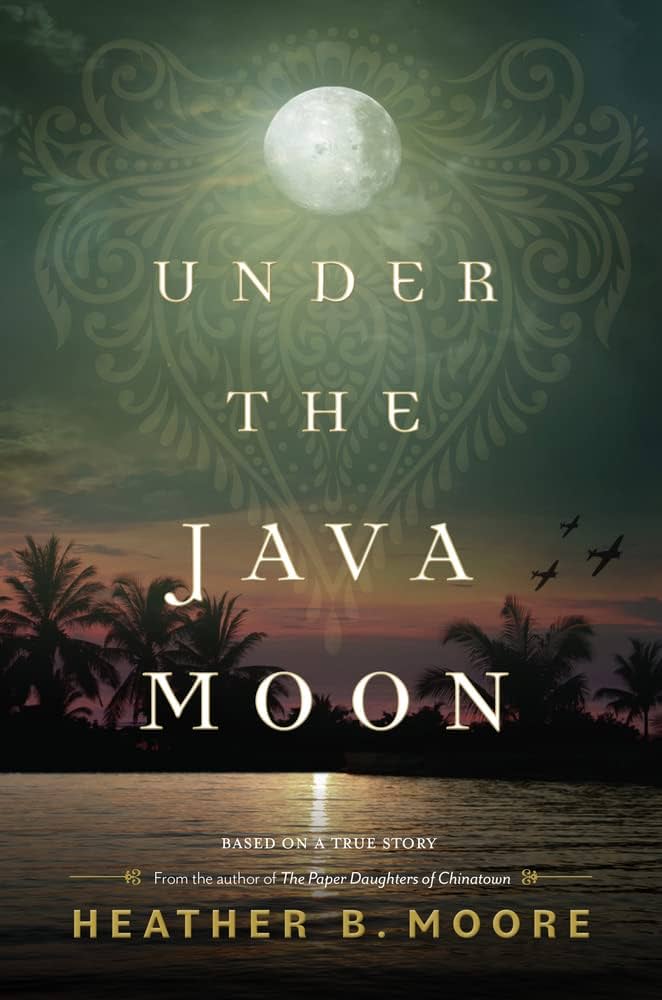
Under the Java Moon: A Novel of World War II by Heather B. Moore
For those interested in the Pacific theater of WWII and the lived experiences of Japanese occupation, Under the Java Moon delivers a poignant and moving story of loss and perseverance.
The novel follows the Vischer family, Dutch colonials living in Indonesia when the Japanese arrive and occupy the region. George, an engineer is drafted into service, separated from his family, who are marched out of their home and into the enemy alien camp at Tjideng. Told through the eyes of George, Mary, and their young daughter, Rita, the reader is immersed in the experience of living through war.
The novel and story is emotional and psychologically nuanced, but — for this reader — sanitized. While I felt sympathy for the Vischers, I felt no emotional pull, no real heart-wrenching, which — perhaps strange to say — I expect to feel from a story of this genre.
Moore’s novel is well-crafted as a historical novel; pertinent historical events serve as the structure of the story, without it turning into a history textbook. But it is unfortunate that we only see the Dutch perspective of WWII here, and very little of the Indonesian experience. I would have liked to seen a little more balance of perspectives.
Overall, an enjoyable read, though less profound that its subject suggests.
If you’re looking for a creeping, eerie read for the wintry months to come, Freshwater Fire must be on your to-be-read list. Forget Halloween, with its flashy, trashy gore, Mullins’ slim novella, with its sparse and evocative prose, and its fog-shrouded terror, brings out of the deepest of our fears as the decay of winter descends. This is a book to curl up to with candle light when the storm takes out the electricity. Or… maybe, that might just send you over the edge into madness. Read at your own risk, right?
I took this risk on this novella. I usually hesitate to spend money or time on independently published fiction; the gamble so often doesn’t pay off. But Mullins is a talented writer. With very few words, Freshwater Fire summons the smell of decay and manifests humanity’s darkest fears: that we are not alone in this world and worse, we are not as invincible as we would like to believe. Mullins builds a devastating sense of futility that the reader cannot shake off. This is a classic gothic horror.
The tale revolves around a lighthouse and its new keepers, sailors who quickly find the isolation of their task is more than a mental exercise in surviving entrapment. Their fears are more than simply psychological, they are real and monstrous. For readers who enjoy mythology, paranormal elements, and psychological thrillers, Freshwater Fire will deliver a satisfying reward.
The story aside, Mullins’ characters are fleshy, their dialogue and fear is palpable. Their reactions to their circumstances are more than plausible, revealing Mullins’ deep understanding of the human psyche and the lengths we will go, not only to survive but must do to overcome our fears. Terrifying as this novella is, it is also inspiring.
I look forward to Mullins’ other novels! They are on my wish list!
I’m wondering to myself — kicking myself — why didn’t I read this book sooner? I won Public Opinion in a Goodreads giveaway last year, but only just read it. I absolutely love it. Kicking myself not reading this sooner.
The novel revolves around a character you love to hate. Melvin Ritkin is a horrible human being who does unsavory things for unseemly amounts of money. He’s built a career around scamming people, creating false realities, and fixing other awful people’s problems. He lives in a place most people love to hate too: Los Angeles, CA. But Melvin’s world is Hollywood adjacent; it is Hollywood’s underworld. Melvin maneuvers and is part of the grotesque underbelly that makes the glitz and glamor possible on its surface. This is the behind-the-scenes view of Hollywood and it is as ugly as one can imagine. The characters are utterly sinful; palpable, pitiable, and on occasional, lovable. This is world of victims and villains, and where the line between the two is porous.
Through Melvin’s eyes we see how perception is easily manipulated. But readers are also treated to the tantalizing view of how the manipulators themselves rot inside. Melvin’s life, relationships, and work all come together in a collision that leaves him… well, I will leave it to the reader to find out. But, Reader, know that there is a moral to this tale, though, it is the journey which makes that lesson so delicious.
Story aside, it is Pettijohn’s prose, his distinct and witty authorial voice that carries the novel beyond snark and soap opera, and into the territory of literary fiction. This is a very well-crafted independent novel. Nathan Pettijohn has a new fan and I very much look forward to their next novel.
Absolutely chilling and brilliantly written. This book made me stay up all night for all the right reasons. It also made me afraid of my own house – and for a horror novel, that’s killing it!
I won a paperback copy from a Facebook Group giveaway, and was thrilled because I am so ready for the spooky October season. (It’s my first spooky October read!) It arrived via Amazon; and a little later, some goodies also arrived from the author (a bookmark and cards depicting the scary characters from the novel).
The Suffering is a new adult horror revolving around the haunting of a group of housemates. Kyle, Pete, Lance, Tad, and Cass are the university students and friends who reside at Brackenby House, a Victorian mansion where the rent is cheap — and where a century ago a famed psychic and a group of would-be occultists performed a séance. That demonic summoning resulted in a terrible bloodbath; all the occupants of the house at the time, save one, perished in inexplicable ways. The gory history of the house was never more than a joke to the young friends, until one Halloween, they decided to perform their own séance.
I will leave the reader to discover the awful consequences.
The haunted house story is not the novel’s only appeal, classic as it is. Mars’ writing and nuanced character development are what makes The Suffering truly shine. The pacing of the book is swift; the story unravels like a horror film. Often, with only a short sentence, Mars sent shivers across my skin. The economy of her words works well to build suspense and dread. She forces the reader to fill in the unsaid darkness with the most evil things.
The characters are also well-crafted. They are unique and yet recognizable, wholly likable, and realistic. The genre so often (sadly) produces puppet-like characters, stereotypes who feel (to this reader) more like ghosts than human. But Mars successfully avoids this; these young friends react as you or I might in the same situations — and in their effort to survive their hauntings — connect with the reader as much as they do to each other, through compassion, friendship, honesty, and fear. Very quickly, this reader found herself bonded to the unfortunate residents of the house.
Readers should also know that the book is spicy in some parts. The romantic aspects of the novel add to the storyline. The language also is suited to an adult audience; this is not a juvenile horror novel, though there is nothing in the novel that would warrant an R rating.
MJ Mars has earned a fan in this reader. I look forward to their other stories and novels!
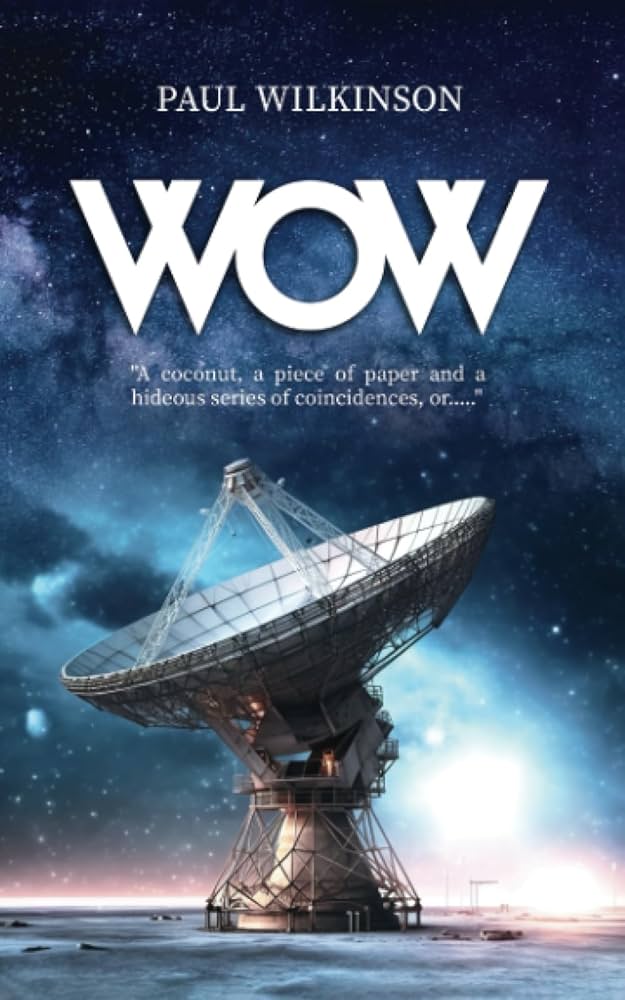
WOW is aptly named; this is a whopper of a novel in more ways than one! This is another independently published novel I discovered through a FB group I’m in.
WOW revolves around — and is narrated by — Paul Drake, an ordinary, suburban Englishman, who, as the result of having a coconut fall on his head, begins to experience a series of strange consequences. The coconut itself causes him severe bodily damage, and Paul is hospitalized. This is where he begins to feel an unexplainable sense that he will be the recipient of some kind of message, though from whom or where, remains a mystery to him. He is drawn to a piece of paper, with expectations that this object holds some significance for the future of humanity.
It is here that we are introduced to the novel’s cast of quirky characters: Zack, Paul’s unorthodox doctor, who treats him for the psychological fallout of the coconut-induced incident and the other three members of the therapy group, all of whom are “delusional” (or are they?) according to the medical establishment. They are: Franck (with a “C”), who suffers from paranoia as much as he is deluded by it; John, who wears a pasta strainer as a hat and who identifies as a Pastafarian; and, Ruth, aka Dobby, who has PSTD from a series of tragic and awful events in her life, and who is haunted by the number 19. The novel revolves around the five of them, as they attempt to make sense of each other, their lives, and the other-wordly claims of their newest member, Paul.
Readers who enjoy deeply reflective narrations — and unreliable narrators! — in the vein of Sophie’s World by Jostein Gaarder, where the characters strive to unravel the mysteries of why we exist, our individual and collective purposes in life, and the “meaning of it all,” will find WOW satisfying — and humorous, to boot! The novel unfolds in a similar epistolary style as journal entries and diaried events. In this respect, Wilkinson channels the dry humor common in many of Ian McEwan’s novels, without McEwan’s trademark darkness. WOW is also reminiscent of another novel, one which Wilkinson mentions in this work: Douglas Adams’ The Hitchhiker’s Guide to the Galaxy. Indeed, the quirkiness in WOW does mimic this science-fiction classic.
It is here that my review begins, primarily because the genre of the novel sets the tone for readers’ expectations. The novel is categorized as science fiction and “first contact” fiction, a notion supported by the (gorgeous) cover of the novel, an image of a large satellite pointed into space, suggestive of humanity’s SETI (the Search for Extraterrestrial Intelligence) efforts. But WOW is not a science fiction novel, it leans far more into literary fiction and its focus is wholly on the human effort to understand our earthly purposes. Readers who expect science fiction are likely to feel disappointment as the story unfolds: it lacks the world-building, technology, and off-world focus that science-fiction typically delivers.
On that note, readers of speculative fiction may find WOW fits their preferred genre more. It is speculative, though, as previously noted, the novel runs toward the philosophical more than anything. A reason for this is the lack of story arc and narrative in the novel; WOW captures Paul and his friends’ experiences and thoughts, but nothing really happens. But, that’s the point of the novel, it is a deeply reflective and philosophical exploration.
The outer space this novel traverses is really more of an inner space. Looking beyond our world puts our own into higher definition.
As a philosophical work — a treatise, in some ways — there are several moments in which the novel lags, running off on a tangent. Readers will have different levels of tolerance for this; for this reader, the novel was longer than it needed to be. But this is a minor complaints. At 315 pages it is a far more succinct read than Gaarder’s novel at 500+ pages, both of which tackle much the same questions!
This novel is literary fiction in other ways as well. Its lack of plot and narrative arc is a hallmark of literary fiction, and likewise, its characters are its primary focal points. Wilkinson does fantastic work of creating and developing intriguing, thoughtful, deeply self-aware characters. The story is propelled by their delusions, thoughts, the functions of their inner worlds. This is a character-based novel and this is where WOW shines.
My overall rating is therefore, mixed. I placed it at a solid 3 stars as I enjoyed it for it is, rather than what I expected it to be.
Readers who would like to explore Paul Drake’s mind on their own — or his friends’, can purchase WOW from Amazon here. It is currently selling for $14.00 for the paperback, $19.40 for the hardback, or $3.99 as a Kindle ebook. Readers who subscribe to Kindle Unlimited also have access to it.
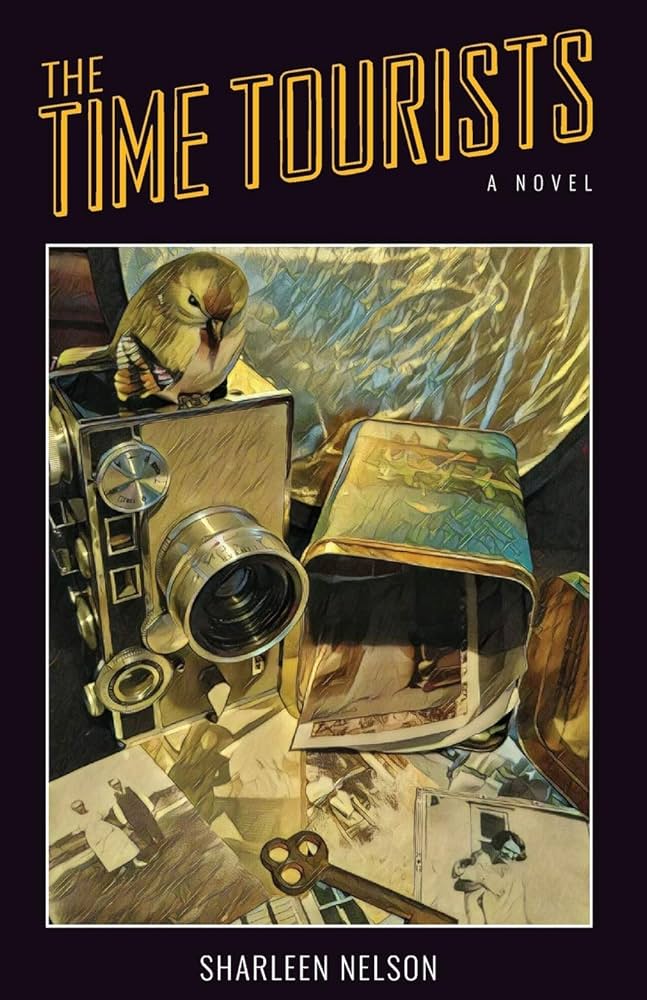
I am thrilled to be reading and reviewing a novel written and published by a local PNW author and independent press. This is a backlist book from GladEye Press, having come out in 2018, but The Time Tourists deserves another round in the limelight.
Readers of speculative historical fiction in the vein of Dr Who, and especially those who delight in time travel, with all its peculiar possibilities, will enjoy this novel. The Time Tourists centers on the concept of time travel through photographs, revolving around a particular set of individuals who have discovered how to both profit from this and use the skill to provide closure for descendants living in the present. Specifics about the process of time travel are murky; this is not purely science fiction, the novel leans toward historical fiction and mystery over the former genre. At the core of the novel is a young woman, Imogen Oliver, who discovers she possesses this rare ability. Through her adventures into the past, she assists people in finding out about their ancestors, retrieves items lost to them and their families — and, perhaps most importantly, learns that her parents’ disappearance is not all it seemed to be. Indeed, the novel ends on a cliffhanger, encouraging the reader to seek out Nelson’s second book, The Yesterday Girl.
Readers should allow the novel time to unwind; it does lead to a very exciting mystery. But, perhaps because The Time Tourists is the first novel in the series, readers may find the first eight chapters, fifty-odd pages, a little more heavy on exposition and slow-paced than expected. In these chapters, Nelson provides a thorough, but sometimes plodding, outline of Imogen’s personal history and life. I found this section of the novel somewhat confusing: Is this a Young Adult novel? A Coming of Age bildungsroman? When do we get to the time travel part? As a lover of historical fiction, the contemporary focus lost me periodically. Indeed, it was not until page 92, the beginning of Chapter 14 that I began to find the novel intriguing. And, to be honest, it wasn’t until the last line on Page 147: “Leeroy Jenkins, my ass,” that it gripped me. The novel comes off as episodic; it reads as two separate novels rolled into one, which a significant chunk of the beginning serving as prologue.
The reader will be quickly introduced to Imogen’s friends and family, parents Niles and Francis, her Grammy, friends Fletcher and Jade, but also others within her orbit who have less kindly motives and personalities. Theodore Diamond and his mother, Mimi Pinky, are neighbors who have lived nearby for several years. As the novel progresses, readers will become abundantly aware this is not a juvenile novel; it borders on the cusp between Young Adult and Adult. Similarly, readers should be aware the novel also raises and explores toxic masculinity, incel “male-rights”, sexual abuse, child abuse, mental health, and death. Should these be your triggers, this novel may not be for you. That said, Nelson weaves these dark ideas into the narrative arc of the story exceedingly well, and they are central to understanding the characters, their motives, and behavior.
On that note, Nelson’s characters are well-crafted and possess depth, though in several parts of the novel, expository details run long and sometimes derail its flow and pace. As a consequence, the novel sags in some parts, requiring the reader to push on to pick back up the story’s arc. (Non-American readers may find the pop culture references do not add to the characters’ development in ways that American readers might.) Historical references, on the other hand, do provide the novice historical reader with plenty of context. Nelson’s handling of the disparities in cultural differences and historicity are especially appreciated by this reader, though as noted previously, historical exposition slows the progress of the story. Just as readers should not expect a heavy dose of science in this fiction, readers should not expect scholarly content, though it is clear Nelson has done a significant amount of historical research.
The final third of the novel is where the real excitement begins, and Nelson maximizes the mystery that has brewed in the first two-thirds. All the threads that have begun earlier come to an explosive, emotional ending, one which — I think — will satisfy most readers and leave them wanting more.
Readers who would like to purchase this novel may do so on Amazon here, or find it on GladEye Press’s website here. At present this 387-page novel sells on Amazon for $11.09 for the paperback and $5.99 for the Kindle ebook, and on the press website for $14.95 (paperback), where buyers also have the option of having it custom signed by the author for an additional $3.
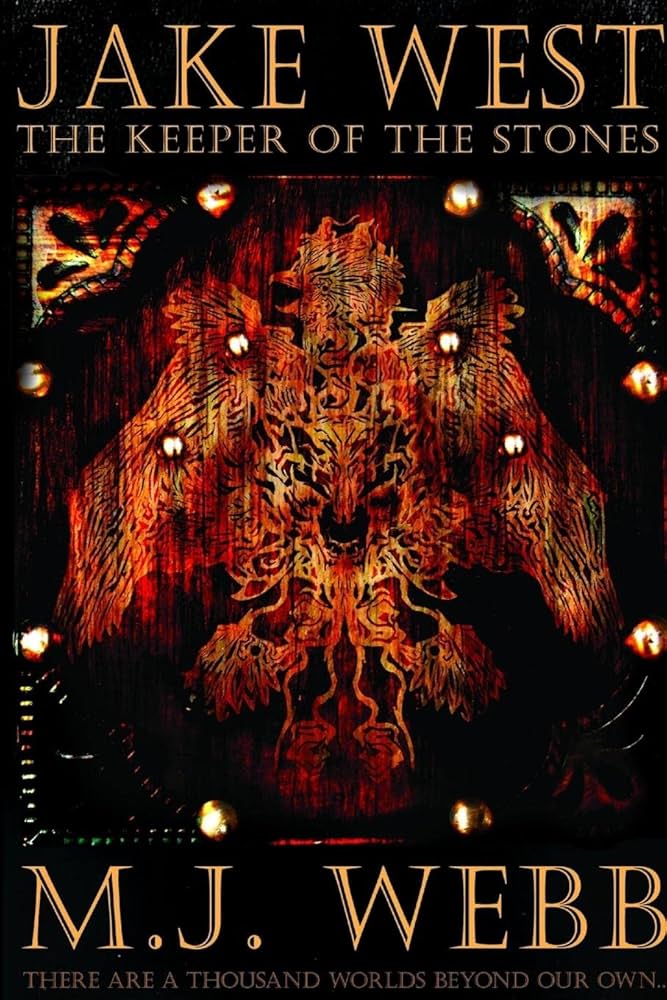
As I delve into self-published and independently published novels, I am also exploring outside my usual genres. I won a giveaway of this trilogy from a FB Group and was thrilled to have a chance to read a fantasy, Young Adult series.
The Keeper of the Stones introduces readers to the world of Rhuaddan, another world that exists in parallel to our own. It is a world torn to shreds by war, and Jake West belongs to a rare clan of humans who have been blessed — or cursed — with the ability to travel between this world and our own. Jake and his friend Ben discover this rare talent while rummaging through Jake’s grandfather’s attic. The results are catastrophic — and adventurous! The novel leads the reader into a world of high fantasy, a quest-driven journey of these two human boys through a non-human world as they seek to protect stones which could lead to the destruction of worlds. I will leave the reader to discover the consequences and ending themselves (hint: there are two more books in the series!)
This Jake West novel would appeal to those who enjoyed the classic, The Lion, The Witch, and The Wardrobe by C.S. Lewis and the rest of the Narnia novels, as well as those who appreciate the classic fantasy realms in J.R.R. Tolkien’s Lord of the Rings novels. The Jake West trilogy draws from both of these classic series, producing a narrative along similar lines; though, of course, the world of Rhuaddan is unique.
The story aside, Webb’s prose is smooth and error-free. Some parts feel plodding, offering — in this reader’s view — a little too much exposition that does not add to the characters’ development or the development of the story. Its pacing was slower than this reader would have liked; in several chapters I wished for less exposition and world-building, and a more rapid unfolding of Jake and Ben’s story. But, this is likely because world-building is not a particular favorite subject; fantasy is not my cup of tea in general. That said, Webb provides ample world-building and a fully fleshed out landscape for the fantasy reader; as a historian I deeply appreciated the attention to Rhuaddan’s past to understand its present. Overall, Webb’s writing is sound and its language is well-suited to its audience of young adults.





 Dr JoAnn LoSavio