Night Side of the River: Stories by Jeanette Winterson

Night Side of the River: Stories by Jeanette Winterson

I thoroughly enjoyed this collection of ghostly tales, but then, I may be biased; I’m a sucker for a good haunting. Of course, I did have my favorites.

I especially enjoyed “A Fur Coat”, “App-Arition” and “The Spare Room”, primarily because the haunted in these stories isn’t necessarily the living, but the dead haunting themselves or one another. Indeed, that was the attraction for me in Winterson’s tales: they challenged the concept of haunting, yet remained authentic to the trope of the traditional ghost story. Readers shouldn’t expect to be thrown into a new genre here; this is not speculative horror, but tried-and-true revised into immersive stories.

And, of course, the revelations in these stories are more about the living than the dead, which is ultimately the mark of a good short story.

The collection as a whole is fantastic, and follows through on this tightrope balance between showing the reader something novel and satisfying their hankering and expectations of the “ghost story” trope. In some stories, Winterson brings in an element of the contemporary through technology and devices we use today, in other cases, it is the characters’ quotidian lives in the present — marred somehow with an encounter with death and the dead — that makes it clear to the reader there is an anachronistic meeting of time here.

Winterson’s writing is superb, well-suited to the genre of the short story form. With few words wasted on exposition and an emphasis on characters’ thoughts, Winterson quickly immerses the reader in the story. It is everything a reader wants from this short form.

Halloween has passed, but Winter is upon us; put this on your list for this year’s gloomy, deathly season.

The Foreboding: A Novel by M.J. Foley

The Foreboding: A Novel by M.J. Foley

As with several other indie novels I’ve reviewed, I found this one through a FB group I am in.

The synopsis of the The Foreboding intrigued me. Here is the description from its Amazon webpage:

Destination drawn unceremoniously from a hat, quiet, bookish Shiloh leaves her cliché life and all the expectations that went with it without any intention of looking back. Upon arrival in her new city, a dark past lurks in her musty apartment and invades her subconscious. She is quickly enveloped into an unbelievable plot that turns her assumptions about the world upside down. When personal tragedy and evil unmask a long-standing plot for power and dominance, Shiloh is forced to confront the unharnessed potential of the human mind and the interconnectedness of the world she worked so hard to learn about in school. Through the painful introspection of early adulthood and eye-opening discovery of scientific truths beyond her wildest dreams, Shiloh must learn to trust her own instincts and an unlikely group of comrades to fight the power of obsession and control threatening to obliterate all she holds most dear.

The novel has a strong start. I was especially impressed with the quality of writing in the Author’s Note — and the novel premise of its story. However, and sadly for this reader, while the novel did deliver a story that bends and challenges our conceptions of physics and nature, the novel failed to engage me emotionally and create a landscape of possibility beyond the microcosmic world of its characters.

My personal preference is for character-based literary fiction, stories in which the human connection is the fulcrum around which the rest revolves. The Foreboding lacked the character development I wanted. Shiloh came through as a distinct, fleshy voice, a strong presence as the novel’s lead protagonist, but Margaret and the others felt flattened, making it difficult to understand their motivations and purpose in the novel, especially in their interactions with Shiloh. In some parts, the dialogue — even Shiloh’s — felt contrived; likely as a result of a lack of character development, their words sounded hollow, conveying the author’s voice and intent more than their own.

For this reader, the story required smoother introductions into its concepts and more nuanced context to both bring the landscape around its events to life, and highlight its events as a singular. The world Foley suggests is an unique and intriguing one, but this quality is obscured by a too-casual framing of those events.

All this said, The Foreboding delivers on other points. First, it is technically well-written. There are few, if any, typographical errors. Its syntax, grammar, structure, and organization are largely correct, and were clearly considered with care. Second, the author has an interesting, original, and creative premise. There is a story here worth the telling, even if this reader found its delivery lacking.

As such, my overall review is mixed. Readers should read The Foreboding themselves, as they may find their experience of it to differ from my own. The novel can be purchased on Amazon here. The paperback is $16.83, the hardback $27.43, and the ebook is available on Kindle Unlimited and for purchase for $3.99.

The Suffering: A Novel by MJ Mars

The Suffering: A Novel by MJ Mars

Absolutely chilling and brilliantly written. This book made me stay up all night for all the right reasons. It also made me afraid of my own house – and for a horror novel, that’s killing it!

I won a paperback copy from a Facebook Group giveaway, and was thrilled because I am so ready for the spooky October season. (It’s my first spooky October read!) It arrived via Amazon; and a little later, some goodies also arrived from the author (a bookmark and cards depicting the scary characters from the novel).

The Suffering is a new adult horror revolving around the haunting of a group of housemates. Kyle, Pete, Lance, Tad, and Cass are the university students and friends who reside at Brackenby House, a Victorian mansion where the rent is cheap — and where a century ago a famed psychic and a group of would-be occultists performed a séance. That demonic summoning resulted in a terrible bloodbath; all the occupants of the house at the time, save one, perished in inexplicable ways. The gory history of the house was never more than a joke to the young friends, until one Halloween, they decided to perform their own séance.

I will leave the reader to discover the awful consequences.

The haunted house story is not the novel’s only appeal, classic as it is. Mars’ writing and nuanced character development are what makes The Suffering truly shine. The pacing of the book is swift; the story unravels like a horror film. Often, with only a short sentence, Mars sent shivers across my skin. The economy of her words works well to build suspense and dread. She forces the reader to fill in the unsaid darkness with the most evil things.

The characters are also well-crafted. They are unique and yet recognizable, wholly likable, and realistic. The genre so often (sadly) produces puppet-like characters, stereotypes who feel (to this reader) more like ghosts than human. But Mars successfully avoids this; these young friends react as you or I might in the same situations — and in their effort to survive their hauntings — connect with the reader as much as they do to each other, through compassion, friendship, honesty, and fear. Very quickly, this reader found herself bonded to the unfortunate residents of the house.

Readers should also know that the book is spicy in some parts. The romantic aspects of the novel add to the storyline. The language also is suited to an adult audience; this is not a juvenile horror novel, though there is nothing in the novel that would warrant an R rating.

MJ Mars has earned a fan in this reader. I look forward to their other stories and novels!

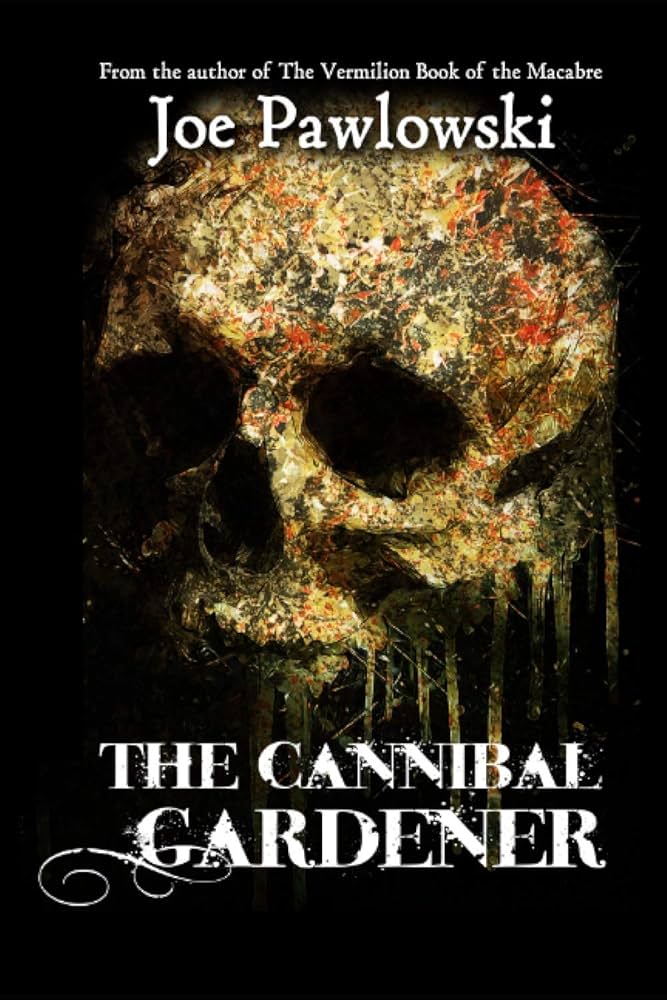
The Cannibal Gardener: A Novel by Joe Pawlowski

The Cannibal Gardener: A Novel by Joe Pawlowski

I am kicking myself for letting The Cannibal Gardener sit on my (ridiculously, 4-digit long) TBR List (To Be Read) for as long as I did. This novel delivered on all the horror and squeamish discomfort it promised. For readers who enjoy paranormal and historical elements, delight in having their own sense of security in the Righteous Ways of the World shaken, and well-delivered gore, this exploration into cannibalism and flesh-lust is a must-read.

That said, readers should be aware that gore here is not for the faint of heart. The subject matter, cannibalism, is already one which pings our most primal fears. The idea of consuming human flesh twigs an evolutionary nerve in our psyche the wrong way; we are social beings, needing the survival of others to secure our own. Even in a case of hyper-evolution of the competitive drive as individuals seek to enhance evolutionary fitness, human culture has developed an universal anathema to indulge in killing and eating a member of our own species. An odd quirk of humanity, as one character in the novel, Denise, notes.

This nauseating subject is also what makes this novel such a good horror read. And it is indeed, all about cannibalism. The novel is an entanglement of its characters’ diverse stories, each one eventually weaving together with another until all come together at the end. Their disparate lives are connected by this ugly, bloody practice in some way. Edmund, Denise, Milo, and George are the primary protagonists of the novel. Each of them engages in the profane act in some sense and this draws them into an ancient goddess’ cruel net.

Aside from the lurid story itself, Pawlowski’s fast-paced prose, adeptness at storytelling, and nuanced character development is an major appeal. The novel flows at a pace which fuels the urgency of events and, yet also linger on the characters’ voices and inner dialogue. The resultant surge and lull allows the reader to feel the thrill of a mystery and immerse themselves in the interior world of the characters. This is in part achieved by allotting each chapter to a different narrator.

The prose is mature, as is Pawlowski’s authorial voice. It is consistent, succinct, expressive. It is also clear Pawlowski’s journalistic experience enhances his craft. Not only have his observations of human behavior led him to create fleshy characters (forgive the pun!), his decisions of what to reveal and when reflect a deep understanding of his audience. I also much appreciated his vocabulary; the novel’s language borders on the intellectual. I mean this as a compliment. Its precision delivers a sharp image of events to the reader, leaving well-placed gaps that each one may organically fill in with their own imagination.

I look forward to Pawlowski’s other horror fiction…

Cadaverous: A Novel by Jay Bower

Cadaverous: A Novel by Jay Bower

I came across this novel in a Facebook group I’m in, and — I’ll be honest — the cover caught my eye. I know, I know, we aren’t supposed to judge a book by its cover, but dang, it is appealing. The book itself did not disappoint either! For readers looking for some Halloween horror (it is that season again), Cadaverous will deliver.

For readers who enjoy the tongue in cheek style of Grady Hendrix (and their novel, We Sold Our Souls), paranormal and demonic elements, or novels about heavy metal, rock, or music in general, Cadaverous will appeal. Music is a central theme. Bower’s novel is also, like Hendrix’s, an intellectual horror, the sort premised on what is said and unsaid, leaving the reader to organically grasp the creepiness of the story. It is horror of the outlandish and yet-could-be-totally-believable type, with a decent dose of gore and paranormal spookiness.

The novel begins in epistolary style, as the remnants of a research project gone awry. The novel is delivered mostly in this format, as a blog belonging to its main character, Gaige Penrod, a musician in a band. The story revolves around Gaige and his desire to achieve fame, fortune, and prestige through his music, and his interactions with a groupie named Lisa. The reader is never quite sure what happens to Gaige, or how trustworthy Lisa is — until we reach the end. Cadaverous is a mystery as well, up to the very end, and it leaves the reader with a tantalizing and creepy “what if….”

The novel’s characters are young; this is a young adult fiction, best suited for and written with the young person in mind. It’s an appropriate horror for a young audience, though there are mentions and references to sex, romance, and similar themes. The characters are well developed, though readers should know this is not a character-centric novel; plot propels the story.

Bower’s prose fits a YA audience and the story is straightforward and simple, though with a good share of twists befitting a horror/mystery. The language is accessible, easy to follow; and overall, the novel is well-written with a flowing pace.

All in all, a very satisfying horror read.

The Unforgiven Dead: A Novel by Fulton Ross

The Unforgiven Dead: A Novel by Fulton Ross

This Tartan Horror/Mystery had me creeped out in the middle of the night! And yet, I couldn’t put it down, spine shivers be damned!

The novel revolves around a murder of a young girl and the mystery of her gruesome death, as seen through the eyes of the local constable who is investigating it, Angus. But this policeman is extraordinarily gifted with paranormal (in)sight, a legacy of his own haunted past. What results is a deeply engrossing whodunit woven through with Gaelic history and culture. For readers who enjoy hints of the demonic, pagan, and ancient evils, The Unforgiven Dead will have you prancing a ritual dance. For readers who love a twisted murder mystery, one in which the murderer is hidden in plain sight alá Agatha Christie, The Unforgiven Dead will absolutely make you squeal once the culprit is exposed.

But the story alone is not the novel’s only draw. The characters of this novel are deftly crafted, their dialogue mimics life, their motivations are raw and human and utterly flawed. For readers of literary fiction, the trials of Angus, Nadia, Gills, and Ashleigh will rent your heart. Their lives mimic reality and their hurts are ones we are likely to relate to, if we don’t know them well already.

The Unforgiven Dead leaves me pining for a moody, grey Scotland more than I could have imagined.

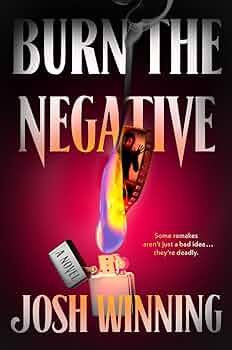
Burn The Negative: A Novel by Josh Winning

Burn The Negative: A Novel by Josh Winning

It’s such a cliché to say “I couldn’t put it down!” but with Burn The Negative it was so true! Thrillers set in contemporary digs are rarely my chosen genre, but every once in awhile a little thrill appeals to me and relieves me from the setting and character-driven interiority of historical or literary fiction. Burn The Negative had everything I wanted in a thriller: compelling characters with flawed, awful motives; a fast-paced plot that left me thinking “Oh no, what the WHAT?” as things go from horrendous to abysmal; mysterious hints that led me to announce “Aha!” far too early; and, the cherry on top: a twisted ending.

The novel opens with a fabulous line, immediately a portent of fuckery on a grand scale. A young women is headed somewhere she’d rather not be. It’s for work, but it isn’t really, and she’s having a bit of a nervous breakdown over it. The woman is the novel’s protagonist, Laura, who is a former child actor, now tasked with rehashing her Hollywood trauma as a journalist writing an article about the remake of the horror film that killed her career and ended her normal psychological development as a teenager. This is a novel that revolves around the drama of Hollywood on multiple levels, leaving the reader feeling very much like they are watching a Netflix Original horror film unfold in text.

As the remake of the film progresses, things go unbelievably wrong. But is this marketing? Is this the curse of the original horror film? Is it Laura herself? Both the remake and Laura’s memories of her Hollywood nightmare disintegrate into a surreal soup, leaving the reader wondering if there is something paranormal at foot or not.

The story alone is not the only draw of the novel. Winning’s prose is witty and the book includes fun elements — flashbacks, articles, ephemera, movie lore — which flesh out the story arc, provide context, and make the novel feel deliciously kitschy. This book is fun.

Fans of horror films, horror film lore, haunted media, and fast-paced mysteries can fully expect to enjoy Burn The Negative.

Unquiet Spirits: Essays by Asian Women in Horror Edited by Angela Yuriko Smith & Lee Murray

Unquiet Spirits: Essays by Asian Women in Horror
Edited by Angela Yuriko Smith & Lee Murray

I honestly wasn’t sure what to expect from this collection: Modern horror? Literary criticism? Traditional tales of terror? It intrigued me regardless.

What Unquiet Spirits delivers is a combination of all of the above. It is memoir, criticism, history, and ethnography in balanced fusion. Each chapter is written by an Asian female author and in it she discusses both her own writing, the cultural and historical inspiration for her characters, the origins of some feminine demon, ghost, or creepy — a unquiet spirit — which haunts her and the pages she has produced. In some chapters the author draws on a deeper well of literature of the past and ponders the future of the female spirit archetype that is the focus of their chapter.

The books is divided by and devotes its pages equally to feminine spirits across the Asian continent, from East to Southeast to South Asia. I was pleasantly surprised to see such attention given to Southeast Asian spirits and archetypes (my favorite was always the pontianak, the evil spirit of a woman who lurks in the dark under the protection of a banana tree. In my recollection, she can be “pinned” to the tree with a needle or a pin and made to do the pin-holder’s bidding. But, beware to that horrid individual if the offending metal is ever removed!)

While the collection examines different demons and feminine archetypes from across a swath of very diverse cultures, it ultimately makes a singular, united appeal to the reader. Their call to action is unmistakable: Asian women, as a whole, alive or dead, demonic or angelic, monstrous or victimized, are powerful beings. Asian women have been too long overlooked in the literary world and deserve more than the whispered, submissive voice they have been too long assigned by Orientalists; hear them shout, scream, screech!

For that reason alone, Unquiet Spirits is worth reading. But there is more.

The authors reveal facets of the Asian feminine that have rarely been visible, that is to Western audiences. To Asian women, we have always known they were there, even when our patriarchal societies told us to ignore them, to castigate them, to revile these demonic women as ill-influences on ourselves and our communities, yet still, Unquiet Spirits is sure to deliver novelties and new knowledge to Asian/Asian American readers.