I absolutely loved reading this book. Every twist, every shift of the story was both unpredictable and comfortably familiar. It was gratifying. I won’t give it away, but I found myself saying, “I knew it!” and “Oh, noooooo!” equally as frequently.
The story unfolds in a small rural Indian village (a fact about it I love; too often the novels I’ve read of India focus on the urban experience) and revolves around a woman whose husband has vanished under mysterious circumstances. The villagers suspect nefarious reasons and the woman is ostracized as a witch, though nominally included in a number of village activities, including a micro-financing program run by one of several foreign NGOs.
As the women become empowered through their new wealth and skills, they find themselves unwilling to bow to the patriarchal norms of Indian culture and so they seek out the witch in their midst to help rid themselves of their problems in the way they imagine she did.
Mayhem and hilarity ensue. Vengeance too. And redemption. Really, this novel has it all.
Shroff’s prose is another worthy reason to pick up this novel. Her voice is clear, bell-like and unique; her voice as an author, like the the women she writes is individual. The prose is confident and bold, clear and evocative. In several parts, Shroff touches too close to the reality of being a woman in a patriarchal society. I twinged when I read those words, both out of appreciation at being seen and discomfort, being confronted with the fact that women are universally abused.
I especially appreciated Shroff’s portrayal of rural Indian women. The characters here are fleshy women who disrupt the stereotype of the unworldly, uneducated, unintelligent village woman. This is a work of decolonization, unravelling the orientalist stereotype too many Indian women have — and are — burdened with.
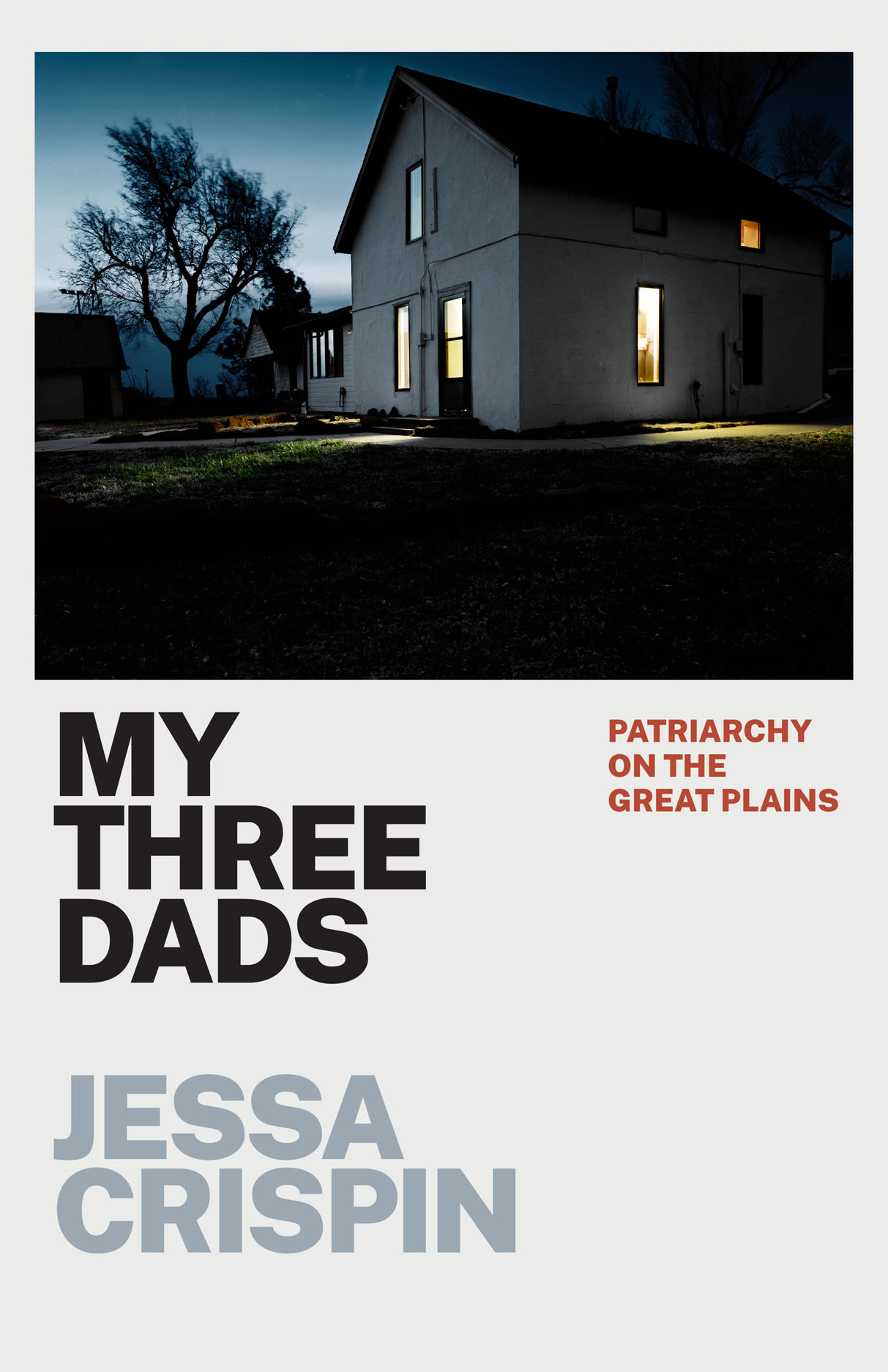
My Three Dads: Patriarchy on the Great Plains by Jessa Crispin
This was not what I expected. I mean that in as positive a way as possible. Let’s say that the three dads Crispin deep discusses in the book are not the fathers you might assume from the title. This is not a work centered on biological relationships or familial history; it is, rather, a genealogy of our present moment — Crispin’s response — to the very existential question: What in the biscuits is going on here? (Here being America or ‘Murica. Take your pick, it is somewhat fungible.)
Crispin’s answer is: No gravy. All biscuits, no gravy. From this reviewer’s position, Crispin hits it on the head of the nail pretty dead on. Told from a woman’s perspective, the response cannot but factor in gender and sexuality. A person’s lens is inevitably shaped by their experience of living within the patriarchy. And that’s Crispin’s big point IMO: We all live within a patriarchal world and we always have. It is highly likely we always will. Or, at least, those of us alive today always will.
[Side Note: It is likely Crispin wrote the bulk of this book prior to the recent SCOTUS ruling on abortion. It is interesting reading this in the wake of that decision, on the cusp of things going so very sideways. I would have liked to read Crispin’s view on that in these pages. Perhaps, next time, eh?]
Crispin’s MyThree Dads is a long read essay, flowing from one chapter to another like a river, making turns at arbitrary, but logical loci. The book is split, however, into three major parts, one for each “father”. Dad One is a figure from Crispin’s past, a father figure or an archetype of a male/masculine figure we’ve all known or read about, the invasive species of man who erases women violently, silently, assuredly, simply through living their own lives. The act of being a man — in the midwestern definition — is a violent act toward women. Crispin mulls marriage and children, the banal locale of domesticity as the insidious, quotidian site of patriarchy; here, she admits to its wiles herself. The disguise is love, security, belonging.
Dad Two is the Citizen, in Crispin’s case, John Brown, a Kansan historical figure. But again, John Brown is the manifestation — one of many — Crispin write about it. She’s interested in the archetype again, but again these are men we recognize as living individuals: The White Men Who Feel Their Lack of Control And Lash Out. Politics becomes the platform for these men: the excuse for their rage and the subsequent tantrum. Reading this section was like watching a montage of the American news from the past thirty or so years. Crispin revives Waco, Timothy McVeigh, Nazis, Bolsheviks, bring the conversation to the present with references to unnamed mass shooters. Crispin’s point is made visible by the invisible: there’s no need to name any of the recent mass shooters of the past twenty years because these perpetrators (typically a man or a boy) are so commonplace as to collate into an archetype of their own.
Dad Three is God, but since that is too multicultural, too broadly applicable as a term, Crispin narrows it in: the Protestant God and, even more specifically, his human mouthpieces, Martin Luther. But this is really a discussion of the Church and the folk version of Christianity as it is practiced in the American Midwest. Crispin lost me a little here, but that may be because I can’t relate, having grown up in Asia where religion flavors life in very different ways. That said, having spent a significant amount of my adult life in the Midwest, Crispin’s cultural landscape is familiar.
Crispin critiques the patriarchal world we live in, but her point is its all-encompassing presence. The title says this is focused on the Midwest, but really, the world Crispin paints for us is easily recognizable as anywhere else in the United States. The title and structure of the book even performs Crispin’s point: the world revolves around man and men and their needs, desires, rages. My Three Dads is a snapshot of what it means to be American — but, a caveat on that: The people in Crispin’s work are white. She doesn’t really say this, but she does through silence and implication. The book focuses on the Midwest, after all, and that is the heartland of whiteness, despite the millions of non-white people who reside there now and have historically shaped Americanness. So, let me rephrase: My Three Dads is a snapshot of White Americanness, the kind typically performed, desired, and domiciled in (but not confined to) the American Midwest. But this doesn’t mean this is just about or for white people; People of color have to live in a white world, after all. My Three Dads is a worthy expenditure of time for any reader interested in the question: What in the bisuits is going on in America today? The answer will either confirm what you already know or ricochet off someone you know.


 Dr JoAnn LoSavio