
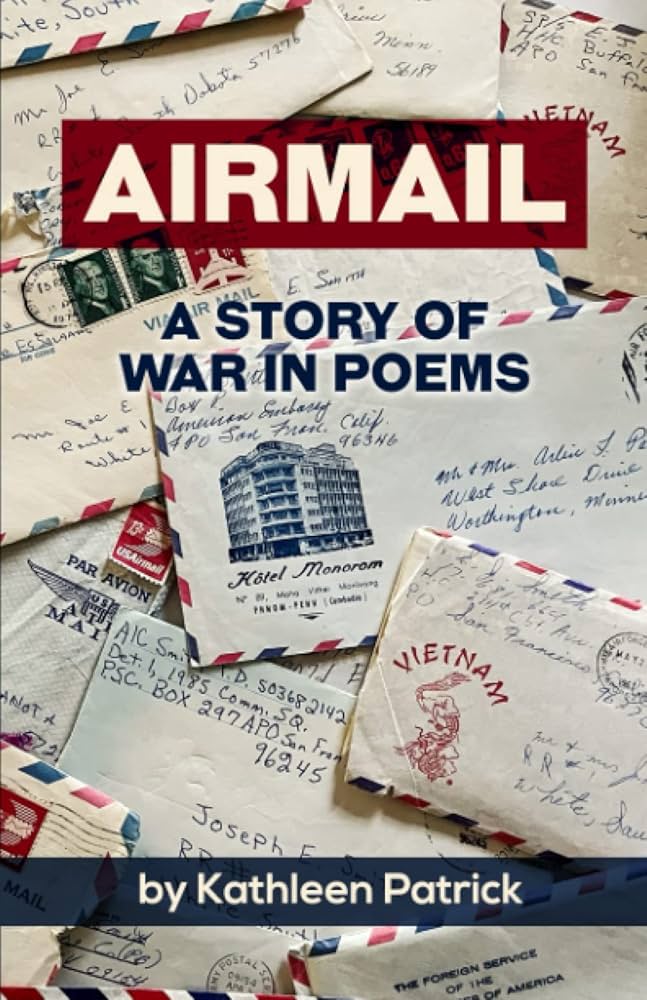
This is a collection of poems about the experience of American soldiers off to war in Vietnam. It is about the family that they left behind in the United States. It is about the loss and gains of war, patriotism, the inevitable criss-crossing of cultures and people across oceans.
It has been a long time since I have read poetry, and especially since I have reviewed any. Poetry is harder, so much harder to assess. Or rather, its assessment — if that is the right word — is so much more subjective (in one sense) or so much more technical (in another sense).
I’ll start with this: The subject matter of this collection of poems makes an impression on me in ways particular to my personal heritage and profession. I am from Southeast Asia, though not from Vietnam or Cambodia or Laos, the places where the Vietnam War (or the American War, as it is also called in Southeast Asia) took place. I am also a historian of the twentieth century, of Southeast Asian history, of decolonization, and transnational connections between Southeast Asia, the United Kingdom, and the United States. The way I have read these poems — and the way in which I review them — is inevitably filtered through these twin lenses.
These poems are powerful, both as evidence of historical perspectives and subjectively, as pathways of emotion. These poems open up avenues for understanding and seeing the experience of war, beyond the political, beyond the combat, beyond the filter of news.
I especially enjoyed “Voices, A Collage” which spans years and tells us a soldier’s letters home. This is poem about regrets, but it is also about how a family remains connected in spite of the distance, in spite of the pain of war.
“Telegram”, a much shorter poem, was especially poignant; its truncated form permits the reader to come to their own organic feelings and expectations. There is an implication of regret or guilt; an odd thing to say, but I really enjoyed that about “Telegram.”
“Robert M. in the Doorway” struck me as being about the PTSD of war, and for that reason, it was also a favorite. Again, a short poem, but powerful and thought-provoking. “Picking Rock” and “Don’t Forget the Women” brought to light the consequences of war that are often left unsaid; the soldier’s experience is not the only one. These poems made that clear, and sadly so.
What can I say about these poems? They made me feel, and that is — to me — the only thing a poem should aspire to.
 Dr JoAnn LoSavio