
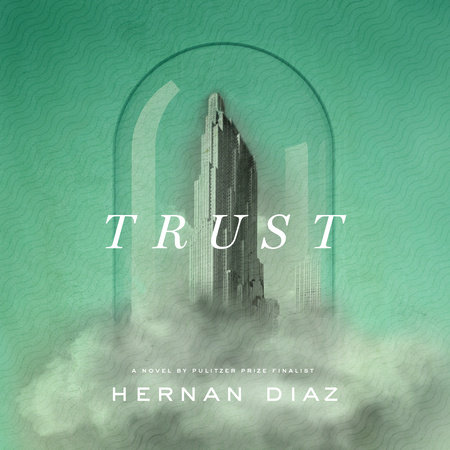
I saw this book posted over and over in a subreddit I frequent, and, being a Pulitzer Prize winner, I was intrigued. The book did not disappoint, though I hesitate to say it delivered on my expectations. This is a novel that defies expectations.
Trust is an unusual book and for many reasons, not least being its format. The novel is a work in metaphor, being a novel-within-a-novel in part. Trust is divided into four part parts: the first is a novel by Harold Vanner, a romance between Benjamin Rask and his wife, Helen. Both embody the Gilded Age of New York; this is the world of Edith Wharton, one of immeasurable, incomparable wealth, culture and romance. The second is a memoir, “My Life” by Andrew Bevel, who is the man Benjamin Rask was based on. It is a far less romantic version of events. The third takes the Trust into totally different territory; this is an account by Bevel’s secretary, Ida Partenza, who comes to learn about the real individuals behind Vanner’s novel: Andrew and Mildred Bevel. The fourth section brings the reader into the present; the novel ends with Ida Partenza’s return to the Bevel mansion and the discovery of Mildred’s voice.
This is a complex novel, one woven with a very clear and meticulous vision in mind. A novel which explores several interlocking themes and multiple facets. On one level, the novel is about power, those who have it and those who do not. It is a novel about money and wealth, access, and agency; in a word, class. But the novel is also about, on a deeper level, about perspectives and performance, and the intricate dance we must all perform in order to get what we want — or, even if we do perform, how we do not get what we want anyway.
The novel is about distortion as well, and history; indeed, the distortion of history as an easily done thing.
I read in this novel a critique of history and historians, but perhaps I am biased because of my profession. History, according to Trust, is a corrupt artifact, one which is corrupted and which corrupts as it is passed down from one decade to the next. Or perhaps, Trust suggests history is in constant revision, always awaiting revision.
I read in this novel an analysis of gender, the patriarchy, and the oppression of women and voice, which crosscuts differences of class. Ida and Mildred occupy different ends of the class spectrum, but wealth does little to protect Mildred from the savagery of patriarchy.
Content alone should not persuade you to read this novel. Diaz is a sophisticated writer, one who knows their characters well and intimately; the multiple voices come through in these sections, distinct and palpable. It is brilliantly written, deserving of its praise.
 Dr JoAnn LoSavio