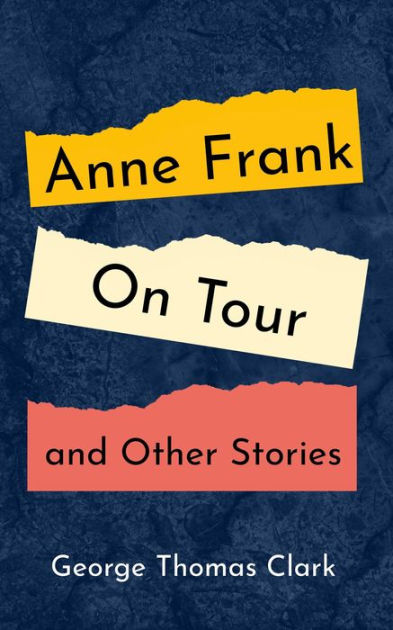
Anne Frank on Tour & Other Stories by George Thomas Clark

Anne Frank on Tour & Other Stories
by George Thomas Clark

This independently published short story and flash fiction collection was a hoot! I laughed through most of it, and moreover, if I may be frank, it was an overdue belly of snortish laughs I emitted. This collection is the sort that encourages the emission of belly laughs. For readers who enjoy a bit of snark, a bit of cheek, and a good dose of make-believe, Anne Frank on Tour & Other Stories will deliver on its eponymous promise of a “What if… ” world.

The collection opens with a section dedicated to “What Ifs”, titled “History” and a delightful tale of vengeance, “Sally and Thomas.” The title characters are Sally Hemings and Thomas Jefferson. Readers, I will leave you to discover the thrill of this tale yourselves, but know that it remits a great deal of satisfaction. Other sections are themed, “Love”, “Need”, “Excess”, and “Final Acts”, the last of which offers a fictionalized glimpse into the lives of certain long-dead celebrities. Some stories are lengthy, though not exceeding more than a reasonable ten or twelve pages; some are flash fiction, punchy bites of a few paragraphs (or less!) Most depict landscapes and characters amply familiar to ourselves: “Speed dating”, “Must Sell”, and “Online Doctor” for example. We know the people in these pages (perhaps they are ourselves, or perhaps we hope they are not) and all their flaws and funny quirks. Most of these stories are hilarious photo-realistic caricatures.

Some tales are surprisingly sobering, offering readers a respite from their giggles; but these tales might hit closer to home than one expects. This may be Clark’s special skill as an author; the subject matter of some stories is dark and perhaps triggering for some readers (sexual assault and gaslighting), but Clark delivers these messages with both humor and a powerful, succinct punch. The result is that the reader is disarmed by their own humor and left with a fading whisper of a giggle to assuage them in the aftermath of the trauma they’ve just witnessed the characters experience. In other words, the reader may find themselves smiling, recognizing the landscape of the story — and then, BAM, Clark delivers a coup d’etat, and the reader may then feel a little guilty for having laughed only a moment before. It is a rare skill to cause a reader to twist internally and Clark does it well several times in this collection. This is not a collection of tales for the sensitive or morally righteous reader. Be prepared to say, “Oh. I didn’t think this was headed that way.”

Clark’s voice is that of a matured storyteller, and it is unique. Fans of Neil Gaiman may recognize the confidence and the trace of dry humor. Fans of Margaret Atwood will appreciate Clark’s wit. Fans of speculative fiction in the vein of Ted Chiang will notice Clark’s imaginative approaches to things that never happened.

Everything the Light Touches: A Novel by Janice Pariat

Everything the Light Touches: A Novel by Janice Pariat

Lyrical, poetic, and ephemeral as its title suggests, Pariat’s novel Everything the Light Touches is an opus-like work of literary fiction. Readers who enjoy historical fiction that spans generations, speculative fiction like Cloud Atlas where the narrative leaps from one place and time to another, and botanical themes will find Everything appealing.

The novel begins in the present, and is set in India — Shillong — a region tucked between Bangladesh and Myanmar. Readers will find that this novel of India encompasses cultures and communities beyond the typical novel set in India; these are the borderlands, an India not usually seen or heard in literature or popular media. Pariat uses this site of unexplored India to their advantage. The result is a novel and mysterious India which does not resort to orientalism to achieve a sense of exoticism.

Everything straddles multiple sites and periods, setting the reader down in India’s high colonial period, taking a step back into 18th century Europe with Goethe, and bringing the author back to the present. We see Shillong through multiple eyes, filtered through multiple histories, both Indian, indigenous, and European alike.

This wide range of periods and foci make it difficult to pin down what exactly the book is about. As its title suggests, it is about “everything”, but of course, it can’t be literally. The novel is about the metaphorical and physical connection between that which light touches: the soil and earth, plants, leaves, and humans. Across space and time, the characters of Pariat’s novel are connected together, sometimes loosely as though through a vine of time, sometimes tightly as a result of proximity or intimacy. Each of the main characters is searching for something, a connection to someone else — marriage, love, parent, child — and also to the earth and its progeny, plants.

This botanical theme vines through each section of the novel. In the present it is about conservation, resource management, and exploitation. In the past it is about botanical science and the essence of growth and life. It is about humans and humanity finding a place for ourselves in the jungle mess of our lives, and about many of us finding that the jungle mess is more orderly than we thought — if we just pay closer attention, the answers are so simple: love, loyalty, and love again — in its myriad of forms.

The prose of the novel mimics the wilderness it highlights; Pariat’s text is sensuous in parts, alluring and floral and fern-like in its delicacy. Yet, simultaneously, Pariat’s prose is structured as a plant cell, symmetrical as a leaf. Some parts are even wild in being tangential and unexpected. There is a section devoted to poetry, but poetry is written all through it. This is a novel for the literary fan; while it is propelled by a plot and a structured narrative, the novel is also deeply rooted in its characters’ flaws, desires, and personalities.

Cadaverous: A Novel by Jay Bower

Cadaverous: A Novel by Jay Bower

I came across this novel in a Facebook group I’m in, and — I’ll be honest — the cover caught my eye. I know, I know, we aren’t supposed to judge a book by its cover, but dang, it is appealing. The book itself did not disappoint either! For readers looking for some Halloween horror (it is that season again), Cadaverous will deliver.

For readers who enjoy the tongue in cheek style of Grady Hendrix (and their novel, We Sold Our Souls), paranormal and demonic elements, or novels about heavy metal, rock, or music in general, Cadaverous will appeal. Music is a central theme. Bower’s novel is also, like Hendrix’s, an intellectual horror, the sort premised on what is said and unsaid, leaving the reader to organically grasp the creepiness of the story. It is horror of the outlandish and yet-could-be-totally-believable type, with a decent dose of gore and paranormal spookiness.

The novel begins in epistolary style, as the remnants of a research project gone awry. The novel is delivered mostly in this format, as a blog belonging to its main character, Gaige Penrod, a musician in a band. The story revolves around Gaige and his desire to achieve fame, fortune, and prestige through his music, and his interactions with a groupie named Lisa. The reader is never quite sure what happens to Gaige, or how trustworthy Lisa is — until we reach the end. Cadaverous is a mystery as well, up to the very end, and it leaves the reader with a tantalizing and creepy “what if….”

The novel’s characters are young; this is a young adult fiction, best suited for and written with the young person in mind. It’s an appropriate horror for a young audience, though there are mentions and references to sex, romance, and similar themes. The characters are well developed, though readers should know this is not a character-centric novel; plot propels the story.

Bower’s prose fits a YA audience and the story is straightforward and simple, though with a good share of twists befitting a horror/mystery. The language is accessible, easy to follow; and overall, the novel is well-written with a flowing pace.

All in all, a very satisfying horror read.

Fatherland: A Memoir of War, Conscience, and Family Secrets by Burkhard Bilger

Fatherland: A Memoir of War, Conscience, and Family Secrets
by Burkhard Bilger

Fatherland: A Memoir is a must-read for readers who gravitate to histories of the European theater of WWII. The book is a case study, illuminating aspects of the human side of these histories which are often left in the dark: here, what happened to those millions of Germans who were caught up in the Nazi machine, willingly or otherwise? Significant numbers of the German citizenry did not support the Nazi party, but as the regime gained power Germans were pressured into adopting or participating in its politics in both minor and significant ways. Thousands were caught between survival and their beliefs, others benefited from the regime’s policies, witnessing no ill-effects as so many millions of others did.

War and ideological divides produce so much more intimate conflicts and consequences than politics would suggest. Fatherland makes this complexity abundantly clear, and more importantly, without being apologetic or sympathetic to Nazism. Indeed, it highlights the different between Nazi party members, Germans, and the Nazi state, forcing the reader to see beyond the inaccurate and unjustified conflation of these constituents with one another.

Bilger dives into their own family history to produce a prosopography, one which explores the complicated consequences of surviving the Nazi regime before, during, and after the war, especially for those who were forced or otherwise minor participants in state operations. Their family derives from a region of Europe straddling the often fluctuating boundary between France and Germany, Alsace and the region around the Black Forest. This geography has — and continues — to produce a culturally and politically fluid community. Bilger also looks beyond their own family, including the personal war-time histories of other German and French citizens in their proximity: for example, mayors of the myriad of French-German towns who were caught in the Nazi and French crossfire, and women who were forced to interact (in platonic and other ways) with German soldiers or Nazi officials.

During the interwar and WWII years, citizens found themselves dispossessed of either their French or German identities, subject to changes in language, dress, and culture as politics blew one way or the other. After the war Germans and French alike found themselves needed to pick up the pieces of their lives, and grapple with former enemies living in their midst. Questions of culpability rent communities and families apart in the aftermath of WWII as war crimes were being prosecuted; to what degree was Life and the Need to Survive responsible for the choices that people made? To what degree was circumvention of Nazi policies a resistance against Nazism? Did local officials and citizens pander to Nazis out of genuine belief in the regime or were their actions made under duress? Did neutrality absolve people from being responsible for war crimes that occurred?

Indeed, the years following the end of war were some of the hardest, perhaps even harder than during the war for some Germans and French. This aspect of Fatherland is, to this reader, its most poignant and significant contribution; war does not begin with a declaration, nor does it end with a surrender and a treaty. War begins so much earlier, the combat and physical destruction being only its peak, and it lingers on for years, even decades, afterward. Bilger reveals that in the case of Germans, the effects of WWII remain today; it is a scar stretched across multiple generations.

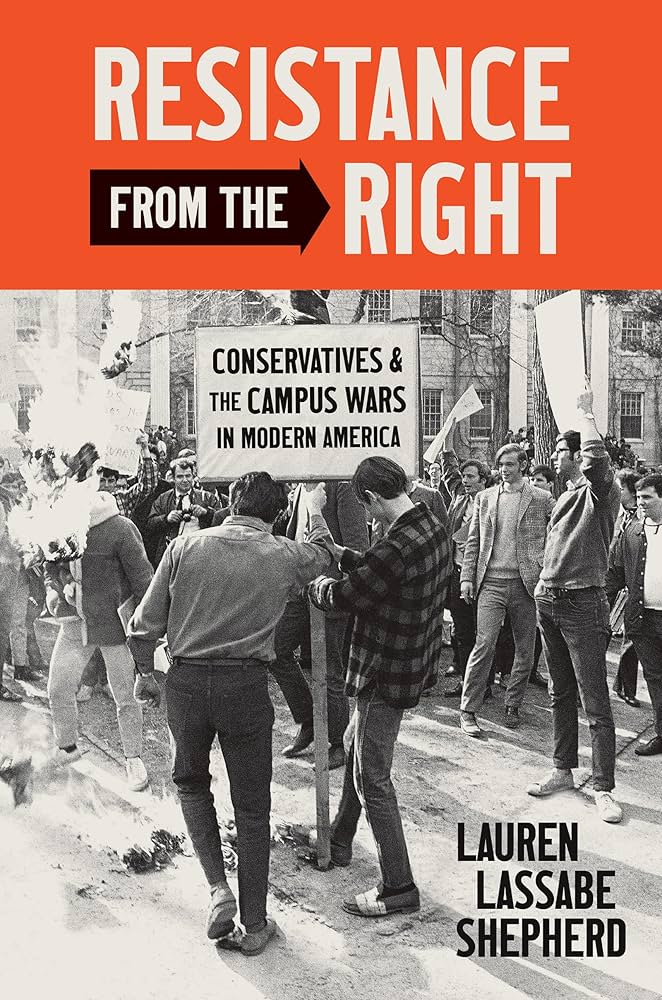
Resistance from the Right: Conservatives and the Campus Wars in Modern America by Lauren Lassabe Shepherd

Resistance from the Right:
Conservatives and the Campus Wars in Modern America by Lauren Lassabe Shepherd

In the ever-increasingly bifurcated world of American politics, Lassabe Shepherd’s monograph on the tactics of the conservative right to achieve a voice and influence on American college campuses is more than well-timed. This book uncovers the depth of today’s conservative/liberal divide, and while it focuses on the site of the university campus and highlights the actions of student organizations, bodies, and activists through the 1960s, 70s, and 80s, it also brings to the fore the work of conservative academics who made these student-based activities possible. Emerging out of this history is the current network of conservative activists, academics, scholars, and strategies, their aim not much different than it had been, but accelerated and perfected: to amplify conservative values and ideology regardless of popular opinion, consensus among the student population or American population at large.

Lassabe’s argument, in essence, is layered: conservatives adopted the strategies of the liberal left for its own intentions and benefits with great success. In doing so, these conservative campus constituents undermined the efforts of the left and were able to achieve institutional and legislative changes favorable to their ideas. Over a period of decades, these conservative parties circumvented the majority — and largely liberal — voice, to ascend to a position of power and policy-making within the university and beyond it. Conservatives operated through and targeted their efforts towards institutional mechanisms to override liberal efforts and enact their values and ideologies in policy.

The book is divided into two parts, the first attends to “Coalition Building” and the ways in which campus conservatives found like-minded students, academics, and other supporters. In these chapters, Lassabe Shepherd reveals to the reader the ways in which conservatives adopted similar but oppositional signaling from the Liberal Left through sartorial means, appearance, and branding. In the second section, titled “Law, Order, and Punishment” chapters highlight the effects of the American War in Vietnam, the rise of Black Studies and other Ethnic Studies, or Area Studies departments in the university, as well the development of a network of conservative students, scholars, and external (to the university) supporters, many of whom entered the world of politics beyond the campus in the last decades of the 20th century; their work has contributed to the conservatism and its political strategies today.

The subject matter of Resistance From the Right indicates a clear target audience, though the monograph would be an immersive and revelatory read for most members of the educated public (liberal, conservative, or independent alike): that is, liberal scholars and educators in American academia today. Lassabe Shepherd answers a question most liberal scholars puzzle over, though it is never explicitly written in the book itself, and that is: Why and How did we end up with such conservative regulations, policies, and protocols when we seem to have such support for liberal values and ideas? Or, the more colloquial form, “What the H happened to us?” As universities continued to grapple with far right propaganda and groups on campuses, hate crimes and violence, racism, and classism, many administrators, faculty, and staff struggle to reconcile the diametrically opposed operations of their institutions with their own (typically liberal) perspectives.

Resistance From the Right is a necessary read for all American academics. It explains a lot.

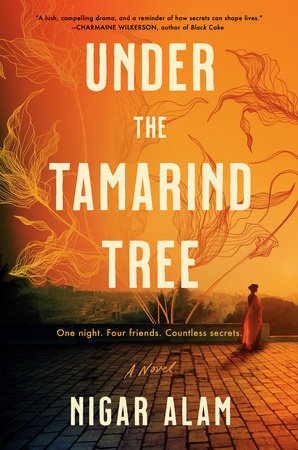
Under the Tamarind Tree: A Novel by Nigar Alam

Under the Tamarind Tree: A Novel by Nigar Alam

The novel revolves around an Indo-Pakistani family in the 1960s, a decade or so after the Partition from India. They have settled in Karachi and its members are navigating through the 60s in various ways, some questioning their belonging in Pakistan and others questioning the future they’ve been told they should have. As the next generation, the younger generation Rozeena and her friends seek to break the norms of tradition, but their parents and society also hold them to the past, one in which young women get married, have children, remain in the domestic inner world. There is an allusion to a traumatic event in 1964, but it is shrouded in some mystery for most of the novel; it is the catalyst which changes the course of Rozeena and her friend’s lives. The novel toggles forward to 2019 and back to the 1960s, unraveling the story of Rozeena and her friends. as it does. In 2019, the same resistance to social conformity duplicates itself in Zara, a young woman under Rozeena’s care.

Unearthing: A Story of Tangled Love and Family Secrets by Kyo Maclear

Unearthing: A Story of Tangled Love and Family Secrets by Kyo Maclear

This is a literary memoir grafted upon botanical themes of growth, seeding, seasons of harvest. Kyo begins with a desire to understand her complicated parents’ history and her mixed race identity. (Kyo is part Japanese, part white, and wholly British.) Kyo struggles with a reticent parent and the death of another.

As a result of a DNA test and through a careful pruning away of her parents’ past and the debris of their romance, Kyo uncovers an even more complicated undergrowth of family and connections. Their memoir throws into question the meanings of belonging, the bonds of love and how far those far are biological.

In some chapters Kyo refers to a woman whom her mother was friends with — perhaps Yoko Ono, though Kyo does not state this outright — and with whom they shared the connection of a child. The focal point here is not celebrity, but the degree to which an individual is a mother or a child to another.

The memoir also addresses the question of normativity and the ways in which women — especially Asian women — are captured and categorized in a Euro-White-centric society.

Maclear writes like a poet. The memoir reads like a poem, a long and winding one. It is lyrical in its delivery as well as in its perspective; the vines of connection are sinuous and undulating and tangled.

The Brightest Star: A Novel by Gail Tsukiyama

The Brightest Star: A Novel
by Gail Tsukiyama

I read this novel along side a non-fiction biography/prosopography of Anna May Wong’s life and times, and honestly, I don’t know if that boded well for my review of this novel! In short, I found Tsukiyama’s fictive treatment of Wong’s life bland and depthless. I wanted interiority, a deep dive into Wong’s subjectivity. I wanted a view of Wong as a woman, as a human being, as a daughter, as a sister, anything, but not as a star.

Sadly, Wong’s characterization in the novel was one-sided, though to Tsukiyama’s credit the facet chosen was one that warrants highlighting: Wong here is portrayed as underfoot the racist boot of Hollywood, the racist weight of America and the White, Colonized world bearing down on her ambitions. I appreciate Tsukiyama’s attention to this racial and racist history; Wong was indeed a woman of her era, a victim of yellowface and orientalism. But I wanted more.

Perhaps I am not the target demographic for this novel; I know this history as a professional, I live its legacy as a Chinese-American woman in a state founded on White Supremacy. I am more than a target of racial hatred, more than a colonized human being, more than an Asian Woman, and so I wanted Anna May of The Brightest Star to also be more, to allow me entry into her mind, her heart, her existence as a lover, as a sister, as a friend. I wanted to know the facets of her that moved beyond the armor she had to wear to protect herself from the world.

I recognize that I already know the racist history Tsukiyama highlights, the weaponized language, the sneer against color, the snide remarks, and that this colors my view of the novel. I recognize that many other readers likely do not know this history. For those whose decolonizing journeys are just beginning, The Brightest Star will deliver a poignant and profound glimpse into Wong’s life as an Asian woman objectified and consumed as Other. Tsukiyama does a fantastic job peeling back the layers of glamour to reveal the ugly side of Wong’s stardom.

Daughter of the Dragon: Anna May Wong’s Rendezvous with American History by Yunte Huang

Daughter of the Dragon: Anna May Wong’s Rendezvous with American History by Yunte Huang

It’s only August, but I know Daughter of the Dragon is one of the best histories I have read this year. It ranks pretty near Number 1 right now. Huang delivers more than a life in this biography; Daughter of the Dragon is a portrait of Asian American history in all its glory and ugliness, it is a history of a community, an ethnic group, a skin color as it played out and was embodied by Anna May Wong.

Anna May Wong’s life is a microcosm of Asian American history, of American history.

Huang’s research is impeccable; each chapter is fully fleshed out with evidence from previous scholarship and archival sources. Letters to and from friends and family, press interviews, and a myriad of other Hollywood ephemera serve as Huang’s fodder. But Anna May’s own voice is rarely invoked; it would appear that few records in her own words exist, though Huang uses what artifacts she did leave behind. Putting the patchwork together as any good historian does, Huang captures and interprets her voice for us in his own; Anna May comes through the pages as if she were seated on the edge of desk, cigarette in hand.

The book follows a typical biographical chronology, from birth to death and everything in-between; however, Huang leans heavily toward Wong’s filmography as the measurement of her state of mind as well as a platform for a deeper discussion of legislation against Asian American citizenship and social standing in the American popular imagination. This is more than a biography, and while Daughter of the Dragon reads like a filmography: it is a vivid cultural history of Asian American film and representation in Hollywood. Indeed, Anna May Wong was a by-word for Asian American film for much of the twentieth century and her career. There can be no discussion of Asian representation in the media without her.

The result is a very satisfying history.

Strange Eden: A Novel by Gina Giordano

Strange Eden: A Novel
by Gina Giordano

Strange Eden is a novel of many things. Foremost, it is a historical fiction set in the Bahamas in 1791, as the British Empire consolidates its colonies in the Caribbean and mourns the loss of its American ones. The story revolves around Eliza Sharpe née Hastings, a young English girl of the gentry class and her life as the bride of Lord Charles Sharpe, the scion of an old Colonial family and a Lieutenant Colonel in the British Army at Nassau. Their union is a relationship rife with hostility and repulsion; it is a core pillar of the novel, as is Eliza’s and Charles’ relationship with one of this old friends, Jean Charles de Longchamp.

Romance aside, the novel also possesses paranormal elements, political intrigue, and feminist assertions. Eliza is a young woman with many gifts, some which are less desirable in the highly hierarchical and patriarchal world of the Colonial 18th century: a fierce independence, a boldness of spirit and tongue, a sharp intelligence in matters spiritual and political, and an ability to see that which is beyond the visible. In her adventures on the island, Eliza encounters those who expand her view of the world and those who would seek to limit it. It is a diverse cast of characters: Lord Dunmore, the governor of the island, Charlotte and a host of aristocratic society women, Cleo, an enslaved obeah woman, pirates and smugglers, and a mysterious shadow man. Each one paints this Strange Eden in garish and sober colors. It is a paradoxical place for those who are free may also live in chains, though made of silk and gold, and only those who are enslaved know the notion of freedom is an illusion. The novel’s title is apt: what is a paradise for some is very often not a paradise for a great of many others.

This dissonance is what makes Strange Eden shine as a work of historical fiction. For this reader, the appeal of the novel is its attention to historical notions of gender, race, and class. Giordano includes a bibliography at the end, and it is clear that she has done a great deal of research. I hesitate to consider the novel appropriate for the classroom; it is not. The research is good, though not at a professional level. But it was not meant to be; Strange Eden is not a textbook. The historical research Giordano has done remains a positive attribute of the novel nonetheless.

Giordano highlights the expectations put upon women of Eliza’s aristocratic class, and the overarching misogyny women experienced in this era. This is a theme which threads throughout the novel. The expectations of white upperclass women are contrasted against those imposed on enslaved women, like her young maids, Celia and Lucy, and contrasted against the rights and privileges of powerful men like Charles, her husband, Jean de Longchamp, and Lord Dunmore.

Giordano also pays close attention to the slave trade in the Atlantic, racial hierarchies risen out of Europe’s Enlightenment, and the paternalistic racism of the so-called “Civilizing Mission” as it was inflicted on the indigenous and persons of color in the colonies. Britain’s slave trade was abolished in 1807 and the practice itself in 1833, several decades after the moment of the novel; the novel is bold in its recognition of the tension between abolitionists and slave-holders at this time.

Strange Eden delivers a powerful lesson about the gendered and racial notions of the British Colonial world.

The mode of its delivery unfolds at a languid pace. The novel’s prose is thick with description, rich like the molasses that were produced in the Caribbean islands the novel is set in. In some parts the prose, to stick with the analogy to molasses, is unrefined for this reader; on occasion its phrasing conveys cliché over clarity or is redundant, perhaps benefiting from further editing. These do not degrade the novel on the whole. Giordano delivers a cohesive narrative, tangible characters and dialogue, and — most importantly for this reader — weaves a textured fabric of the period. Readers will find the prose is performative of the heat, vibrancy, and slow pace of life inherent in the British colonies of the 18th century. The result is an immersive read.

Readers should also know Strange Eden is the first of a series. The novel ends on a cliffhanger, “to be continued“; however this should not dissuade readers for two reasons. First, the novel ends at 517 pages allowing one to meander through it at their leisure until the next in the series is available and second, the novel has the strength and narrative arc to stand alone without its sequel. The ending satisfies.

To purchase a copy of Strange Eden click here. At present, you can purchase it on Amazon for $19.99 (paperback) or $4.99 (Kindle ebook).