
Before Your Memory Fades: A Novel by Toshikazu Kawaguchi

Before the Coffee Gets Cold #3

Before Your Memory Fades: A Novel
by Toshikazu Kawaguchi

Before Your Memory Fades is the third installment of the Before The Coffee Gets Cold series. It picks up directly where the second novel, Tales From The Café leaves off. I thoroughly enjoyed the first novel and loved how the second one tied up loose ends; this third novel follows with the same pace, cadence, and story. For those who love the way the past and present and future intertwines and the mythology of the series, Before Your Memory Fades will feel like a warm welcome in an old and familiar place (the Cafe Funiculi Funicula, of course!)

For me, personally, Before Your Memory Fades made less of an impression on me than I expected. I think I had tired of the story; indeed, there was nothing necessarily new in this novel that the previous two had not delivered. The emotional payoff for me was spent, but this does not lessen the potential payoff of the novel for a fan of the series: There is a ghost, albeit a new one, in The Seat in the café and there are new eager patrons who come to use the time traveling device to correct some wrong they have committed in the past or have yet to commit in the future. Then there is the same terrible lesson they learn: that love and obligation are on the same sides of the coin and that they cannot change the events fated to them, but the knowledge they learn in the past or future can change their hearts and souls in their present.

We are reintroduced to familiar, new, and newish characters, Nagare and Kei’s now teenaged daughter, Miki, and a new employee, Reiji, who works at another café in the “family”, Café Donna Donna, which also has its own time-bending seat, its own ghost, and its own crew of café regulars, Nanako and Dr Saki Muraoka, There are familiar characters: Nagare and Kazu. There is also Kazu’s daughter, Sachi, who is the newest Tokita woman to wield the power of the coffee and time travel. There are new patrons who arrive at the Café Donna Donna to rewrite their pasts: a daughter who seeks out her parents and a way to manifest her vengeance, a comedic celebrity who needs to tell his wife something important, and others.

All in all, Before Your Memory Fades delivers on its promise. It is a fantastic addition to the existing two novels. It continues the tradition of the Café Funiculi Funicula, giving the reader more of what they fell in love with in the first novel.
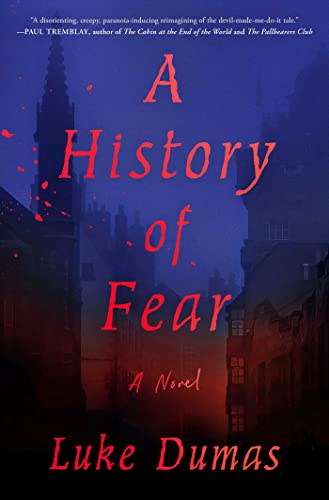
A History of Fear: A Novel by Luke Dumas

A History of Fear: A Novel
by Luke Dumas

By page three, I was hooked. The ending comes to a perfect, organic conclusion — but I readily admit that if Dumas writes a sequel, I’m all in.

A History of Fear unfolds like Stoker’s Dracula, adopting an epistolary approach, delivering the story via journal entries, letters, official reports from doctors, prison officials, and newspaper articles. The novel dives deep into the most disturbing parts of human psychosis reminiscent of Dostoevsky’s Crime and Punishment. It delivers gothic horror too, in the manner of Shelley’s Frankenstein. In the end, the reader can’t be entirely sure of who is the monster, if demons are real, if evil is more human than we comfortable with. A History of Fear is a horror fan’s feast: gore and psychological terror stride side-by-side, the paranormal and the divine and the mundane intertwine to create a world the reader is never entirely sure is real. Illusion may very well be reality… or worse.

But the story is not fantasy; there is a real history embedded in this novel — and a commentary on a history of monstrous bodies, sexuality, religion, and intergenerational trauma. There is a reality underlying the one Dumas weaves for us. This is what makes the novel so appealing; there is a real horror here, one that we can recognize. This history is one that might be so common as to be truly terrifying because it might actually exist within ourselves. Or someone we know.

A History of Fear follows the main character’s slow descent into madness — or his ascent into clarity, depending on your interpretation. There is a true mystery here and this drives the story forward. The reader needs to discover what the main character also seeks: some sense of closure and parental acceptance. The main character is driven by a need to know themselves and their past. This is a genealogy of a family and the homophobic culture of the West. Dumas focuses on the psychological damage inflicted on those who deviated from the dominant norm and those who dared to question their place in it. The novel travels between the past and the present, each part of the jigsaw puzzle adds to the image of the whole of time, allowing the reader to witness the unraveling of the man’s mind and the suffering caused by intergenerational trauma.

The novel opens with the main character’s eventual, inevitable fate; this is the mystery. We know what happens to him. The mystery is why and how. The horror is the long arm of intergenerational trauma.

A wonderful book to have read in October, the Halloween month, but really, a fantastic gothic horror for any time of the year.

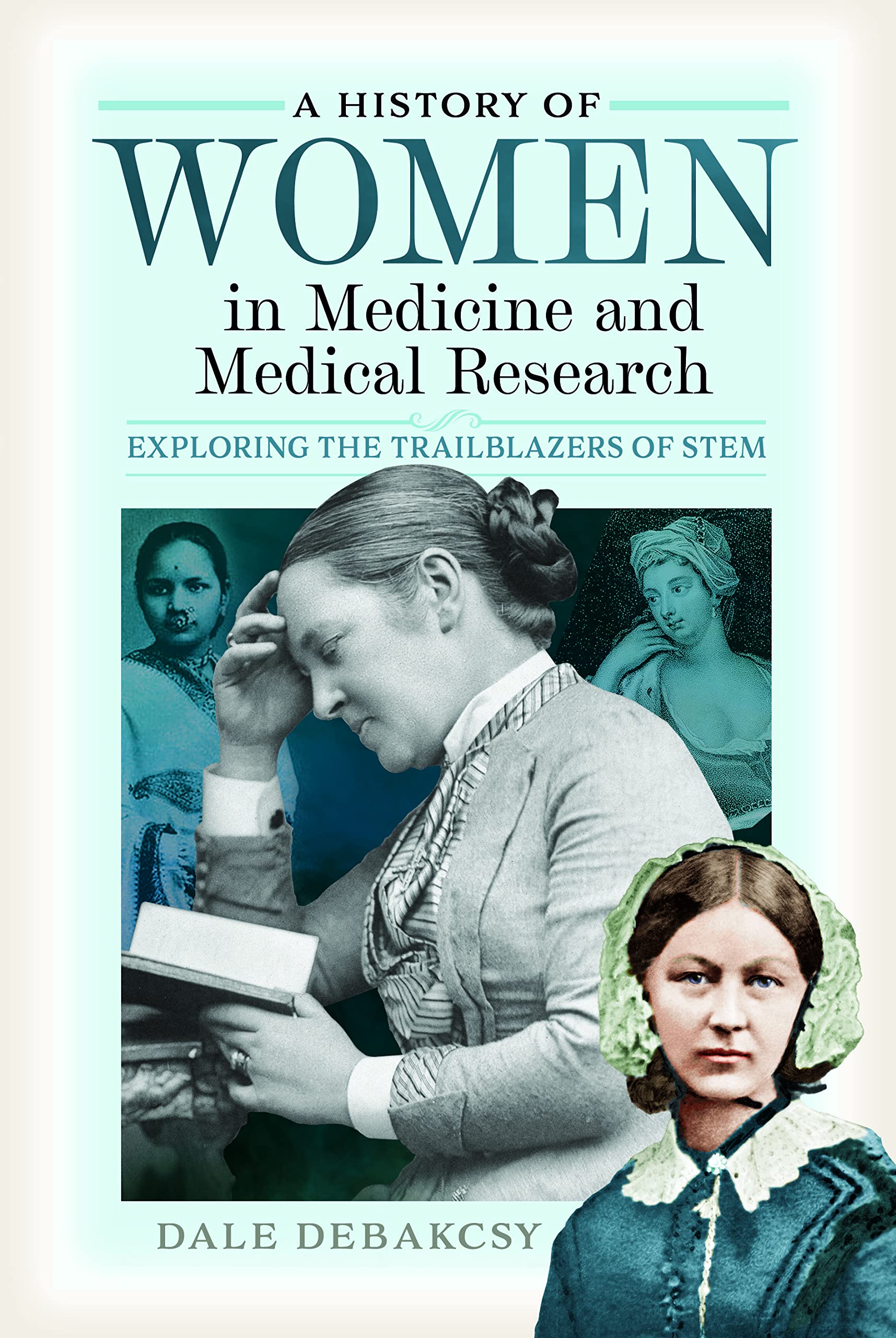
A History of Women in Medicine and Medical Research: Exploring the Trailblazers of Stem by Dale Debakcsy

A History of Women in Medicine and Medical Research: Exploring the Trailblazers of Stem
by Dale Debakcsy

I loved reading this ARC (Advanced Reader’s Copy) so much I pre-ordered it! Eye-opening, superbly written, and well-researched. I cannot think of higher praise for a non-peer-reviewed non-fiction written for a general audience. I can’t wait for my copy to arrive so I can re-read it!

A History of Women in Medicine and Medical Research: Exploring the Trailblazers of Stem is broken down into several chapters, each one focusing on a specific woman, her personal background or life story, and her professional career in the sciences. The book progresses chronologically from the 16th century up to the near present, ending in the 1970s.

Each chapter ends with a section devoted to further reading and sources. While the book lacks citations and formal references, these inclusions are especially valuable. This kind of historiography is difficult to discover without a significant investment of time and effort making Debakcsy’s book all the more useful and appealing. I do not mind admitting this is a key reason why I have chosen to purchase my own copy.

These are not long or exhaustive studies of each individual; these historiographical sections allow the reader to explore further. That said, the brevity of each chapter is not a detraction. These are easily digestible chapters, perfect for classroom use or as readings for an undergraduate course. The chapters capture all they need to, leaving the reader satisfied but curious for more.

The women themselves are fascinating subjects, not only for their contributions to STEM, but also for their perseverance and resilience in the face of class, gender, and racial prejudices. Many of the women derive from the upper classes, but a significant number of them are working- or middle-class. Some were immigrants or enslaved (or lived just outside that category). Many had to break with their families to pursue their dreams. In many cases these women knew or knew of one another, interacted closely or within similar professional circles. A cohort of pioneering women in these fields is visible in the 19th century, particularly in the fields of medicine.

While the majority of women examined and brought to light in DeBakcsy’s book are white, European or American, there are also significant chapters focusing on women of color in the Western world. These are mostly (but not exclusively) black women who broke academic and professional ceilings.

This is a fantastic book for the classroom and any library (academic and home, alike). I cannot wait for my copy to arrive!