Playing Doctor: Part 3, Chief Resident Tumbling Towards Medical Practice by John Lawrence

Playing Doctor: Part 3, Chief Resident Tumbling Towards Medical Practice by John Lawrence

Lawrence gives us a hilarious memoir, one that rips the bandaid off the mystery of the medical profession (am I punny, or what?) Playing the Doctor Part 3 highlights how human our medical professionals are. Their trials and insecurities are no more tragic or exotic than our own (non-medical professional here). Lawrence’s prose and smooth sense of phrase is a large part of its success; brevity and levity are promised and delivered.

I won this book on Goodreads giveaways, which is why I don’t have Part 1 and 2; but, I did consider buying Parts 1 and 2 before reading this one. I didn’t, but Lawrence’s humor and wit made me think about it. As a reader of only one part of this series, I can say that readers will find it possible to dip into it without needing the previous parts; Part three stood on its own. That said, there are references to events from Parts 1 and 2, which may have added to the joy of reading this memoir.

The ability of Part 3 to function well as a standalone is, unfortunately, also one of the books detractions. There is no overarching single narrative or story arc, but rather a series of chapters which could be discrete works on their own (except for the references to past events). The result is that Playing Doctor reads more like the Diary of a Doctor, rather than as a novel. Readers might find they could put down the book and not return to it, as there’s no inherent incentive to “know what happens next.” This is, sadly, what happened with my reading of it; I think I finally completed it reading it on the third attempt, with several months lapse in between.

Overall, however, it is an entertaining read, one which is likely to make you smile and grimace simultaneously.
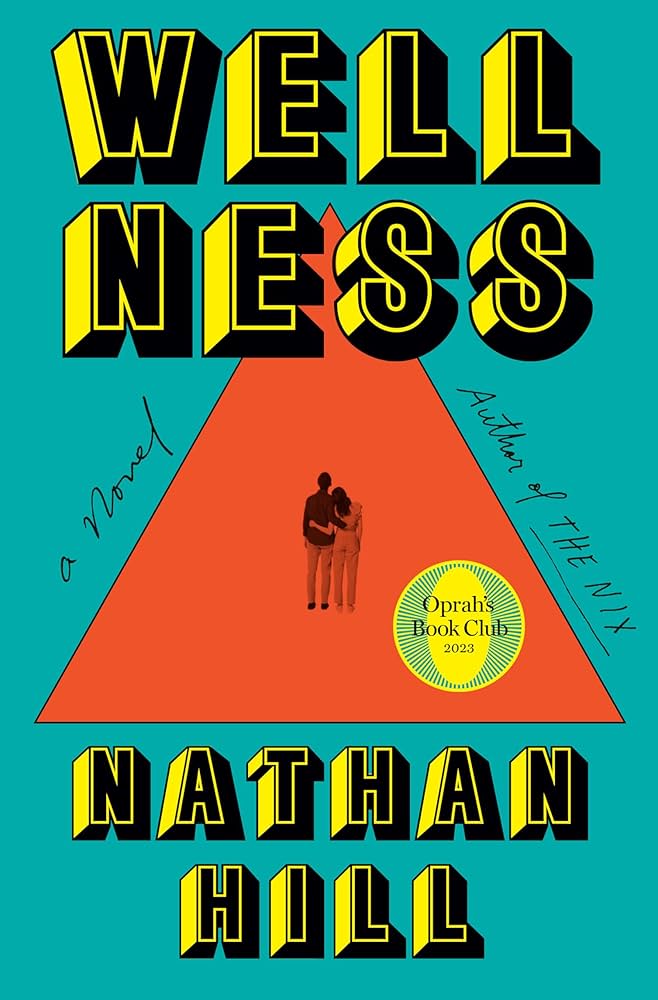
Wellness: A Novel by Nathan Hill

Wellness: A Novel by Nathan Hill

The best – BEST – book I have read in awhile. This novel deserves all the awards, and I’m not only saying that because I lived in Chicago-land, where the novel is set, but because the story and the story-telling is so amazingly delivered. To borrow a phrase from Spinal Tap‘s Nigel Tufnel, “this one goes to 11.”

Wellness revolves around the romance, marriage, demise of said-romance, and self-discovery of a couple, Jack and Elizabeth. Their 9-year old son, neighbors, old friends, and parents also play — as to be expected — significant roles in this account of their mid-life crisis. It’s a mundane and perhaps all-too-familiar tale of life lived and regretted, of the parts of ourselves we lose along the way. This is the draw of the book; it is immensely relatable — at least for those of us of a certain age. There are bits of Jack and Elizabeth in us all, and for those of us who parents, the novel highlights the agony of parenting, especially as mother.

It’s the story of what you do when life doesn’t seem to have delivered what you promised yourself, and — as the novel progresses — it’s the story of why that happened.

At 600+ pages, this is a doorstopper of a novel, but Hill’s prose is so smooth, the story so compelling, the characters so intriguing, that I finished the book in about a week, roughly a hundred a pages a night. A feat given that I read this book during and just after Finals Week of the semester when I had to knuckle down and grade.

And Hill is hilarious. Several parts and dialogue made me laugh out loud; not only could I see myself at the Metro (been there, yes) and some of the other places where Jack and Elizabeth lived out their romance, but Hill allowed me to laugh at myself and my past a little bit. Readers of my generation are likely to find some humor in the pretentiousness of our younger selves in this. I did, and loved the confrontational reflection I had with myself afterwards.

The book will date you and itself, but I think it’s destined to be a classic of our moment.

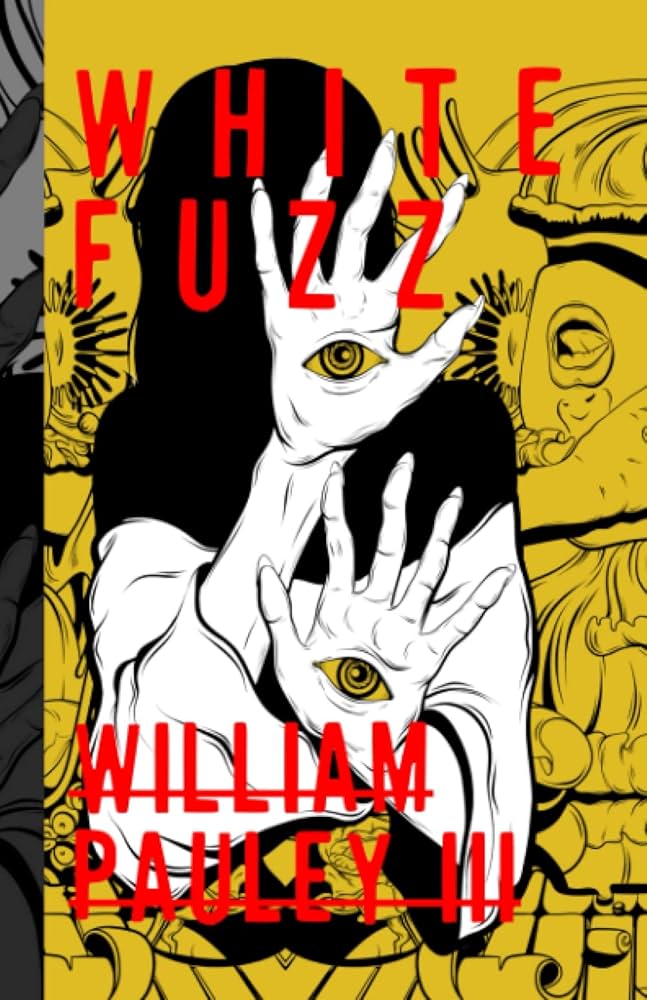
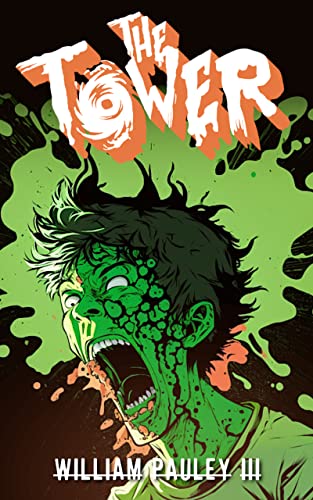
The Tower & White Fuzz: Bedlam Bible #1 and #2 by William Pauley III

Bizarre is the only word to describe these stories. The Bedlam Bible series, of which The Tower and White Fuzz are the first two novellas, revolve around a residential building in which the residents are trapped. Strange, monstrous things happen to them. They are often themselves the monsters. There is a sense of gothic madness in these tales.

In The Tower, we are introduced to the building, the Eighth Block Tower, where these events occur. The Tower consists of three stories: “Hypanogogia,” “The Invalids”, and “Under Green Brain”, while White Fuzz is its own standalone story.

I hesitate to tell you any more, because it really would ruin the surprise and shock of reading them yourself. Readers who enjoy speculative fiction, horror, or science fiction are likely to enjoy the otherworldliness of these stories. Collectively, they ride the border of horror and science fiction. Readers will find them reminiscent of Kafka and Kavan in that there is an internal insanity at play here. Or, if television is your thing, one might liken them to American Horror Story or particular grotesque version of Black Mirror.

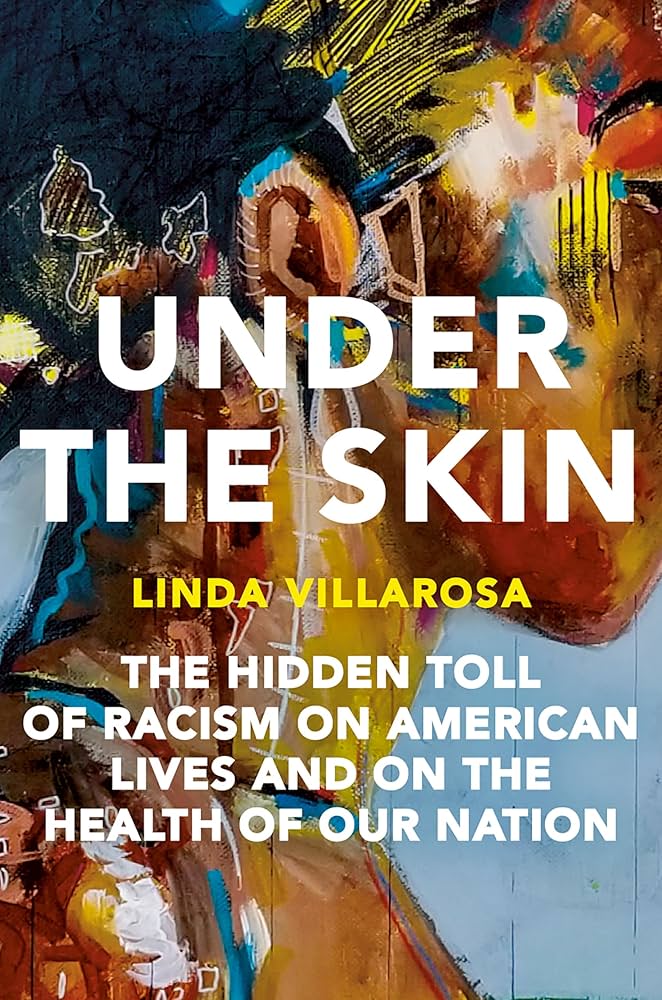
Under the Skin: The Hidden Toll of Racism on American Lives and on the Health of Our Nation by Linda Villarosa

Under the Skin: The Hidden Toll of Racism on American Lives and on the Health of Our Nation by Linda Villarosa

Under the Skin is the kind of book you dread to read, but once you start, you’re compelled to see it through — not because you like its contents, but because it would be immoral to look away. Indeed, it would be more than a little awkward to say that I liked the things I learned in Villarosa’s documentary of healthcare in America today. It is more accurate to say these were things I needed to know to in order to live in America today.

I read this for a book club at work; I work at a university so some of the messaging of Under The Skin felt like preaching to the choir, but it was, nonetheless, a lesson worth learning again. What lesson is that? Racism is not “over” and it hasn’t “ended” in any kind of definitive way. Anti-blackness especially is a legacy that remains and it’s tentacles are long and far reaching.

Indeed, its toll is not as hidden as it appears. Its toll is a scar and a fresh wound in living flesh.

This is a book worth reading at least once, and I would say, especially for women of color, for whom the tax of racism is higher, more exacting, even sometimes fatal.

Happiness Falls: A Novel by Angie Kim

Happiness Falls: A Novel by Angie Kim

I have such mixed feelings about Happiness Falls: On the one hand, it was a brilliant mystery and a dynamic, swift family drama. Equally, its attention to matters of ability and disability struck a profound note for this reader. On the other, the flaws of its characters annoyed the hell out of me. Still, hats off to Kim who wove the story and its characters so seamlessly together that I compulsively — and sometimes against my will — read to the very end.

The noel revolves around a mixed race, Asian and White American family: parents (Hannah and Adam), two young adult children (Mia and John), and an adolescent son (Eugene) who has a mental disability and is non-speaking. One day Adam and Eugene go missing. Eugene returns, injured and unable to articulate what has happened to his father. As the police, authorities, and the family attempt to unravel Adam’s last know whereabouts and uncover the mystery of his disappearance — and hopefully, his safe recovery — family secrets, fears, and flaws come to the surface.

A distinctive appeal of the novel is how Kim embeds a discussion of ability/disability rights and the treatment of persons with disabilities into this tale. What assumptions do normatively abled persons make about those who express themselves differently, about those who are deemed “disabled”, and about the parents and their responsibilities to society and their loved ones with disabilities? It is this element of the novel which makes it so resoundingly relevant and contemporary to our moment.

What then did I find so irritating about the novel? Mia. I found Mia irritating. I found myself annoyed with her youth and rigidity. I have little patience for inflexibility in fictional characters (ironic and hypocritical, I know, but there I am). Still, I could understand her position, and Kim speaks through Mia, as the primary narrator of the novel, with a depth of skill I can only envy as a writer.

The resultant dissonance makes Happiness Falls an engrossing read, one which I could not tear myself from until I reached its end.

These Things Linger: A Novel by Dan Franklin

These Things Linger: A Novel by Dan Franklin

What lingers afterwards is how wonderfully creepy this novel is. Readers will find These Things Linger a fantastic combination of paranormal horror and literary fiction. It is a tale of a haunting, but Franklin’s delivery and the depth of his characters make this a unique ghost story. Franklin unspools the terror in a fashion reminiscent of contemporary gothic literature, The Hacienda by Isabel Cañas or Silver Nitrate by Silvia Moreno-Garcia, except that the protagonist is male.

Alex is a young man on the edge of his future. He is starting a new career and building a prosperous, fulfilling life with his fiancé, Raychel and their soon-to-born child. He abandons a past and a world that he no longer belongs to, but then a family crisis forces him to confront those he has left behind. The novel immerses the reader in the trauma of its protagonist, framing the horror as deeply personal and intimate. Readers of classic gothic horror and literary fiction will appreciate the reflexivity and character-based approach Franklin takes; indeed, the unraveling of Alex’s sanity is what makes These Things Linger so successful as a horror novel.

Story aside, the novel is well-crafted. Franklin’s prose invokes more than just imagery, it builds an affect of fear, successfully persuading this reader to keep reading well into the night. Despite an occasional clichéd metaphor or turn of phrase, Franklin’s authorial voice is clear, confident, and distinct. Independently published novels often suffer from fractured writing, fuzzy characters, or clipped stories; but, These Things Linger does not. Alex, Lacey, Raychel, Uncle Matty, and Buzz are fully tangible characters. The novel’s tempo is swift (here is where it diverges from the typical gothic horror); the pace at which the secrets of Alex’s life are revealed to the reader produces a compulsion to read on.

These Things Linger deserves a spot in your To Be Read List. If it is already on your TBR, it ought to be moved up in the queue.

Yolk: A Novel by Mary HK Choi

Yolk: A Novel by Mary HK Choi

Yolk made me feel things, not all of which was pleasant. Nonetheless, I was drawn to finish it, indeed, compelled to finish it.

The novel revolves around two twenty-something Korean American sisters, June (the elder) and Jayne (the younger) living in New York City. June has graduated from college and begun what appears to be a flourishing, successful career, while Jayne is struggling through college. Both are new adults, learning how to navigate relationships and new responsibilities. Both fail the task. But find themselves needing and relying on the other to come to terms with their limitations, desires, their shared history of being yellow and first generation immigrant kids. The reader is treated to a front view of the wreckage of their attempts, watching the sisters bungle every decision as they try to find their way in the world and figure out who they are.

There were parts of this novel I loved, and parts I utterly despised.

I liked the focus on family, and the ways in which being a child of immigrants and the immigrant experience unfolded here, not in a pedantic way that highlights only the awful or only the positive, but all of it. I liked that. But I loved how Choi turned this multifaceted way of looking at the immigrant experience — already great — into a journey that reveals belonging as both a positive and negative transformative factor. I love that Choi acknowledges there is no reconciliation here, no transcending “final” outcome that makes it all perfect in the end.

I liked Jayne and June’s closeness, the assumption of sisterhood. I enjoyed being a voyeur to their dysfunctional relationship.

I hated their privilege, and their obliviousness to it. To be blunt, I hated Jayne. Jayne reeked of “I am the main character” vibes and I couldn’t stand her immaturity. June wasn’t a favorite either. But that said, I appreciated Choi’s ability to make such a horrible characters so readable. Much as I hated the sisters, I had to know what happened to them, how it all resolved in the end.

I don’t think I’d ever want to read Yolk again, but I’m glad I did read it once.

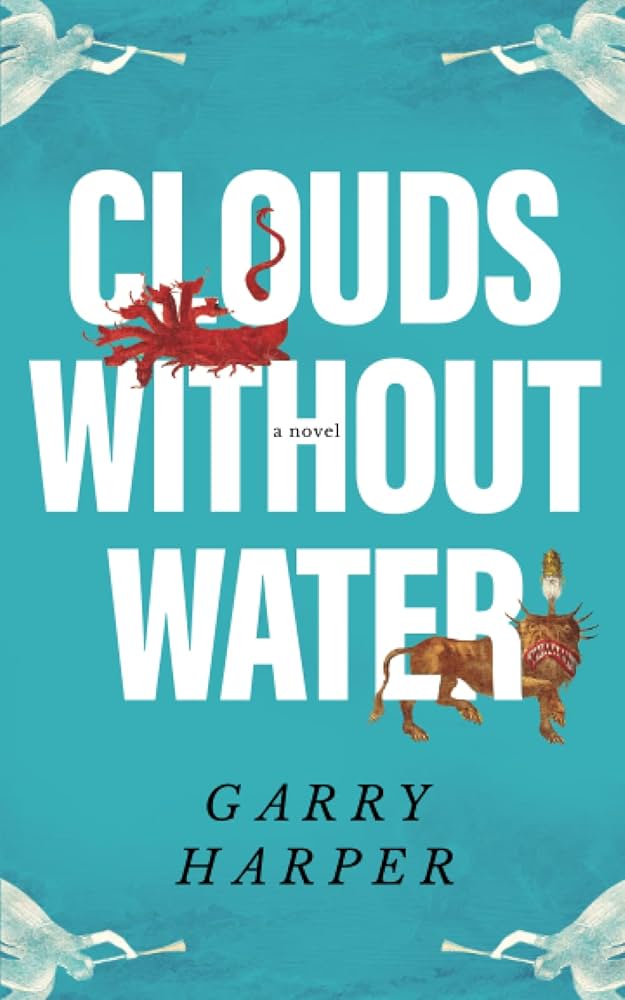
Clouds Without Water: A Novel by Garry Harper

Clouds Without Water: A Novel by Garry Harper

Clouds Without Water was a slow burn for me, but it did burn bright — especially in the second half — compelling me to keep reading to discover what happens to Calvary and its more independent-minded denizens.

The novel is a fiction around true events, The Millerite Movement of 1844, in which the Second Coming of Christ and the end of the world was predicted for October 22nd 1844, and The Great Disappointment, when the predicted end did not materialize. Delivered in two parts, Clouds Without Water delivers a portrayal of the community and town at the epicenter of these events, Calvary, NY, where the Millerite Movement begins under the direction of its eponymous leader, Reverend William Miller. Part One focuses on the rise of Miller’s influence, Part Two on what happens when the Apocalypse fails to occur, the subsequent social fallout.

The story the novel promises is fascinating. But Harper’s prose… Well, this was the novel’s “great disappointment.” Harper is heavy-handed in Part One, and the voice behind the writing feels biblical in a supercilious sort of way. There is a plodding sensation, an awkwardness in Part One. Harper has a penchant for long or obscure words, wordy words: “concatenation”, “incredulity”, “entropy”, which made the prose dense and feel overly structured. The characters, so vibrant in Part Two, are underdeveloped in Part One. Indeed, I DNFed this book three times before reading it a fourth time, and completing it.

Although the novel is, particularly in Part One, pedantic the strength of Harper’s story and his characters do seed a tension which prevailed on this reader to keep reading. Interestingly, the Reverend Miller himself is almost a supporting figure in this novel; though he is the hinge around which the movement develops and Harper deftly crafts his portrayal of Miller’s fervor and charisma, the reader does not witness events through his eyes. Indeed, we are never treated to an internal view of Miller’s mind or heart. The result is a rather one-dimensional Reverend.

That said, while Miller is somewhat flattened, Harper’s other characters shine and are fleshy representations of people most readers would recognize: the Smith family headed by Henry, his children Abigail, Rosemary, and Benji, the town doctor, Dr Clarke, its newspaperman, Josiah Young, Marigold Chandler, descendent of the town’s founders, and Nathaniel Hawthorne, who owns the general store. It is through these characters’ eyes that the reader is treated to a deeply disturbing facet of religious passion. Part Two draws and holds the reader because of them.

Overall, Clouds Without Water delivers.

You Make It Feel Like Christmas: A Novel by Toni Shiloh

You Make It Feel Like Christmas: A Novel by Toni Shiloh

I’m not a reader of romances. It’s not that I completely eschew a romantic twist in the tale; it’s fine if it’s interconnected to the tale, forwards the motives of the characters, adds some tension to he dialogue. But generally, I don’t seek out romance novels, the kind in which love or lust are the primary objectives of the story.

So I took a chance on You Make It Feel Like Christmas. It’s — as the title makes obvious — a Christmas romance, to boot. These things usually follow a formula (as I understand it), so I expected something similar to what I’ve watched on Netflix around Christmastime; y’know, the Reese Witherspoon-look alike kind of rom-com movies that are all about feeling good after feeling bad about family, love, marriage, some kind of expectation or the failure to deliver it. You know the type.

I was not disappointed. Readers of contemporary holiday romance will likely find You Make It Feel Like Christmas a perfect reflection of the genre. They will walk away from reading it with a sense of wholesomeness, like things are the way they should be. It’s a feel-good read that delivers.

Starr Lewis and family friend, Waylon Emmerson are the fated lovers, but there is also Starr’s whole immediate family, a cast of characters who are equal parts infuriating and endearing. This is family goodness, right here.

Because of the wholesomeness of this romance, readers should not expect high octane, reality-tv-show drama (though there are moments when a particular sister might drive the reader to throw something); but, there is tension and the romance does not flow in a smooth linear fashion from point A to point B. Moreover, there are not only tensions between the lovers, but also within the Lewis family as its members navigate the stress of the holiday and other momentous events.

What is smooth and linear is Shiloh’s prose. The story is delivered in a straightforward manner, though with finesse and her own style, making the novel a pleasant read. It’s perfect for de-stressing during the holiday season, as the reader might need to navigate their own family dramas.

The Lover: A Novel by Rebecca Sacks

The Lover: A Novel by Rebecca Sacks

I can’t stop thinking about this love affair. It’s been months since I finished reading the book, but Allison and Eyal (and Timor, Aisha, Talia, and so many others) continue to occupy my thoughts, not least because the war in Gaza and the horrors that plague Palestine and Palestinians, Israeli and Israelis, remains on-going.

The Lover is a timely novel, as one which revolves around that very political and cultural conflict. But the novel offers a social perspective on how politics hits the ground, how real lives are shaped by the tragedy. The short of it, as I think most people understand, is that the situation is messy. Israelis and Palestinians, Jewish, Arab, each and every one, is woven into a fabric that cannot be unpicked, their threads too tightly interlaced for any one to be extracted without fraying, snapping, leaving a scar in the cloth. The Lover highlights that messiness, the ethical messiness, the material messiness, the psychological and emotional turmoil of Palestine and Israel.

The Lover is a love story, a romance between Allison, a half-Jewish American graduate student who has come to Israel for a semester abroad, and Eyal, a soldier in the Israeli army. To fulfill his military duty, Eyal must conduct missions in Gaza, while Allison frets and waits for his return. But there is another romance here: Allison’s as she becomes enraptured with Israel and the tensions between Jews and Arabs. This is a novel about the ethics of love, what authentic compatibility means, and the difference between passion and compassion between lovers.

What makes The Lover so compelling is that the intertwined romances here force us to confront our own biases in this or other situations. This is a story we cannot turn away from, because even as outsiders watching the news, looking in on the events in Gaza, its messiness forces us to consider what we each might do, might have to do in a similar situation.

The story, as darkly riveting as it is, is not the novels only attraction. The Lover is superbly written. This is literary fiction at its most devastating. Sacks has also clearly done an incredible amount of research, and what might be understood as ethnographic observation; the novel’s environs are so real as to transport the reader to that place, to Israel, to Gaza. The tension Sacks develops through combining research with literature results in a palpable immersion for the reader.

Moreover, Sacks’ characters are fleshy, flawed, and real. Allison is its main protagonist; it is through her voice, her thoughts, that the story is narrated (though she is not its only narrator). Readers cannot help but feel her anxiety, her excitement; as Allison falls deeper in love with Israel, readers may find they are uncomfortably immersed in Allison’s mind. This is a testament to Sacks skill with words.

The Lover is a novel I will likely return to again, perhaps more than once.