Facing the Mountain: An Inspiring Story of Japanese American Patriots in World War II by Daniel James Brown

Facing the Mountain: An Inspiring Story of Japanese American Patriots in World War II by Daniel James Brown

I joined my local public library Adult Book Club and this was the first book I read with the group.

As an Asian and Asian American, I was immediately drawn the subject matter in Brown’s book. Given the rabid anti-Asian hate that has been on the rise in this country since Covid-19, non-fiction like this serves to do more than illuminate obscured histories; they emphasize the significance of diversity in American identity and entrench the idea that Asian American citizens — long held as “perpetual strangers/aliens” — belong in American society.

Facing The Mountain did not disappoint. While the book is a non-fiction history written for a popular press and a general adult audience, its methodology and archival research would more than satisfy any academic reviewer. Brown drew, not only from archives, but from oral histories and interviews to produce a historical monograph of significant breadth.

The book begins with the Japanese and Japanese American community in Hawai’i, but also explores the larger Japanese diaspora in the United States, on the mainland. Indeed, one of the highlights of the book is its attention to the diversity of voices within the Japanese American community: Mainlanders and Islanders came from very different cultures, sometimes held opposing views, and certainly cannot be assumed to be a monolithic society with a single voice. Its chapters explore the nuances of these different ideas within the community and how Japanese people across the United States, diverse in their social and economic class, gender, and generation, reacted to and handled the Presidential executive orders which sent them to internment camps and cast them out of American society as “enemy aliens.” Chapters document Japanese citizens’ resistance, compliance, sorrow, and joy, allowing the reader to witness the experience of WWII in many ways.

Facing The Mountain focuses heavily on the military experience as well, both domestically and abroad, which made the reading of this book novel for me. I do not typically gravitate toward military histories, finding many of them dry and clunky. But Brown turned this into a social history of the US military and the 442nd Regiment, making it a lively and very enjoyable read.

This was the very appealing part of Facing The Mountain for me; Brown made this political and military history feel intimate. It is, in fact, a prosopography. Facing the Mountain follows a cast of specific individuals and families who occupy different roles, careers, and places in the United States and American society. Through their experiences the readers views the entire landscape of the Japanese American perspective of WWII.

Perfume River: A Novel by Kathleen Patrick

Perfume River: A Novel by Kathleen Patrick

Perfume River is a New Adult bildungsroman, revolving around a young woman named Sam as she navigates her life around competing stakeholders: lovers, friends, herself. She is also wrestling with her past, specifically, her dysfunctional childhood and relationship with her parents. She encounters a young black boy, also suffering through his own life and problems. Together, they attempt to make sense of the world around them and the demands made upon them, to be adults, to grow up, to take on the consequences of others’ decisions. 

My review of the novel is mixed. On the one hand, the novel is well-written, in a technical sense; Patrick’s prose is smooth, even, and consistent. As with her other work, her use of words is sparse and succinct, leaving the reader to indulge in their own imaginings of the space and events. The pauses and silences are evocative. 

On the other hand, unlike Patrick’s other works, Mercy and Anxiety in the Wilderness, Perfume River lacks emotional depth. Overall, this novel does not deliver on its emotional promise, the one made in its synopsis. 

There are absences which flattened Sam and Rexel as individuals. The muteness of Rexel’s family and the superficial context of his life beyond his encounters and engagement with Sam were a detraction for this reader. The reader is treated to one facet of Rexel’s emotive life: his wariness, his diffidence, his armor. Sam doesn’t seem to really break through Rexel’s armor in a meaningful way so that the friendship benefits him. A deeper view into Rexel’s life beyond Sam, perhaps his own chapters, would flesh him out further as a primary actor in this story. (Or, perhaps, the story isn’t or shouldn’t be about him. Is this really Sam’s story and not his?)

Ultimately, for this reader, what is lacking in the story is change. Sam’s metamorphosis is too subtle, delivered too late in the novel. Much of the novel feels like it isn’t “going anywhere” as the events which are meant to serve as catalysts are given too brief of a treatment. This reader found it difficult to connect with the other characters in order to feel the tension between them and Sam. Much of the tension that exists is situational, but the internal psychological turmoil they cause is left unsaid; this absence hindered this reader’s ability to connect with Sam and these other characters. 

For this reader, the Prologue was the most compelling element of the novel; it was intriguing and suggests a story about dysfunctional families. However, the distance between Sam’s childhood and adulthood is not bridged by the remainder of the novel.

Overall, for this reader, the novel did not deliver on its synopsis’ promise; it feels unfinished, like it hasn’t had time to fully develop. Its characters feel under-developed, as if the author hasn’t had time to get to know them fully yet, and as a result, this story of their lives only skims their surfaces. 

All this said, I am a fan of Kathleen Patrick’s work and look forward to her next novel. 

Wondrous Transformations: A Maverick Physician, the Science of Hormones, and the Birth of the Transgender Revolution by Alison Li

Wondrous Transformations: A Maverick Physician, the Science of Hormones, and the Birth of the Transgender Revolution by Alison Li

I was thrilled to read this. There remain far fewer transgender historical monographs in the field, compared to the number published in other sub-disciplines. This biography of Harry Benjamin, an endocrinologist whose research and promotion of the effect of hormones on the human body, gender, and perceptions of health, fills a gap in our understanding of the formation of gender and transgender in the 20th century.

Li’s monograph is well-researched, pulling from a variety of sources to build a fleshy portrait of the man, but not only him; as with all good histories, Li produces a landscape of the era for the reader to understand the context of the individual. Benjamin, however, was a man beyond his time, thinking of gender in ways more similar to our own period than his — but that is the point: Benjamin is one of the forerunners of the way we think about gender today, as a spectrum. It is the contrast between him and his contemporaries which helps the reader visualize this landscape.

The chapters are chronological (rather than strictly thematic), offering the reader a clear trajectory of how concepts of gender and transgender — and here, especially — how the use of hormones became mainstream and effected changes in how medicine and healthcare as a whole.

I hesitate to write a full academic review as the digital review copy I had expired! Readers, this is a worthy book to read to grasp an often un-addressed aspect of transgender history!

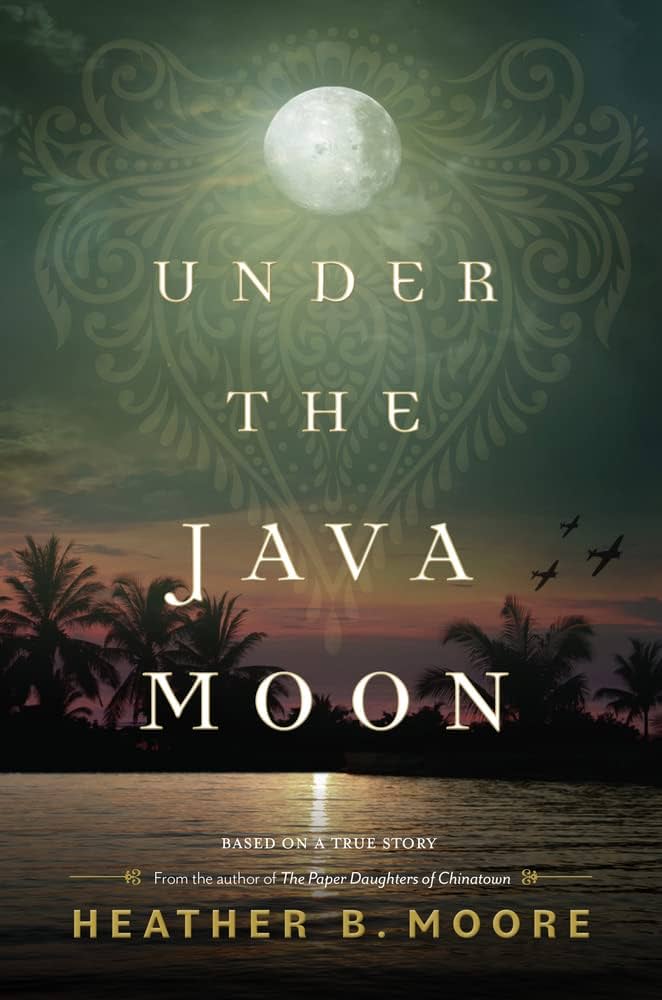
Under the Java Moon: A Novel of World War II by Heather B. Moore

Under the Java Moon: A Novel of World War II by Heather B. Moore

For those interested in the Pacific theater of WWII and the lived experiences of Japanese occupation, Under the Java Moon delivers a poignant and moving story of loss and perseverance.

The novel follows the Vischer family, Dutch colonials living in Indonesia when the Japanese arrive and occupy the region. George, an engineer is drafted into service, separated from his family, who are marched out of their home and into the enemy alien camp at Tjideng. Told through the eyes of George, Mary, and their young daughter, Rita, the reader is immersed in the experience of living through war.

The novel and story is emotional and psychologically nuanced, but — for this reader — sanitized. While I felt sympathy for the Vischers, I felt no emotional pull, no real heart-wrenching, which — perhaps strange to say — I expect to feel from a story of this genre.

Moore’s novel is well-crafted as a historical novel; pertinent historical events serve as the structure of the story, without it turning into a history textbook. But it is unfortunate that we only see the Dutch perspective of WWII here, and very little of the Indonesian experience. I would have liked to seen a little more balance of perspectives.

Overall, an enjoyable read, though less profound that its subject suggests.

Trail of the Lost: The Relentless Search to Bring Home the Missing Hikers of the Pacific Crest Trail by Andrea Langford

Trail of the Lost:
The Relentless Search to Bring Home the Missing Hikers of the Pacific Crest Trail by Andrea Langford

This work of true crime utterly possessed me; I am torn between wanting my hiking friends to read it, because I don’t want any of these awful things to happen to them, or not wanting them to read it, because it will terrify them into never venturing into the wilds again. (I am probably going to buy a few copies of this book this Christmas as gifts for those same friends!) Anyone who knows someone who hikes or camps or goes “off trail” for any reason should have an eye out for this book.

The depth of Lankford’s research, the number of interviews and observations, and the countless hours and days and weeks spent in Search and Rescue to make this book happen is staggering; that alone is a draw for anyone interested in this kind of crime non-fiction. Lankford themself is well-positioned to write on the subject. As a former ranger involved in several S&R investigations, Lankford is more than a hiker. Here, Lankford takes on the role of investigative journalist, detective, social worker, and friend.

The book focuses on the disappearances of three men (primarily) from the Pacific Crest Trail, which runs along the West Coast, from California up to and through Washington State. Kris Fowler, David O’Sullivan, and Chris Sylvia vanished from the trail in mysterious circumstances and have yet to be found, alive or otherwise.

But, of course, the book is about more than them and their individual cases; Trail of the Lost is also about their families and loved ones, the grief and pain of their loss, the process and protocols of police and other investigations into vanishings, and — perhaps this is where the book truly shines and connects with readers on a wholly different level — the culture of the trail and of extreme hiking. By giving readers a view into the the lure of these activities and the perils they entail, Trail illuminates certain flaws in our societal ideals and in the normative flows of life around work-family-friendship-community. Lankford highlights what might be missing in our urban/suburban spaces that trails like this offer. Chapters that seemingly veer off onto tangential subjects, like the Yellow Deli Group, or suspicious and creepy “trail trolls” in fact, draw attention to deeply inclusive, welcoming, altruistic, and connected the culture of the PCT and hiking is (or can be).

The irony is, of course, that individuals take on these hikes individually; they seek isolation — and yet, the culture of the trail highlights the deep dependence we, as humans, have on each other, and our need for social contact, a sense of belonging with others, a sense of community.

Freshwater Fire: A Novella by Hubert L. Mullins

Freshwater Fire: A Novella by Hubert L. Mullins

If you’re looking for a creeping, eerie read for the wintry months to come, Freshwater Fire must be on your to-be-read list. Forget Halloween, with its flashy, trashy gore, Mullins’ slim novella, with its sparse and evocative prose, and its fog-shrouded terror, brings out of the deepest of our fears as the decay of winter descends. This is a book to curl up to with candle light when the storm takes out the electricity. Or… maybe, that might just send you over the edge into madness. Read at your own risk, right?

I took this risk on this novella. I usually hesitate to spend money or time on independently published fiction; the gamble so often doesn’t pay off. But Mullins is a talented writer. With very few words, Freshwater Fire summons the smell of decay and manifests humanity’s darkest fears: that we are not alone in this world and worse, we are not as invincible as we would like to believe. Mullins builds a devastating sense of futility that the reader cannot shake off. This is a classic gothic horror.

The tale revolves around a lighthouse and its new keepers, sailors who quickly find the isolation of their task is more than a mental exercise in surviving entrapment. Their fears are more than simply psychological, they are real and monstrous. For readers who enjoy mythology, paranormal elements, and psychological thrillers, Freshwater Fire will deliver a satisfying reward.

The story aside, Mullins’ characters are fleshy, their dialogue and fear is palpable. Their reactions to their circumstances are more than plausible, revealing Mullins’ deep understanding of the human psyche and the lengths we will go, not only to survive but must do to overcome our fears. Terrifying as this novella is, it is also inspiring.

I look forward to Mullins’ other novels! They are on my wish list!

Public Opinion: A Novel by Nathan Pettijohn

Public Opinion: A Novel by Nathan Pettijohn

I’m wondering to myself — kicking myself — why didn’t I read this book sooner? I won Public Opinion in a Goodreads giveaway last year, but only just read it. I absolutely love it. Kicking myself not reading this sooner.

The novel revolves around a character you love to hate. Melvin Ritkin is a horrible human being who does unsavory things for unseemly amounts of money. He’s built a career around scamming people, creating false realities, and fixing other awful people’s problems. He lives in a place most people love to hate too: Los Angeles, CA. But Melvin’s world is Hollywood adjacent; it is Hollywood’s underworld. Melvin maneuvers and is part of the grotesque underbelly that makes the glitz and glamor possible on its surface. This is the behind-the-scenes view of Hollywood and it is as ugly as one can imagine. The characters are utterly sinful; palpable, pitiable, and on occasional, lovable. This is world of victims and villains, and where the line between the two is porous.

Through Melvin’s eyes we see how perception is easily manipulated. But readers are also treated to the tantalizing view of how the manipulators themselves rot inside. Melvin’s life, relationships, and work all come together in a collision that leaves him… well, I will leave it to the reader to find out. But, Reader, know that there is a moral to this tale, though, it is the journey which makes that lesson so delicious.

Story aside, it is Pettijohn’s prose, his distinct and witty authorial voice that carries the novel beyond snark and soap opera, and into the territory of literary fiction. This is a very well-crafted independent novel. Nathan Pettijohn has a new fan and I very much look forward to their next novel.

Savor: A Chef’s Hunger for More: A Memoir by Fatima Ali with Tarajia Morrell

Savor: A Chef’s Hunger for More: A Memoir by Fatima Ali with Tarajia Morrell

It’s extremely difficult to write a review for this memoir. Aside from the tragedy of its author and subject dying from cancer, the content itself is emotionally fraught. But perhaps, for these same reasons, a review should be written as this would be an acknowledgement of Ali’s legacy.

For those who are not familiar with the author and subject, Fatima Ali was a chef and a celebrity one, competing on Top Chef. She sadly and tragically passed away in 2019, before the age of 30. This is her memoir, written with Taraji Morrell who completed it after Ali’s death. The memoir covers the breadth of Ali’s life, from childhood to the very end, with a substantial focus on her career as a chef. The memoir also incorporates Ali’s mother’s perspective, each chapter bounces between Ali and her mother, offering the reader a view into more than Ali’s life alone.

The inclusion of Farezeh Durrani, Ali’s mother and the complex and emotional story of mother and daughter, as Pakistani Muslim women, makes this memoir especially poignant and moving. Through Durrani’s eyes we experience not only the loss of a child and the grief of that event, but also the power and strength of being a woman and a woman of color in a deeply patriarchal and racist world. The intergenerational threads make this memoir, more than a memoir, more than the story of a single person. Savor captures modern experiences of divorce, immigration, transcultural identity, race and racism, gendered expectations and sexism, career and ambition. Ali leaves a legacy with her life and this memoir.

For readers who seek inspiration, emotional connections with their books, Savor will exceed your expectations.

The Suffering: A Novel by MJ Mars

The Suffering: A Novel by MJ Mars

Absolutely chilling and brilliantly written. This book made me stay up all night for all the right reasons. It also made me afraid of my own house – and for a horror novel, that’s killing it!

I won a paperback copy from a Facebook Group giveaway, and was thrilled because I am so ready for the spooky October season. (It’s my first spooky October read!) It arrived via Amazon; and a little later, some goodies also arrived from the author (a bookmark and cards depicting the scary characters from the novel).

The Suffering is a new adult horror revolving around the haunting of a group of housemates. Kyle, Pete, Lance, Tad, and Cass are the university students and friends who reside at Brackenby House, a Victorian mansion where the rent is cheap — and where a century ago a famed psychic and a group of would-be occultists performed a séance. That demonic summoning resulted in a terrible bloodbath; all the occupants of the house at the time, save one, perished in inexplicable ways. The gory history of the house was never more than a joke to the young friends, until one Halloween, they decided to perform their own séance.

I will leave the reader to discover the awful consequences.

The haunted house story is not the novel’s only appeal, classic as it is. Mars’ writing and nuanced character development are what makes The Suffering truly shine. The pacing of the book is swift; the story unravels like a horror film. Often, with only a short sentence, Mars sent shivers across my skin. The economy of her words works well to build suspense and dread. She forces the reader to fill in the unsaid darkness with the most evil things.

The characters are also well-crafted. They are unique and yet recognizable, wholly likable, and realistic. The genre so often (sadly) produces puppet-like characters, stereotypes who feel (to this reader) more like ghosts than human. But Mars successfully avoids this; these young friends react as you or I might in the same situations — and in their effort to survive their hauntings — connect with the reader as much as they do to each other, through compassion, friendship, honesty, and fear. Very quickly, this reader found herself bonded to the unfortunate residents of the house.

Readers should also know that the book is spicy in some parts. The romantic aspects of the novel add to the storyline. The language also is suited to an adult audience; this is not a juvenile horror novel, though there is nothing in the novel that would warrant an R rating.

MJ Mars has earned a fan in this reader. I look forward to their other stories and novels!

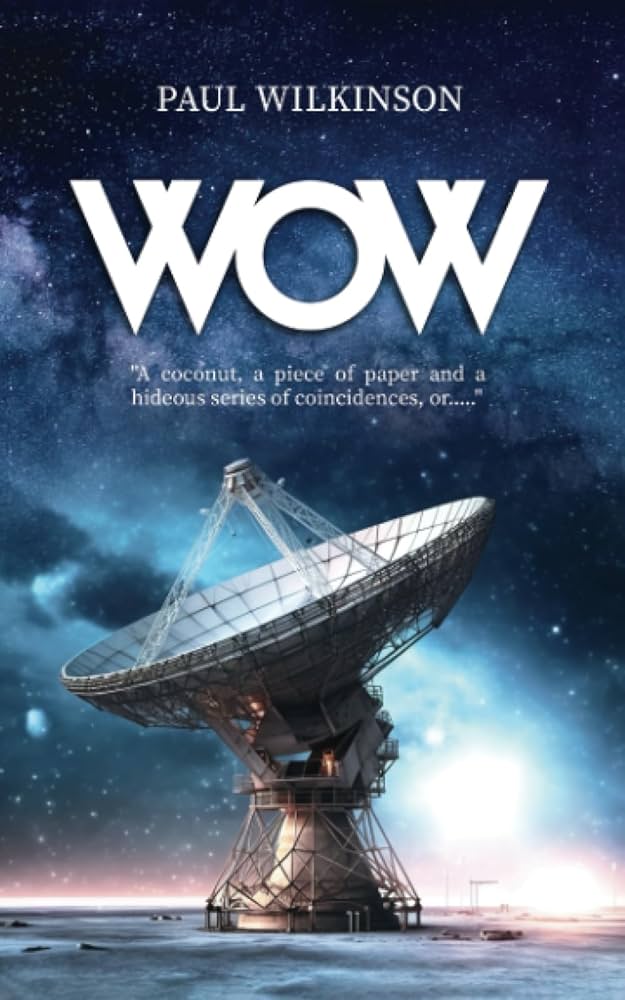
WOW: A Novel by Paul Wilkinson

WOW: A Novel by Paul Wilkinson

WOW is aptly named; this is a whopper of a novel in more ways than one! This is another independently published novel I discovered through a FB group I’m in.

WOW revolves around — and is narrated by — Paul Drake, an ordinary, suburban Englishman, who, as the result of having a coconut fall on his head, begins to experience a series of strange consequences. The coconut itself causes him severe bodily damage, and Paul is hospitalized. This is where he begins to feel an unexplainable sense that he will be the recipient of some kind of message, though from whom or where, remains a mystery to him. He is drawn to a piece of paper, with expectations that this object holds some significance for the future of humanity.

It is here that we are introduced to the novel’s cast of quirky characters: Zack, Paul’s unorthodox doctor, who treats him for the psychological fallout of the coconut-induced incident and the other three members of the therapy group, all of whom are “delusional” (or are they?) according to the medical establishment. They are: Franck (with a “C”), who suffers from paranoia as much as he is deluded by it; John, who wears a pasta strainer as a hat and who identifies as a Pastafarian; and, Ruth, aka Dobby, who has PSTD from a series of tragic and awful events in her life, and who is haunted by the number 19. The novel revolves around the five of them, as they attempt to make sense of each other, their lives, and the other-wordly claims of their newest member, Paul.

Readers who enjoy deeply reflective narrations — and unreliable narrators! — in the vein of Sophie’s World by Jostein Gaarder, where the characters strive to unravel the mysteries of why we exist, our individual and collective purposes in life, and the “meaning of it all,” will find WOW satisfying — and humorous, to boot! The novel unfolds in a similar epistolary style as journal entries and diaried events. In this respect, Wilkinson channels the dry humor common in many of Ian McEwan’s novels, without McEwan’s trademark darkness. WOW is also reminiscent of another novel, one which Wilkinson mentions in this work: Douglas Adams’ The Hitchhiker’s Guide to the Galaxy. Indeed, the quirkiness in WOW does mimic this science-fiction classic.

It is here that my review begins, primarily because the genre of the novel sets the tone for readers’ expectations. The novel is categorized as science fiction and “first contact” fiction, a notion supported by the (gorgeous) cover of the novel, an image of a large satellite pointed into space, suggestive of humanity’s SETI (the Search for Extraterrestrial Intelligence) efforts. But WOW is not a science fiction novel, it leans far more into literary fiction and its focus is wholly on the human effort to understand our earthly purposes. Readers who expect science fiction are likely to feel disappointment as the story unfolds: it lacks the world-building, technology, and off-world focus that science-fiction typically delivers.

On that note, readers of speculative fiction may find WOW fits their preferred genre more. It is speculative, though, as previously noted, the novel runs toward the philosophical more than anything. A reason for this is the lack of story arc and narrative in the novel; WOW captures Paul and his friends’ experiences and thoughts, but nothing really happens. But, that’s the point of the novel, it is a deeply reflective and philosophical exploration.

The outer space this novel traverses is really more of an inner space. Looking beyond our world puts our own into higher definition.

As a philosophical work — a treatise, in some ways — there are several moments in which the novel lags, running off on a tangent. Readers will have different levels of tolerance for this; for this reader, the novel was longer than it needed to be. But this is a minor complaints. At 315 pages it is a far more succinct read than Gaarder’s novel at 500+ pages, both of which tackle much the same questions!

This novel is literary fiction in other ways as well. Its lack of plot and narrative arc is a hallmark of literary fiction, and likewise, its characters are its primary focal points. Wilkinson does fantastic work of creating and developing intriguing, thoughtful, deeply self-aware characters. The story is propelled by their delusions, thoughts, the functions of their inner worlds. This is a character-based novel and this is where WOW shines.

My overall rating is therefore, mixed. I placed it at a solid 3 stars as I enjoyed it for it is, rather than what I expected it to be.

Readers who would like to explore Paul Drake’s mind on their own — or his friends’, can purchase WOW from Amazon here. It is currently selling for $14.00 for the paperback, $19.40 for the hardback, or $3.99 as a Kindle ebook. Readers who subscribe to Kindle Unlimited also have access to it.