Land of Milk and Honey is a haunting novel, the kind that consumes you long after you think you’re done with it. Certainly, it reverses the usual process: where a reader typically consumes, by the end, I felt consumed.
That said, for this reader, my initial attempt to read it caused a slow and uncomfortable indigestion, and I was tempted to abandon the book several times. I found Zhang’s prose felt overwritten, pretentious, too academically literary as if it had been pummeled, shaped, and reshaped in an MFA workshop where Zhang had been too eager to please an implacable professor. The food too, its descriptions and imagery, was overly reminiscent of the kind of unsatisfying fare one might find at Alinea or on Top Chef Season 2,349,349, pretty without satiety. But, in retrospect, having reached the end of the novel: that was the point.
I am glad I did not DNF the novel, and followed it through to the last “course.” It was well worth the patience.
Land of Milk and Honey is a speculative, near-future earth-bound science fiction. Written during the 2020-2023 Covid pandemic when the world had shut down and shut in, Zhang built an insular microcosm of our contemporary world. It is the same, yet different: more intensely bleak, more virulently violent, more callous. Readers, myself included, will easily recognize our pandemic selves in the characters of the novel.
The events of the novel take place in a bleak “what if” landscape, a world which is ravaged by climate change and late-stage capitalism, having never progressed further in its decolonization than our present. Food as we know it is scarce, GMO crops abound out of necessity. Nationalist and populist fears of scarcity have made political borders impermeable, except where power and money create porosity. A young Asian American professional cook trapped in immigrant, stateless limbo in Europe finds herself posing as a chef and working for a strange and shady corporation, one whose mission is evolutionary revolution. This is eugenics gone awry (as it historically has, no surprise here).
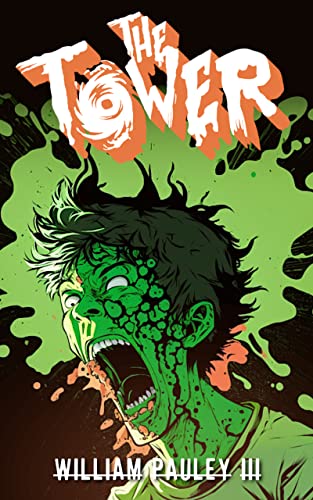
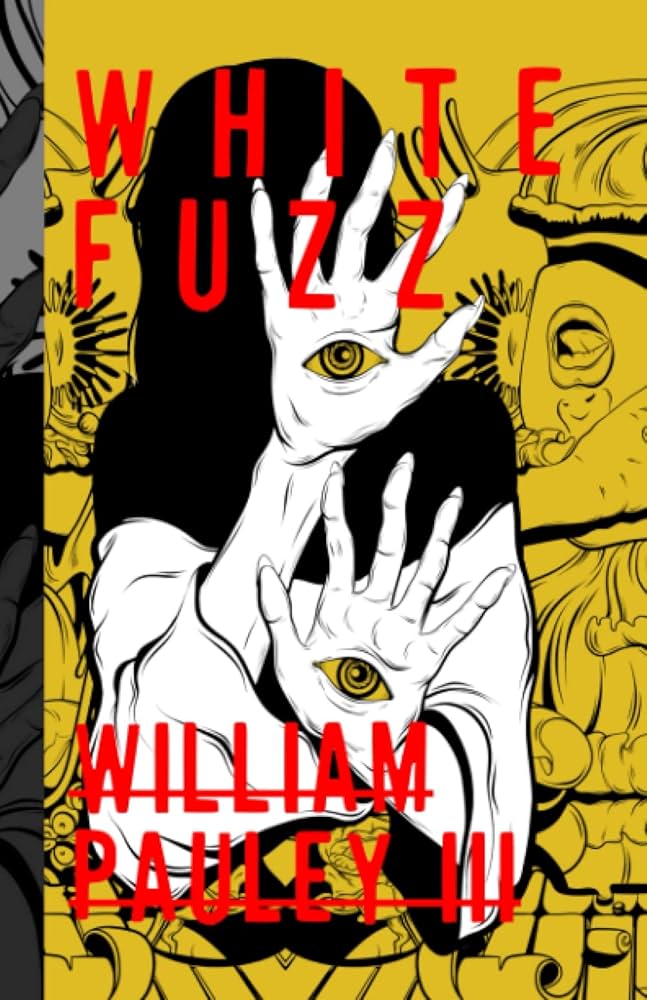
Bizarre is the only word to describe these stories. The Bedlam Bible series, of which The Tower and White Fuzz are the first two novellas, revolve around a residential building in which the residents are trapped. Strange, monstrous things happen to them. They are often themselves the monsters. There is a sense of gothic madness in these tales.
In The Tower, we are introduced to the building, the Eighth Block Tower, where these events occur. The Tower consists of three stories: “Hypanogogia,” “The Invalids”, and “Under Green Brain”, while White Fuzz is its own standalone story.
I hesitate to tell you any more, because it really would ruin the surprise and shock of reading them yourself. Readers who enjoy speculative fiction, horror, or science fiction are likely to enjoy the otherworldliness of these stories. Collectively, they ride the border of horror and science fiction. Readers will find them reminiscent of Kafka and Kavan in that there is an internal insanity at play here. Or, if television is your thing, one might liken them to American Horror Story or particular grotesque version of Black Mirror.
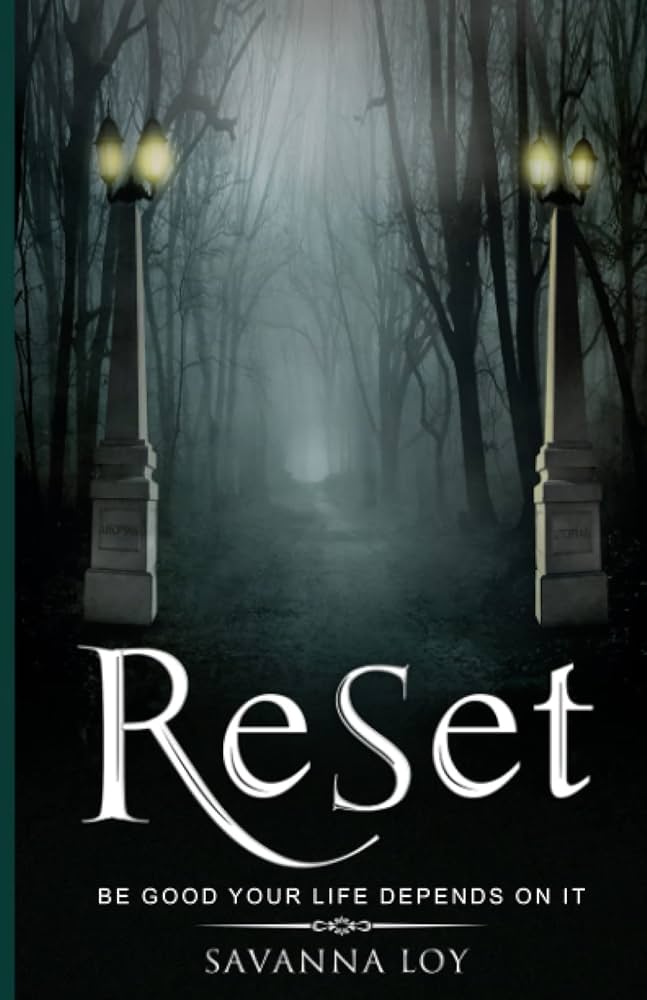
ReSet: Be Good, Your Life Depends On It by (A Novel) by Savanna Loy
A horror/dystopian novel premised on a popular trope — but delivered from a novel perspective. In ReSet the world as we know it has come to an end and a new oligarchy has come into power. A committee of a few men now decide who lives and dies and the terms which everyone must now abide. Failure to do otherwise results in the collective execution of whole communities, a reset. The novel reveals all through the eyes of one of its elite families, those chosen to plan and carry out the gruesome task of resetting.
The premise is inherently intriguing, given the climate change, political and social turmoil of the American nation at present; one cannot help but wonder what consequences we may need to confront — and perhaps sooner than we would like to admit. ReSet plays on those fears. In that vein, the novel is reminiscent of Margaret Atwood’s Handmaid’s Tale and the eugenically driven political world of Gilead. A central theme of the novel is the corruption of power and the terrible consequences this can lead to.
For all its unique perspective, I found the narrative arc of the story predictable and the peak of the novel, its crescendo, slightly disappointing and less explosive than promised. The drama of that moment is confined to a small circle, decreasing the visibility of its larger impact on society. Given the drastic shift in culture that the apocalypse created, I expected a greater dramatic backlash or swing in equal measure. The ending suggests a sequel, and perhaps this is where the novel leads — rather than to a terminal ending.
On the whole, the novel was well-written, though there were some parts which unfolded in confusion — deliberately, I suspect — which detracted from the flow of the novel for this reader. Nonetheless, this is a minor complaint. Likewise, characters are well-developed and tangible, though some better than others. On the whole, an intriguing read for readers who enjoy dystopian possibilities.
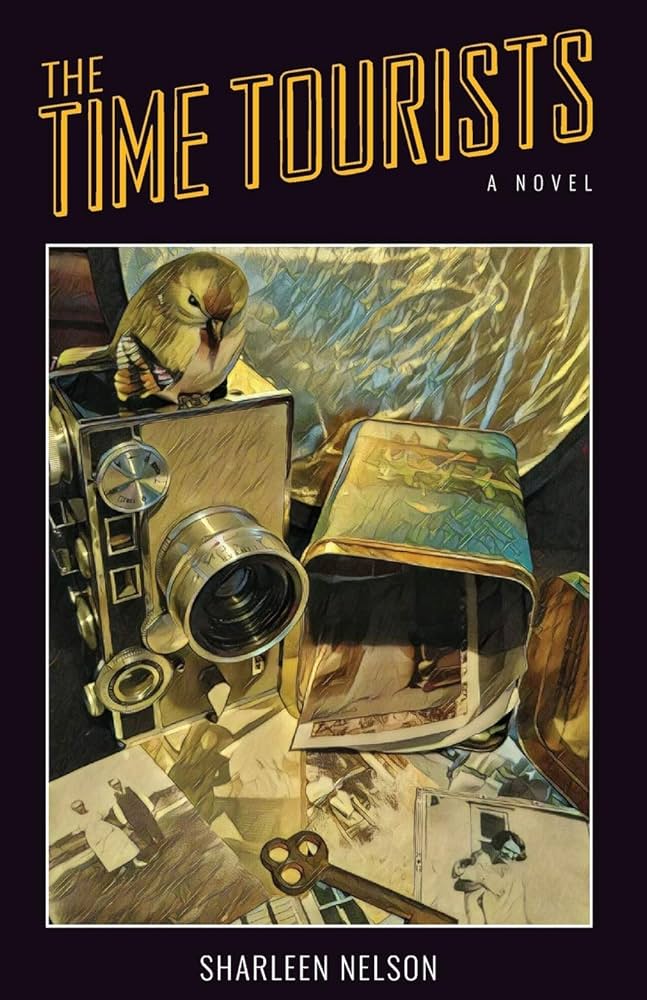
I am thrilled to be reading and reviewing a novel written and published by a local PNW author and independent press. This is a backlist book from GladEye Press, having come out in 2018, but The Time Tourists deserves another round in the limelight.
Readers of speculative historical fiction in the vein of Dr Who, and especially those who delight in time travel, with all its peculiar possibilities, will enjoy this novel. The Time Tourists centers on the concept of time travel through photographs, revolving around a particular set of individuals who have discovered how to both profit from this and use the skill to provide closure for descendants living in the present. Specifics about the process of time travel are murky; this is not purely science fiction, the novel leans toward historical fiction and mystery over the former genre. At the core of the novel is a young woman, Imogen Oliver, who discovers she possesses this rare ability. Through her adventures into the past, she assists people in finding out about their ancestors, retrieves items lost to them and their families — and, perhaps most importantly, learns that her parents’ disappearance is not all it seemed to be. Indeed, the novel ends on a cliffhanger, encouraging the reader to seek out Nelson’s second book, The Yesterday Girl.
Readers should allow the novel time to unwind; it does lead to a very exciting mystery. But, perhaps because The Time Tourists is the first novel in the series, readers may find the first eight chapters, fifty-odd pages, a little more heavy on exposition and slow-paced than expected. In these chapters, Nelson provides a thorough, but sometimes plodding, outline of Imogen’s personal history and life. I found this section of the novel somewhat confusing: Is this a Young Adult novel? A Coming of Age bildungsroman? When do we get to the time travel part? As a lover of historical fiction, the contemporary focus lost me periodically. Indeed, it was not until page 92, the beginning of Chapter 14 that I began to find the novel intriguing. And, to be honest, it wasn’t until the last line on Page 147: “Leeroy Jenkins, my ass,” that it gripped me. The novel comes off as episodic; it reads as two separate novels rolled into one, which a significant chunk of the beginning serving as prologue.
The reader will be quickly introduced to Imogen’s friends and family, parents Niles and Francis, her Grammy, friends Fletcher and Jade, but also others within her orbit who have less kindly motives and personalities. Theodore Diamond and his mother, Mimi Pinky, are neighbors who have lived nearby for several years. As the novel progresses, readers will become abundantly aware this is not a juvenile novel; it borders on the cusp between Young Adult and Adult. Similarly, readers should be aware the novel also raises and explores toxic masculinity, incel “male-rights”, sexual abuse, child abuse, mental health, and death. Should these be your triggers, this novel may not be for you. That said, Nelson weaves these dark ideas into the narrative arc of the story exceedingly well, and they are central to understanding the characters, their motives, and behavior.
On that note, Nelson’s characters are well-crafted and possess depth, though in several parts of the novel, expository details run long and sometimes derail its flow and pace. As a consequence, the novel sags in some parts, requiring the reader to push on to pick back up the story’s arc. (Non-American readers may find the pop culture references do not add to the characters’ development in ways that American readers might.) Historical references, on the other hand, do provide the novice historical reader with plenty of context. Nelson’s handling of the disparities in cultural differences and historicity are especially appreciated by this reader, though as noted previously, historical exposition slows the progress of the story. Just as readers should not expect a heavy dose of science in this fiction, readers should not expect scholarly content, though it is clear Nelson has done a significant amount of historical research.
The final third of the novel is where the real excitement begins, and Nelson maximizes the mystery that has brewed in the first two-thirds. All the threads that have begun earlier come to an explosive, emotional ending, one which — I think — will satisfy most readers and leave them wanting more.
Readers who would like to purchase this novel may do so on Amazon here, or find it on GladEye Press’s website here. At present this 387-page novel sells on Amazon for $11.09 for the paperback and $5.99 for the Kindle ebook, and on the press website for $14.95 (paperback), where buyers also have the option of having it custom signed by the author for an additional $3.


 Dr JoAnn LoSavio