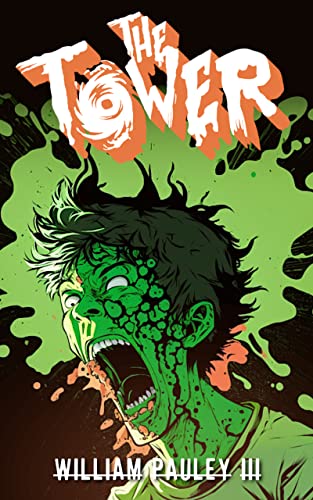
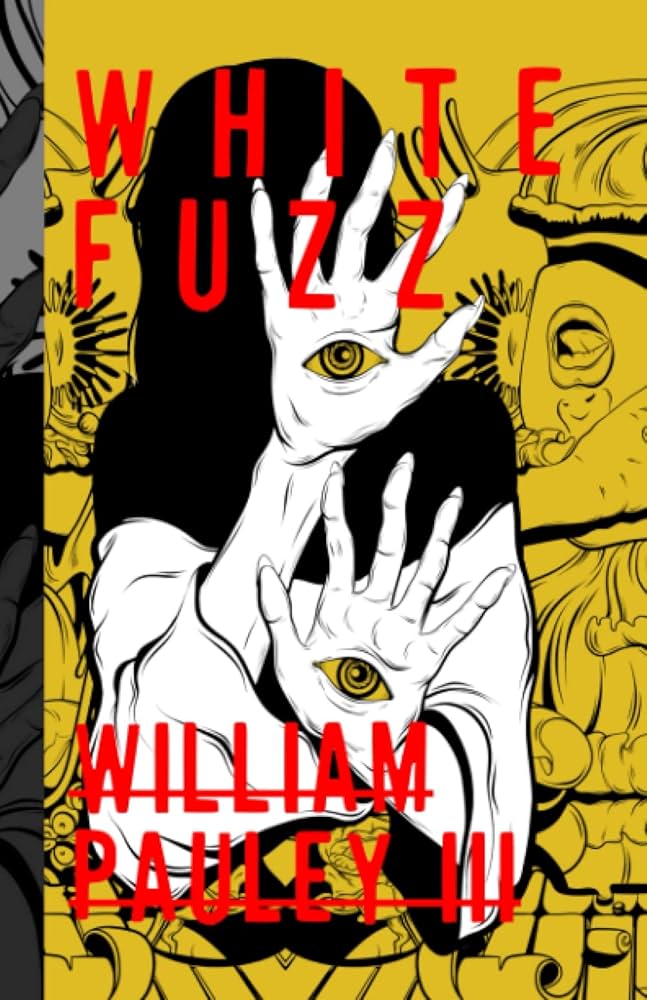
Bizarre is the only word to describe these stories. The Bedlam Bible series, of which The Tower and White Fuzz are the first two novellas, revolve around a residential building in which the residents are trapped. Strange, monstrous things happen to them. They are often themselves the monsters. There is a sense of gothic madness in these tales.
In The Tower, we are introduced to the building, the Eighth Block Tower, where these events occur. The Tower consists of three stories: “Hypanogogia,” “The Invalids”, and “Under Green Brain”, while White Fuzz is its own standalone story.
I hesitate to tell you any more, because it really would ruin the surprise and shock of reading them yourself. Readers who enjoy speculative fiction, horror, or science fiction are likely to enjoy the otherworldliness of these stories. Collectively, they ride the border of horror and science fiction. Readers will find them reminiscent of Kafka and Kavan in that there is an internal insanity at play here. Or, if television is your thing, one might liken them to American Horror Story or particular grotesque version of Black Mirror.
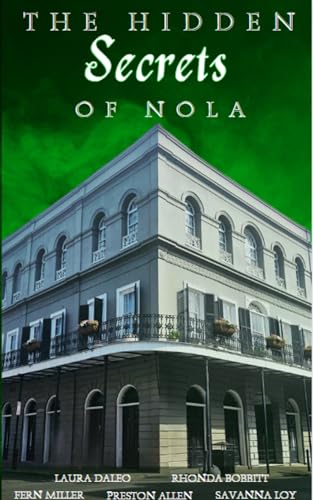
The Hidden Secrets of NOLA: Stories by Laura Daleo, Fern Miller, Savanna Loy, Rhonda Bobbitt, & Preston Allen
This was the perfect Halloween read and one that I’d been looking forward to for several weeks! I saw the book in one of the FB groups I’m in and I put in a pre-order for the ebook (something I rarely do). It did not disappoint! This anthology of five tales set in New Orleans conjures the mystique and history of that city’s famous French quarter; the stories force the reader to reconsider their notions of the supernatural, to wonder if darkness is really the evil we assume it is. Laura Daleo’s short story about what happens when Death meets an innocent is one of these tales which gets the reader wondering about the nature of evil and compassion, how they are two sides of the same coin. Rhonda Bobbit’s tale delivers the shivers; two sisters, Rose and Lydia are haunted by a family heirloom and an inheritance they did not expect. Fern Miller, a romance writer, takes us in another direction, trading on the lust and romance of New Orleans. It is a place where lovers escape to — or attempt to escape each other –but fate always has its plans for us. Preston Allen’s story, Crossed at the Cafe, was my favorite of the five; a story revolving the hoodoo that NOLA is famous for. Powerful curses and malevolent witches deliver the shivers in this tale. Savanna Loy’s Borrowed Bayou was my second favorite story here. This was a dark tale as well. The Laguerre family hides a terrible secret; they’ve made a pact that must be kept, or thousands might lose their lives.
This is a diverse collection of tales. Readers are sure to find at least one which appeals to them. They are, on the whole, well-written and conceived. Each one evokes a different characteristic of the city: its dark history, its romance, its mystery, its portals into the underbelly of humanity. These tales record the bargains we must make; here, these are the bargains New Orleans extracts from all who visit it. Some of pacts deliver unexpected happy endings. Certainly all of the stories here make the reader wonder what they might do in the same situation.
Anne Frank on Tour & Other Stories by George Thomas Clark
This independently published short story and flash fiction collection was a hoot! I laughed through most of it, and moreover, if I may be frank, it was an overdue belly of snortish laughs I emitted. This collection is the sort that encourages the emission of belly laughs. For readers who enjoy a bit of snark, a bit of cheek, and a good dose of make-believe, Anne Frank on Tour & Other Stories will deliver on its eponymous promise of a “What if… ” world.
The collection opens with a section dedicated to “What Ifs”, titled “History” and a delightful tale of vengeance, “Sally and Thomas.” The title characters are Sally Hemings and Thomas Jefferson. Readers, I will leave you to discover the thrill of this tale yourselves, but know that it remits a great deal of satisfaction. Other sections are themed, “Love”, “Need”, “Excess”, and “Final Acts”, the last of which offers a fictionalized glimpse into the lives of certain long-dead celebrities. Some stories are lengthy, though not exceeding more than a reasonable ten or twelve pages; some are flash fiction, punchy bites of a few paragraphs (or less!) Most depict landscapes and characters amply familiar to ourselves: “Speed dating”, “Must Sell”, and “Online Doctor” for example. We know the people in these pages (perhaps they are ourselves, or perhaps we hope they are not) and all their flaws and funny quirks. Most of these stories are hilarious photo-realistic caricatures.
Some tales are surprisingly sobering, offering readers a respite from their giggles; but these tales might hit closer to home than one expects. This may be Clark’s special skill as an author; the subject matter of some stories is dark and perhaps triggering for some readers (sexual assault and gaslighting), but Clark delivers these messages with both humor and a powerful, succinct punch. The result is that the reader is disarmed by their own humor and left with a fading whisper of a giggle to assuage them in the aftermath of the trauma they’ve just witnessed the characters experience. In other words, the reader may find themselves smiling, recognizing the landscape of the story — and then, BAM, Clark delivers a coup d’etat, and the reader may then feel a little guilty for having laughed only a moment before. It is a rare skill to cause a reader to twist internally and Clark does it well several times in this collection. This is not a collection of tales for the sensitive or morally righteous reader. Be prepared to say, “Oh. I didn’t think this was headed that way.”
Clark’s voice is that of a matured storyteller, and it is unique. Fans of Neil Gaiman may recognize the confidence and the trace of dry humor. Fans of Margaret Atwood will appreciate Clark’s wit. Fans of speculative fiction in the vein of Ted Chiang will notice Clark’s imaginative approaches to things that never happened.
After the Funeral and Other Stories by Tessa Hadley
What an amazing collection of short stories! I couldn’t find one that I did not enjoy or that did not make me wonder about my own life, those around me, and just the state of humanity as a whole. Readers who enjoy the creativity and perspective of Margaret Atwood or the incisiveness of Meg Wolitzer are likely to find Hadley’s After the Funeral and Other Stories equally as well-written, equally as insightful into the human experience. And like Atwood and Wolitzer, there is an undercurrent of the uncomfortable in this collection of Hadley’s work, something that makes one wonder about the moral state of our species.
The stories range wide in terms of their narrators and protagonists. In some stories the narrator is a child, in others adult women, adult men. These are stories that clip a slice of a group of someones lives: some pinpoint a long moment of grief or the sharp cut of a sudden loss. There is death and all the attendant fears of delivering the news of death, of getting on after the loss, of not feeling much of anything and what that means about oneself. There are stories here of indifference, a death of a different kind amongst our very social species. There are stories of disloyalty and infidelity, yet again, another kind of death. Indeed,the title of the collection, while signaling the title of one of its stories, is also telling of the content of the collection. After the Funeral and Other Stories is about what happens after there has been a resignation of some kind, a real or metaphorical death and the putting to bed of that corpse. In some of these tales, there is proof of an afterlife.
The characters in these stories do unexpected things, sometimes things that shouldn’t be done but are done anyway, with and without shame. Readers will find themselves wondering at the end of a story, “Oh, that’s just not right…. is it?” Or, is it? That is the draw of this collection of Hadley’s work.
Story aside, Hadley’s prose should also be an attraction for readers. This is delicious literary fiction; Hadley’s turns of phrase are crisp and succinct; the description of the squelch of plimsoll shoes in the rain is enough to invoke a multitude of elements necessary to the reader’s experience: a sense of activity, the image of the character, the mind of the narrator — and more profound, the poignancy of the moment.
I would normally list my favorite stories, but honestly, I enjoyed each and every one of these.
It is so rare to find novels and creative fiction that is not only set in Southeast Asia, but written by Southeast Asian authors (rare, not impossible!) that when I saw this coming out in 2023 I JUMPED on it! And I am so glad I did. This is a book that makes my heart sing!
Nardone’s Welcome Me to the Kingdom is a novel woven in stories, revolving around the lives of Thais who live in Thailand or beyond in the diaspora, transnational and transcultural Thais. This is a book about people, individuals as they navigate the multiethnic and multicultural world of Thailand, and what it means to be Thai for them. The characters, as diverse as they are in terms of ethnicity, class, and gender, are connected together in this novel; they and their lives serve as a microcosmic diorama of Thai realities where muslims of the south grapple with discrimination, poverty stricken girls from the village migrate to the city, mixed race Thai/White kids straddle two worlds and belong not quite fully into either one.
The stories span across several decades and generations, allowing the reader a view, not only into modern Thainess, but also how the concept has changed over time and the ways in which being Thai is differently defined for individuals of different religions, classes, genders, etc. Language is a significant element in these stories, not surprisingly since Thailand (like so many other parts of Southeast Asia) has and remains affected by colonialism and its invasive culture (though it was never politically colonized). Welcome Me to the Kingdom is about the rubbing together of cultures, the tension and chafing as multiple perspectives collide. This is a historical novel offering readers a textured, multi-faceted sense of contemporary Thailand, a place in which tradition and modernity coexist, sometimes contentiously, sometimes not.
My favorite characters were Nam and Lara, their story, interwoven with Pea’s and Rick’s, was my favorite, though I probably identified most with Ping. I think readers will find a little bit of themselves in these pages, whether they are Thai or not, as the emotion driving these stories is universal. Nardome’s stories are about desire, ambition, longing, and fear — that inevitable friction between parents and children, within families, the old(er) and new(er) attempting to find common ground.
For readers who enjoy anthropology, history, and postcolonial literature, Welcome Me to the Kingdom will be an especially enjoyable read.
I’m not a huge fan of short story collections, especially those by a single author… but Margaret Atwood! It’s Margaret Atwood! So I was thrilled to read and review this.
As it turns out, Old Babes in the Wood includes a set of stories that unfolds like a novel told in segments. There are also some standalone stories in this collection, but several which incorporate the same characters and, combined, offer the read a novel-like narrative arc. This novel-in-stories revolves around a mature couple and their engagements with one another and others of their mature social circle. They are “empty nesters”, finding themselves now in a moment of their lives that is somewhat unfamiliar.
Other stories are also peppered with similarly mature life-stage themes and concerns. One of my favorites in this collection revolves around the hot topic of motherhood and mothering. As usual, Atwood delivers very creative approaches to each one, turning the perspective inside out, and presenting the reader with a novel experience.
That said, many tales here have been published in journals earlier, so readers should not expect a wholly new collection of stories. Their cohesiveness here, however, appears to mimic Atwood’s own life journey: these tales are concerned with change from one life-stage to another, mature themes and concerns (by which I do not mean X rated spice, but concerns of older adults). Atwood is, after all, an old babe in their own wood (no offense, Mx Atwood!) and like us all, navigating our own paths through life.
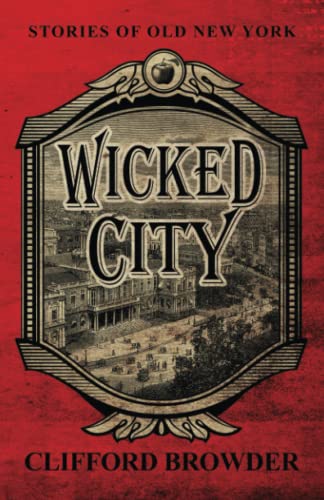
Wicked City: Stories of Old New York by Clifford Browder
Oooo! What a slick collection of grimy, gruesome peeks under the golden veneer of the Gilded Age! The prose and tales in Wicked City are as smooth as the criminal characters in its pages, which is to say, if you, Reader, are a fan of urban grit and historical fiction, then this is the collection of stories for you. Wicked City reads like a literary revision of The Gangs of New York, but instead of Daniel Day Lewis, the lead is a very chic Edith Wharton — if Edith had a side hustle as a brothel Madam and if the brothel was run out of the Waldorf Hotel.
Make of that what you will. (I love Edith Wharton’s refined snark and the grubbiness of Gangs of New York.)
The stories in Wicked City are historical, but some things have been updated since the actual Gilded Age. Many of the tales are infused with modern sensibilities, that is, there are more enlightened notions around race, racism, class, and gender in these pages than perhaps there were in history. For example, Browder includes tales from Chinatown and addresses interracial marriage. Jingoism and nativism abound and are present, but Browder does justice to history by highlighting the non-White version of events in his fictions.
Many of the stories interweave, though some of the connections are subtle; there is a sense of dispersed, urban community woven throughout the collection. True to Browder’s work, this is an homage to New York and its history.
The World’s Greatest Sea Mysteries (Non Fiction) by Mollie and Michael Hardwick
This title lit up the 8-year old in me when I saw it. I remember loving those DK trivia books and collections of mysterious events. I am still a sucker for a book on sasquatches or sea monsters. The Hardwick’s collection did not disappoint. Each chapter recounts the tale and history of a vessel lost at sea, a spate of sea monster attacks, ghostly ships, and the like. The chapters are short, succinct, and leave the reader wanting to know more — and isn’t that the purpose of a mystery?
The prose is a bit dated — the Hardwicks wrote the original back in the 1967 — but there is nothing wrong with this. Indeed, that kind of syntax adds a little historicity to the collection. There is something familiar about it and nostalgic in a way. But maybe that’s just me remembering my childhood and the long, lovely hours I spent reading books like these that let my imagination fly wild.
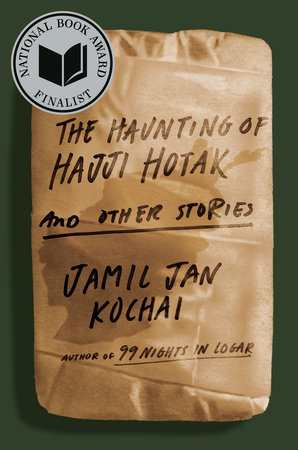
The Haunting of Hajji Hotak and Other Stories by Jamil Jan Kochai
Living in the United States, the word “Afghanistan” crackles in the air when uttered. There is no escaping the politics of the word and, more often than not, insulting Orientalist and racist language in the larger context of that conversation (malicious or unintentional).
For that reason alone, Kochai’s collection of stories set in contemporary Afghanistan is powerful and worth any reader’s time and attention. The narratives and characters in this collection humanize a subject that has too long been objectified and rendered inferior. The tales bring Afghans to life, force the reader — in the best of ways — to see and think of them as living, feeling, bleeding individuals, as tangible and as intimate with ourselves as our sisters, brothers, uncles, aunts, parents, friends, lovers, husbands, wives, children. In these character’s voices we can hear our own. Our own desires and fears are mirrors of theirs.
The stories are embedded in Central Asian Islamic and Colonial culture and history, but they also revolve around universal principles: love, marriage, ambition, identity, belonging. Afghans in these stories are college students sharing the same interests and experiences of growing up and out like all college students — not merely tokenized international students who live on the periphery of campus life, transient and alien. In some of these stories there are young women seeking to understand their roles in society, in their families. They, like all of us, are torn by expectations imposed on us from within and without. The women in these stories are not foils to men or cutouts of the flattened, Orientalist idea of Islam; they are also not mindlessly rebellious, mimics of Western feminism. These women are accurate reflections of women everywhere and yet also unique in their Afghani-ness: contradictory, full of internal and external conflict, desirous and aware of obligation, selfish and selfless. The characters in Kochai’s fiction — women and men alike — do not need to trade their Afghani selves for a Western one or a vice versa, even if there is tension between these identities. It is a tension that enhances, rather than subverts the narratives here. Tradition and modernity are not at odds in the real, lived world anywhere; that false binary is the fiction here! Kochai’s nuanced depictions of women, youth, men, childhood, marriage, love, sex, and life-at-large made this a very satisfying read.
I also deeply appreciated that many stories depicted Afghans outside of Afghanistan in an authentic diasporic perspective. So frequently are Afghans (and other Asians and people of color in general) fixed into some faraway, non-Western, exotic location. In several of the stories Afghans are cosmopolitan, worldly figures, part of the global community in material ways beyond being an image on the television news. They are American, British, European in as much as they are Afghan. As with many other OwnVoice fiction, these stories make the poignant point that the hyphenated identity is true but simultaneously too simplistic of a label; national boundaries are not only porous, in cultural context they are fiction. (Of course, borders do exist in a material, political sense; passports are not obsolete artifacts!)
At the same time, there is a thread of distinctly Afghan experience threading through these tales, one that is grounded in global politics, colonial histories, Islam in its present forms, migration. That is its cohesion and its strength. The Haunting of Hajji Hotak and Other Stories is a must-read collection, especially for those who seek to understand a misunderstood community and want to excavate their identities beyond its contemporary political history and presence.
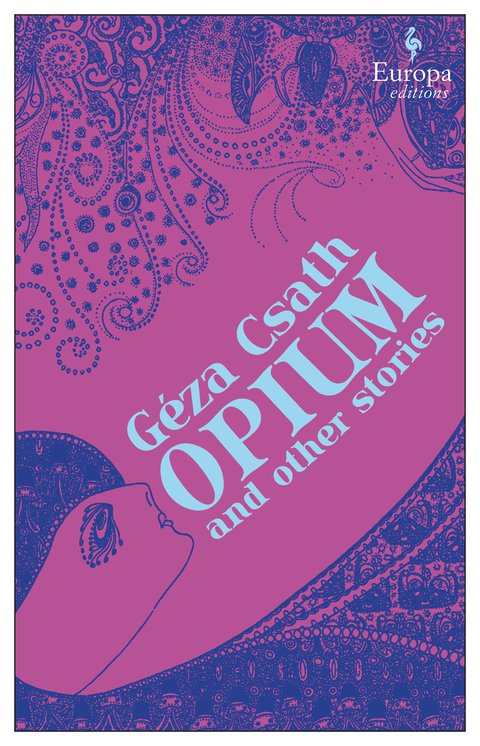
Opium and Other Stories is a mirror of Csath’s deranged interior and exterior lives, as if they clashed together and the broken shards became the pieces of these stories and characters. Originally published in 1908, these tales of murder, death, desire, lust, and loss possess a darkness that is characteristic of this period of European history, a moment marked by Imperial ambitions and imperial defeats, war, chaos, and revolution. Nations seemed to be forged and dismantled in the course of an evening’s drunken revelries in these decades. Kings. princes, and the bourgeoisie fed their greed on the fruits of exploitation: child laborers, colonial taxes, the broken backs of men and women worked to death in factories. What was proposed in metaphor became someone’s reality; everything was possible — then World War ensued — and despair came like a wave over Europe.
World War I was an incalculable loss, in Europe and for the rest of the world. Millions of European soldiers perished on the battlefields, suffocated on mustard gas and wasted by gangrene before slow, agonizing deaths. Colonial armies were crushed. France sacrificed hundreds of thousands of Indochinese lives; millions of Asians served as laborers; brown and yellow men died for white men’s ambitions. Men like Csath did not escape; his PTSD is a biography of the death that came after those who survived.
There is no escaping the profound sense of fracture that seems to have broken Csath as a human being. Opium and Other Stories are the pieces of what was left of him. I do not mean that in a sad, negative way; no, indeed, Csath’s life is the stuff of his imagination. His life is a wreckage you can’t tear your eyes off of and his stories are the same.
On the whole, these stories are short, snippets of lives at their strangest, at their ends, at the moment things unravel. Many of them end just as the reader notices that something is really, really, really wrong. “Paul and Virginia” was one that caught me; Csath reveals and revels in a side of love and sex that is unsavory, but not so perverse as to disgust — it attracts, causes pause, intrigues. “The Surgeon” frightened. That tale made my skin goose a bit, as did “Matricide” and “The Black Silence.” “Toad” made me smile wistfully; there was something magical in the way the animal came to life and something ugly in the way it did too.
These stories are Franz Kafka and Anna Kavan and Chuck Palahniuk — but of course, before all of them existed. They are weird and creepy and I am a little too intrigued by their gore for my comfort. Perfect for Halloween.




 Dr JoAnn LoSavio