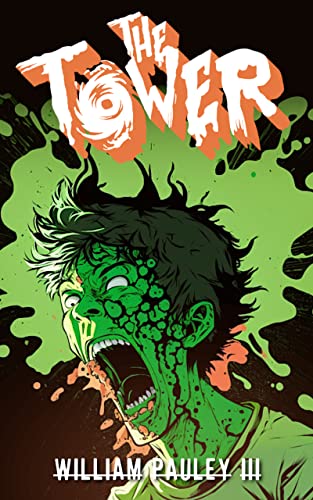
Bizarre is the only word to describe these stories. The Bedlam Bible series, of which The Tower and White Fuzz are the first two novellas, revolve around a residential building in which the residents are trapped. Strange, monstrous things happen to them. They are often themselves the monsters. There is a sense of gothic madness in these tales.
In The Tower, we are introduced to the building, the Eighth Block Tower, where these events occur. The Tower consists of three stories: “Hypanogogia,” “The Invalids”, and “Under Green Brain”, while White Fuzz is its own standalone story.
I hesitate to tell you any more, because it really would ruin the surprise and shock of reading them yourself. Readers who enjoy speculative fiction, horror, or science fiction are likely to enjoy the otherworldliness of these stories. Collectively, they ride the border of horror and science fiction. Readers will find them reminiscent of Kafka and Kavan in that there is an internal insanity at play here. Or, if television is your thing, one might liken them to American Horror Story or particular grotesque version of Black Mirror.
Night Side of the River: Stories by Jeanette Winterson
I thoroughly enjoyed this collection of ghostly tales, but then, I may be biased; I’m a sucker for a good haunting. Of course, I did have my favorites.
I especially enjoyed “A Fur Coat”, “App-Arition” and “The Spare Room”, primarily because the haunted in these stories isn’t necessarily the living, but the dead haunting themselves or one another. Indeed, that was the attraction for me in Winterson’s tales: they challenged the concept of haunting, yet remained authentic to the trope of the traditional ghost story. Readers shouldn’t expect to be thrown into a new genre here; this is not speculative horror, but tried-and-true revised into immersive stories.
And, of course, the revelations in these stories are more about the living than the dead, which is ultimately the mark of a good short story.
The collection as a whole is fantastic, and follows through on this tightrope balance between showing the reader something novel and satisfying their hankering and expectations of the “ghost story” trope. In some stories, Winterson brings in an element of the contemporary through technology and devices we use today, in other cases, it is the characters’ quotidian lives in the present — marred somehow with an encounter with death and the dead — that makes it clear to the reader there is an anachronistic meeting of time here.
Winterson’s writing is superb, well-suited to the genre of the short story form. With few words wasted on exposition and an emphasis on characters’ thoughts, Winterson quickly immerses the reader in the story. It is everything a reader wants from this short form.
Halloween has passed, but Winter is upon us; put this on your list for this year’s gloomy, deathly season.
After the Funeral and Other Stories by Tessa Hadley
What an amazing collection of short stories! I couldn’t find one that I did not enjoy or that did not make me wonder about my own life, those around me, and just the state of humanity as a whole. Readers who enjoy the creativity and perspective of Margaret Atwood or the incisiveness of Meg Wolitzer are likely to find Hadley’s After the Funeral and Other Stories equally as well-written, equally as insightful into the human experience. And like Atwood and Wolitzer, there is an undercurrent of the uncomfortable in this collection of Hadley’s work, something that makes one wonder about the moral state of our species.
The stories range wide in terms of their narrators and protagonists. In some stories the narrator is a child, in others adult women, adult men. These are stories that clip a slice of a group of someones lives: some pinpoint a long moment of grief or the sharp cut of a sudden loss. There is death and all the attendant fears of delivering the news of death, of getting on after the loss, of not feeling much of anything and what that means about oneself. There are stories here of indifference, a death of a different kind amongst our very social species. There are stories of disloyalty and infidelity, yet again, another kind of death. Indeed,the title of the collection, while signaling the title of one of its stories, is also telling of the content of the collection. After the Funeral and Other Stories is about what happens after there has been a resignation of some kind, a real or metaphorical death and the putting to bed of that corpse. In some of these tales, there is proof of an afterlife.
The characters in these stories do unexpected things, sometimes things that shouldn’t be done but are done anyway, with and without shame. Readers will find themselves wondering at the end of a story, “Oh, that’s just not right…. is it?” Or, is it? That is the draw of this collection of Hadley’s work.
Story aside, Hadley’s prose should also be an attraction for readers. This is delicious literary fiction; Hadley’s turns of phrase are crisp and succinct; the description of the squelch of plimsoll shoes in the rain is enough to invoke a multitude of elements necessary to the reader’s experience: a sense of activity, the image of the character, the mind of the narrator — and more profound, the poignancy of the moment.
I would normally list my favorite stories, but honestly, I enjoyed each and every one of these.
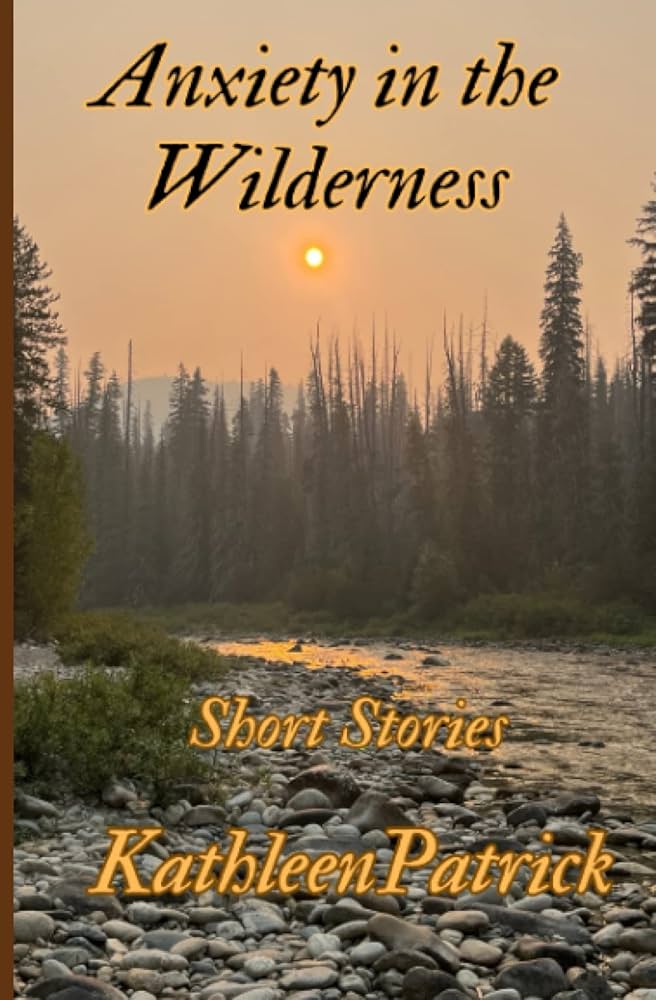
Anxiety in the Wilderness: Short Stories by Kathleen Patrick
I’ll start with context, not about the book, but about how I came to review it. I don’t typically read independently published novels and books for a variety of reasons. But I decided to join a Facebook group, one which has an active review program organized by the administrators. On a whim and by chance, I joined in.
The process began with contacting the organizing administrator. Every reviewer wrote a short biography of themselves as readers.
Hello! My name is JoAnn. I'm located in the USA. I'm an academic in the humanities and a huge reader (it's part of the work I love to do!) I actively review books and galleys, both professionally and for my own pleasure. I review Non-Fiction and Fiction. I prefer physical print copies. For NF I read history and historical archaeology. In fiction, my preferred genres are: Historical Literary Fiction, Literary Fiction, Multicultural/OwnVoices, multigenerational fiction. I especially enjoy Asian-American, Immigration, BIPOC stories/themes. I do not gravitate toward romance, thrillers, horror, or contemporary fiction as much, but on occasional will read slipstream and mysteries."
Then I waited…
Each participating author scrolled through the post to find a reader they thought would match their novel or manuscript and commented below their name. [While some reviewers had several interested authors, I did not. In fact, Patrick had not selected me as a reader for her collection, but I saw her book offered to another reviewer and I asked the organizer if I could review it.] Reviewers could then choose three authors or books they wanted to review. The organizing administrator then connected the authors to the reviewers via direct messaging.
Anxiety in the Wilderness: Short Stories was one of the books I had the privilege to review. I am glad I got the chance to do so; Patrick’s collection of stories is well-worth the read and the price (at present USD $9.99 for the paperback, $0.99 for Kindle ebook, $15.99 for the hardback edition). [Indeed, Patrick’s collection of tales causes me to consider reading more independently published fiction.] The collection, at a total of 161 pages, comprises of seventeen stories and two poems, a few of which have been published in journals elsewhere.
The stories collected in this volume cohere under the theme suggested in its title. These are vignettes clipped from a variation of lives. Each story captures a personal moment of anxiety, ranging from the life-changing to the merely inconvenient. In these tales individuals lose some part of themselves or worry about the possibility of doing so: In Fire, a woman assesses what part of her life is measured in the material goods she owns; in Anxiety in the Wilderness what it means to watch someone lose their life forces a woman to review her value to her spouse. In other stories mothers look upon their children and weigh their love for them against their love for their husbands, wives question the strength of their husband’s love, children face the loss of a parent. Patrick’s stories reflect the small and large gravities in our lives like a mirror.
Like a reflection in a mirror, Patrick’s prose possesses clarity and crispness; in its simple lines there is an element of accuracy in her portrayals of human worry. This lends a literary quality to the collection as a whole. Patrick’s words are deliberately sparse, and in this, she allows the reader a rare privilege: To imagine themselves in the precarious positions the characters are in. It is this small inflection permitted to the reader which I find most appealing about Patrick’s work; she holds back from telling the reader what to feel and so the reader’s own fears organically merge with those of the characters in her tales. The effect is a profound empathy on the part of the reader for the individuals in these tales. Some of the stories left me with an intense poignancy, which I do not regret; this depth of feeling is a testament to the stories and Patrick’s skill as an author. The reader is left feeling “seen” and the result is one of both discomfort (from the anxiety around which the story revolves) and assurance that we are not alone in our worries. Like many of the tales here, there is a bittersweet end for the reader.
Patrick states these stories were written over many years; perhaps drawing from different periods and experiences in her own life. There is a breadth of experience in these stories, expressed in both the varied ages and genders of the characters Patrick produces, and in the range of events and concerns around which the stories revolve. Some stories focus on youthful worries: love, romance, ambition, belonging. Others hone in on more mature causes of unease: death, aging, marriage, adultery, loneliness. I appreciate this variation deeply; I think most readers will find at least a few stories that move them. This is a collection for adult readers across the age spectrum.
On a more personal level, I enjoyed “Letters Home”, “The Dancer”, and “Storm” most, though all of the stories had each their own attractions. There was not one story which I wanted to skip, nor one I disliked, none I found out of place, or which evoked less than a thoughtful pause at its end.
If you’re interested in purchasing Anxiety in the Wilderness, you can do so from Amazon. You’ll find it here.




 Dr JoAnn LoSavio